1968·Zona Desmilitarizada (DMZ) e isla del Tigre, costa central de Vietnam
Vietnam.Zona Desmilitarizada de Vietnam · las luces de la DMZ y el fuego amigo de junio de 1968
En junio de 1968 los infantes de marina de EE.UU. reportaron luces y contactos lentos de noche sobre la Zona Desmilitarizada vietnamita y el mar frente a la isla del Tigre; la noche del 15 de junio, unas 15 aeronaves no identificadas «que se cree que eran helicópteros enemigos» (otros relatos hablan de unas 30 luces) desataron una alarma de incursión. La respuesta aliada degeneró en fuego amigo: los cazas F-4 Phantom hundieron la lancha PCF-19 y alcanzaron al crucero USS Boston y al destructor australiano HMAS Hobart, con muertos. La investigación naval lo atribuyó a confusión de radar y misidentificación.
Tier A · Aceptable¿Qué significan? →
Evidencia institucional: varios testigos independientes identificados, o documentación oficial de la época, sin un registro instrumental que los corrobore.
Qué fue
82%causa natural o humana
Lo más probable es una causa ordinaria que nadie ha identificado
Ver el reparto entre las seis explicaciones
Causa natural o humana
Sin causa conocida
Leer el porqué completo
Según Jon Wyatt, historias navales australianas citan «condiciones atmosféricas inusuales», «enjambres de insectos» o «bandadas de aves», sin elegir. La falta de un análisis publicado no es prueba contra una causa ordinaria: en su informe de 2024, AARO dio por resueltos 174 casos, todos como «objetos prosaicos», aunque «muchos otros casos siguen sin resolver».Documentos primarios
Crónica de mando de la III Fuerza Anfibia de Marines, junio de 1968: carátula, cartas de remisión y págs. 16-17 del resumen de inteligencia, 6 págs.
Extracto de la crónica de mando de la III MAF del 1 al 30 de junio de 1968, remitida al Comandante del Cuerpo de Marines el 9 de agosto de 1968 (serie 00176768) y reenviada por la Fuerza de Marines del Pacífico el 23 de septiembre; clasificada «secret» y hoy desclasificada. En la sección 5, «Inteligencia», anota que al final de la tarde del 15 de junio se avistaron en la zona de la DMZ unas 15 aeronaves no identificadas, «que se cree que eran helicópteros enemigos», que desde entonces hubo numerosos avistamientos, visuales y por radar, de «OVNIs» lentos en la DMZ y hacia la isla del Tigre, y que «aún no se ha recibido ninguna prueba sólida de esas aeronaves».
Cuerpo de Marines de EE. UU., III MAF (copia desclasificada publicada por Project 1947) · Dominio público · obra del Gobierno de EE. UU. · abrir original
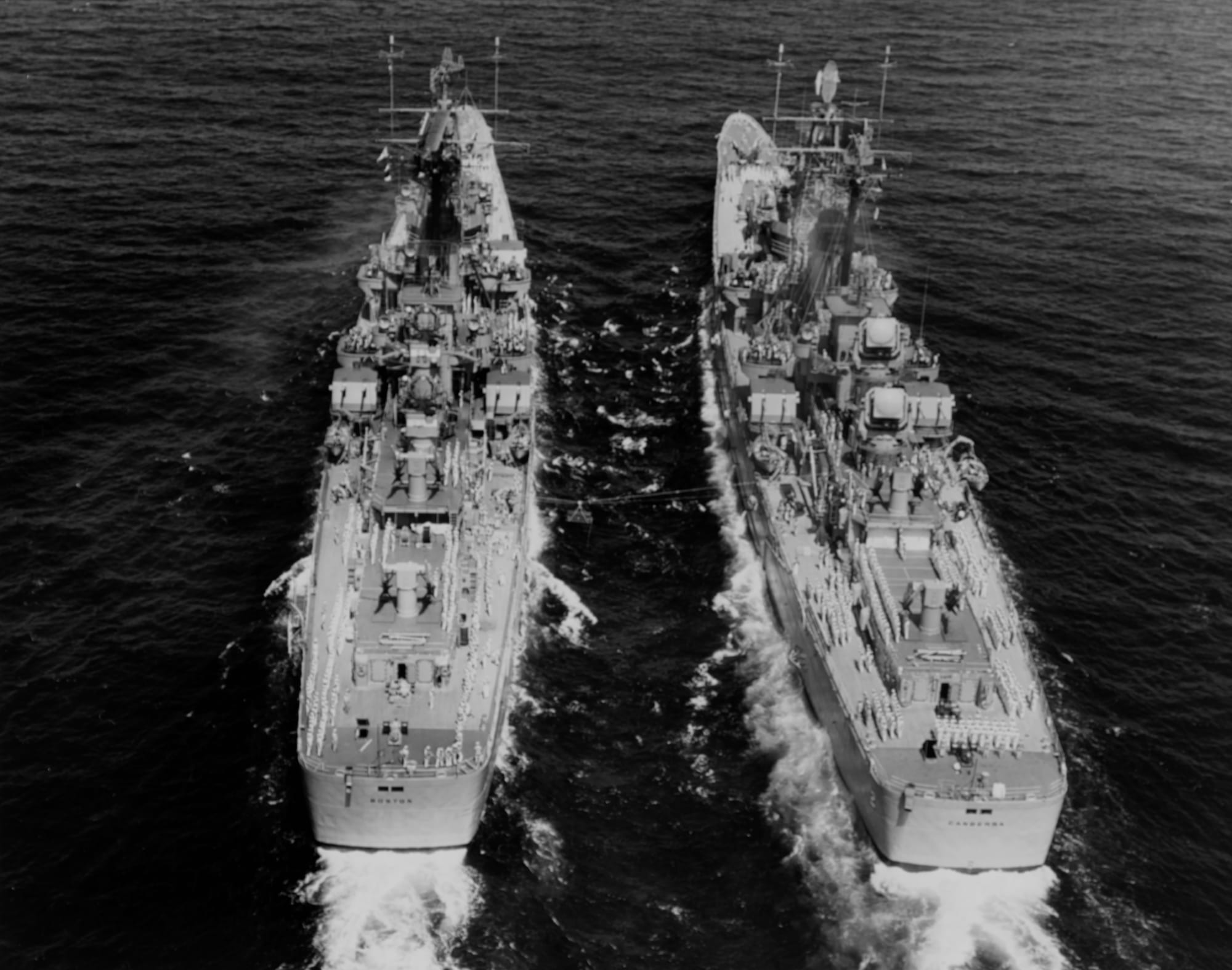
Contexto · el crucero USS Boston, alcanzado por fuego amigo durante el incidente de la DMZ
USS Boston (CAG-1) and USS Canberra (CAG-2) underway in the Caribbean Sea on 22 April 1958 (NH 98289).jpg · Wikimedia Commons · Dominio público · abrir original
La noche en cuestión
En 1968, observadores de la Infantería de Marina de EE.UU. y otros puestos avanzados a lo largo de la Zona Desmilitarizada (DMZ) (la franja de unos 9,6 km que separaba el norte y el sur de Vietnam) venían reportando «luces» suspendidas que aparecían de noche justo al norte de la zona e incluso sobre el mar, entre Vietnam del Norte y la isla del Tigre (en manos norvietnamitas). Con el humor negro habitual de la tropa, esos contactos se apodaban «OVNIs». El contexto era el año de la Ofensiva del Tet: cualquier señal de concentración de fuerzas al otro lado de la frontera se leía como preludio de un ataque.
La noche del 15 al 16 de junio la alarma se disparó. Según la crónica de mando de la III Fuerza Anfibia de Marines de ese mes, al final de la tarde del 15 se avistaron en la zona de la DMZ unas 15 aeronaves no identificadas, «que se cree que eran helicópteros enemigos», y desde entonces hubo «numerosos avistamientos, tanto visuales como por radar», de objetos lentos no identificados en la DMZ y hacia el mar, en dirección a la isla del Tigre; otros relatos hablan de cerca de 30 luces; la interpretación inmediata fue que se trataba de helicópteros norvietnamitas M-14 'Hound', de fabricación soviética, transportando hombres y material sobre la frontera. Temiendo otra concentración al estilo del Tet, el Mando Aliado envió más cañones antiaéreos a la frontera, puso en alerta a cazabombarderos F-4 Phantom en la base aérea de Da Nang y pidió a los buques de guerra disponibles que patrullaran la costa de la DMZ.
Lo que siguió fue una cascada de fuego amigo. Poco después de la medianoche, la lancha rápida PCF-19 de la Armada estadounidense fue alcanzada por dos cohetes disparados desde una fuente no identificada y se hundió en minutos; cinco de sus siete tripulantes murieron, y el guardacostas USCGC Point Dume rescató a dos supervivientes malheridos antes de recibir ella misma fuego de una aeronave no identificada. La noche del 16 al 17 de junio, el crucero USS Boston (CA-69) resultó dañado por la metralla de misiles aire-aire caídos cerca y por fuego automático; y frente a la isla del Tigre, el destructor australiano HMAS Hobart, tras detectar una aeronave evaluada como «amiga» que siguió acercándose, fue alcanzado por tres misiles (el primero en el centro del costado de estribor) que mataron a dos marineros, el marinero R. J. Butterworth y el jefe electricista R. H. Hunt, e hirieron a varios más; el cañón de proa disparó cinco proyectiles contra el atacante, que se alejó. La tripulación recogió fragmentos de los misiles, que luego se identificaron como de origen estadounidense.
La Junta de Investigación de la Armada de EE.UU., que examinó el caso también para el gobierno australiano, recuperó fragmentos de misiles aire-aire Sparrow estadounidenses y concluyó que quienes habían atacado a los buques eran, por error, cazas F-4 Phantom de la Fuerza Aérea de EE.UU. Un factor técnico clave: para evitar que los blancos grandes saturaran la pantalla, el radar del Phantom tenía un mecanismo de corte, de modo que el eco de un buque de guerra y el de un helicóptero lento y bajo podían verse casi iguales. La crónica de mando de los Marines confirma la «actividad OVNI» que precedió a los ataques y anota que «aún no se ha recibido ninguna prueba sólida de esas aeronaves»; el detonante fueron las luces, pero las muertes las causó el fuego propio.
Por qué importa
El caso importa por dos razones distintas. La primera es documental: un episodio en un teatro de guerra con documentación oficial de primera mano (la investigación de la Armada de EE.UU. y los H-grams de la Naval History and Heritage Command).
La segunda es analítica, y es la que lo hace valioso más allá del exotismo. Este no es un caso donde la pregunta interesante sea «¿qué eran las luces?» (las lecturas que se han propuesto van de ecos de radar ambiguos o inversiones de propagación a, ya fuera de lo prosaico, helicópteros norvietnamitas reales, o una mezcla) sino un estudio de manual de cómo la ambigüedad de un fenómeno aéreo no identificado se convierte en letal en un entorno de combate. Las «luces» fueron el detonante, pero las muertes las causó el fuego amigo: cazas F-4 propios disparando contra blancos que su radar no podía distinguir de un buque. Esta cadena se repite una y otra vez (contacto radar-visual ambiguo → respuesta armada → identificación equivocada) y la DMZ de 1968 es su expresión más trágica, con una lancha hundida, un crucero y un destructor alcanzados y varios muertos.
Por eso la lectura no se reduce a «puro error». La hipótesis oficial de la época (incursiones reales de helicópteros o aeronaves norvietnamitas) era plausible en ese frente, aunque la propia crónica de los Marines anotó que no se había recibido «ninguna prueba sólida» de esas aeronaves; y los contactos lentos, visuales y de radar, que se repitieron hacia la isla del Tigre nunca se fijaron del todo. Está documentado por militares y bien explicado por candidatos prosaicos, significativo no como prueba de anomalía sino como caso testigo del peligro operacional de la ambigüedad UAP.
Lo que queda en papel
Evidencia documentada
- Crónica de mando de la III Fuerza Anfibia de Marines (junio de 1968): unas 15 aeronaves no identificadas «que se cree que eran helicópteros enemigos» el 15 de junio y, desde entonces, «numerosos avistamientos, tanto visuales como por radar», de objetos lentos en la DMZ y hacia la isla del Tigre; «ninguna prueba sólida» de esas aeronaves.
- Noche del 15-16 de junio de 1968: unas 30 luces lentas sobre el sector oriental de la DMZ, interpretadas como helicópteros norvietnamitas M-14 'Hound'.
- Respuesta aliada: refuerzo de cañones antiaéreos en la frontera, cazas F-4 Phantom en alerta en Da Nang y buques de guerra patrullando la costa de la DMZ.
- Hundimiento de la lancha rápida PCF-19 por dos cohetes de fuente no identificada; 5 de 7 tripulantes muertos; el USCGC Point Dume rescató a dos supervivientes y luego recibió fuego.
- Daños al crucero USS Boston (CA-69) e impacto de misiles Sparrow sobre el HMAS Hobart frente a la isla del Tigre: 2 muertos (el marinero R. J. Butterworth y el jefe electricista R. H. Hunt) y varios heridos; fragmentos de los misiles identificados como estadounidenses.
Ver 2 evidencias más
- Junta de Investigación de la Armada de EE.UU.: fragmentos de misiles aire-aire Sparrow estadounidenses → los atacantes fueron cazas F-4 Phantom de la USAF por error; el mecanismo de corte del radar del Phantom confundía el eco de un buque con el de un helicóptero lento.
- La crónica de mando de los Marines confirma la «actividad OVNI» previa a los ataques (documento desclasificado de la era de Vietnam).
Fuentes
- Naval History and Heritage Command, H-Gram 019-1: «Swift Boat Disappearance» (PCF-19 y el incidente de la DMZ, junio de 1968) — Fuente oficial de la Armada de EE.UU. sobre el hundimiento de la PCF-19 y el fuego amigo sobre Boston y Hobart.
- Project 1947, UFO Historical Revue #14: «Air Force UFO Documents, Vietnam Era — HMAS Hobart» — Reproduce el relato oficial de la Real Armada Australiana sobre el ataque al Hobart y el extracto de inteligencia de la crónica de mando de la III Fuerza Anfibia de Marines (junio de 1968).
- Royal Australian Navy — «Hobart UFOs» (memorando de veteranos de la RAN) — Relato australiano del impacto sobre el HMAS Hobart y sus bajas.
- «Navy ship HMAS Hobart hit during Vietnam UFO encounter?» — UFO Evidence (agregador, fuente secundaria; archivo del caso, DMZ, 15 jun 1968) — Compilación de la cronología del episodio de la DMZ.