1987·Embalse Vranov nad Dyjí · Moravia del Sur
Checoslovaquia.Vranov nad Dyjí · Mi-24
El 12 de julio de 1987, poco después del mediodía, la tripulación de un helicóptero Mi-24 del 51.º Regimiento checoslovaco fue guiada por radar hacia un blanco junto a la frontera austríaca y vio durante alrededor de un minuto un objeto oscuro, cilíndrico y sin alas sobre el embalse de Vranov. Recibió orden de fuego y no disparó por los bañistas; los pilotos estimaron después velocidades de 60 a 2.700 km/h. Los registros se destruyeron por orden, y el relato procede de una crónica del regimiento (1998) y de una entrevista al piloto (1999).
Tier B · Indiciario¿Qué significan? →
Evidencia limitada: un solo testigo, un testimonio recogido años después o un relato sin documentación primaria de la época.
Qué fue
55%causa natural o humana
Lo más probable es una causa ordinaria que nadie ha identificado
Ver el reparto entre las seis explicaciones
Causa natural o humana
Sin causa conocida
Imagen de contexto (no es un documento del caso)
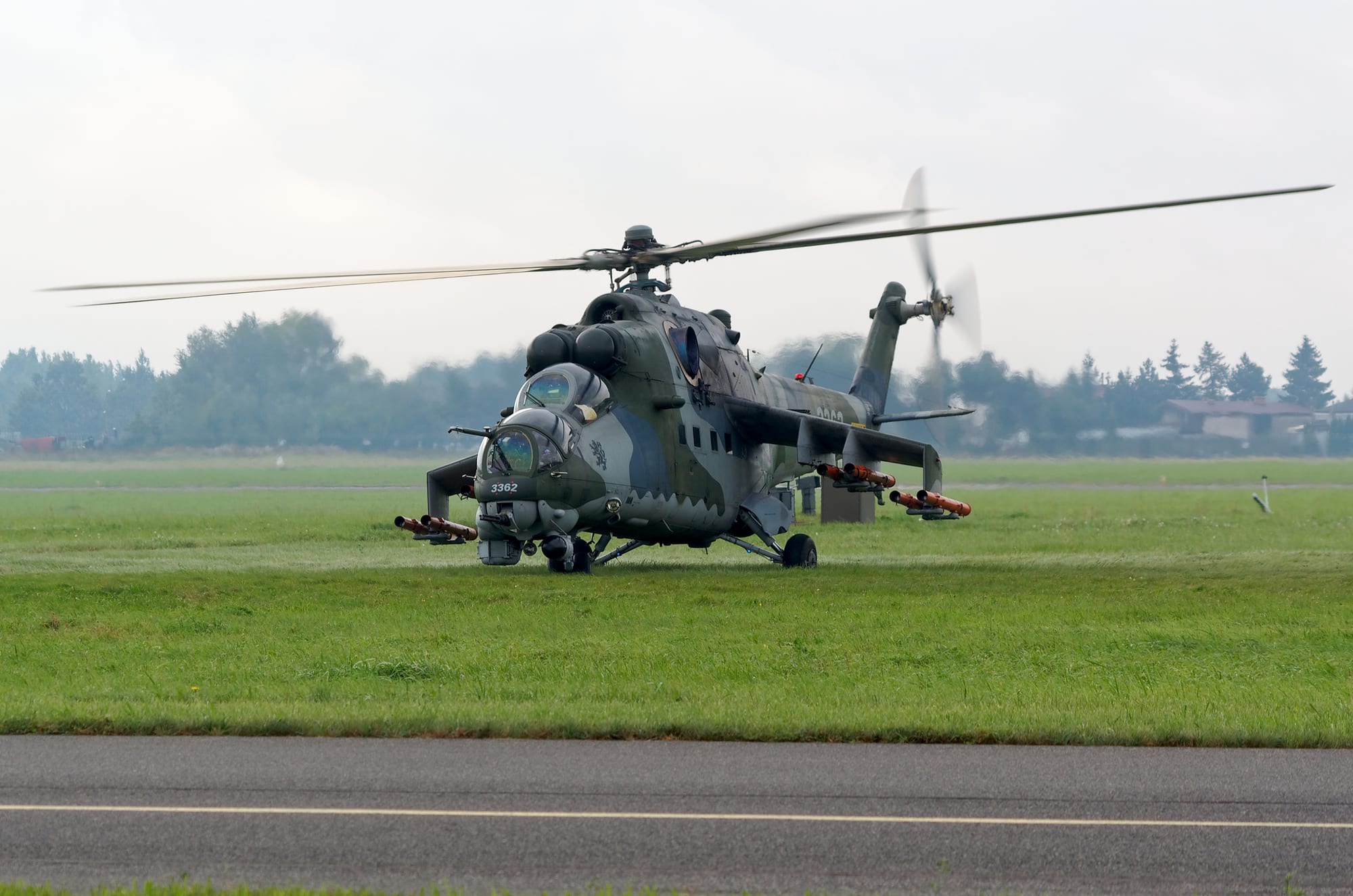
Contexto · un helicóptero Mil Mi-24, el tipo implicado en el incidente de Vranov nad Dyjí
Czech Air Force Mil Mi-24 Hind 3362 - Radom Air Show - 20180825 0926 4675 DxO.jpg · Wikimedia Commons · CC BY-SA 4.0 · abrir original
La noche en cuestión
El 12 de julio de 1987 (un domingo de verano con el embalse de Vranov nad Dyjí, en Moravia del Sur, lleno de bañistas) la tripulación de un helicóptero de combate Mi-24 del 51.º Regimiento de Helicópteros checoslovaco, de guardia de defensa aérea en Božice, recibió poco después del mediodía la orden de despegar hacia Vranov. Ya en la zona, el puesto de interceptación en tierra le informó de un blanco de radar en Austria, cerca de la frontera, y le ordenó subir a 2.000 metros. La tripulación la formaban el capitán Čestmír Tesařík (piloto), el teniente Ivan Pospíchal (operador) y el teniente Š., técnico de a bordo, identificado en relatos posteriores como Milan Šero. El relato conocido procede de dos fuentes: un capítulo de la historia del regimiento escrita por el piloto Jaroslav Špaček, adelantado en la revista L+K en junio de 1998, y una entrevista a Tesařík, ya teniente coronel, grabada el 10 de agosto de 1999 para el programa Fakta de ČT-1 y transcrita por el grupo checo Projekt Záře.
El control condujo al helicóptero a lo largo de la frontera entre Vranov y Slavonice con avisos de que el blanco se acercaba a gran velocidad, pero entre los cúmulos, que iban de 1.500 a más de 4.000 metros, la tripulación no veía nada y pensó primero que el radar seguía una nube o un planeador. Cuando el control anunció el blanco a 200 metros, ya por encima de las nubes a unos 3.500 metros, Pospíchal vio pasar sobre ellos en sentido contrario un objeto oscuro con forma de cigarro; Tesařík viró, lo vio también e informó al control de que parecía «un avión sin alas». Según la entrevista, lo mantuvieron en el visor alrededor de un minuto («ni siquiera dos minutos, es demasiado»): un objeto cilíndrico de 10 a 15 metros, a 500 o 1.000 metros, que brillaba al sol «como aluminio o como la cabina de un avión» y que maniobraba siempre hacia el sol, lo que impedía apuntarle. Desde tierra llegó la orden de abrir fuego; estaban sobre el embalse lleno de gente y, según Tesařík, él y el operador decidieron no disparar e informar de que habían perdido el blanco. Después, dentro de una nube, el control les anunció el blanco de frente a su misma altura y luego que les había pasado a unos 500 metros. Tras cerca de hora y media, que acabó sobre Dukovany, volvieron a Božice por falta de combustible; según lo que les contaron desde el puesto de control, el radar siguió el blanco hacia Brno, Jaslovské Bohunice y Bratislava, y lo perdió allí o, en la versión de Tesařík, ya en Hungría.
Tras el aterrizaje la tripulación recibió la orden de destruir todos los registros de radiocomunicaciones y de parámetros de vuelo. En 1999 Tesařík dijo que, «por suerte», no queda ningún documento, y atribuyó la destrucción a que el controlador se había precipitado al dar la orden de fuego y, al comprobarse que el blanco no era un avión, se prefirió borrarlo todo; añadió que con ellos no se investigó nada más. Por iniciativa propia, los pilotos calcularon después la velocidad del blanco cronometrando las distancias que les iba dando el control, y obtuvieron un rango de unos 60 a 2.700 km/h. El caso trascendió años después, sobre todo a partir de la crónica del regimiento publicada en 1998 y de la entrevista televisiva de 1999, y ha sido reconstruido desde entonces por medios y portales checos a partir de esos dos textos.
Las pruebas tienen límites. Según ambas fuentes el blanco sí fue seguido por el radar de tierra, pero no se conservan trazas, grabaciones ni fotografías, y la narrativa descansa en testimonios recogidos más de una década después. El avistamiento fue diurno, con el objeto casi siempre a contraluz o a gran distancia: el propio Tesařík dijo que no pudieron distinguir detalles porque brillaba, y que no sabría decir si tenía puntas o era como un barril. Las velocidades de 60 y 2.700 km/h son cálculos de cabina a partir de avisos de distancia del control, no mediciones de sensor independientes. Tesařík no ofreció ninguna explicación y dijo que muchos avistamientos se pueden explicar, pero subrayó que lo vieron los tres y de forma independiente. El propio Tesařík aporta dos datos que pesan en contra de lo anómalo: la otra tripulación de guardia, que patrullaba sobre Mikulov y no registró nada, escoltaba en ese momento a un helicóptero que volaba a lo largo de la frontera por el lado austríaco; y tres o cuatro veces el control les anunció el blanco a 500 metros sin que vieran nada. No se ha localizado en la literatura escéptica una explicación mundana específica y consensuada para este caso; un helicóptero o una aeronave ligera a contraluz, o un eco de radar asociado por error a lo que vio la tripulación, son candidatos que las fuentes no permiten descartar ni confirmar.
Por qué importa
Según los relatos recogidos más de una década después, el caso combina una misión de interceptación guiada por el radar de defensa aérea, una orden de fuego que la tripulación no cumplió por la presencia de bañistas, velocidades estimadas fuera del alcance de un helicóptero y una observación visual diurna compartida por los tres tripulantes. La orden de destruir los registros es en sí misma un dato sobre cómo el aparato militar de un Estado socialista gestionaba un incidente que no controlaba, aunque el propio piloto la atribuyó a una orden de fuego precipitada más que a lo anómalo del objeto.
La calibración, sin embargo, debe ser sobria sobre lo que esto prueba. La fortaleza del caso es la cualificación de los testigos y la coincidencia entre la crónica de 1998 y la entrevista de 1999. La debilidad es estructural: no sobrevive ningún registro instrumental, de modo que las cifras cinemáticas más llamativas (los 2.700 km/h) no pueden auditarse y son, en rigor, cálculos a partir de avisos de radar retransmitidos por radio; el contacto visual duró alrededor de un minuto, a contraluz y entre nubes de desarrollo; y el testimonio directo recogido en las fuentes es el del piloto, mientras que el de los otros dos tripulantes llega a través de la crónica del regimiento. A eso se suma que, según el piloto, había un helicóptero volando junto a la frontera por el lado austríaco y que el radar les anunció varias veces el blanco a 500 metros sin que vieran nada, lo que hace más plausible una confusión con tráfico convencional. En conjunto, el caso es un apoyo modesto: testimonio militar coherente, huérfano de la instrumentación que distinguiría una anomalía genuina de una aeronave convencional mal identificada o de un error al asociar un eco de radar con lo que la tripulación vio.
Lo que queda en papel
Evidencia documentada
- Crónica del 51.º Regimiento de Helicópteros por Jaroslav Špaček (L+K 6/1998; libro «Jednapadesátý», Votobia)
- Entrevista a Tesařík para ČT-1 (10 ago 1999): blanco seguido por el radar de tierra, visual de alrededor de un minuto, orden de fuego no cumplida
- Guiado continuo desde el puesto de interceptación en tierra, con distancias y rumbos del blanco retransmitidos por radio
- Orden, tras el aterrizaje, de destruir los registros de radiocomunicaciones y parámetros de vuelo; según el piloto no queda ningún documento
Fuentes
- Projekt Záře — «Incident nad Vranovem»: texto de L+K 6/1998 y transcripción de la entrevista a Tesařík en ČT-1 (10 ago 1999) — Reproduce el relato de la crónica del regimiento y la entrevista sin editar; los comentarios de lectores al pie no son fuente.
- PraguePig — traducción al inglés del capítulo de Špaček (fuente secundaria) — Traducción de 2018; añade los nombres completos de los tripulantes.
- ArmyWeb — «V roce 1987 se český armádní vrtulník střetl s pravděpodobným UFO» (fuente secundaria) — Resumen de prensa de 2022; da una duración de dos horas y media que no coincide con la hora y media que dijo el piloto.
- Aktuálně.cz — reconstrucción del incidente de Vranov (fuente secundaria)
- AARO — Fiscal Year 2024 Consolidated Annual Report on UAP (14 nov 2024)