1991·Alma-Ata (Almaty), near Mount Kok-Tyube
Kazakhstan.Alma-Ata · police patrol + CIA cable
In 1991, militiamen (police) on patrol in Alma-Ata (then capital of Soviet Kazakhstan) reported an unidentified object near Kok-Tyube Mountain: a kind of fire at the summit whose flames moved up and down and from which red rays burst; according to the item, the patrol car that drove up stopped dead and the officers could not recall the way back. The episode was recorded in a CIA FOIA reading-room document. A documented case but of ambiguous phenomenon, included for its institutional trail rather than its strength.
Tier B · IndicativeWhat do they mean? →
Limited evidence: a single witness, testimony gathered years later, or an account without contemporary primary documentation.
What it was
68%natural or human cause
Most likely an ordinary cause that no one has identified
See the split across the six explanations
Natural or human cause
No known cause
Primary documents
FBIS, 'Alma-Ata patrolmen report UFO sighting': the TASS English dispatch of 19 April 1991 (1 p.)
Foreign Broadcast Information Service (FBIS) transcript of the TASS dispatch by correspondent Vasiliy Danshin, citing the newspaper Vechernyaya Alma-Ata. It says that militiamen on patrol saw late in the afternoon a kind of fire at the top of Kok-Tyube mountain; that at about 200 metres a few rays swept across the car and stopped it; that the object dimmed its 'searchlights' and disappeared as they moved towards it, and that back at the police station none could recall the way back. It adds that the radio talks were recorded on tape and that there were 'impartial witnesses'. It is the case's contemporary record, and it relays the press account, not an investigation. Released by the CIA in May 2000.
CIA · FBIS (archive.org, cia-readingroom-document-0005517792) · Public domain · US Government work · open original
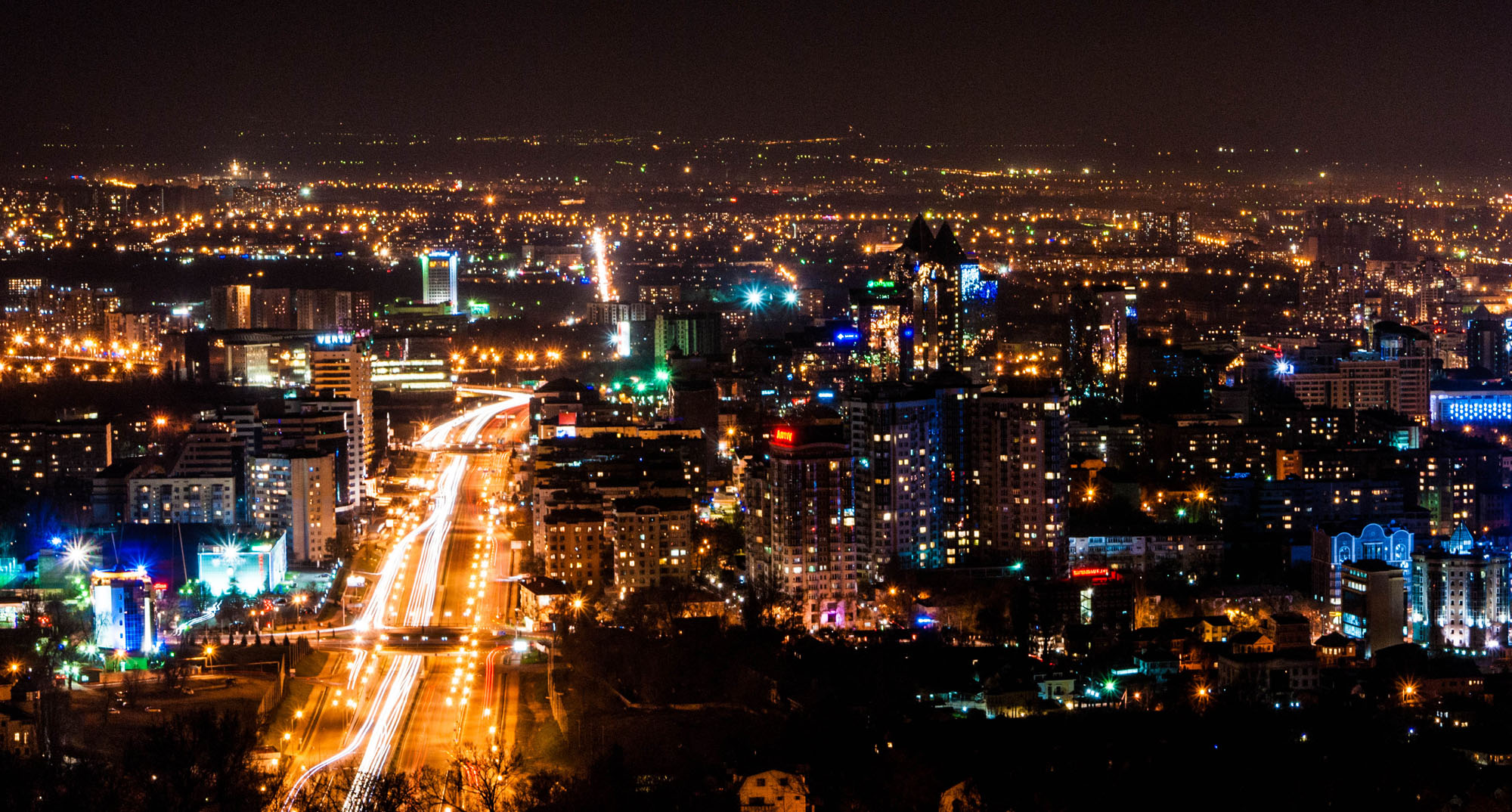
Context · Almaty (Alma-Ata, Kazakhstan), near Kok-Tyube mountain
Almaty, Kok-tobe exposition 3.jpg · Wikimedia Commons · CC BY-SA 3.0 · open original
The night in question
Late one afternoon in 1991, a patrol of militiamen (Soviet police) approaching Kok-Tyube Mountain (a recreation area on the outskirts of Alma-Ata, capital of the then Kazakh Soviet Socialist Republic) observed what they described as a fire at the mountain's summit. According to the report, the flames moved up and down and then an array of red rays burst out of the centre. Other militiamen also noticed the object: the driver of the patrol car said he and his comrades drove up to the 'flaming object' and that, a mere 200 metres from the hovering UFO, a few rays swept across the car and it stopped dead; when they moved towards it, the object dimmed its 'searchlights' and disappeared. Back at the police station, none of the patrolmen could recall the way back from the mountain. The item adds that radio talks about the object were recorded on tape and that there were 'impartial witnesses'.
The case's interest is its documentary trail, and the chain is worth spelling out. The sighting was published by the local newspaper Vechernyaya Alma-Ata and circulated in English by the Soviet agency TASS, in a dispatch by its correspondent Vasiliy Danshin, on April 19, 1991 at 16:03 GMT; the FBIS press-monitoring service picked it up in London and distributed it the next day to a long list of addressees, including NORAD, Space Command, the DIA and several NASA centres, and is now held in the CIA FOIA reading room under the title 'ALMA-ATA PATROLMEN REPORT UFO SIGHTING.' That is, the CIA document is not a field investigation by the agency but the record of a Soviet press report, a nuance that lowers, not raises, the evidential weight: what the CIA retained was a news item, not its own operational file.
The framing is deliberately cautious. The dispatch proposes no explanation and no later investigation is known; its most striking details (the stalled car, the collective amnesia, the radio tape) come only through a press item, with no officer named and no tape ever published. Its core description (fire on a recreational summit, red rays) has not been checked against ordinary causes either, and a misunderstanding in the press→TASS→archive chain cannot be ruled out. It is included for its documentary value (police witnesses + CIA archive), not for discriminating between hypotheses: it is a floor case, anchored on its limitation.
Why it matters
It documents the uncommon crossover of a Soviet press report about police witnesses that ended up archived by U.S. intelligence (CIA FBIS/FOIA). It adds a second point in Kazakhstan, with clear limits: institutional witnesses, yes, but an ambiguous phenomenon, a second-hand journalistic source and plausible mundane explanations.
The case also serves a calibrating function: it illustrates that 'CIA document' is not synonymous with 'CIA investigation.' Much of the UAP material circulating with U.S. intelligence letterhead is in fact open-source monitoring (FBIS systematically collected the Soviet-bloc press), so the agency's stamp certifies that the report existed and was of analytical interest, not that its content was verified. The datum is real as a report, ambiguous as a phenomenon.
It is also worth placing the episode in its historical moment. The spring of 1991 was one of accelerating Soviet collapse (in December of that year, in Alma-Ata itself, the Protocol would be signed that shaped the Commonwealth of Independent States and sealed the dissolution of the USSR) and glasnost had relaxed control over the press, which began publishing with unusual freedom reports of UFOs and the paranormal previously suppressed. The proliferation of items like the one in Vechernyaya Alma-Ata partly reflects that editorial opening: it does not imply an increase in the phenomenon, but in the space the press granted it. This reinforces the cautious reading: a report from institutional witnesses (militiamen) is preferable to an anonymous one, but the source is still journalistic, the phenomenon admits mundane causes, and the context favored the circulation of this kind of account. That is why the case adds a geographic point in Kazakhstan and a documentary link, without any claim to discriminate between hypotheses.
What's left on paper
Documented evidence
- A patrol of militiamen (Soviet police) as witnesses, near Kok-Tyube Mountain, Alma-Ata (1991).
- Report circulated by TASS / Vechernyaya Alma-Ata on Apr 19, 1991, and held in a CIA FOIA reading-room document ('ALMA-ATA PATROLMEN REPORT UFO SIGHTING').
- The CIA document is the record of a Soviet press report, not a field investigation by the agency.
- Phenomenon described: fire at the summit with flames going up and down and red rays; according to the item, the patrol car stopped dead 200 m away and the officers could not recall the way back. No explanation proposed and no investigation known.
Sources
- CIA FOIA Reading Room — 'ALMA-ATA PATROLMEN REPORT UFO SIGHTING' — As of Oct 2026 the URL redirects to the reading room's home page; the document remains available on the archive.org mirror.
- CIA (FBIS) — 'Alma-Ata patrolmen report UFO sighting', TASS in English, 19 Apr 1991 (DOC 0005517792; archive.org mirror) — Primary source: the full TASS dispatch as transcribed by FBIS.
- CIA (FBIS) — same item with the FBIS London distribution header, 20 Apr 1991 (DOC 0000112342; archive.org mirror) — Shows the addressees: NORAD, USSPACECOM, DIA, NASA and others.
- AARO — Fiscal Year 2024 Consolidated Annual Report on UAP (Nov 14, 2024)
Related cases