1954·Stadio Artemio Franchi, Florence
Italy.Florence · UFO over the stadium + 'angel hair'
On October 27, 1954, during a Fiorentina football match, ~10,000 people at the Stadio Artemio Franchi saw objects over the stadium and the game stopped. A filamentous substance ('angel hair') fell, which Professor Giovanni Canneri (University of Florence) analyzed by spectrography: boron, silicon, calcium and magnesium, non-radioactive. There is an open skeptical debate (migrating spiders, according to skeptic James McGaha).
Tier B · IndicativeWhat do they mean? →
Limited evidence: a single witness, testimony gathered years later, or an account without contemporary primary documentation.
What it was
60%natural or human cause
Most likely explanation: animal
See the split across the six explanations
Natural or human cause
No known cause
Context image (not a document from the case)
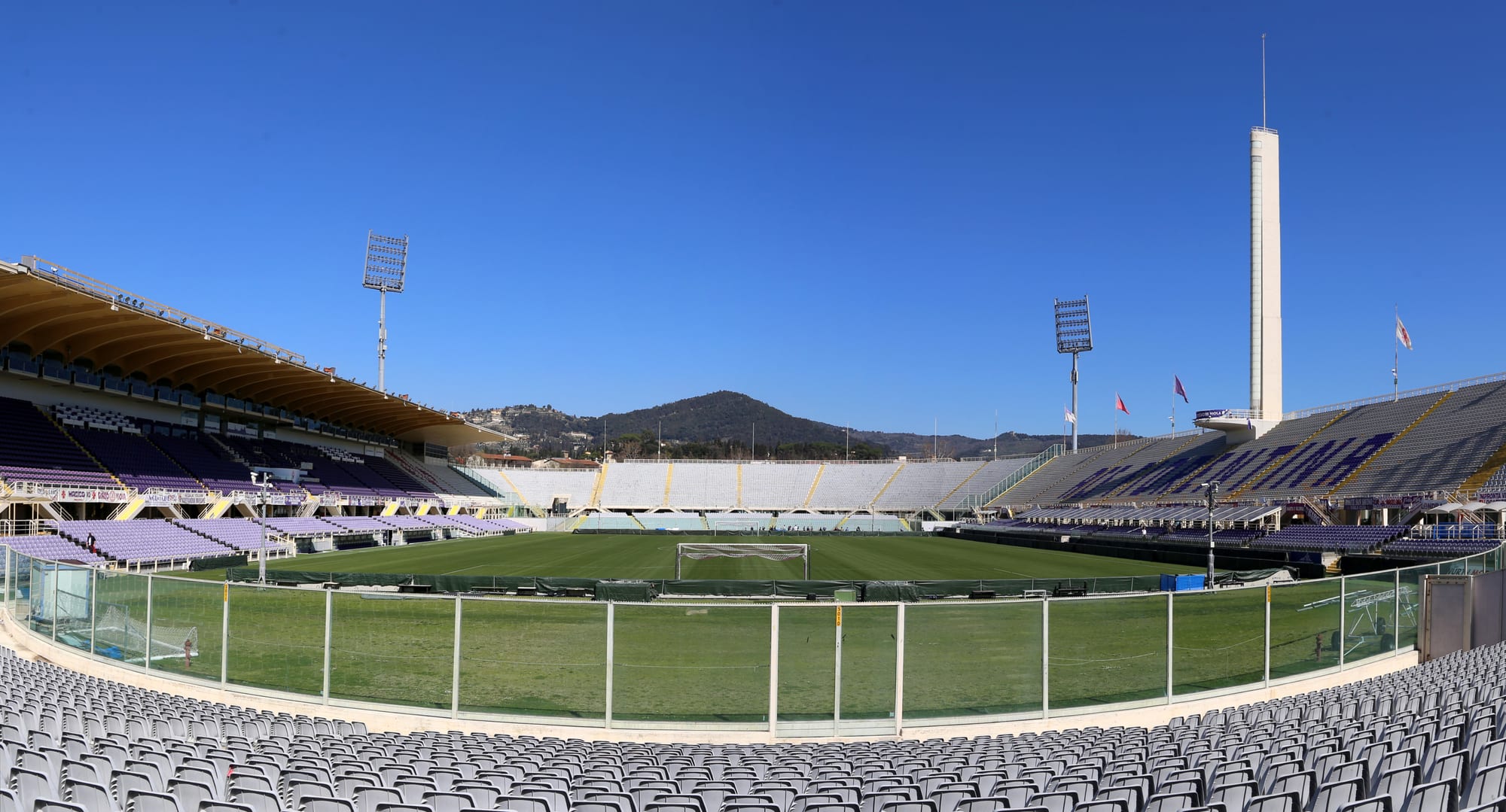
Context · the Florence stadium, over which the UFO was seen during a match
Firenze, stadio artemio franchi, campo da gioco, 10,0.jpg · Wikimedia Commons · CC BY 3.0 · open original
The night in question
On October 27, 1954, during a Fiorentina football match at Florence's municipal stadium, today the Stadio Artemio Franchi (against Pistoiese, per the usual record of the case), about 10,000 people turned their attention shortly after half-time. Silence fell over the stands, spectators pointed to the sky, and the players stopped the game upon seeing one or more objects over the stadium: variously described as egg-shaped, cigar-shaped or glowing spheres, with flashes. The episode falls within the Italian 'wave' of sightings of autumn 1954, a period of intense, geographically widespread reports across the peninsula. Among the witnesses were named figures. Fiorentina player Ardico Magnini, who had played for Italy at the 1954 World Cup, recalled it sixty years later: "something that looked like an egg that was moving slowly, slowly, slowly", while silver glitter came down from the sky; fan Gigi Boni saw several objects "like Cuban cigars" that moved very fast and then stopped, in a scene lasting a couple of minutes. La Nazione journalist Giorgio Batini said he received hundreds of phone calls about the sightings that day, which recurred in many Tuscan towns that day and the following ones; the paper's headline said "glass fibres" were falling on Tuscan cities after "globes and flying saucers" passed by.
During the episode a silvery, filamentous substance known as 'angel hair' (capelli d'angelo) fell in quantity, draping over rooftops, wires and the pitch itself, then sublimating or disintegrating in about an hour. Batini and others took samples to the laboratory of Professor Giovanni Canneri, of the University of Florence's Institute of Chemical Analysis; spectrographic analysis indicated it contained boron, silicon, calcium and magnesium, and was not radioactive. A detail relevant to replicability: the analysis process itself destroyed the sample, so no physical material survives for re-examination with modern techniques.
There is skeptical discussion about the origin of the 'angel hair,' and the most-cited natural hypothesis is the silk of migrating (ballooning) spiders, which in autumn rise in great numbers and form filaments that can fall in clumps; seasonally, late October in Tuscany is plausible for that phenomenon. The objection from the case's proponents is that the measured mineral composition (boron, silicon, calcium, magnesium) does not fit naturally with pure spider silk, although surface contamination cannot be ruled out. The case therefore remains open: without a resolved object, without preserved material, and with a reasonable mundane hypothesis under debate.
Why it matters
Florence 1954 is a mass sighting: on the order of ten thousand witnesses in a stadium, a stopped match, named witnesses, and a physical sample analyzed by a university.
The mass of witnesses at an announced public event (a league match, with press present) makes a fabrication or isolated-observer-error explanation very hard to sustain: something objective happened over Florence that afternoon, and the fall of visible filaments is corroborated by the very collection of the sample. The visual observation was of objects at a distance, without instruments, and the only physical element was precisely the 'angel hair,' whose natural explanation (migrating spider silk) is solid and seasonally consistent.
The chemical residue is ambiguous: it neither confirms an exotic origin nor reconciles cleanly with spider silk, and the destruction of the sample prevents settling the question. Many honest witnesses and a real sample can coexist with a plausible mundane explanation, and careful calibration requires holding both at once without collapsing them into a conclusion the evidence does not support.
What's left on paper
Documented evidence
- ~10,000 witnesses at the Stadio Artemio Franchi; the Fiorentina match stopped.
- Named witnesses: player Ardico Magnini ("something that looked like an egg"), fan Gigi Boni ("like Cuban cigars") and journalist Giorgio Batini of La Nazione.
- 'Angel hair' fall; sample analyzed by Prof. Giovanni Canneri (Univ. of Florence): boron, silicon, calcium, magnesium; non-radioactive.
- Skeptical debate: natural hypothesis of migrating (ballooning) spider silk, seasonally plausible in October, but the measured mineral composition does not fit cleanly with pure silk; sample destroyed in the analysis.
- La Nazione headline (1954): "glass fibres" fall on Tuscan cities after "globes and flying saucers" pass by.
Sources
- Wikipedia — UFO sightings in Italy (Florence stadium, 1954) — Secondary source (encyclopedia)
- Enigma Labs — Soccer Match UAP Sighting Over Tuscany, Italy (1954)
- BBC News Magazine — «The day UFOs stopped play» (2014) — Testimony from Magnini and Boni, the La Nazione headline, Canneri's analysis and the debate between McGaha, Pinotti and Ball
Referenced by 1 case
Related cases