1954·Cennina, Bucine, Tuscany, Italy
Italy.Rosa Lotti · Cennina
On 1 November 1954, the Tuscan peasant Rosa Lotti said she found in a clearing at Cennina an object shaped like a spindle or double cone, of polished metal and with a small glass door. Beside it were two beings a metre tall, in grey suits and helmets, who took five carnations and a black item from her; the carabinieri found no traces at the spot. The case is one of the most famous of the great Italian wave of 1954.
Tier B · IndicativeWhat do they mean? →
Limited evidence: a single witness, testimony gathered years later, or an account without contemporary primary documentation.
What it was
58%natural or human cause
Most likely an ordinary cause that no one has identified
See the split across the six explanations
Natural or human cause
No known cause
Primary documents
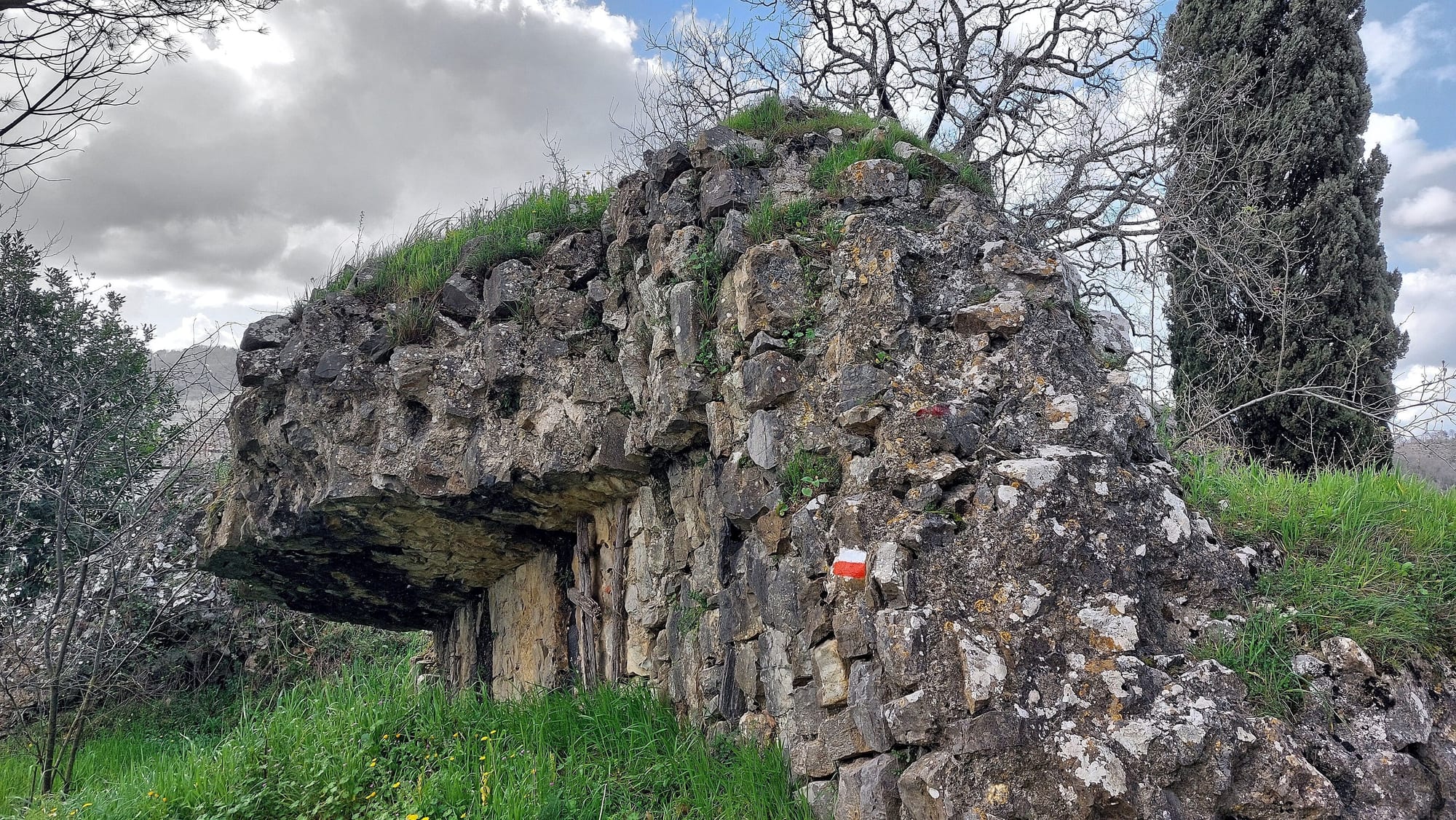
Context · Cennina (Bucine, Tuscany, Italy)
La pietra tagliata - Cennina - Bucine.jpg · Wikimedia Commons · CC BY 4.0 · open original
L'Unità, 3 Nov 1954: 'Romanzesco incontro coi marziani narrato da una contadina di Arezzo'
The unsigned contemporary report, two days after the event. It summarises the complaint the peasant woman Lotti lodged with the carabinieri: at 7:30 on 1 November, on her way to Cennina, two one-metre strangers in a grey 'diving-suit-shaped' outfit, leather helmet, normal face and very small teeth took from her hands five red carnations she was taking to church and 'a black cup'; about five metres away stood a metal double-cone craft, upright, about two metres tall, with a glass hatch and two seats. It adds that in the village she is held to be 'perfectly sane, calm and serious', that carabinieri and civilians went to the site without finding the craft or its occupants, and that 'a careful examination of the ground did not yield even a small trace'. A copy of the full page at archive.org; the newspaper's rights are unclear, so it is given as a link.
L'Unità · Internet Archive · view source
The night in question
The autumn of 1954 brought to Italy (and much of Europe) one of the most intense sighting waves in history. Within it, the Rosa Lotti case became one of the most famous for its character as a close encounter with occupants. On the morning of 1 November 1954 (at 7:30, according to the complaint she filed with the carabinieri; later versions say around 6:30), Rosa Lotti, a 40-year-old peasant and mother of four, was walking from her farm toward the cemetery of Cennina, in Tuscany, carrying a bunch of carnations. On reaching a clearing along the path she stopped dead before an unusual object.
She described it as a large spindle fixed vertically in the ground, a kind of double cone ('like two bells joined at their bases') whose surface shone like very polished metal. In the lower cone was an open glass door, through which two small seats could be seen; in the central, widest part there was a kind of rounded glass following the machine's shape. As she watched, from behind the object emerged two beings a little over a metre tall, of friendly appearance (the elder one laughing) dressed in suits resembling a pilot's. They spoke an incomprehensible language, with sounds that seemed Chinese to her: 'liu, lai, loi'. The two beings snatched the carnations and one of her black stockings; when Rosa protested timidly, the elder returned some flowers but kept five, examined them curiously while laughing, wrapped them in the stocking and threw them inside the spindle through the small opening. Frightened, Rosa fled; when she returned with neighbours, the object and the beings had vanished. The press of the time carries a sparer version: according to L'Unità of 3 November, in her complaint to the carabinieri she wrote that at Poggio d'Ambra, in the municipality of Bucine, two strangers a metre tall, in a grey suit "shaped like a diving suit", a leather helmet, a normal face and very small teeth, took five red carnations and "a black cup" from her, and that some five metres away stood a metal double-cone device about two metres tall, with a glass door and two small seats. The paper added that in the village she was regarded as "perfectly sane, calm and serious", that she ran to the village shouting, and that the carabinieri and villagers who went to the spot found neither the device nor its occupants, and that "a careful examination of the ground did not yield even a small trace" of the device or of their footsteps.
The case fits the dominant pattern of the 1954 wave, in which most reported entities were human-like 'dwarfs', often in diver-type suits or, as here, a pilot's. Later investigators noted that a hole was found in the ground at the site, something L'Unità's report does not mention, and that Rosa Lotti's account had some indirect corroboration from other neighbours regarding the location and sightings in the area, though none directly witnessed the occupants. The CISU entry qualifies that corroboration: the first investigation took place in 1972; two children, Ampelio and Marcello Torzini, said months later that they had seen Lotti talking with the 'little men', but contradicted each other before journalists and their account grew out of a school exercise; flying saucers had been discussed at Lotti's home the night before; and an anonymous postcard sent to the Giornale del Mattino attributed the episode to a prank staged against her. Her simple, consistent testimony contrasted with the enormous media attention it received amid the Italian ufological fever.
Why it matters
Rosa Lotti matters as a representative case of the great European wave of 1954 and as an almost textbook specimen of the single-witness close encounter of the third kind in a rural setting. Its value is twofold: it documents the recurring morphology of that wave (the 'spindle' or double cone and the dwarf occupants in suits) and it allows the study of how a simple account, told by an unsophisticated witness with no desire for notoriety, inserts itself into a cultural frame saturated with 'saucer' news that gave shape to the ambiguous.
The case's strength is Rosa Lotti's apparent sincerity and consistency; its structural weakness is that the entire extraordinary episode (the object and, above all, the beings) rests on a single witness, without direct corroboration of the occupants and without physical evidence: the hole in the ground cited by later investigators is not in the report of the time, according to which the examination of the ground found no trace at all. In the context of a massive wave, with the press publishing similar encounters daily, cultural contagion and the reinterpretation of a real but banal experience (a misidentified object, animals, people) are economical explanations. Rosa Lotti is the human face of the 1954 wave: the reminder that a witness's sincerity and the truth of what they believe they saw are two different things, and that a whole wave of sincere witnesses does not amount to a real object.
What's left on paper
Documented evidence
- Rosa Lotti's testimony (1 Nov 1954) of a spindle/double-cone object of polished metal with a glass door at Cennina
- Two occupants a metre tall, in a grey suit "shaped like a diving suit" and a leather helmet according to the 1954 complaint (a pilot's in later versions), speaking an incomprehensible language ('liu, lai, loi')
- Theft of five red carnations and a black item ("a black cup" in L'Unità's report, a stocking in later versions)
- Hole in the ground cited by later investigators; the 1954 press says the examination of the ground found no trace
- Indirect corroboration from neighbours about the location and area sightings (not of the occupants)
- Context of the great Italian/European wave of autumn 1954, dominated by reports of suited 'dwarfs'
Sources
- UFO Evidence — 'The 1954 Cennina Landing and Encounter with Humanoids'
- UFO Insight — 'The UFO Landing Encounter Of Rosa Lotti'
- Think AboutIt — '1954: Cennina Landing and Encounter with Humanoids'
- CISU — «1954 – Cennina – IR3» (ufo.it, 2015)
- «Romanzesco incontro coi marziani narrato da una contadina di Arezzo», L'Unità, 3 nov 1954, p. 2 — Press of the time: quotes Lotti's complaint to the carabinieri (7:30, Poggio d'Ambra, five carnations and «a black cup») and says the examination of the ground found no traces.
- AARO — Fiscal Year 2024 Consolidated Annual Report on UAP (Nov 14, 2024)
Related cases