1952·Tremonton, Utah
United States.Tremonton film · Navy photographer footage (Utah)
On July 2, 1952, U.S. Navy Chief Photographer's Mate Delbert C. Newhouse filmed in 16mm near Tremonton, Utah a group of ~12 bright objects moving in formation. The Navy photographic labs (Anacostia) analyzed the film and concluded they were not aircraft, balloons or birds; the 1953 Robertson Panel rejected that analysis and held that the motions, sizes and brightnesses 'strongly suggest birds', while recording that positive identification required further data.
Tier A · AcceptableWhat do they mean? →
Institutional evidence: several identified independent witnesses, or contemporary official documentation, without an instrumental record to corroborate them.
What it was
53%no known cause
The evidence is not enough to decide between the explanations
See the split across the six explanations
No known cause
Natural or human cause
Primary documents
DOW-UAP-PR159 · the Tremonton film digitised, 2 July 1952 (PURSUE Release 06)
Department of War · PURSUE Release 06 (18 sep 2026), vía DVIDS · Public domain · US Government work (17 USC §105) · open original
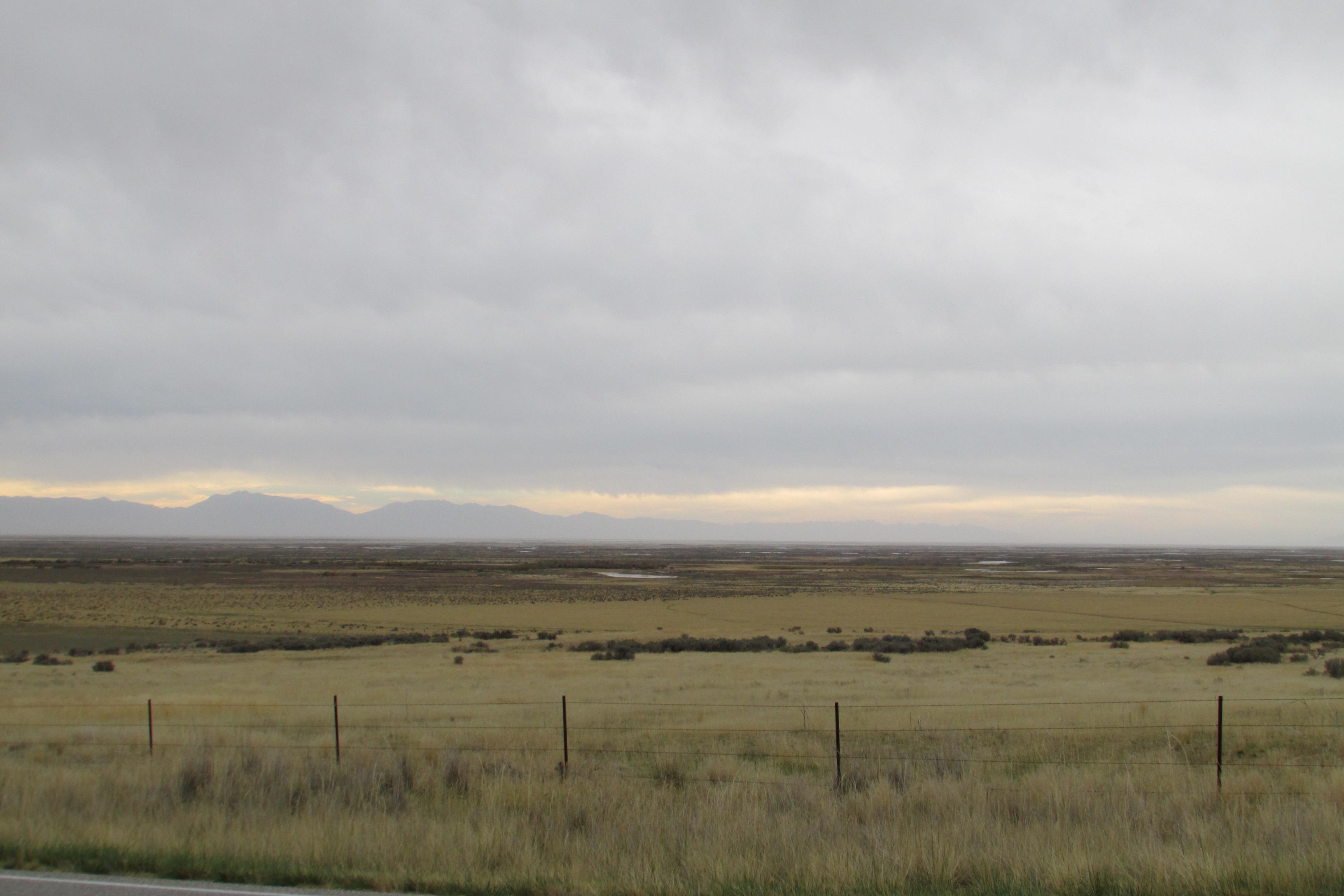
Context · the Bear River valley (Utah), near Tremonton
Bear River Migratory Bird Refuge 2016-10-14 2428.jpg · Wikimedia Commons · CC BY-SA 4.0 · open original
DOW-UAP-D103 · Project Blue Book's photo file on the film, with the index card that shelves it as 'pillow-balloons or birds' five days after the sighting (PURSUE Release 06)
Department of War · PURSUE Release 06 (18 sep 2026) · Public domain · US Government work (17 USC §105)
Robertson Panel report (CIA, 14-18 January 1953), written up by F. C. Durant: 38 pages including the section on Tremonton, the list of objections to the Navy analysis and the inventory of material presented, pillow balloon included
CIA · desclasificado 2013, referencia CIA-RDP79B00752A000300100010-4, vía el espejo público de la sala de lectura de la CIA en archive.org · Public domain · US Government work (17 USC §105) · open original
DOW-UAP-D085 — transmission of the CIA scientific advisory panel report (Robertson Panel, 1953)
Department of War / CIA (PURSUE Release 03) · Public domain · US Government work · open original
Show the other 1 documents
CIA-UAP-002 — Scientific Advisory Panel on UFOs (Robertson Panel), 1952-53
Report of the Scientific Advisory Panel on Unidentified Flying Objects, the so-called Robertson Panel: the committee of scientists convened by the CIA in January 1953, which reviewed the best cases and recommended a public "debunking" policy to reduce the volume of reports. It is one of eighteen CIA documents (CIA-UAP-002) released in the third PURSUE release on 12 June 2026, together with Battelle's Special Report No. 14, the official history of the U-2 and OXCART programs, which acknowledges that many reports from the 1950s and 1960s were flights of those spy planes, and foreign-intelligence reports. It shows that the CIA treated the phenomenon as a management problem; it does not prove the objects were anomalous.
Central Intelligence Agency (PURSUE Release 03) · Public domain · US Government work · open document
Robertson Panel
Report of the five-scientist panel convened by the CIA from 14 to 18 January 1953, signed on 17 January and included in the meetings report written by F. C. Durant (CIA-RDP79B00752A000300100010-4). The panel reviewed cases supplied by ATIC and two films, Great Falls (1950) and Tremonton (1952): it rejected the Navy's conclusion that the Tremonton objects were 'self-luminous' and leaned towards birds, and attributed the Great Falls objects to reflections from aircraft. It concluded there was no direct threat and recommended a 'training' and 'debunking' program and watching civilian groups. It was partially declassified in 1966; the Condon Report states that program was never officially carried out.
The night in question
On July 2, 1952, while traveling with his family near Tremonton, Utah, Chief Photographer Delbert C. Newhouse, a U.S. Navy chief petty officer, stopped the car after his wife noticed a group of bright objects in the sky. In the interview the Air Force conducted with him on 10 September 1952 he described them as 'approx as long as they were wide and thin', identical to one another and light in colour, and gave no opinion on what they were. With a 16mm Bell & Howell camera fitted with a three-inch telephoto lens, he captured on daylight Kodachrome film at 16 frames per second what the Robertson Panel counted as about 1,600 frames: roughly a dozen luminous objects moving in formation, one of which separated and moved off in the opposite direction.
The film was handed to the military and analyzed in two instances. The study by the Navy photographic laboratory at Anacostia was the most detailed: at Air Force request it spent some 2,000 man-hours plotting, frame by frame, the lights' motion and the variations in their intensity, and concluded that the objects were not birds, balloons or aircraft, were 'not reflections because there was no blinking while passing through 60° of arc' and were therefore 'self-luminous'. The Air Force's own interpretation at ATIC was also put before the Robertson Panel, whose report does not summarise it.
In January 1953 the Robertson Panel (a committee of scientists convened by the CIA to review the UFO problem) examined the Tremonton film along with the Great Falls, Montana footage. The panel heard the Anacostia team in person, did not accept its conclusions and, after viewing a short film on the high reflectivity of seagulls in sunlight, held that the motions, sizes and brightnesses 'strongly suggest birds'; the same report recommends stripping the subject of its 'aura of mystery' and an education programme to reduce public interest. The tension between the naval lab's photogrammetric study (which ruled out birds) and the panel's judgment (which held them 'strongly suggest[ed]' without treating the identification as settled) is the analytical core of the case.
On 18 September 2026, the sixth PURSUE release published the film as DOW-UAP-PR159, 'Historical Film of Reported UFOs, Utah, 1952'. It is the digitisation of a 16mm Kodachrome print, and the official record pins down the equipment more precisely than the earlier record allowed: a handheld Bell & Howell Auto Master. It confirms the rest of the chronology (Newhouse observed and filmed the group of bright objects and submitted the footage to the Air Force shortly afterwards) and summarises the Blue Book verdict in terms that settle nothing: the film's limited detail and lack of fixed reference points prevented a conclusive resolution.
What is new, and bears on how any analysis of the film should be read, is the provenance of the surviving material. From the 55-second mark the film shifts to footage unrelated to the case, appearing to show a demonstration of sewing equipment. The official record draws the cautious conclusion from this (that the surviving footage may be a composite or reused print) and marks its own limit: the available record does not establish how or when the materials came to be combined. It adds one more detail, taken from the documents submitted with the film and catalogued in the same release as DOW-UAP-D102: the footage was originally paired with mountain scenery from Idaho, which this digitisation does not preserve.
It is worth measuring what that moves and what it does not. It does not resolve the seagull question: the disagreement between the Navy photographic laboratory, which ruled out birds after frame-by-frame analysis, and the Robertson Panel, which held them 'strongly suggest[ed]' without treating the identification as settled, stands exactly where it stood. What it introduces is a caution about the physical object: the print one can watch today is an assembly whose history is undocumented, so the correspondence between what the analysts of 1952-53 examined and what anyone examines now cannot be assumed. It is an uncertainty of custody, not of interpretation: it only recalls that the medium passed through hands the file cannot reconstruct.
On 18 September 2026 the sixth PURSUE release published Project Blue Book's photo file on this case, DOW-UAP-D103: the index card and its prints, filed as files 1377 and 1415 under National Archives reference NND 923007, dated 7 July 1952, five days after the sighting. The card is brief and every line is a decision: 'Tremonton, Utah / 2 photos / CPO Delbert C. Newhouse / 7 miles north of Tremonton, Utah / 1110 MST 2 July 1952 / Driving on highway -- Wife noticed objects / Group of objects milling about in rough formation / No reference points by which to estimate speed, distance or size / Size too small on photo to show detail / Probable explanation -- "Pillow-Balloons or Birds"'. The last line is partly illegible in the scan, but the strokes are compatible with that reading and with no other plausible one.
Three things change with it, and none is what one would expect. The first is chronological: the bird hypothesis was not introduced by the Robertson Panel in January 1953, it was on file as the probable explanation five days after the sighting and before any frame-by-frame analysis existed. The Panel did not reinstate it over a file that had discarded it; it returned it to where the file itself had put it from the start. The second is the card's own admission: 'no reference points by which to estimate speed, distance or size'. It is the same limitation that seventy-three years later makes MQ-9 mission reports mark all their kinematics 'estimated' (a camera measures angles, not distances) written here by hand on a 1952 index card. The third looked minor and turned out to be a correction: the card calls Newhouse 'CPO', chief petty officer, and this file treated him as a chief warrant officer. The card is right, and the 1957 personnel record was not needed to know it: the Air Force's own file settles it, as set out below.
The file also carries a photo-laboratory form from General Mills Research Laboratories in Minneapolis. It is worth saying exactly what that establishes and what it does not: it establishes that one of that firm's forms ended up inside the file, not that General Mills analysed the film. But the name is not just any name in this context. General Mills operated the high-altitude Skyhook balloons, and in the lecture Captain Ruppelt gave that same spring (also published in this release) he cites 'the people that release these General Mills balloons' among the most reliable observers the project had. That a form from the balloon company should appear in the file on the film the Air Force shelved as 'pillow-balloons or birds' is a coincidence of provenance worth recording, not an explanation.
What the card records is an administrative disposition (what a filer wrote down as the probable explanation five days afterwards) not an analysis. The analysis came later and ran the other way: the Navy photographic laboratory at Anacostia ruled out birds after its frame-by-frame study, and that remains the strongest element on the opposite side. An index card does not compete with a laboratory analysis; what it does is date the hypothesis and remind us it was there from the first day.
The same release published DOW-UAP-D105, the Air Force's 'flying discs' file for September–December 1952: a hundred and seventy pages of internal correspondence in which Newhouse's own covering letter for the film sits in full. It is dated 11 August 1952, comes from the Aviation Supply Depot at the Naval Supply Center in Oakland, and is addressed to the commanding officer of Hill Air Force Base in Ogden, Utah. He signs it 'Chief Photographer Delbert C. Newhouse, U.S.N.', which settles the rank: his own letter and the later Air Force headquarters teletype call him that, as does the Blue Book card. He encloses 'one fifty-foot roll of processed 16mm color motion picture film' and forwards it 'for whatever value it may have in connection with your investigation of the so-called “Flying Saucers”'.
The technical data he gives in his own hand is what the file did not have: 'About 7 miles north of Tremonton, Utah on U.S. Highway No. 30S. Time: 1110 Wednesday 2 July 1952. Camera: B&H Automaster, magazine load, 3" telephoto lens, 16 frames per second. Handheld. Exposure: First few feet - f:8. Balance - f:16. Clear sun, cloudless sky. EKCo Kodachrome film - Daylight.' And then the sentence that weighs most in the whole file: 'Exposure was changed with the mistaken idea of darkening the sky to gain greater contrast. The result was merely general under exposures.' He adds two more things from his own observation: that 'it was impossible for me to make any estimate of speed, size, altitude or distance', and that 'toward the end one of the objects reversed course and proceeded away from the group. I held the camera still and allowed this single one to cross the field of view, picking it up again and repeating for three or four such passes.' He closes by explaining what he did with the rest of the roll: 'I expended the balance of the film late that afternoon on a mountain somewhere in Idaho.'
The file also allows the film to be followed through the system. It reached Air Force headquarters on 5 September, and from there a teletype went out ordering Newhouse interviewed against thirteen specific questions. The interview took place on 10 September 1952 at his home in Berkeley, conducted by the director of intelligence of the 28th Air Division (Defense), with the whole family present: Mrs Newhouse, his son Delbert junior, fourteen, and his daughter Anne. The answers: no sound; no exhaust trails or contrails; no aircraft, birds, balloons or other identifiable objects in view before, during or after; the objects 'appeared approx as long as they were wide and thin', 'appeared identical in shape', '12 to 14 objects', 'all appeared light color'; on what they were, 'no opinion'; all with the same type of motion except the one that reversed course; they 'disappeared from view by moving out of range of eyesight'; no filters used. The report closes with an assessment of the witnesses: they had never seen anything like it before, 'Newhouse stated that he never believed he would join ranks of those reporting such objects prior to this observation', and 'CPO Newhouse and Mrs. Newhouse appeared to be extremely honest'.
One detail in that interview does not line up and is worth recording: in describing the place, the report puts the observation 'approx 10 miles north of Tremonton', where Newhouse's own letter and the Blue Book card say 7. It is not a substantive contradiction (it is the difference between what a witness recalls a month later and what he wrote down within weeks) but it is the kind of drift worth logging before someone cites it as precision.
And there is a stray question, from a teletype of 10 October, that reveals how the analysts were working. A single query, with no context: 'Was tripod used to [take] photograph mountain scene in Idaho which appears on final footage of film in question?' Answer: 'Negative, entire roll of film was handheld.' Which is to say they were using the Idaho landscape as a camera-shake control (a known, resolved, terrestrial scene shot with the same equipment on the same day) against which to calibrate the motion of the luminous dots. Had those last feet been tripod-mounted, the comparison would have been worthless. This file had already noted that the scene existed; now it is clear what it was for.
What all this changes is not who was right but why the argument was possible. The dispute between the Navy photographic laboratory, which ruled out birds after frame-by-frame analysis of intensity variation, and the Robertson Panel, which held them 'strongly suggest[ed]' without treating the identification as settled, is a dispute about images the photographer himself declares under-exposed, and under-exposed by a deliberate decision that removed precisely the detail later argued over. It favours neither side: both analysed the same film. What it does is explain the margin within which they could disagree. To that is added the match between what the witness says ('impossible to make any estimate of speed, size, altitude or distance') and what the Blue Book card filed five days after the sighting, and what seventy-three years later still forces every kinematic field of a mission report to be marked 'estimated'.
The Robertson Panel report, which this file had been citing second-hand, is now embedded and read: 'Report of Meetings of Scientific Advisory Panel on Unidentified Flying Objects convened by Office of Scientific Intelligence, CIA, January 14-18, 1953', written up by F. C. Durant and declassified under reference CIA-RDP79B00752A000300100010-4. Thirty-eight pages, with a section of its own devoted to this case. What it says is considerably more specific than the summary usually in circulation.
The session is dated and populated. On the first morning, after Robertson distributed the material (radar cases to Alvarez, green fireballs and nocturnal lights to Page) the Tremonton and Great Falls, Montana films were screened. At 14:00 Lt. R. S. Neasham and Mr. Harry Woo, of the Navy's photo interpretation laboratory at Anacostia, presented the results of their analysis in person. Besides the panel members and CIA personnel, the room held Capt. E. J. Ruppelt, Dr. J. Allen Hynek, Mr. Dewey J. Fournet, Capt. Harry B. Smith and Dr. Stephen Possony; Ruppelt then spoke for about forty minutes on ATIC. Two of those names are worth holding on to: Fournet and Possony are the same men who four months earlier were handling the radar-ionisation correspondence inside the directorate of intelligence.
The report does not say the panel preferred birds. It says why it did not accept the laboratory's conclusions, and it does so in an enumerated list running to the letter k, most of whose points are about photometry rather than ornithology. That the light-intensity analysis was 'made from duplicate rather than original film'. That 'no data had been obtained on the sensitivity of Kodachrome film to light of various intensities using the same camera type at the same lens openings'. That the method of obtaining light-intensity data 'appeared faulty because of unsuitability of equipment and questionable assumptions in making averages of readings'. That the hand 'jitter' frequencies, obtainable from the early part of the film, 'were not [carried] from the plots of the single pass plots at the end of the film'. That 'the intensity change in the Tremonton lights was too great for acceptance of the P.I.L. hypothesis that the apparent motion and changing intensity of the lights indicated extremely high speed in small orbital paths'. That a semi-spherical object 'can readily produce a reflection of sunlight without blinking through 60° of arc travel'. That the laboratory's description of the objects as 'circular, bluish-white' in colour 'would be expected in cases of specular reflections of sunlight from convex surfaces'. That there was 'no valid reason' to relate the Tremonton objects to the Great Falls ones. And one that is not technical: 'apparent lack of guidance of investigators by those familiar with U.F.O. reports and explanations'.
On birds, the report is explicit about what persuaded the panel: 'although no data was available on the albedo of birds or polyethylene balloons in bright sunlight, the apparent motions, sizes and brightnesses of the objects were considered strongly to suggest birds, particularly after the Panel viewed a short film showing high reflectivity of seagulls in bright sunlight'. That film appears in the inventory of material presented, alongside 'Kodachrome transparencies of polyethylene film balloons in bright sunlight showing high reflectivity' and a 'sample polyethylene “pillow” balloon (36 inches square)'. Which is to say that the 'probable explanation -- pillow balloons or birds' filed on the Blue Book card in July 1952 was not a filer's shorthand: the panel had a pillow balloon on the table and a seagull film in the projector. Whether that is evidence or the staging of a conclusion is the reader's call; the report supplies material for both readings.
Because the panel itself put on record that the identification had not been made. Its conclusion is that the available data 'was sufficient for positive identification if further data is obtained', and it spells out which: photographing polyethylene pillow balloons released near the site under similar weather conditions; checking bird flight and reflection characteristics with competent ornithologists; and calculating the apparent 'G' forces acting on the objects from their apparent tracks. A three-part protocol, concrete and cheap. Nothing in the available material says it was ever carried out.
Three things in that report fit what this same file already held, and all three were found separately. First: the hand-jitter objection is the other end of the October 1952 teletype asking whether the Idaho mountain scene was shot on a tripod. The analysts were building precisely that control, and the panel's complaint is that they did not carry it through to the plots of the final single passes, which are exactly the passes Newhouse describes making with the camera held still. Second: the panel misses data on Kodachrome's response 'at the same lens openings', and those openings were written down in Newhouse's covering letter, f:8 for the first few feet and f:16 for the rest, together with his admission of under-exposure. The datum the panel declared missing had been in the file for five months. Third is personnel: Fournet and Possony, routing ionisation hypotheses in September, are sitting in January in the room where this case is decided.
The received version (the Navy laboratory ruled out birds and the panel reinstated them) is not accurate: the panel did not reinstate birds, it rejected the laboratory's method on an eleven-point list, most of it about how the light was measured, and then said identification would require experiments that are not on record as having been run. The dispute is narrower and more technical than the summary, and it ends unresolved by the panel's own standard.
Why it matters
Its film was formally analyzed by a government laboratory, and a test case of the clash between technical analysis and political conclusion. The Navy lab said 'not birds'; the Robertson Panel, which recommended stripping the subject of its 'aura of mystery', said everything 'strongly suggest[ed] birds'. That documented divergence is the analytical value.
The case exposes how an official conclusion can form for reasons other than the weight of the evidence. The Robertson Panel was not a neutral exercise: it was to determine whether the wave of UFO reports posed a national-security threat, and its recommendations include a 'debunking' aim that 'would result in reduction in public interest', so as not to clog defence channels at the height of the Cold War. In that frame, a reassuring explanation (birds) was functional to the institutional objective, regardless of whether the earlier photogrammetric analysis had ruled it out. The preference for gulls arose from no new measurement: the report itself admits that no data were available on the albedo of birds or balloons, and it rested on a film of seagulls in sunlight and on its objections to the laboratory's photometry.
At the same time, the case's limits favor the skeptics. The film is of limited resolution: it shows points of light, not structure. On points of light with no absolute scale, attribution to bright backlit birds is not physically impossible, and it must be weighed. Tremonton leaves a methodological datum: when a single state's technical apparatus and political apparatus diverge, the final conclusion is best read in light of the incentives of whoever signs it.
What's left on paper
Documented evidence
- 16mm film of ~12 objects in formation by Chief Photographer (CPO) Delbert C. Newhouse, U.S. Navy, Jul 2, 1952; Photogrammetric analysis by the Anacostia naval lab (about 2,000 man-hours): not birds, balloons or aircraft, and 'self-luminous' because there was no blinking over 60° of arc
- Review by the Robertson Panel (CIA, Jan 1953), which did not accept the lab's conclusions and held that the film 'strongly suggest[ed] birds', without treating the identification as closed; Robertson Panel report, 'Report of Meetings of Scientific Advisory Panel on Unidentified Flying Objects convened by Office of Scientific Intelligence, CIA, January 14-18, 1953', by F. C. Durant, declassified as CIA-RDP79B00752A000300100010-4, 38 pages, embedded in this file; Composition of the session: Lt. R. S. Neasham and Harry Woo, of the Navy photo interpretation laboratory at Anacostia, presented their analysis in person; in the room, besides the panel and CIA, Capt. Ruppelt, Dr. Hynek, Dewey J. Fournet, Capt. Harry B. Smith and Dr. Stephen Possony
- Panel objection: the light-intensity analysis was 'made from duplicate rather than original film'; Panel objection: 'no data had been obtained on the sensitivity of Kodachrome film to light of various intensities using the same camera type at the same lens openings', data that were in Newhouse's letter (f:8 and f:16); Panel objection: the hand 'jitter' frequencies, obtainable from the early part of the film, were not carried through to the plots of the single passes at the end (the other end of the October 1952 tripod teletype); Panel objection: 'the intensity change in the Tremonton lights was too great for acceptance of the P.I.L. hypothesis that the apparent motion and changing intensity of the lights indicated extremely high speed in small orbital paths'
- What persuaded the panel on birds, per its own report: 'particularly after the Panel viewed a short film showing high reflectivity of seagulls in bright sunlight'; Inventory of material presented: the seagull film, 'Kodachrome transparencies of polyethylene film balloons in bright sunlight showing high reflectivity' and a 'sample polyethylene pillow balloon (36 inches square)': the Blue Book card's 'probable explanation' had hardware behind it; The panel's conclusion: the data 'was sufficient for positive identification IF further data is obtained': pillow balloons photographed at the site, competent ornithologists and G-force calculations from the tracks. There is no record of the protocol being carried out; The same report lists among the material presented the progress reports of Project STORK, code name for the Battelle Memorial Institute contract supporting ATIC
- Newhouse's covering letter, 11 Aug 1952, from the Oakland Aviation Supply Depot to the commanding officer of Hill AFB: signed 'Chief Photographer Delbert C. Newhouse, U.S.N.' and enclosing 'one fifty-foot roll of processed 16mm color motion picture film'; Technical data in his own hand: 'B&H Automaster, magazine load, 3" telephoto lens, 16 frames per second. Handheld. Exposure: First few feet - f:8. Balance - f:16. Clear sun, cloudless sky. EKCo Kodachrome film - Daylight'; The photographer's own admission: 'Exposure was changed with the mistaken idea of darkening the sky to gain greater contrast. The result was merely general under exposures'; Newhouse, in the same letter: 'it was impossible for me to make any estimate of speed, size, altitude or distance'
Show 3 more items
- Interview of 10 Sep 1952 at his home in Berkeley, by the director of intelligence of the 28th Air Division (Defense), with the whole family: no sound, no trails, no aircraft/birds/balloons in view, objects 'as long as they were wide and thin', 'identical in shape', '12 to 14', 'light color', 'no opinion' on what they were; The interviewers' assessment: 'Newhouse stated that he never believed he would join ranks of those reporting such objects', 'CPO Newhouse and Mrs. Newhouse appeared to be extremely honest'; Distance discrepancy: the interview places the sighting 'approx 10 miles north of Tremonton' where Newhouse's letter and the Blue Book card say 7
- DOW-UAP-D103, Project Blue Book's photo file on the Tremonton film (PURSUE Release 06, 18 Sep 2026), embedded in this file: files 1377 and 1415, National Archives reference NND 923007, dated 7 Jul 1952; The index card records: '7 miles north of Tremonton, Utah / 1110 MST 2 July 1952 / Driving on highway -- Wife noticed objects / Group of objects milling about in rough formation'; The card's own admission: 'No reference points by which to estimate speed, distance or size' and 'Size too small on photo to show detail'; The probable explanation filed by the Air Force five days after the sighting, before any frame-by-frame analysis: 'Pillow-Balloons or Birds' (line partly illegible in the scan); The card calls Newhouse 'CPO' (chief petty officer); his own letter of 11 August 1952 confirms it, signed 'Chief Photographer Delbert C. Newhouse, U.S.N.', and corrects the chief-warrant-officer rank this file used to give him; The file includes a photo-laboratory form from General Mills Research Laboratories, Minneapolis, the Skyhook balloon company. It establishes that the form ended up in the file, not that the firm analysed the footage
- DOW-UAP-D105, the Air Force's 'flying discs' file for September–December 1952 (PURSUE Release 06): 170 pages of internal correspondence, cited from its text; Teletype of 10 Oct 1952 with a single question: 'Was tripod used to [take] photograph mountain scene in Idaho which appears on final footage of film in question?' Answer: 'Negative, entire roll of film was handheld'. The analysts were using the Idaho landscape as a camera-shake control
Sources
- Department of War — DOW-UAP-PR159, 'Historical Film of Reported UFOs, Utah, 1952' (PURSUE Release 06, 18 Sep 2026) — Digitisation of the 16mm print. The camera identification, the 55-second cut and the composite-or-reused-print reading come from here.
- Department of War — DOW-UAP-D102, documents submitted with the film (PURSUE Release 06) — Referenced by the PR159 record as the source for the original pairing with Idaho scenery. Not reachable from this environment —war.gov returns 403 and it is not on DVIDS— so it is cited by reference, not from direct reading.
- Robertson Panel — 'Report of Meetings of Scientific Advisory Panel on Unidentified Flying Objects', CIA, 14-18 Jan 1953 (the Durant report) — Primary document embedded in the viewer. Declassified in 2013 as CIA-RDP79B00752A000300100010-4. Source of every panel quotation in this file.
- Department of War — DOW-UAP-D103, 'Project Blue Book Photo File Relating to Tremonton Film, Utah, 1952' (PURSUE Release 06, 18 Sep 2026) — Primary document embedded in the viewer: Blue Book's index card and its prints. It is the source of the card's verbatim lines and of the probable explanation filed in July 1952.
- Department of War — DOW-UAP-D105, 'US Air Force Flying Discs File, September–December 1952' (PURSUE Release 06, 18 Sep 2026) — 170 pages of ATIC internal correspondence. Source of Newhouse's covering letter, the 10 Sep 1952 interview and the tripod teletype. Not embedded for storage-budget reasons (44.4 MB; see rule E38).
- Report of the panel's meetings (CIA-RDP79B00752A000300100010-4), archive.org copy from the CIA reading room — Primary source: Durant's full report, with the panel's signed report (Tab A) and the list of participants.
- Condon Report — Appendix U: Robertson Panel Report — Primary source: text of the report as published in 1969, with the deletions restored and marked.
Related cases
same object · same country · same period
Flatwoods Monster · Braxton County
1952 · Tier B
same object · same country · same period
Lubbock Lights · photographed formation over Texas (USA, 1951)
1951 · Tier A
same object · same country · same period
Kelly-Hopkinsville
1955 · Tier B
same object · same country
Mothman · Point Pleasant
1966 · Tier B