1978·El Taire hill · Bermejo · Tarija border
Bolivia.El Taire / Bermejo crash
In May 1978 the press in Bolivia, Argentina and Uruguay reported that an egg-shaped metal object about 4 meters across had fallen near Bermejo, on the border of Tarija and Salta, after an event dated 6 May. The U.S. embassy asked Washington for help, and Washington found no matching space object; the Bolivian Air Force and Army searched and found nothing, and a second expedition found only a recent rockslide with signs of burning.
Tier B · IndicativeWhat do they mean? →
Limited evidence: a single witness, testimony gathered years later, or an account without contemporary primary documentation.
What it was
61%natural or human cause
Most likely an ordinary cause that no one has identified
See the split across the six explanations
Natural or human cause
No known cause
Primary documents
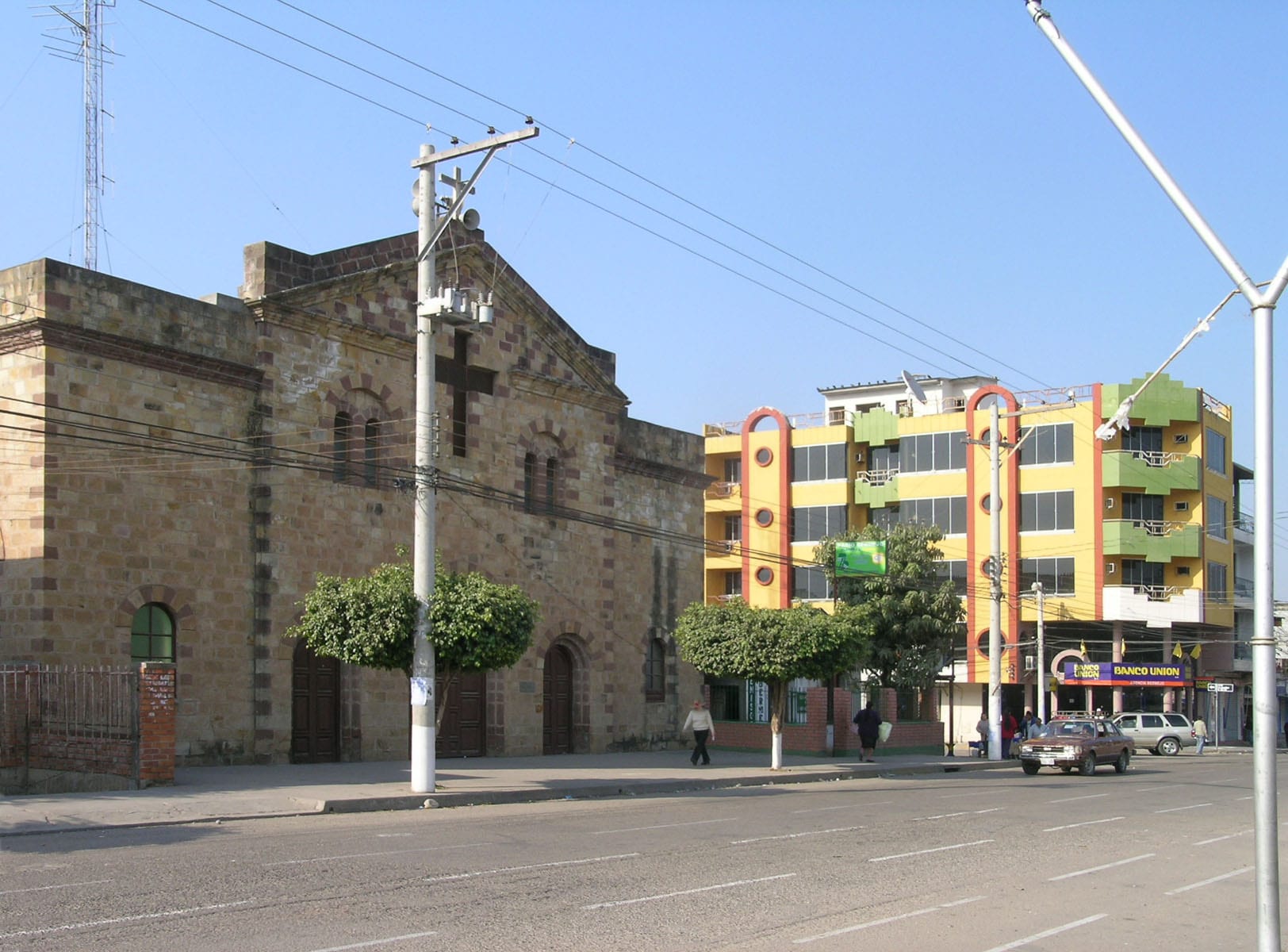
Context · Bermejo (Tarija, Bolivia), near El Taire hill
Kirche in Bermejo.jpg · Wikimedia Commons · Public domain · open original
Cable 1978LAPAZ03804 from the U.S. Embassy in La Paz, "Report of fallen space object" (15 May 1978)
Unclassified telegram with immediate precedence, signed by Ambassador Paul Boeker and copied to the CIA, the NSA and NASA, among others. It says that the Bolivian papers that morning, quoting a story from Salta, reported an unidentified object that had fallen from the sky and was found near Bermejo, "egg-shaped, metal and about four meters in diameter"; that the Bolivian Air Force planned to investigate; and it asks the agencies to shed light on what it might be, since the region had had "more than its share of reports of UFOs" that week. It is an electronic telegram with no facsimile; the full text is in the PlusD archive.
Departamento de Estado de EE. UU. (NARA, telegramas electrónicos de 1978), vía WikiLeaks PlusD · view source
The night in question
According to the chronology later reconstructed by researchers, on 6 May 1978, at about 4:15 p.m., something fell in the vicinity of El Taire hill, by the Bermejo river, on the border between Tarija department (Bolivia) and Salta province (Argentina). Later accounts speak of an object trailing flames, a boom heard at great distance and thousands of witnesses, but those details do not appear in the official documents of the time. What is on record is what the press published. On 15 May, the U.S. Embassy in La Paz cabled Washington, with immediate precedence and copies to the CIA, NSA and NASA, that that morning's Bolivian newspapers reported, quoting a correspondent in Salta, an unidentified object found near Bermejo, "egg-shaped, metal and about four meters in diameter"; that the Bolivian Air Force planned to investigate; and that the region had had "more than its share of reports of UFOs" that week. Ambassador Paul Boeker asked the appropriate agencies to shed light on what it might be.
On 16 May, the CIA's foreign media monitoring service (FBIS) translated a bulletin from Radio La Plata in Sucre, which is the document now in the CIA reading room under the title "Bolivia reports conflict on details of fallen object". It is not an intelligence analysis: it collects press versions that did not agree with one another. The radio said Argentine and Uruguayan stations were reporting that Bolivian authorities had urgently requested NASA's help, that a Montevideo station had just announced that this report was uncertain, and that the border with Argentina had been closed; a La Paz newspaper claimed the area had been cordoned off for security reasons and that the object, "a mechanical device" almost 4 meters in diameter, had already been brought to Tarija. The bulletin ended with the possibilities being discussed: a satellite, a meteorite or a false alarm.
On 18 May, the State Department replied in a secret cable that, after checking with the appropriate agencies, "no direct correlation with known space objects that may have reentered the earth's atmosphere near May 6 can be made", though they were continuing to examine possibilities, and asked for specific data on the object's trajectory, time and markings. The Air Force's Moondust program, which recovered foreign space debris, took an interest in the case. On 24 May, the defense attaché's office in La Paz reported that Bolivian Air Force planes had flown over the area where the object was supposed to have landed and "drew a blank", that the Army's search party had found nothing, and that the Army concluded "there may or not be an object". According to the CAUS investigation published in 1984, the first expedition did not reach the mountain because the slopes were too steep; a young Bolivian astronomer flew over it and saw a rockslide, and a second expedition of three Air Force officers, which reached it on 25 May, described a recent slide with boulders three meters tall, a trench of about 100 meters, rocks that looked burned and withered grass around it, but no debris. The officers said they believed something had crashed into the mountain, Cerro Bravo, identified as the suspected crash site. In June, journalist Bob Pratt of the National Enquirer told CAUS that several Bolivian witnesses described the object manoeuvring before it exploded and two explosions, the first heard 85 miles away, and that he had flown over the slide; the State Department said it had found nothing of the kind, and his paper did not run the story.
Why it matters
El Taire is a case with a real U.S. documentary trail: an embassy cable, the State Department's secret reply, the interest of the Moondust program and a report from the defense attaché. But that trail says something different from what the case literature attributes to it. The document in the CIA reading room is not an intelligence cable noting a contradiction in the official Bolivian report, but the translation of a radio bulletin collecting contradictory press versions, among them that of an object already moved to Tarija that the Bolivian military never found. And what the U.S. Government learned through official channels was negative: no known re-entry matched, the Air Force saw nothing from the air, and the Army could not say there was an object.
The only physical trace is the rockslide the second expedition described, with rocks that looked burned and a trench, but not a single piece of debris, and known through an anonymous American source cited by CAUS. A recent slide in steep mountains admits ordinary causes, and the lack of debris weighs against an object the press said was four meters across. No proposed cause found support in the data. Colonel Robert Eddington, of the State Department office that tracked launches, said he had no "first-hand information that, in fact, the object does exist" and speculated that, if it was solid, it might be "a near spherical liquid oxygen/hydrogen tank from a booster", but his office found no correlation with any known re-entry, though it said it was continuing to examine possibilities. A meteorite, an amplified press rumour or a false alarm remain open, and the period bulletin itself already mentioned them.
Read soberly, El Taire does not prove the fall of a non-human artifact, nor even of an object: it proves that a wave of news in three countries mobilized two states, and that the file went unanswered because nobody found anything to analyse.
What's left on paper
Documented evidence
- U.S. Embassy La Paz cable (15 May 1978): the press reports an egg-shaped metal object about 4 m across found near Bermejo
- Radio La Plata bulletin translated by FBIS (16 May 1978), CIA Reading Room 0005515665: contradictory press versions; satellite, meteorite or false alarm
- Cable State 126725 (18 May 1978): no correlation with known space objects
- Defense attaché (24 May 1978): the Bolivian Air Force and Army found nothing; "there may or not be an object"
- Second expedition (25 May 1978), per CAUS: recent rockslide, rocks that looked burned, no debris
Sources
- CIA Reading Room 0005515665 — 'Bolivia Reports Conflict on Details of Fallen Object' (FBIS, 16 May 1978) — Primary document: FBIS translation of a Radio La Plata (Sucre) bulletin. Copy on archive.org; the cia.gov link redirects to the home page.
- UFO Evidence — El Taire / Bermejo Crash — Secondary source (aggregator); origin of the boom and witness details that are not in the period documents
- Fawcett, L. and Greenwood, B. — Clear Intent (1984), ch. 'David and Goliath: The CAUS Battle', pp. 203–205 — Reproduces verbatim the embassy (15 May), State Department (18 May) and defense attaché (24 May) cables, and the account of the second expedition
- EarthSky — article on AARO's 2024 annual report