2022·REBEP reporting point, north of Caldera (Atacama region)
Chile.Atacama · the light seen by the air ambulance near REBEP
In the early hours of 30 January 2022, the pilot of a Beechcraft 200 air ambulance flying from Iquique to Santiago asked Iquique control twice by radio whether there was other traffic and then reported one that was 'very bright and fast', at about 50,000 feet, to the south of his position, near the REBEP waypoint in Atacama. Neither the Iquique nor the Santiago radar had any other aircraft in the area.
Read the rest of the summary
SEFAA reviewed the flight's radar track and eleven visible satellites without finding anything that fitted; the captain never replied or handed over the video he reportedly shot, and the case was closed as a 'Report'.
Tier B · IndicativeWhat do they mean? →
Limited evidence: a single witness, testimony gathered years later, or an account without contemporary primary documentation.
What it was
59%natural or human cause
Most likely an ordinary cause that no one has identified
See the split across the six explanations
Natural or human cause
No known cause
Read the full reasoning
The lack of a proposal is not evidence against an ordinary cause: in its 2024 report AARO stated that 'all 174 cases have been finalized as resolved to prosaic objects including balloons, birds, UAS, satellites, and aircraft'. The same report adds that 'many other cases remain unresolved', so the figure is the rate among resolved cases, not among all cases.Primary documents
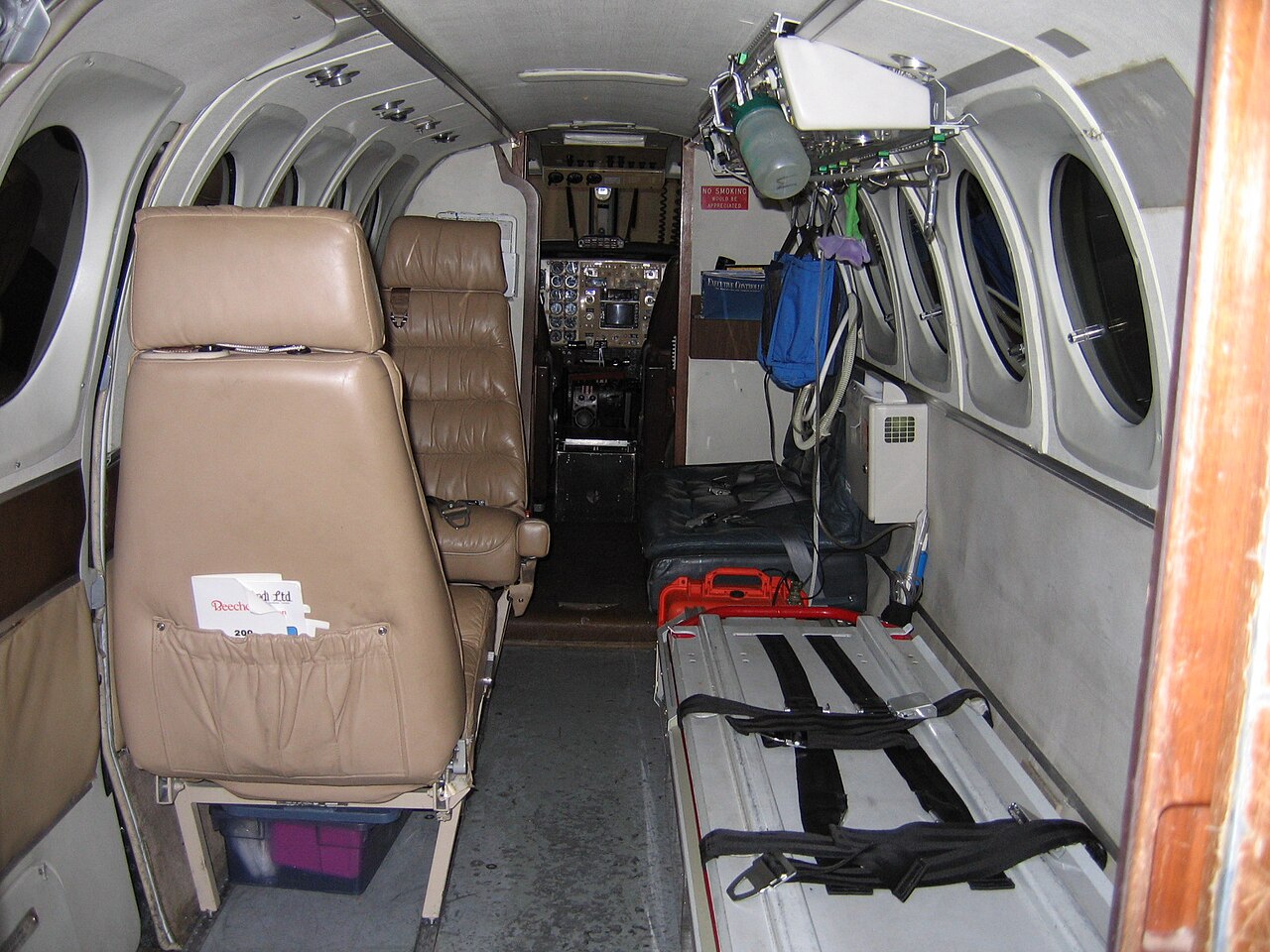
Context · a Beechcraft King Air 200 configured as an air ambulance
An aircraft of the same model as the one in the case, in another country. It is an image of the aircraft type, not of the phenomenon: no image of the sighting was handed over.
King Air 200 air ambulance.JPG (Trevor MacInnis) · Wikimedia Commons · Public domain · open original
SEFAA (Chilean DGAC) report, case no. 1752, REBEP, 30 January 2022
Six-page report by the official anomalous aerial phenomena section. It quotes the Iquique controller's log with the pilot's communications, reconstructs the flight and the sky visible from REBEP, lists the eleven satellites that could have been seen, summarises the first officer's report and an adviser's radar analysis, and closes the case as 'Report' (Relato) because what was reported could not be confirmed. A DGAC work with no open licence, so it is linked rather than hosted.
SEFAA, Dirección General de Aeronáutica Civil de Chile · view source
The night in question
On Saturday 29 January 2022, at 23:43 local time, a Beechcraft 200 belonging to Aero Transportes Araucanía took off from Diego Aracena aerodrome in Iquique as an air ambulance, bound for Arturo Merino Benítez airport in Santiago, where it landed at 02:58 on Sunday the 30th. It levelled off at 17,000 feet. According to SEFAA, the sky above the low cloud layer must have been clear: the Desierto de Atacama aerodrome, at Caldera, issued no weather reports overnight, but those from the previous evening and the following morning record clouds below 2,800 feet and almost unchanged pressure, so SEFAA concluded that from the aircraft's altitude the sky must have looked dark and clean, conditions especially favourable for observation.
The next day, 31 January at 16:01, a controller at the Iquique Area Control Centre reported what had happened on her shift. According to her log, at 04:24 the pilot asked whether she had any other traffic at 12 or 1 o'clock of his position, 40 miles out; he was told no. At 04:29 he asked again and was told he was the only traffic in flight and on the frequency. At 04:34 he reported seeing 'a traffic between Vallenar and La Serena in a holding pattern from east to west, very bright and fast, at about 50 thousand feet'. The controller replied that the radar showed nothing at that position and checked with the Santiago Area Control Centre, which controls that airspace and had no traffic in the sector either. The logged times only fit within the flight if read as UTC (01:24 to 01:34 local); the report, however, labels them as local time. The report gave no size or colour; there was reportedly no instrument malfunction, although, according to the controller, there was a 'CAT detection', an abbreviation the report does not explain. SEFAA was waiting for the recordings of the communications and the control centre's logbook, but its report never mentions them again, so what is quoted is the controller's account, not a transcript.
SEFAA, the office of the Directorate General of Civil Aviation that studies these reports, requested the crew's details. It wrote to the captain five times, between 3 February and 14 September 2022, asking for his account, the identity of the medical team on board and the footage he had reportedly taken with his phone; he never replied. The first officer did send a report: he placed the aircraft 40 nautical miles north of the Caldera aerodrome and 22 from the REBEP waypoint, and described a light flying horizontally from west to east. In an email of 9 February he drew a sketch of what he had seen, and from it SEFAA inferred that there had been no light flying a holding pattern, as the controller had understood, and that it could not be ruled out that there were several luminous objects crossing the horizon in front of the aircraft.
The office reconstructed the sky visible from REBEP with the Stellarium planetarium and Heavens-Above records, and reviewed the eleven satellites that could have been seen during the flight. None followed a path like the one described: three could have been seen towards the east, but two for less than a minute and the third always to the southeast of the aircraft. A controller who advises SEFAA reviewed the radar for the whole flight, with 14 images from the take-off at Iquique: the air ambulance appeared level at 17,000 feet and there was no other aircraft or track nearby. The adviser said he was unable to form any hypothesis about what was reported. With no images to set against the accounts, SEFAA concluded that 'the occurrence of what was reported could not be confirmed' and closed the case as a 'Report' (Relato).
Why it matters
The case shows how a cockpit report degrades on its way to the archive. The first thing put in writing was the controller's version, second-hand and from the following day, and it came with a 'holding pattern' that the first officer's sketch contradicted: there was no light circling, but one or several that crossed from west to east. The captain, whom SEFAA asked for the footage he had reportedly taken with his phone, did not answer five emails over seven months. What remains, then, is the account of a single crew member, gathered days later, and a radar that records the absence of another aircraft near the plane, not the presence or absence of an object much higher or further away.
SEFAA proposed no cause. It checked the satellites visible that night and none fitted the path, and its radar adviser could not form a hypothesis. That absence of a proposal is not evidence against an ordinary cause: in the same air corridor of northern Chile, the office later studied similar crew reports. In November 2022, three crews saw lights to the south near Copiapó, not far from REBEP, and SEFAA found that conditions existed for them to be the rocket and the Cygnus NG-18 spacecraft, launched the day before, although without images it closed the case as a 'Report'; in November 2023 it proposed sunlight reflecting off satellites for a series of reports and, in one with video, identified them. None of those findings concerns this night. The captain's footage, if it exists, would be the only way to settle it; until it turns up, the case stays as SEFAA left it: an account that could be neither confirmed nor explained.
What's left on paper
Documented evidence
- Log of the Iquique Area Control Centre controller: two queries from the pilot about other traffic (04:24 and 04:29) and, at 04:34, the report of a 'very bright and fast' traffic at about 50,000 feet between Vallenar and La Serena
- No traffic on the Iquique radar or on that of the Santiago Area Control Centre, checked at the time
- Flight plan: Aero Transportes Araucanía Beechcraft 200, Iquique 23:43 – Santiago 02:58 local time, level at 17,000 feet
- First officer's report and sketch: a light, or perhaps several, crossing horizontally from west to east; not a holding pattern
- Review of eleven visible satellites (Stellarium and Heavens-Above): none followed a similar path
Show 2 more items
- SEFAA radar adviser: 14 images of the flight, no other track near the aircraft and no possible hypothesis
- The captain did not answer five emails or hand over the footage he reportedly took; closed as a 'Report'
Sources
- SEFAA (Chilean Directorate General of Civil Aviation) — 'Case No. 1752', REBEP, 30 Jan 2022 — Primary source: the controller's log, flight plan, weather, satellite and radar analysis, and official conclusion.
- SEFAA — 'Case No. 1838', crews over northern Chile, 8 Nov 2022 — Later report in the same corridor: SEFAA considered it possibly launch 2022-149 (the Antares rocket and the Cygnus NG-18 spacecraft) and closed it as a 'Report'.
- AARO — Fiscal Year 2024 Consolidated Annual Report on UAP (14 Nov 2024) — Base rate: the 174 cases resolved that year were all resolved to prosaic objects; many others remain unresolved.
- SEFAA — Anomalous Aerial Phenomena Study Section (DGAC), official site — Catalogue of cases published by the Chilean office.
Referenced by 2 cases
Related cases
same country · same period
Copiapó · the lights to the south seen by three crews on the night of Cygnus NG-18
2022 · Tier A
same country · same period
Paposo · the lights seen by three airline crews over the desert
2023 · Tier A
same country · same period
Calama · the light 'following' an Argentine Learjet
2023 · Tier B
same country · same period
Antofagasta · the glowing cloud two airline crews saw over northern Chile
2023 · Tier A