1996·Pretoria / Mamelodi / Cullinan, Gauteng
Sudáfrica.Pretoria / Mamelodi · persecución policial con helicóptero (Sudáfrica, 1996)
A las 4:00 de la madrugada del 28 de agosto de 1996, el sargento Nico Stander, de la comisaría Adriaan Vlok de Pretoria, filmó un disco luminoso pulsante; el vecino Johann Becker lo vio sobre Erasmuskloof.
Seguir leyendo el resumen
Un helicóptero Bo-105 de la policía, pilotado por el superintendente Fred Viljoen, lo persiguió desde Mamelodi hacia Cullinan sin alcanzarlo y abandonó por falta de combustible; el radar de Waterkloof solo registró eco difuso. La hora y el rumbo coinciden con Venus, que brillaba con magnitud −4,2 al este-noreste, y el propio Stander mencionó el lucero del alba en su grabación; la objeción es la altura de 70° que dio Viljoen.
Tier A · Aceptable¿Qué significan? →
Evidencia institucional: varios testigos independientes identificados, o documentación oficial de la época, sin un registro instrumental que los corrobore.
Qué fue
64%causa natural o humana
Lo más probable es una causa ordinaria que nadie ha identificado
Ver el reparto entre las seis explicaciones
Causa natural o humana
Sin causa conocida
Documentos primarios
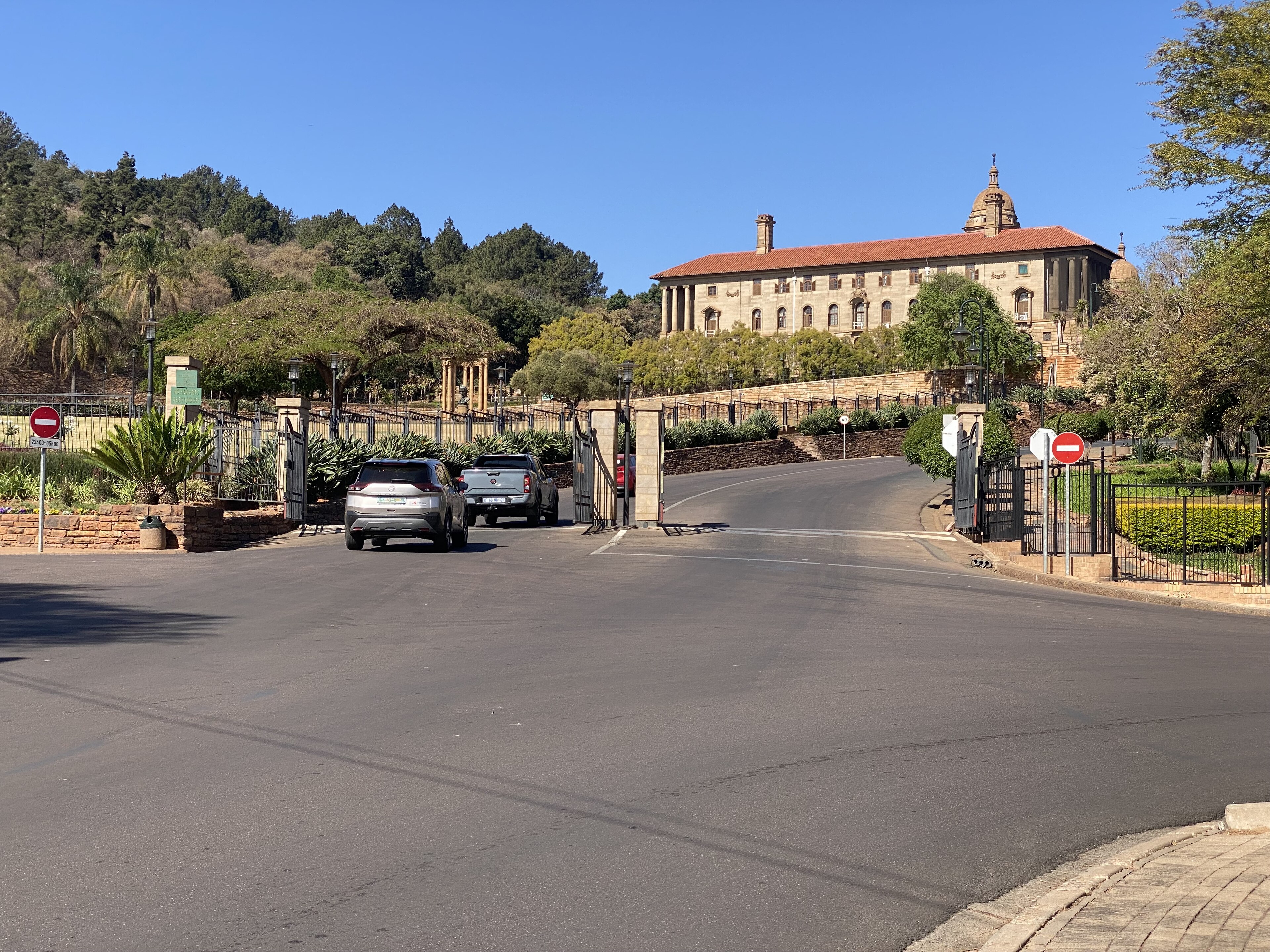
Contexto · los Union Buildings en Pretoria (Sudáfrica)
Union Buildings Pretoria 05.jpg · Wikimedia Commons · CC BY 4.0 · abrir original
CNI News, 1 de septiembre de 1996: el informativo de la SABC y la crónica de Rapport en traducción de Marius Lubbe
Boletín CNI News (ISCNI) copiado en la web de SAUFOR. Resume el informativo de la SABC del 28 de agosto, con el vídeo y las entrevistas al testigo Johan Becker y al piloto, y reproduce la traducción al inglés de Marius Lubbe del artículo «Was it a hoax or was it little green men?», del dominical afrikáans Rapport. En él, el superintendente Fred Viljoen cuenta que despegó a las 5:25 con cuatro pasajeros, siguió un disco blanco desde Mamelodi hacia Cullinan sin alcanzarlo y que la torre de la base de Waterkloof le dijo que su radar mostraba «clutter»; el sargento Nico Stander, que filmó la luz desde el coche patrulla, dice en la cinta que «podría ser un globo, el lucero del alba o un eclipse».
CNI News / Rapport (1 sep 1996), copia en la web de SAUFOR (oocities.org) · ver fuente
La noche en cuestión
El 28 de agosto de 1996, alrededor de las 4:00 de la madrugada, el sargento Nico Stander, de guardia en la comisaría Adriaan Vlok de Pretoria, observó y filmó con una cámara de video un disco luminoso pulsante en el cielo. El objeto, descrito como un disco que latía e incluía un triángulo rojo y que en un momento emitió 'tentáculos' verdes brillantes, fue también visto de forma independiente por Johann Becker, residente de Pretoria, suspendido sobre el sector de Erasmuskloof, al sureste de la capital.
La observación escaló a una persecución. El helicóptero Bo-105 de la policía despegó a las 5:25 con el superintendente Fred Viljoen a los mandos y cuatro pasajeros, según la crónica que publicó el diario afrikáans «Rapport» el 1 de septiembre. Viljoen declaró: «Había una luz brillante sobre Mamelodi, a 70 grados sobre el horizonte. Seguí el disco blanco, con su patrón de vuelo inusual, en dirección a Cullinan. Se movía a gran velocidad. No pudimos alcanzarlo y al final tuvimos que abandonar cuando el combustible empezó a ser un problema». Añadió que el disco se veía con facilidad incluso a plena luz del día. Las cifras que circulan hoy (unos 200 policías en tierra, una velocidad máxima de unos 270 km/h, el abandono a 10.000 pies y un ascenso vertical final) proceden de recopilaciones posteriores y no aparecen en esa crónica, que solo dice que el objeto «se alejó a una velocidad sobrenatural» hasta perderse en el horizonte de Cullinan. La televisión pública, la SABC, emitió el vídeo el mismo 28 de agosto; muchos sudafricanos lo tomaron por una broma o una campaña de «Independence Day», que se estrenaba ese viernes, algo que la distribuidora negó.
Viljoen declaró que no pidió que despegara un caza Mirage de la Fuerza Aérea, pero que mantuvo contacto por radio con la torre de control de la Base Aérea Waterkloof, cuyos operadores le dijeron que su radar mostraba «clutter» (eco difuso) en la zona donde volaba el disco. Ese dato no equivale a un eco limpio que fije posición, velocidad y altitud de un objeto sólido. Viljoen, piloto veterano, dijo que era la primera vez en su vida que veía algo así y que siempre había sido escéptico respecto de los ovnis. El vídeo tiene su propia historia: Stander, aficionado al tema (enseñó a los periodistas una pila de revistas «Encounters»), lo grabó con una cámara que pidió prestada a su padre, a través del parabrisas del coche patrulla, y en la cinta se oye a un policía decir que la luz «late como un corazón» y al propio Stander apuntar que «podría ser un globo, el lucero del alba o un eclipse». Esa noche había luna llena. Y el lucero del alba estaba ahí: el 28 de agosto de 1996 Venus acababa de pasar su máxima elongación matutina y brillaba con magnitud −4,2; a las 4:00, hora local, salía por el este-noreste de Pretoria, y hacia las 5:30 estaba a unos 21° de altura en dirección noreste, que es aproximadamente el rumbo de Mamelodi y Cullinan desde la ciudad.
Por qué importa
Reúne una filmación policial, una tripulación de helicóptero con piloto nombrado y contacto en tiempo real con una base aérea. Pero su versión más difundida es más espectacular que la crónica de 1996. Las cifras que sostienen la lectura exótica (200 policías, la velocidad de 270 km/h, un ascenso vertical a 10.000 pies) no aparecen en el relato publicado cuatro días después. Otros rasgos sí son testimonio de la época: según el mismo relato, en el informativo de la SABC del 28 de agosto de 1996 Viljoen dijo que el objeto lo dejó atrás con facilidad y que lo que más le extrañó fueron sus movimientos ondulantes, y el vecino Johann Becker contó que se desplazaba en silencio y ondulando. Además, el testigo que filmó el objeto era un aficionado al tema que, en la propia grabación, propuso el lucero del alba como explicación. El radar de Waterkloof reportó eco difuso, no un blanco limpio, y las descripciones visuales más llamativas (triángulo rojo, tentáculos verdes) son las esperables de una grabación nocturna de 1996 de una fuente puntual muy brillante.
Dos consideraciones afinan la lectura. La primera juega a favor del caso: Viljoen dio una altura de 70° sobre el horizonte, mientras que Venus estaba a unos 21° cuando despegó; si esa estimación es buena, lo que persiguió no fue el planeta. La segunda juega en contra: todo lo demás encaja con Venus. La hora coincide con la salida del planeta más brillante del cielo, el rumbo de la persecución hacia Cullinan coincide con su acimut, el helicóptero nunca se acercó y abandonó por combustible, y el objeto seguía visible con luz de día, como Venus a esa magnitud. Una luz que no se deja alcanzar y que parece ondular a través del parabrisas de un coche o desde la cabina de un helicóptero en vuelo es el patrón clásico de la persecución de un astro. El caso queda, por tanto, sin una explicación que proponga ninguna fuente: el sargento solo enumeró posibilidades, Venus encaja con casi todo según nuestro cálculo, y la estimación de altura de Viljoen es la objeción que no se ha resuelto.
Lo que queda en papel
Evidencia documentada
- Vídeo del sargento Nico Stander, grabado a través del parabrisas del coche patrulla hacia las 4:00 del 28 de agosto de 1996 y emitido por la SABC ese mismo día
- Observación del vecino Johann Becker sobre Erasmuskloof
- Helicóptero Bo-105 de la policía (despegue a las 5:25, piloto Fred Viljoen y cuatro pasajeros): luz sobre Mamelodi a 70° de altura, persecución hacia Cullinan, abandono por combustible
- Contacto con la torre de la Base Aérea Waterkloof: «clutter» en la zona, no un eco limpio
- En la grabación, Stander dice que «podría ser un globo, el lucero del alba o un eclipse»
- Venus en su máxima elongación matutina (magnitud −4,2), saliendo por el este-noreste a las 4:00 y a unos 21° al noreste hacia las 5:30
Fuentes
- «Was it a hoax or was it little green men?», Rapport, 1 de septiembre de 1996, en traducción de Marius Lubbe publicada por CNI News (copia en la web de SAUFOR) — La crónica más cercana al suceso: declaraciones de Viljoen y Stander, hora del despegue, contacto con Waterkloof y el contenido del vídeo; en la misma página, la crónica del informativo de la SABC del 28 de agosto de 1996, con las declaraciones de Viljoen y Becker
- Wikipedia — UFO sightings in South Africa (fuente secundaria) — Cronología del incidente de Pretoria 1996 con nombres y detalles.
- HandWiki — UFO sightings in South Africa (fuente secundaria) — Detalle del relato de Viljoen y el contacto con Waterkloof.
- UFO Casebook — 1996 South Africa Police Chase / Film UFO (fuente secundaria) — Recopilación del caso y el material de video.
- Posición de Venus calculada con PyEphem para Pretoria (25,75° S, 28,25° E), 28 de agosto de 1996 — Altura y acimut de Venus entre las 3:30 y las 6:00, hora local
Casos relacionados