2019·Área de advertencia restringida frente a San Diego, California
Estados Unidos.USS Omaha — esfera transmedium
El 15 de julio de 2019, en un área de advertencia restringida frente a San Diego, el Combat Information Center del buque USS Omaha registró con FLIR/visión nocturna una esfera que sobrevoló el mar, se detuvo y descendió al agua sin estela visible (comportamiento 'transmedium'). Según un informe de inteligencia que Corbell dice haber obtenido, hubo al menos 14 objetos alrededor de la formación. Jeremy Corbell y George Knapp difundieron el material en 2021; en mayo de ese año el Pentágono confirmó que fue captado por personal de la Marina y estaba bajo análisis de la UAPTF (autenticidad confirmada, no explicación).
Tier S · Sólido¿Qué significan? →
Evidencia fuerte: un registro instrumental de la época (radar, sensor, película o foto con procedencia conocida) que corrobora a varios testigos independientes.
Qué fue
53%causa natural o humana
Explicación más probable: tecnología adversaria
Ver el reparto entre las seis explicaciones
Causa natural o humana
Sin causa conocida
Documentos primarios
Marina de EE. UU. — respuesta FOIA sobre los registros del USS Omaha del 15 de julio de 2019 (3 págs.)
Carta del Departamento de la Marina (Naval Surface Force, Flota del Pacífico, San Diego) del 15 de septiembre de 2021, firmada por el capitán J. M. Lucci, Force Judge Advocate, en respuesta a la solicitud FOIA DON-NAVY-2021-005821 de John Greenewald (The Black Vault), que pedía los registros del incidente del 15 de julio de 2019 frente a San Diego y los diarios del USS Omaha del 13 al 18 de julio. La Marina explica que en esta clase de buque el diario en navegación es una grabación de voz digital; que el buque buscó copias digitales, en CD/DVD y en papel, y concluyó que la tripulación anterior no conservó ni creó registros del 1 al 18 de julio de 2019; y que el NHHC y el Federal Records Center tampoco los tienen. Solo entrega los diarios del 19 al 31 de julio.
Department of the Navy, FOIA DON-NAVY-2021-005821 (vía The Black Vault) · Dominio público (obra del gobierno de EE. UU., 17 U.S.C. § 105) · abrir original
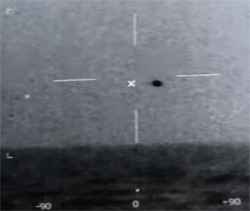
Fotograma del vídeo del USS Omaha (15 de julio de 2019)
Captura de baja resolución (250 × 211 píxeles) del vídeo tomado desde el USS Omaha el 15 de julio de 2019, tal como la publica Wikimedia Commons, que la atribuye a la Marina de EE. UU. y la toma de una nota de IBTimes sobre el vídeo filtrado. Se ve una mancha oscura y redonda a la derecha de la cruz de una retícula de sensor, sobre la línea del horizonte marino, con una escala de −90 a +90 en el borde inferior.
USS Omaha UFO video - July 2019.png · Wikimedia Commons · Dominio público (PD-USGov, obra de la Marina de EE. UU.) · abrir original
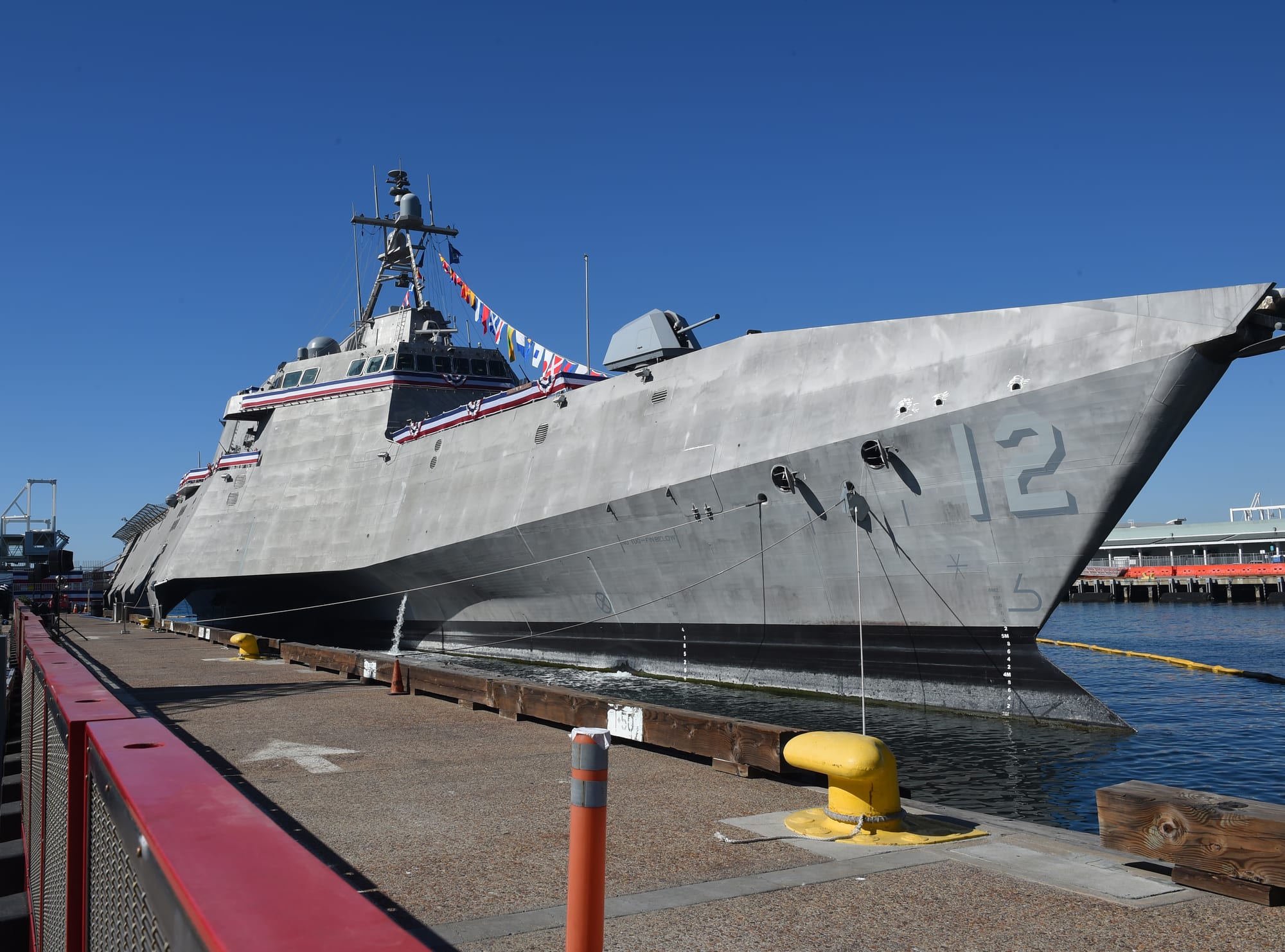
Contexto · el USS Omaha (LCS-12), buque de la esfera transmedium filmada en 2019
USS Omaha (LCS 12) Commissioning Ceremony (4119951).jpg · Wikimedia Commons · Dominio público · abrir original
La noche en cuestión
El 15 de julio de 2019, en un área de advertencia restringida frente a la costa de San Diego (California), el buque de combate litoral USS Omaha y otras unidades de la Marina de EE.UU. registraron una serie de objetos esféricos no identificados. Desde el Combat Information Center (el corazón de mando del buque, donde se integran los datos de sensores) se filmó, con cámara FLIR (infrarrojo de avance) y dispositivos de visión nocturna, una esfera oscura que se desplazaba sobre el mar, se detenía y finalmente descendía hasta tocar el agua y desaparecer bajo la superficie, sin estela, salpicadura prolongada ni restos visibles, el comportamiento que la literatura UAP llama 'transmedium' (transición aire-agua). En el audio operativo del clip se escucha a la tripulación narrar el evento en tiempo real ('splash', es decir 'tocó el agua'), un detalle que refuerza que no se trató de una interpretación posterior sino de algo seguido en vivo por operadores entrenados.
“), un detalle que refuerza que no se trató de una interpretación posterior sino de algo seguido en vivo por operadores entrenados. El episodio no fue aislado: formó parte de una oleada de incursiones de ”
El episodio no fue aislado: formó parte de una oleada de incursiones de 'esferas' sobre varios barcos de la Marina frente a San Diego en julio de 2019 (USS Omaha, USS Russell, USS Kidd, USS Rafael Peralta, USS John Finn, entre otros). Según un informe de inteligencia que Corbell dice haber obtenido, hubo al menos 14 objetos sólidos de unos dos metros de diámetro maniobrando alrededor de la formación, con velocidades de entre 74 y 254 km/h (de unos 40 a más de 130 nudos). De los mismos días proviene también el llamado video 'pirámide', filmado en visión nocturna desde el USS Russell, en el que defectos ópticos de la cámara podrían explicar al menos parte de la forma triangular percibida, un recordatorio de que no todo el lote tiene la misma fuerza. Corbell afirma también que tras el incidente del Omaha un submarino buscó en la zona sin hallar nada: «No se encontraron restos»; ese dato no tiene confirmación oficial.
El material salió a la luz en 2021, difundido por el cineasta Jeremy Corbell junto al periodista de investigación George Knapp; según Corbell, un fotograma del vídeo se había mostrado en una sesión informativa de la Oficina de Inteligencia Naval el 1 de mayo de 2020, y el vídeo se grabó desde un monitor del Combat Information Center. En abril de 2021 el Pentágono confirmó la autenticidad del vídeo «pirámide» y de las fotos, y en mayo, tras la difusión del vídeo del Omaha, su portavoz Susan Gough declaró: «Puedo confirmar que el vídeo fue tomado por personal de la Marina», y añadió que la UAP Task Force (UAPTF) lo estaba revisando. La confirmación cubrió la procedencia y autenticidad del metraje, no una explicación de su contenido: el origen quedó sin determinar. Entre las hipótesis convencionales, la más fuerte es una operación de sistemas no tripulados (drones, posiblemente de vigilancia adversaria) que explicaría bien el enjambre coordinado en una zona de ejercicios navales. El descenso de la esfera al agua sin estela visible, en cambio, sigue siendo el elemento que peor encaja con un dron convencional y el más discutido del caso; los escépticos apuntan a la baja resolución del sensor y a la dificultad de juzgar profundidad y escala en una sola cámara monocular.
En su respuesta a una solicitud FOIA de The Black Vault (15 de septiembre de 2021), la Marina de EE. UU. informó que el USS Omaha «did not retain or create records for July 1–18, 2019»: el diario de navegación de esa clase de buque es una grabación de voz digital, y ni el Naval History and Heritage Command ni el Federal Records Center conservan registros de esas fechas.
Por qué importa
El caso del USS Omaha combina dos cosas: un registro de sensores de la Marina (cámara infrarroja en el centro de combate del Omaha, con otros buques de la formación implicados en la oleada; los datos de radar solo los afirma Corbell) y la confirmación oficial del Pentágono de que el material es genuino y estaba bajo análisis de su task force dedicada. Es, además, parte del cambio de régimen de 2017-2021, cuando la Marina formalizó procedimientos de reporte de UAP, la prensa seria (incluido el New York Times) trató el tema como cuestión de seguridad de vuelo y el Congreso comenzó a exigir informes (el contexto que convierte estos clips en datos institucionales y no en anécdotas).
Al mismo tiempo, el caso tiene límites claros. La confirmación oficial es de autenticidad y procedencia, no de naturaleza: el Pentágono validó que la Marina grabó algo, no qué era. La explicación más sobria del enjambre (una operación de drones, quizá de vigilancia adversaria en una zona de ejercicios navales sensible) es plausible, encaja con el comportamiento coordinado y no debe descartarse; de hecho sería un hallazgo de seguridad nacional serio por derecho propio. Lo que resiste a esa lectura es el descenso de la esfera al agua sin estela visible, narrado en vivo por la tripulación, junto con la búsqueda submarina sin resultados que afirma Corbell. Ese único dato (dependiente de un sensor monocular de baja resolución cuya interpretación está en disputa) es lo que mantiene el caso abierto.
Lo que queda en papel
Evidencia documentada
- Video FLIR/visión nocturna del Combat Information Center del USS Omaha (15 jul 2019) de una esfera que desciende al agua sin estela
- Según un informe de inteligencia que Corbell dice haber obtenido, al menos 14 objetos de unos dos metros alrededor de la formación, a entre 74 y 254 km/h
- Oleada multibuque (Omaha, Russell, Kidd) en julio de 2019; incluye el video 'pirámide' del USS Russell
- Confirmación del Pentágono (Susan Gough, may 2021): «el vídeo fue tomado por personal de la Marina», en revisión por la UAPTF
- Difundido por Jeremy Corbell y George Knapp (2021)
Fuentes
- Mystery Wire (G. Knapp / J. Corbell) — 'USS Omaha UFO video'
- Wikipedia — 'Pentagon UFO videos' (confirmación de autenticidad, abril 2021) — Fuente secundaria (enciclopedia)
- Global News — «Leaked video appears to show UFO plunging under water off California» (18 may 2021) — Prensa de la época: declaración de Susan Gough y afirmaciones de Corbell sobre los 14 objetos y la búsqueda submarina
Casos relacionados
mismo país · misma época
USS Russell — video 'pirámide' (visión nocturna)
2019 · Tier A
mismo país · misma época
El testimonio del aviador de 28 años: un objeto pequeño, rápido, visto desde una aeronave civil
2019 · Tier A
mismo país · misma época
Cuando el propio sensor explica por qué el objeto parpadea
2019 · Tier A
mismo país · misma época
Cinco grabaciones, un mismo evento: luces sobre el Pacífico documentadas por la UAPTF
2019 · Tier A
Actores asociados (2)