Caso Nº 180·Estados Unidos
2011·Department of Homeland Security · Washington D.C.
Estados Unidos.Kona Blue · SAP prospectivo de DHS (recuperación UAP)
Programa de Acceso Especial prospectivo (PSAP) propuesto al DHS hacia 2011, derivado del AAWSAP/AATIP de la DIA y liderado por el Dr. Jim Lacatski. Proponía estudiar tecnología UFO, entrevistar testigos y custodiar materiales recuperados — pero fue terminado el 10 de febrero de 2012 sin ser aprobado, sin financiamiento y sin recibir material alguno. Desclasificado por el DHS en 2023 y documentado oficialmente por la AARO.
Año
2011
Tier
A
Probabilidad
62%
Categoría
Documento
Evidencia institucional: múltiples testigos verificables o documentación oficial. Tres ejes independientes: el «tier» mide la fuerza de la evidencia; la «probabilidad» estima cuán genuinamente inexplicado está el caso —un fenómeno natural puede seguir sin explicación, así que no equivale a «no-prosaico»—; y la partición de explicaciones (abajo) dice qué fue más plausiblemente. Por eso un caso bien documentado puede tener como causa más plausible un posible fraude, y un Tier B no es, por eso, un fraude.
Documentos primarios · visor
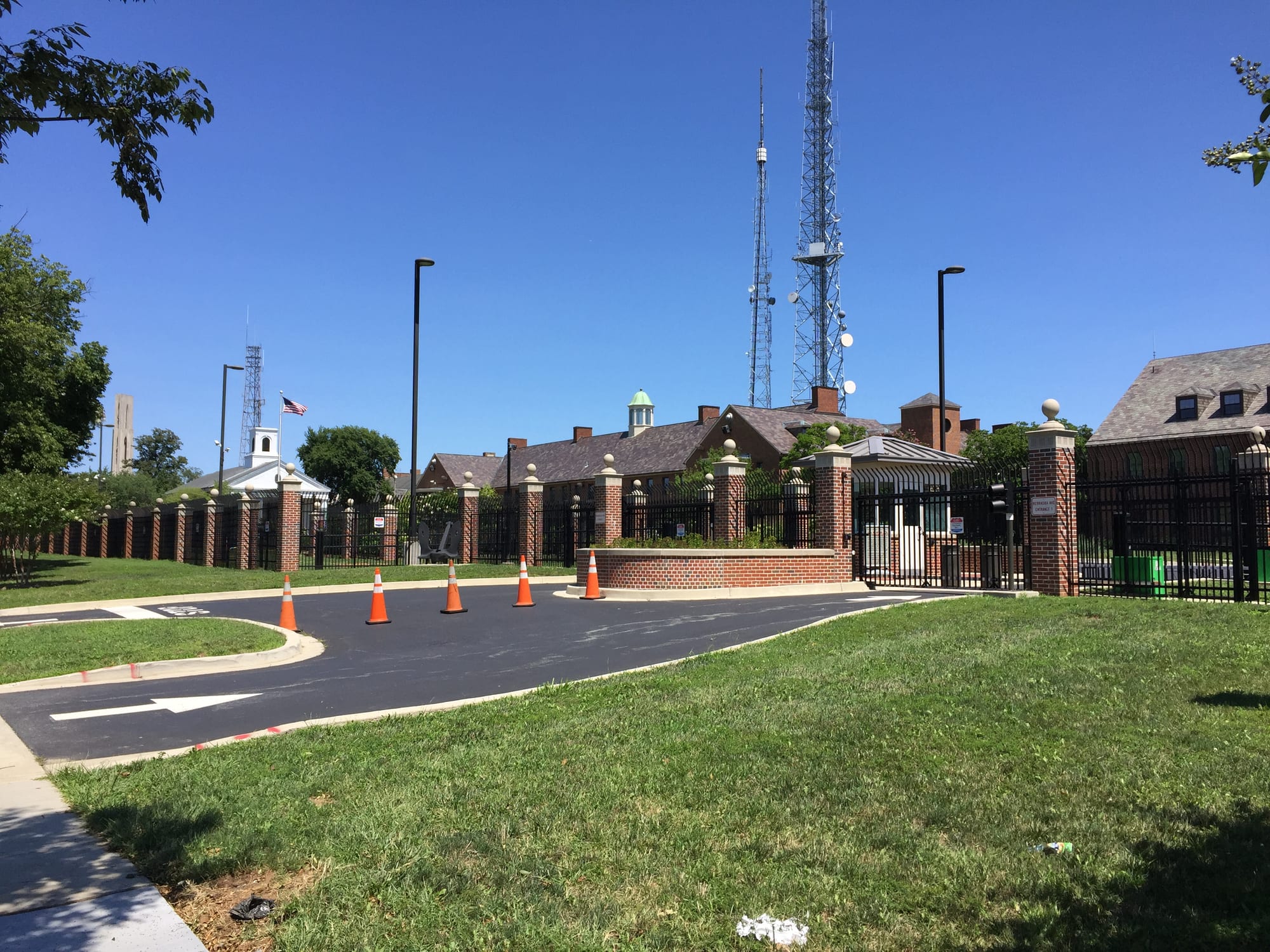
Contexto · el Nebraska Avenue Complex (DHS), Washington D.C.
Nebraska Avenue Complex 2017a.jpg · Wikimedia Commons · CC BY-SA 4.0 · abrir original
Parte 01
El expediente en cuestión
Kona Blue fue un Programa de Acceso Especial prospectivo (Prospective Special Access Program, PSAP) propuesto a la dirigencia del Department of Homeland Security (DHS) alrededor de 2011. No fue un programa improvisado: surgió como continuación directa del Advanced Aerospace Weapon System Application Program (AAWSAP) y su componente más conocido, el Advanced Aerospace Threat Identification Program (AATIP), gestionados por la Defense Intelligence Agency (DIA) entre 2008-2009 y 2012 con fondos asignados por earmarks congresionales (impulsados, según el relato público, por el senador Harry Reid). Cuando el financiamiento de la DIA se agotó, sus arquitectos buscaron un nuevo hogar institucional para la línea de investigación. El impulsor central fue el Dr. James (Jim) Lacatski, científico de cohetes y analista de inteligencia de la DIA que había sido el gestor oficial del AAWSAP; lo acompañaron colegas del mismo equipo. La propuesta contemplaba estudiar tecnología aeroespacial de origen desconocido, entrevistar testigos, investigar efectos físicos y psicológicos de los encuentros, e incluía líneas heterodoxas heredadas del AAWSAP —conciencia y visión remota (remote viewing)—; y, el punto más significativo a efectos del corpus, contemplaba custodiar y analizar materiales recuperados.
“History and Origin of KONA BLUE”
Según la documentación, los proponentes llegaron a briefear a la subsecretaria de Ciencia y Tecnología del DHS, la Dra. Tara O'Toole, sobre lo aprendido en el AAWSAP y los supuestos beneficios de Kona Blue. Pese a un interés inicial, el programa nunca superó la oposición interna: nunca fue aprobado como SAP, nunca recibió financiamiento ni material, y fue terminado por la dirigencia del DHS el 10 de febrero de 2012 por falta de justificación adecuada. La propia AARO subraya en su informe que ningún dato ni material de ningún tipo fue transferido a, o recolectado por, el DHS bajo Kona Blue.
El expediente reapareció más de una década después. El DHS desclasificó inesperadamente los documentos del programa, que circularon públicamente a inicios de 2024, y la All-domain Anomaly Resolution Office (AARO) —la oficina del Departamento de Defensa creada en 2022 para investigar fenómenos anómalos no identificados— publicó un informe oficial titulado 'History and Origin of KONA BLUE' en su portal aaro.mil. El valor del expediente es estrictamente documental, no probatorio: confirma por papel oficial que un equipo proveniente del aparato de inteligencia estadounidense estructuró un programa formal cuyo mandato escrito incluía custodiar naves o materiales recuperados —sin que la desclasificación, en sí misma, pruebe que tal material existiera o que el programa lo hubiera recibido—. La AARO lo presenta, de hecho, como ejemplo de una propuesta que no prosperó, parte de su esfuerzo por documentar el origen de las narrativas de recuperación que ha investigado.
Parte 02
Por qué este caso movió la aguja
Es un dato documental duro sobre la hipótesis de programas de recuperación: el gobierno de EE.UU. redactó y propuso formalmente un Programa de Acceso Especial cuyo mandato incluía custodiar materiales recuperados de naves de origen desconocido. Que el programa nunca se financiara ni recibiera material es exactamente lo que la propia AARO subraya — y por eso el peso es de intención institucional, no de confirmación de hardware. La distinción es central para una lectura calibrada: existe una diferencia categórica entre 'un grupo dentro del Estado quiso montar un programa de custodia de material' (lo que el documento prueba) y 'el Estado custodia material recuperado' (lo que el documento no prueba). El caso suele citarse en ambos sentidos —por los proponentes de la hipótesis de recuperación como señal de que el aparato esperaba tener algo que estudiar, y por los escépticos como prueba de que tales programas nacen, no se financian y mueren sin nada que mostrar—; ambas lecturas caben en el papel.
Importa, además, porque conecta el ecosistema AAWSAP/AATIP/Skinwalker (presente en el corpus) con su intento de continuación en el DHS, mostrando la genealogía institucional de la línea de investigación a lo largo de varias agencias. Y porque la desclasificación lo pone sobre papel oficial verificable —documentos del DHS más un informe nominal de la AARO— en lugar de descansar en testimonio anónimo, que es el estándar de evidencia más bajo del campo. Tier A por esa solidez documental, no por fuerza evidencial sobre la naturaleza del fenómeno: el expediente es sólido como documento y débil como prueba de hardware, y la calibración del caso refleja exactamente esa asimetría.
Parte 03
Lo que queda en papel
Evidencia documentada
- Documentos Kona Blue desclasificados por el DHS (febrero 2023)
- Informe oficial de la AARO: 'History and Origin of KONA BLUE' (aaro.mil)
- Origen en AAWSAP/AATIP (DIA, 2009-2012, earmarks congresionales); impulsado por el Dr. Jim Lacatski
- Mandato propuesto: estudio de tecnología de origen desconocido, custodia de materiales recuperados, efectos en testigos
- Terminado el 10 de febrero de 2012, sin aprobación, sin financiamiento y sin recibir material alguno (según la documentación oficial)
Fuentes
- AARO — 'History and Origin of KONA BLUE' (informe oficial) — Documento primario oficial de la AARO.
- The Black Vault — 'DoD Releases KONA BLUE Documents' — Archivo de los documentos desclasificados.
- NewsNation — 'What was the Kona Blue program, and does it mean UFOs exist?'
Patrones que exhibe (2)
Ubicación
Department of Homeland Security · Washington D.C. · 38.89°, -77.04°
Casos relacionados