Caso Nº 179·Reino Unido · IAA/SETI (global)
En desarrollo2026·Univ. de Manchester · IAA SETI Permanent Committee (ratificación global)
Reino Unido · IAA/SETI (global).Protocolo SETI de post-detección · actualización IAA 2026
El IAA SETI Committee ratificó en 2026 la primera gran revisión desde ~2010 de los 'post-detection protocols': cómo verificar y anunciar una detección de inteligencia extraterrestre. Lo analíticamente relevante es la frontera que traza — declara explícitamente que NO aplica a los UAP en la atmósfera terrestre, en el mismo año en que la ola de divulgación lo empujó a actualizarse.
Año
2026
Tier
B
Probabilidad
80%
Categoría
Documento
Evidencia limitada: testigo único, local o sin verificación primaria. Tres ejes independientes: el «tier» mide la fuerza de la evidencia; la «probabilidad» estima cuán genuinamente inexplicado está el caso —un fenómeno natural puede seguir sin explicación, así que no equivale a «no-prosaico»—; y la partición de explicaciones (abajo) dice qué fue más plausiblemente. Por eso un caso bien documentado puede tener como causa más plausible un posible fraude, y un Tier B no es, por eso, un fraude.
Documentos primarios · visor
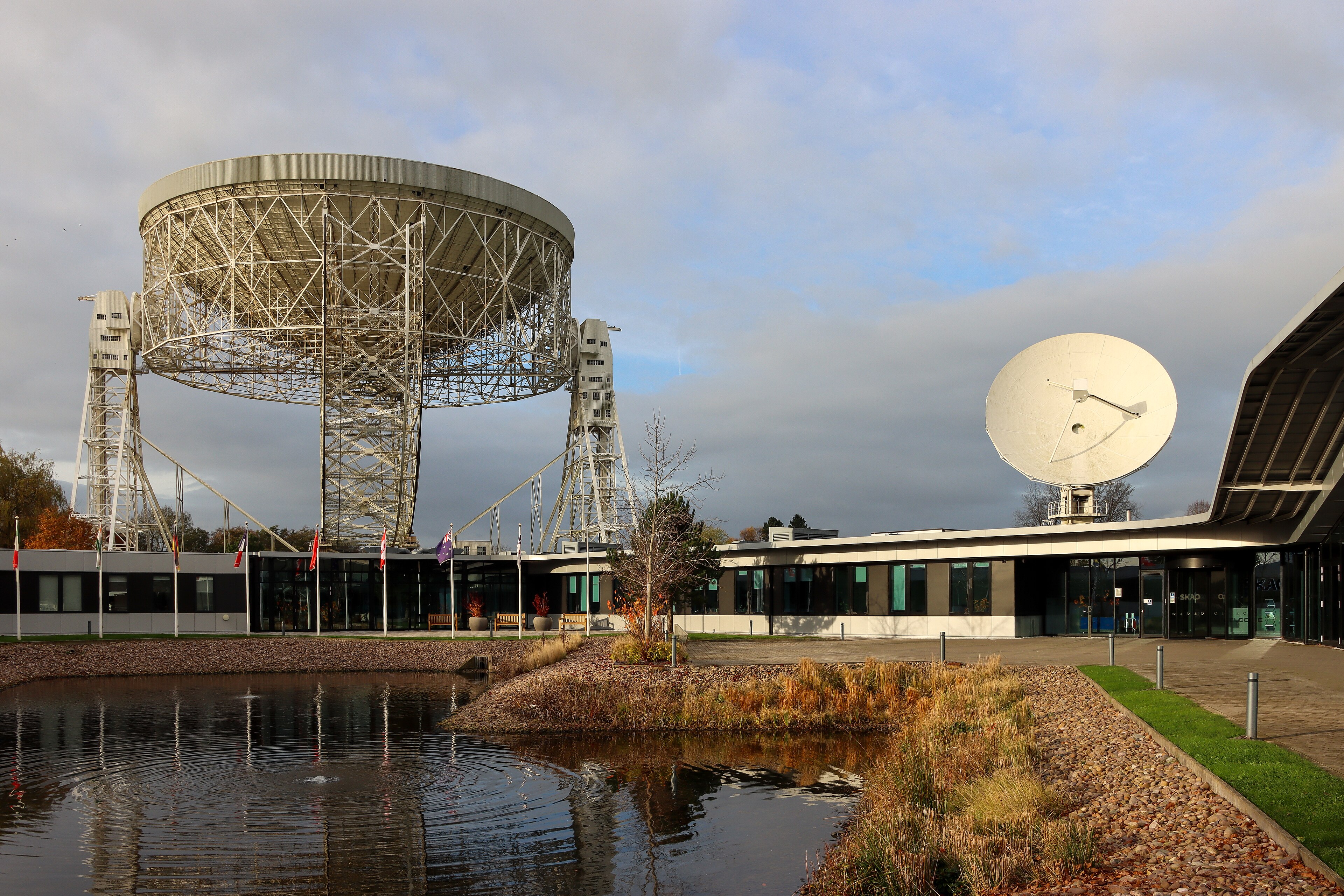
Contexto · el Observatorio de Jodrell Bank (Univ. de Manchester)
At Jodrell Bank Observatory 2024 005.jpg · Wikimedia Commons · CC BY-SA 4.0 · abrir original
Parte 01
El expediente en cuestión
El SETI Permanent Committee de la International Academy of Astronautics (IAA), en un esfuerzo global presidido por el astrofísico Michael Garrett (Sir Bernard Lovell Chair de Astrofísica, Universidad de Manchester) y firmado junto a especialistas como Kathryn Denning, Laurence Tennen y Chris Oliver, anunció el 5 de junio de 2026 una actualización integral de la 'Declaration of Principles Concerning Activities Following the Detection of Extraterrestrial Intelligence' — los protocolos de post-detección, sin una revisión mayor en más de quince años. El proceso fue plurianual, alimentado por precedente histórico, práctica científica en evolución y consulta amplia a la comunidad; la versión se finaliza formalmente en el International Astronautical Congress y su borrador técnico circuló como preprint (arXiv 2510.14506).
“Declaration of Principles Concerning Activities Following the Detection of Extraterrestrial Intelligence”
La actualización amplía el alcance a todo el espectro de tecnofirmas: señales de radio de banda estrecha, emisión láser, exceso infrarrojo asociado a uso de energía a gran escala (megaestructuras tipo Dyson), anomalías en mediciones astronómicas, y evidencia de artefactos físicos. Introduce requisitos de verificación independiente multi-instrumento antes de cualquier anuncio público —ningún equipo puede publicitar una detección sin confirmación cruzada por instituciones y telescopios distintos—, y mantiene la regla de que no debe enviarse ninguna respuesta a una señal sin consulta internacional coordinada a través de Naciones Unidas. La gran novedad de 2026 es que el protocolo asume un entorno mediático transformado por las redes sociales, la inteligencia artificial y el ciclo de noticias de 24 horas: incorpora pautas para la difusión en redes, la gestión de filtraciones de datos, el riesgo de deepfakes generados por IA capaces de simular una 'detección' durante la ventana de verificación, y —de forma destacada— la protección de los investigadores frente al acoso, el doxing y las represalias profesionales que podría desencadenar una detección real o rumoreada. Crea además un Subcomité permanente de Post-Detección para mantener vivo el marco entre revisiones.
El documento traza una frontera explícita: declara que aplica a la búsqueda astronómica de inteligencia extraterrestre y NO a los Unidentified Anomalous Phenomena observados en la atmósfera terrestre. Esa exclusión es deliberada y llega justo cuando el propio contexto que motivó la revisión —un paisaje mediático y político cambiado por la ola de divulgación y las audiencias congresionales sobre UAP— empujaba el tema hacia el centro de la conversación pública. Dicho de otro modo: la presión cultural de los UAP es parte de lo que hizo necesario actualizar el protocolo, y el protocolo aprovechó la actualización para delimitar con claridad que su dominio es el cielo profundo, no el espacio aéreo terrestre.
Parte 02
Por qué este caso movió la aguja
No es un caso de avistamiento — no aporta evidencia del fenómeno. Su valor para el corpus es como dato de comportamiento institucional: el establishment científico (IAA/SETI), empujado por la ola de divulgación de 2026, formaliza y moderniza su canal de contacto y, en el mismo gesto, reafirma la frontera de legitimidad entre la SETI astronómica 'respetable' (tecnofirmas a años-luz) y los UAP atmosféricos 'fuera de dominio'. Es, en términos de sociología de la ciencia, mantenimiento de frontera (boundary-work): la operación por la cual una disciplina define qué cuenta como ciencia legítima trazando una línea contra lo que considera contaminante. Mientras figuras como Grusch llevan testimonios de 'vida plasmoide sintiente' al Capitolio y AARO publica imágenes de orbes 'plasma-like', la academia delimita su jurisdicción para no quedar atrapada en el expediente UAP, asociado en el imaginario público a la pseudociencia.
Hay, sin embargo, una resonancia metodológica que vuelve esa frontera más porosa de lo que SETI quisiera. El estándar que el protocolo de 2026 eleva a norma —verificación independiente multi-instrumento, confirmación cruzada por instituciones distintas, prohibición de anunciar sin réplica— es exactamente el mismo que el corpus usa para calificar un caso como Tier S. La vara con la que SETI mediría una señal de radio extraterrestre es la que, aplicada con honestidad, validaría los mejores casos UAP que SETI se niega a mirar. La exclusión, entonces, no es metodológica sino jurisdiccional y reputacional: no se descarta el UAP porque no pueda cumplir el estándar, sino porque examinarlo amenaza la legitimidad que la SETI astronómica ha cultivado durante décadas. Que el detonante de la actualización sea, en parte, la propia ola UAP hace la ironía más nítida: el fenómeno que la academia se esfuerza por mantener afuera es uno de los motivos por los que tuvo que poner su casa en orden. Tier B porque su peso evidencial sobre la naturaleza del fenómeno es nulo; entra como contexto de gobernanza —cómo trataría la ciencia institucional un contacto y dónde decide no mirar—, no como evidencia. Su probabilidad alta (80) no es un juicio sobre los UAP, sino sobre la solidez documental del propio hecho institucional, que está sustentado en un preprint y en comunicados públicos verificables.
Parte 03
Lo que queda en papel
Evidencia documentada
- Actualización ratificada por el IAA SETI Permanent Committee (2026), primera revisión mayor desde ~2010; presidida por Michael Garrett (Univ. de Manchester)
- Alcance ampliado a todas las tecnofirmas: radio de banda estrecha, láser, exceso IR (megaestructuras), anomalías astronómicas, artefactos físicos
- Verificación independiente multi-instrumento obligatoria antes de cualquier anuncio público
- Regla mantenida: ninguna respuesta a una señal sin consulta internacional coordinada vía ONU
- Novedades 2026: protocolos contra deepfakes/IA, filtraciones, redes sociales; protección a investigadores; Subcomité permanente de Post-Detección
- Exclusión explícita: el documento NO aplica a los UAP observados en la atmósfera terrestre
- Finalización formal en el IAC de agosto de 2026; preprint técnico arXiv 2510.14506
Fuentes
- SETI Post-Detection Protocols — preprint técnico (arXiv 2510.14506) — Borrador de la actualización 2026.
- The Conversation — 'Alien first contact: how the new rules differ from science fiction'
- SETI Institute — 'Beyond Disclosure Day: The Real-World Protocols'
- Astronomy.com — 'The real disclosure day: the protocols for announcing extraterrestrial intelligence'
Patrones que exhibe (2)
Ubicación
Univ. de Manchester · IAA SETI Permanent Committee (ratificación global) · 53.48°, -2.24°
Casos relacionados
mismo país · 1 patrón
Lakenheath-Bentwaters
1956 · Tier S · 80%
mismo país · 1 patrón
West Freugh · radar RAF + silencio del Air Ministry
1957 · Tier A · 55%
mismo país · 1 patrón
Project Condign · estudio UAP del MoD británico
2000 · Tier A · 60%
mismo país · 1 patrón
Flying Saucer Working Party · primer estudio oficial del MoD (UK)
1950 · Tier A · 55%