Caso Nº 321·Estados Unidos
2017·El Pentágono, Arlington, Virginia (sede del AATIP)
Estados Unidos.«Glowing Auras and Black Money» · el NYT revela el AATIP
El 16 de diciembre de 2017, el diario «The New York Times» publicó en portada «Glowing Auras and 'Black Money': The Pentagon's Mysterious U.F.O. Program» (firmas de Helene Cooper, Ralph Blumenthal y Leslie Kean), revelando el Advanced Aerospace Threat Identification Program (AATIP): un programa del Departamento de Defensa financiado con ~US$22 millones entre 2007 y 2012, impulsado por el senador Harry Reid, con contratos a Bigelow Aerospace. El mismo día, la empresa «To The Stars Academy» (TTSA) difundió dos videos de la Marina (FLIR1/Nimitz y Gimbal) y Luis Elizondo apareció como el ex funcionario que decía haberlo dirigido. Fue el evento que volvió mainstream el tema UAP y encadenó la UAPTF (2020) y el informe de ODNI (2021).
Año
2017
Tier
S
Probabilidad
80%
Categoría
Documento
Evidencia fuerte: registro de sensor instrumental + múltiples testigos (típicamente militar). Tres ejes independientes: el «tier» mide la fuerza de la evidencia; la «probabilidad» estima cuán genuinamente inexplicado está el caso —un fenómeno natural puede seguir sin explicación, así que no equivale a «no-prosaico»—; y la partición de explicaciones (abajo) dice qué fue más plausiblemente. Por eso un caso bien documentado puede tener como causa más plausible un posible fraude, y un Tier B no es, por eso, un fraude.
Documentos primarios · visor
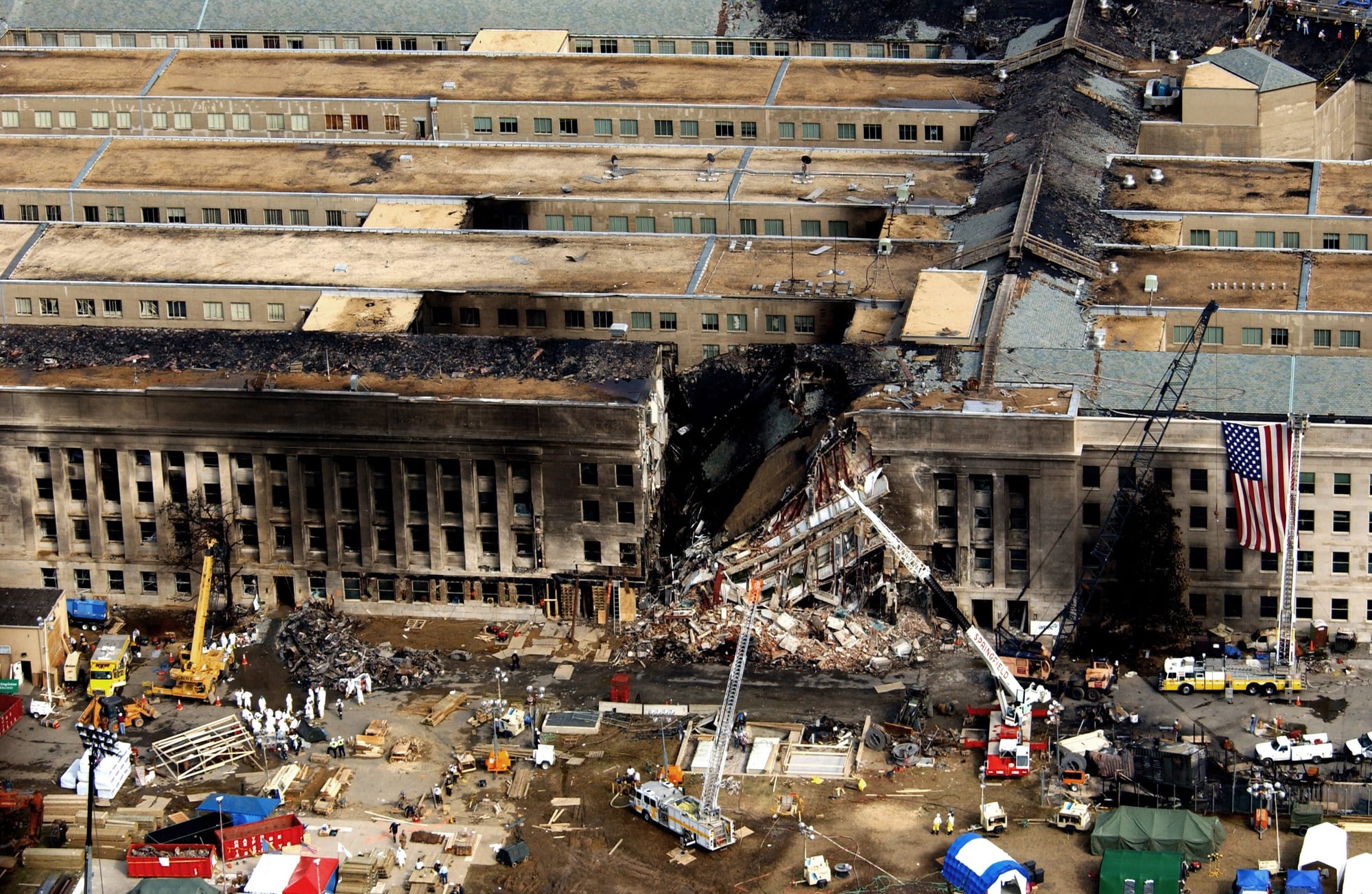
Contexto · el Pentágono (Arlington, Virginia), sede del programa AATIP
Aerial view of the Pentagon during rescue operations post-September 11 attack.JPEG · Wikimedia Commons · Dominio público · abrir original
Parte 01
El expediente en cuestión
El 16 de diciembre de 2017, The New York Times publicó en su portada un artículo firmado por la corresponsal del Pentágono Helene Cooper, el ex redactor Ralph Blumenthal y la autora Leslie Kean, titulado «Glowing Auras and 'Black Money': The Pentagon's Mysterious U.F.O. Program». El texto revelaba la existencia de un programa hasta entonces no reconocido públicamente: el Advanced Aerospace Threat Identification Program (AATIP), dedicado dentro del Departamento de Defensa a investigar fenómenos aéreos no identificados.
Según el reportaje y la documentación posterior, el programa nació en 2007 en la Defense Intelligence Agency, impulsado por el entonces líder de la mayoría en el Senado, Harry Reid (D-Nevada), con apoyo de los senadores Ted Stevens y Daniel Inouye. Se financió con unos 22 millones de dólares a lo largo de cinco años, hasta que las asignaciones cesaron en 2012. Buena parte de ese dinero fue a Bigelow Aerospace Advanced Space Studies (BAASS), empresa del multimillonario Robert Bigelow —amigo de Reid—, que produjo un informe de 494 páginas sobre avistamientos de décadas y decenas de estudios técnicos. El origen contractual del programa se conoce como AAWSAP; «AATIP» es el nombre con que se popularizó su vertiente centrada en UAP.
El artículo presentó a Luis Elizondo como el funcionario de inteligencia militar que decía haber dirigido el AATIP desde el quinto piso del anillo C del Pentágono, y que había renunciado en octubre de 2017 en protesta por el exceso de secretismo y la falta de apoyo interno. De forma coordinada, la recién creada To The Stars Academy (TTSA) —cofundada por Elizondo y el músico Tom DeLonge— difundió el mismo día dos videos captados por la Marina de EE.UU.: el clip «FLIR1» asociado al encuentro del USS Nimitz de 2004 y el llamado «Gimbal». El Pentágono, consultado, confirmó que el AATIP había existido, aunque sostuvo que había terminado en 2012; en los meses y años siguientes fue matizando qué había sido exactamente y quién lo había liderado. El reportaje ancló así, en una sola portada, tres piezas que hasta entonces circulaban por separado: un programa oscuro, un testigo institucional con nombre y unas imágenes militares.
Parte 02
Por qué este caso movió la aguja
Pocos eventos de la historia UAP importan tanto por su forma como por su contenido, y este es uno. El artículo del NYT no probó nada sobre el origen de los objetos; su peso es institucional y cultural. Al llevar el tema a la portada del periódico de referencia, tratado como asunto de seguridad de vuelo y no como folclore, disolvió de golpe el estigma que durante medio siglo lo había mantenido fuera de la conversación seria. Casi todo lo que vino después —la formalización de procedimientos de reporte en la Marina, la UAP Task Force reconocida en 2020, el informe preliminar de ODNI en 2021, las audiencias del Congreso y la creación de la AARO— asume este momento como punto de partida. El corpus lo necesitaba anclado porque ya tenía el incidente que lo alimentó (Nimitz, 2004) y la evaluación oficial que derivó de él (ODNI, 2021), pero le faltaba la bisagra de 2017 que los conecta.
Al mismo tiempo, el caso vive en Tier S por su influencia, no por ser prueba de nada, y su lectura honesta exige marcar las grietas. El programa que se reveló era, sobre todo, un contrato de investigación amplia adjudicado a una empresa privada (BAASS/Bigelow), que abarcó desde física exótica hasta el rancho Skinwalker, y cuyo rendimiento concreto es discutido. El papel de Luis Elizondo al frente del AATIP fue cuestionado: en 2019 The Intercept y, con el tiempo, declaraciones contradictorias del propio Pentágono pusieron en duda que efectivamente lo hubiera dirigido, e incluso qué relación formal tenía con el nombre «AATIP». La difusión simultánea de los videos por una empresa comercial con fines de entretenimiento (TTSA) introdujo además un interés que no es el de un organismo neutral. Nada de esto anula el hecho central —el programa existió y el Pentágono lo confirmó—, pero obliga a separar el dato duro (hubo dinero público investigando UAP) del relato que se montó encima. Es el ejemplo cabal de un caso-documento: cambia el régimen institucional del fenómeno sin decir una palabra sobre su naturaleza.
Parte 03
Lo que queda en papel
Evidencia documentada
- Artículo de portada del NYT «Glowing Auras and 'Black Money': The Pentagon's Mysterious U.F.O. Program» (16 dic 2017), firmas Helene Cooper, Ralph Blumenthal y Leslie Kean
- Confirmación del Pentágono de que el AATIP existió (programa en la DIA, ~US$22M, 2007–2012)
- Programa impulsado por el senador Harry Reid; contrato a Bigelow Aerospace (BAASS); informe de 494 páginas y decenas de estudios
- Luis Elizondo, descrito como director del AATIP, renunció en octubre de 2017; el mismo día TTSA difundió los videos de la Marina 'FLIR1'/Nimitz y 'Gimbal'
- The Intercept (2019) y declaraciones contradictorias posteriores del Pentágono cuestionaron el rol de Elizondo al frente del programa
- El evento encadenó la UAP Task Force (2020) y el informe preliminar de ODNI (2021)
Fuentes
- The New York Times — «Glowing Auras and 'Black Money': The Pentagon's Mysterious U.F.O. Program» (16 dic 2017)
- Wikipedia — 'Advanced Aerospace Threat Identification Program'
- The Intercept — 'The Media Loves This UFO Expert Who Says He Worked for an Obscure Pentagon Program. Did He?' (2019) — Contrapeso escéptico sobre el rol de Elizondo y el alcance real del AATIP.
Patrones que exhibe (3)
Ubicación
El Pentágono, Arlington, Virginia (sede del AATIP) · 38.87°, -77.06°
Casos relacionados
mismo país · 3 patrones
Investigación Burlison · contratistas FFRDC (MITRE, MIT Lincoln Lab)
2026 · Tier A · 85%
mismo país · 3 patrones
UAP Disclosure Act 2025 (S.Amdt.3111)
2023 · Tier A · 80%
mismo país · 2 patrones
WikiLeaks Podesta Cache
2016 · Tier S · 72%
mismo país · 2 patrones
Conferencia del Capitolio · Grusch + legisladores (9 jun 2026)
2026 · Tier A · 80%