1994·Isla Orcas (West Sound), Islas San Juan, Washington
Estados Unidos.Isla Orcas · destellos y anomalía eléctrica
La noche del 24 de septiembre de 1994, un grupo de seis a ocho personas reunidas en una playa de Isla Orcas (Islas San Juan, Washington) para mirar las estrellas reportó dos o tres destellos azules brillantes en el cielo, comparados con el color de los antiguos cubos de flash. El National UFO Reporting Center (NUFORC) recibió cinco reportes adicionales de fuentes independientes sobre el mismo evento, y al menos una vivienda de West Sound habría registrado anomalías eléctricas asociadas. Es un caso multi-testigo de baja extrañeza, anecdótico y sin instrumentación.
Tier B · Indiciario¿Qué significan? →
Evidencia limitada: un solo testigo, un testimonio recogido años después o un relato sin documentación primaria de la época.
Qué fue
65%causa natural o humana
Lo más probable es una causa ordinaria que nadie ha identificado
Ver el reparto entre las seis explicaciones
Causa natural o humana
Sin causa conocida
Leer el porqué completo
El arco de transformador y el bólido son lecturas de la ficha, no de una fuente. La falta de un análisis publicado no es prueba contra una causa ordinaria: AARO dio por resueltos en 2024 174 casos, todos como «objetos prosaicos», aunque «muchos otros casos siguen sin resolver».Documentos primarios
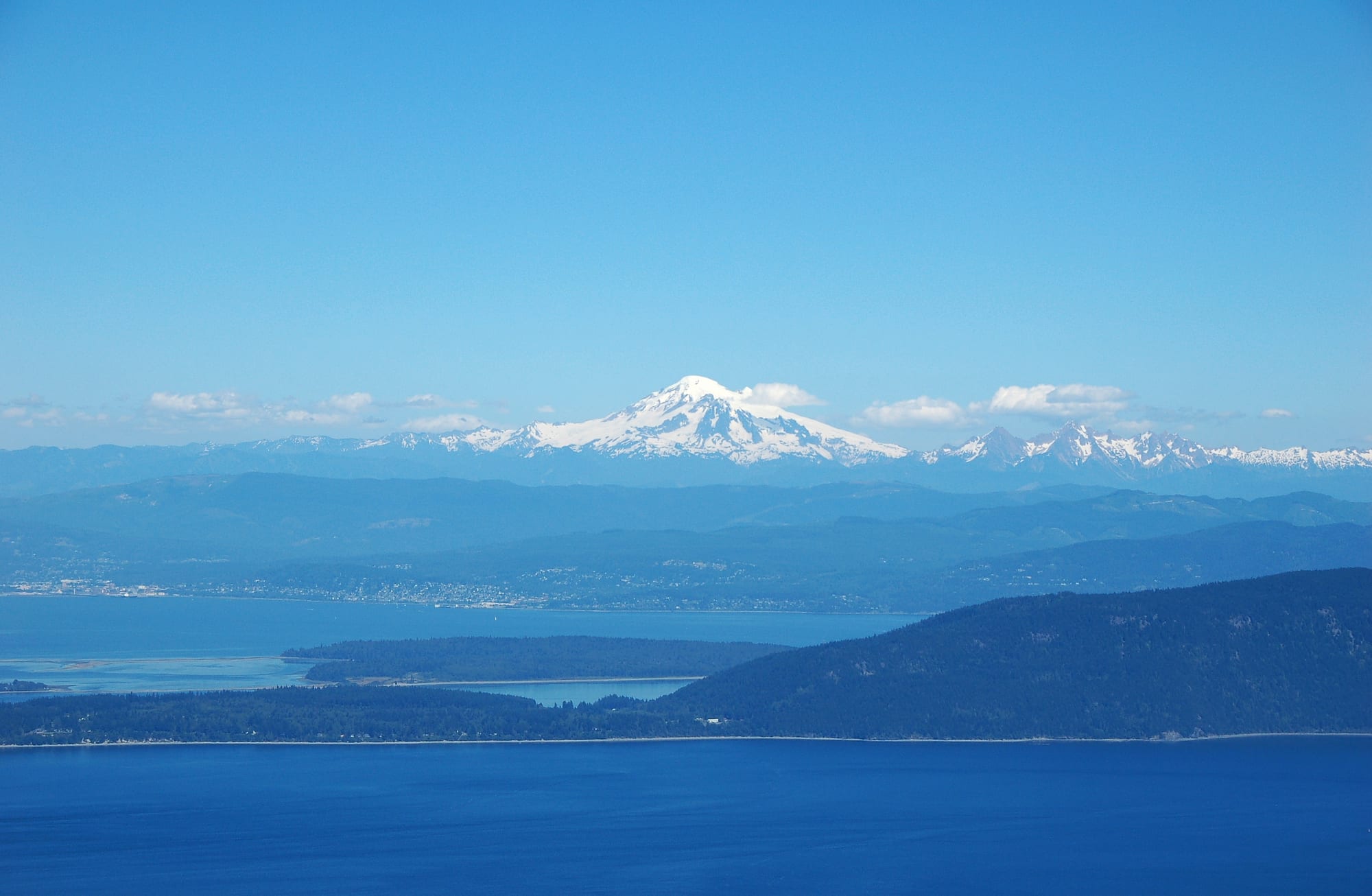
Contexto · Orcas Island (Washington)
Orcas Island, San Juan Islands, and Mount Baker, Washington State - panoramio.jpg · Wikimedia Commons · CC BY 3.0 · abrir original
NUFORC, informe S33261 · «Bright blue flashes in the sky and zigzagging light - 1994»
Informe del National UFO Reporting Center, enviado el 20 de noviembre de 2003 y publicado el 26 de noviembre, escrito por una testigo «de memoria». Cuenta que seis a ocho mujeres miraban las estrellas en una playa de Isla Orcas cuando vieron dos o tres destellos azules del color de los antiguos cubos de flash, luego una luz que tomó por un satélite y que bajó en zigzag con una pequeña cola de fuego hasta perderse a unos 60 grados, y un zumbido como de motor fuera de borda que duró una hora. La nota de Peter Davenport dice que la fecha es aproximada, que la fijó él en el sábado 24 de septiembre de 1994, que tuvo cinco reportes independientes del suceso y anomalías eléctricas en una casa de West Sound.
National UFO Reporting Center (texto leído en la copia de su base de datos en Hugging Face, arieltunontdf/nuforc_reports.CSV) · ver fuente
La noche en cuestión
El relato central proviene de un grupo de seis a ocho personas que la noche del sábado 24 de septiembre de 1994 se habían reunido en una playa de Isla Orcas, la mayor de las Islas San Juan, en el estrecho de Puget Sound del estado de Washington. Se habían congregado para observar el cielo estrellado. Según el reporte recogido por el National UFO Reporting Center (NUFORC), hacia su izquierda y en lo alto del cielo aparecieron dos o tres destellos azules brillantes, breves, que los presentes describieron con un color comparable al de los antiguos cubos de flash fotográfico. Según el mismo resumen, después una luz brillante con una pequeña cola de fuego salió disparada y bajó en zigzag hacia la tierra, hasta perderse a unos 60 grados sobre el horizonte. Según el testimonio, los destellos no fueron acompañados de un objeto sólido claramente definido; según el resumen del registro del NUFORC que reproducen los buscadores (la página no se pudo consultar directamente), el grupo oyó en cambio un zumbido grave, como de un motor fuera de borda en el lago, que duró cerca de una hora o hasta que dejaron la playa.
“ de ese verano en el noroeste estadounidense. Isla Orcas, en particular, tiene reputación local de fenómenos inusuales y atrae tanto a observadores serios como a folclore de baja credibilidad (avistamientos de criaturas, ”
Lo que distingue al episodio de un reporte aislado es la corroboración. El NUFORC (el centro civil de recepción de reportes con sede en el estado de Washington, dirigido por Peter Davenport) registró, según ese resumen, cinco reportes adicionales de fuentes independientes sobre el mismo evento. El índice del NUFORC, tal como lo recoge una copia pública de su base de datos, data el avistamiento a las 20:00 del 24 de septiembre de 1994, le da una duración de hora y media, lo resume como «destellos azules brillantes en el cielo y una luz en zigzag» y lo fecha como publicado el 26 de noviembre de 2003, nueve años después. Esa concurrencia de observadores no coordinados que describen un fenómeno luminoso simultáneo eleva el caso por encima del testimonio único: cualquiera que sea la causa, algo visible ocurrió en el cielo de la zona esa noche. A ello se sumó un segundo elemento: al menos una vivienda en West Sound, una localidad de la misma isla, habría experimentado anomalías eléctricas asociadas temporalmente al fenómeno, el tipo de detalle que, de confirmarse, conectaría el destello con una perturbación física en tierra.
El caso debe leerse en su contexto regional. El estrecho de Puget Sound y las Islas San Juan acumulan una larga tradición de reportes anómalos que se remonta al célebre incidente de Maury Island (1947), cercano en geografía, y a la propia oleada fundacional de 'platillos' de ese verano en el noroeste estadounidense. Isla Orcas, en particular, tiene reputación local de fenómenos inusuales y atrae tanto a observadores serios como a folclore de baja credibilidad (avistamientos de criaturas, 'vórtices' de energía, relatos recientes de supuestos 'nórdicos' difundidos por cineastas). Separar la señal del ruido cultural es parte del trabajo analítico: el evento de 1994 pertenece al extremo sobrio del espectro (multi-testigo, registrado en un archivo civil, aunque publicado nueve años después), no al folclore.
Las explicaciones prosaicas son fuertes y convergentes, y dos en particular encajan bien con la combinación de 'destellos azules' más 'anomalía eléctrica'. La primera es un arco eléctrico de un transformador o de una línea de distribución: un cortocircuito o flameo de un transformador produce exactamente fogonazos azul-blancos intensos y breves, visibles a distancia, y al mismo tiempo perturbaciones en el suministro eléctrico de las viviendas conectadas, lo que daría cuenta, de un solo golpe, del color, la brevedad y la anomalía en la casa de West Sound. La segunda es un bólido o meteoro brillante de entrada atmosférica, que puede producir destellos de color y ser visto simultáneamente por observadores dispersos; la coloración azulada es compatible con ciertas composiciones. Una aurora, un relámpago lejano o un reflejo no explican bien la descripción puntual y de alta intensidad. Ninguna de las dos hipótesis fuertes pudo confirmarse ni descartarse con registro técnico, porque no hubo instrumentación: el caso vive enteramente en el plano testimonial.
Por qué importa
Isla Orcas 1994 es un caso menor por diseño, y su valor es precisamente ese: funciona como ejemplo de la clase 'multi-testigo de baja extrañeza' que constituye el grueso silencioso del fenómeno y que rara vez se examina con cuidado. Su fortaleza es la corroboración (media docena de testigos en la playa más cinco reportes independientes al NUFORC) que descarta la alucinación individual o la fabricación solitaria: algo luminoso ocurrió. Su debilidad es la ausencia total de instrumentación y la baja extrañeza del estímulo: un destello azul breve es compatible con muchas causas mundanas.
La combinación de destellos azul-blancos con una anomalía eléctrica en una vivienda cercana tiene una explicación prosaica casi a medida: el flameo de un transformador de distribución, que produce ambos efectos a la vez. Un bólido es la segunda candidata fuerte. Ninguna se confirmó, por la falta de registro técnico.
Para la metodología, el caso ancla dos cosas. Primero, que la corroboración multi-testigo es necesaria pero no suficiente: confirma que hubo un estímulo real, no que el estímulo sea anómalo. Segundo, que la disciplina de separar un reporte sobrio del folclore acumulado de un lugar (Isla Orcas arrastra criaturas, vórtices y 'nórdicos' de baja credibilidad) es parte del trabajo de calibración. Es un caso real y corroborado que aporta poco como evidencia del fenómeno.
Lo que queda en papel
Evidencia documentada
- Reporte al National UFO Reporting Center (NUFORC) de uno de los testigos de la playa, escrito de memoria y registrado en 2003; el NUFORC fijó después la fecha en el 24 de septiembre de 1994
- Cinco reportes adicionales de fuentes independientes sobre el mismo evento, recibidos por el NUFORC
- Anomalías eléctricas reportadas en al menos una vivienda de West Sound, Isla Orcas
- Contexto regional documentado: tradición de reportes en Puget Sound / Islas San Juan (Maury Island 1947 cercano)
- Índice del NUFORC (copia pública de la base de datos): 24/9/1994 20:00, duración 1,5 h, «destellos azules brillantes en el cielo y una luz en zigzag», publicado el 26/11/2003
Fuentes
- National UFO Reporting Center (NUFORC) — reporte de avistamiento, Orcas Island WA
- The Orcasonian — reseñas históricas de avistamientos en Isla Orcas
- UFO Hunters — registro del avistamiento de Orcas Island, WA (24 septiembre 1994)
- Copia pública del índice del NUFORC (planetsig/ufo-reports, GitHub), fila de Orcas Island, 24 sep 1994 — Metadatos del registro: hora, duración, resumen y fecha de publicación (26 nov 2003); no incluye el texto completo del reporte.
- AARO — Fiscal Year 2024 Consolidated Annual Report on UAP (14 nov 2024)
Casos relacionados