1997·Phoenix, Arizona
Estados Unidos.Phoenix Lights
Miles de testigos observaron una formación triangular desplazándose sobre Phoenix; un segundo evento esa noche fue explicado como bengalas militares; el primero no tiene explicación oficial, y el escéptico Robert Sheaffer y el astrónomo James McGaha lo atribuyen a una formación de aviones A-10. El gobernador Symington ridiculizó el caso en 1997 y años después declaró haber visto el objeto.
Tier A · Aceptable¿Qué significan? →
Evidencia institucional: varios testigos independientes identificados, o documentación oficial de la época, sin un registro instrumental que los corrobore.
Qué fue
67%causa natural o humana
Explicación más probable: avión
Ver el reparto entre las seis explicaciones
Causa natural o humana
Sin causa conocida
Leer el porqué completo
Las luces de las 22:00 fueron bengalas LUU-2 lanzadas por A-10 de la Guardia Aérea de Maryland, según la Fuerza Aérea y el piloto Ed Jones. Muchos testigos del primer evento describen una estructura sólida, y la Fuerza Aérea no dio explicación para él.Documentos primarios
Respuestas FOIA de la Fuerza Aérea sobre la noche del 13 de marzo de 1997: base de Luke (1 may 1997) y base de Davis-Monthan (8 ago 2013)
Dos cartas del Departamento de la Fuerza Aérea a John Greenewald. En la primera, del 1 de mayo de 1997, la oficina de archivos del 56th Fighter Wing de Luke responde que no existen registros, que esa noche sus F-16 hacían «normal training missions» sin «involvement whatsoever with the lights observed over Phoenix», que su puesto de mando recibió llamadas, y que su oficina de prensa no dijo que la causa fueran bengalas: «we don't know where the question of aerial flares come from». La segunda, de Davis-Monthan en 2013, contesta a una petición sobre la hipótesis de las bengalas de los A-10: esos registros se conservan seis meses y fueron destruidos, así que no pudo consultar ningún registro de esa fecha.
Departamento de la Fuerza Aérea de EE. UU. (56 CS/SCBR, Luke AFB; 355 CS, Davis-Monthan AFB), vía The Black Vault · Dominio público (obra del Gobierno de EE. UU.) · abrir original
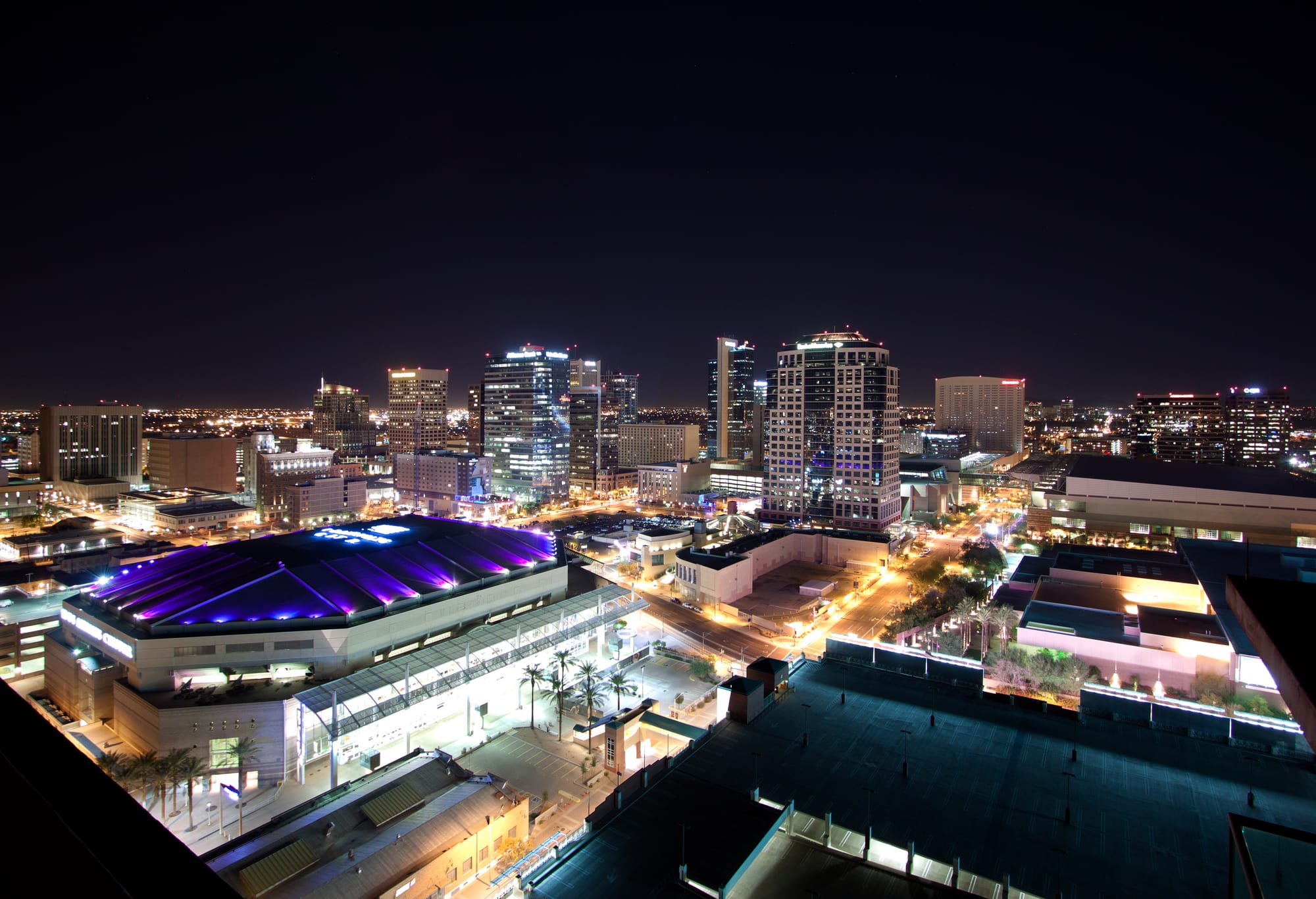
Contexto · Phoenix (Arizona), sobre cuya área metropolitana se vieron las luces de 1997
Downtown Phoenix Skyline Lights.jpg · Wikimedia Commons · CC BY-SA 2.0 · abrir original
La noche en cuestión
El 13 de marzo de 1997, entre las 20:00 y las 22:30, miles de residentes de Arizona (desde Kingman, en el noroeste, hasta Tucson, en el sur) observaron luces en formación en V o triangular; relatos posteriores los extienden a Nevada y al norte de Sonora (México). La primera llamada al centro de reportes NUFORC llegó a las 20:16 desde Paulden, 60 millas al norte de Phoenix: un policía retirado vio un grupo de cinco luces rojas que iba hacia el sur; en minutos llamaron desde Prescott, Wickenburg, Glendale, Phoenix, Scottsdale y Tempe. El análisis posterior separó dos eventos distintos que el público vivió como uno solo: (1) una formación de luces que se desplazó lentamente de norte a sur sobre Phoenix entre aproximadamente las 20:00 y las 20:30, descrita por muchos testigos como una estructura sólida, oscura y en forma de cuña que bloqueaba las estrellas a su paso (un testigo de Phoenix dijo a USA Today que veían «the outline of a mass behind the lights»), y que los controladores de la torre de Sky Harbor vieron sin que apareciera nada en sus pantallas de radar; y (2) un conjunto de luces estacionarias que aparecieron sobre la zona sur de Phoenix en torno a las 22:00 y se apagaron de forma secuencial.
El segundo evento es el que cuenta con explicación convencional sólida. En las primeras semanas, la base aérea de Luke dijo solo que «it was not one of our planes»; en julio de 1997, el portavoz de la Guardia Aérea Nacional de Maryland, el capitán Drew Sullins, explicó que ocho A-10 de la unidad hacían esa noche misiones de entrenamiento sobre el campo de tiro Barry M. Goldwater, 60 millas al suroeste de Phoenix, lanzando bengalas de iluminación con paracaídas (del tipo LUU-2) desde 15.000 pies, y que antes de volver a Davis-Monthan soltaron a gran altura todas las que les quedaban, «one hell of a light show», en palabras de un piloto. La misma nota de AP advertía que eso no explicaba los avistamientos del noroeste de Arizona, a hasta 200 millas. La cronología, la posición y el comportamiento de las luces (suspendidas, descendiendo lentamente y extinguiéndose una a una tras las montañas Estrella) son consistentes con bengalas de magnesio bajo paracaídas. Esta es la explicación mundana aceptada para la fase de las 22:00.
El primer evento (la formación en movimiento de las 20:00) es el residuo disputado. El testimonio escéptico más citado es el de Mitch Stanley, un astrónomo aficionado de 21 años que observó las luces con un telescopio Dobson de 25 cm desde Scottsdale y afirmó que, bajo aumento, cada luz se resolvía en pares montados bajo lo que parecían alas: para él, un escuadrón de aviones volando en formación. Esa observación es el principal argumento convencional para el primer evento (aviones a gran altitud cuyas luces, a simple vista, parecían un único objeto) y rebaja con fuerza la pretensión anómala. El escéptico Robert Sheaffer atribuye esa formación a cinco A-10 de la Operación Snowbird, un programa de entrenamiento invernal de la Guardia Aérea Nacional con base en Davis-Monthan, que volvían a la base por un corredor asignado con luces de formación fijas, y el astrónomo James McGaha llegó a la misma conclusión. Frente a ella están los muchos testigos que describieron una estructura rígida y silenciosa que ocultaba el cielo, incompatible (según ellos) con luces aisladas de aeronaves, y el análisis de vídeos aficionados de Village Labs, una empresa de efectos especiales de Tempe sin formación científica específica, que dijo haber descartado bengalas y luces de aviones. La base de Luke reconoció que había F-16 en el aire esa noche, pero negó que tuvieran relación con las luces.
La dimensión institucional la aporta el gobernador de Arizona, Fife Symington. En junio de 1997, cuando un oyente le preguntó en su programa de radio, dijo que era la primera noticia que tenía; días después anunció que había ordenado una investigación estatal y luego convocó una conferencia de prensa burlesca en la que su jefe de gabinete apareció disfrazado de extraterrestre. Diez años después, en 2007, Symington escribió que él mismo había visto esa noche «a massive delta-shaped, craft silently navigate over Squaw Peak», que no se parecía a nada hecho por el hombre y que no eran bengalas, «because flares don't fly in formation», y explicó que la conferencia buscó «lighten the mood» y reducir la sensación de pánico. La reversión es, en sí misma, un dato sobre la presión política que pesa sobre un funcionario senior que reporta un avistamiento.
Por qué importa
Caso de calibración, instructivo porque dentro de un mismo evento conviven una explicación convencional sólida y un residuo disputado. El segundo evento (bengalas sobre Goldwater Range) está genuinamente explicado por la Fuerza Aérea y confirmado por el escuadrón que las lanzó: es una demostración limpia de que un avistamiento masivo y emocionalmente intenso puede tener una causa mundana. Esa parte del caso enseña humildad: miles de personas pueden ver algo real y describirlo con sinceridad sin que ello implique anomalía.
El primer evento (la formación en movimiento) no tiene cierre oficial, pero tampoco está libre de explicación convencional: el testimonio de Mitch Stanley con telescopio (que resolvió las luces en aviones) es el contrapeso escéptico de mayor peso, junto con la identificación de Sheaffer y McGaha de una formación de A-10. La disputa entre Stanley y los testigos de la estructura sólida queda abierta.
La reversión pública del gobernador Symington (de la burla escenificada en 1997 al testimonio personal en 2007) es el componente institucional duradero: un dato sobre la presión política y reputacional que pesa sobre un funcionario senior que reconoce un avistamiento, y sobre cómo esa presión puede distorsionar el registro público durante años.
Lo que queda en papel
Evidencia documentada
- Miles de testigos en Arizona, Nevada, Sonora
- Reversión testimonial del Gobernador Symington (1997 burla → 2007 testimonio personal)
- La Guardia Aérea de Maryland atribuyó en julio de 1997 las luces de las 22:00 a bengalas de ocho A-10 sobre el Goldwater Range: explicación parcial confirmada
- Primer evento (formación 20:00) sin explicación oficial; Sheaffer y McGaha lo atribuyen a cinco A-10 de la Operación Snowbird, y Mitch Stanley vio aviones por telescopio
Fuentes
- Symington, F. — «Symington: I saw a UFO in the Arizona sky», CNN (9 nov 2007)
- Craven, S. — «Intrigue persists over lights in sky», The Arizona Republic (25 feb 2007)
- Kitei, L. — The Phoenix Lights (2010) — Compilación de testigos por médica local
- Wikipedia — Phoenix Lights — Fuente secundaria. Resume las identificaciones de Robert Sheaffer y James McGaha (formación de A-10 de la Operación Snowbird) y la observación de Mitch Stanley.
- Prensa de 1997 sobre las luces de Phoenix: Arizona Republic (18 mar), USA Today (18 jun), AP (jun) y AP/Daily News Leader (26 jul, bengalas de la Guardia Aérea de Maryland), reproducidos en UFO Newsclipping Service n.º 334, 336 y 337 — Fuente primaria: crónicas de la época; el n.º 334 y el n.º 337 están en la misma colección de archive.org.
Casos relacionados
mismo objeto · mismo país
Stephenville
2008 · Tier A
mismo objeto · mismo país
Hudson Valley · el 'Boomerang'
1983 · Tier A
mismo objeto · mismo país
Tres 'UAP' resueltos: eran tres aviones comerciales, según el cruce con radar de la AARO
2021 · Tier A
mismo objeto · mismo país
El MQ-9 que grabó a otro MQ-9 — y una estela que era compresión de video
2023 · Tier A