1996·Órbita terrestre baja · transbordador Columbia (STS-80), lanzado desde el Kennedy Space Center, Florida
Estados Unidos / órbita terrestre baja.STS-80 · objeto no identificado en fotografía orbital (1996)
Durante la misión STS-80 del transbordador Columbia, del 19 de noviembre al 7 de diciembre de 1996, la fotografía de observación terrestre captó un pequeño objeto blanco y alargado, visible sobre el negro del espacio junto al limbo iluminado de la Tierra y, en otra toma, sobre las nubes. La NASA catalogó tres fotogramas como «objeto no identificado» (NASA-UAP-D030/031/032), desclasificados en 2026 por la AARO.
Seguir leyendo el resumen
Son fotos de una sola cámara, sin radar ni datos de distancia: la explicación propuesta es un fragmento cercano al orbitador iluminado por el Sol, cuya escala y distancia no pueden juzgarse en una imagen monocular.
Tier A · Aceptable¿Qué significan? →
Evidencia institucional: varios testigos independientes identificados, o documentación oficial de la época, sin un registro instrumental que los corrobore.
Qué fue
63%causa natural o humana
Explicación más probable: objeto espacial
Ver el reparto entre las seis explicaciones
Causa natural o humana
Sin causa conocida
Leer el porqué completo
Jones habla de los vídeos de la cámara de televisión de la bodega, no de las tres fotos de PURSUE; para estas, WARUFO, un sitio de análisis sin autor identificado, propone lo mismo: su comportamiento es «compatible con basura orbital o una partícula de hielo».Documentos primarios
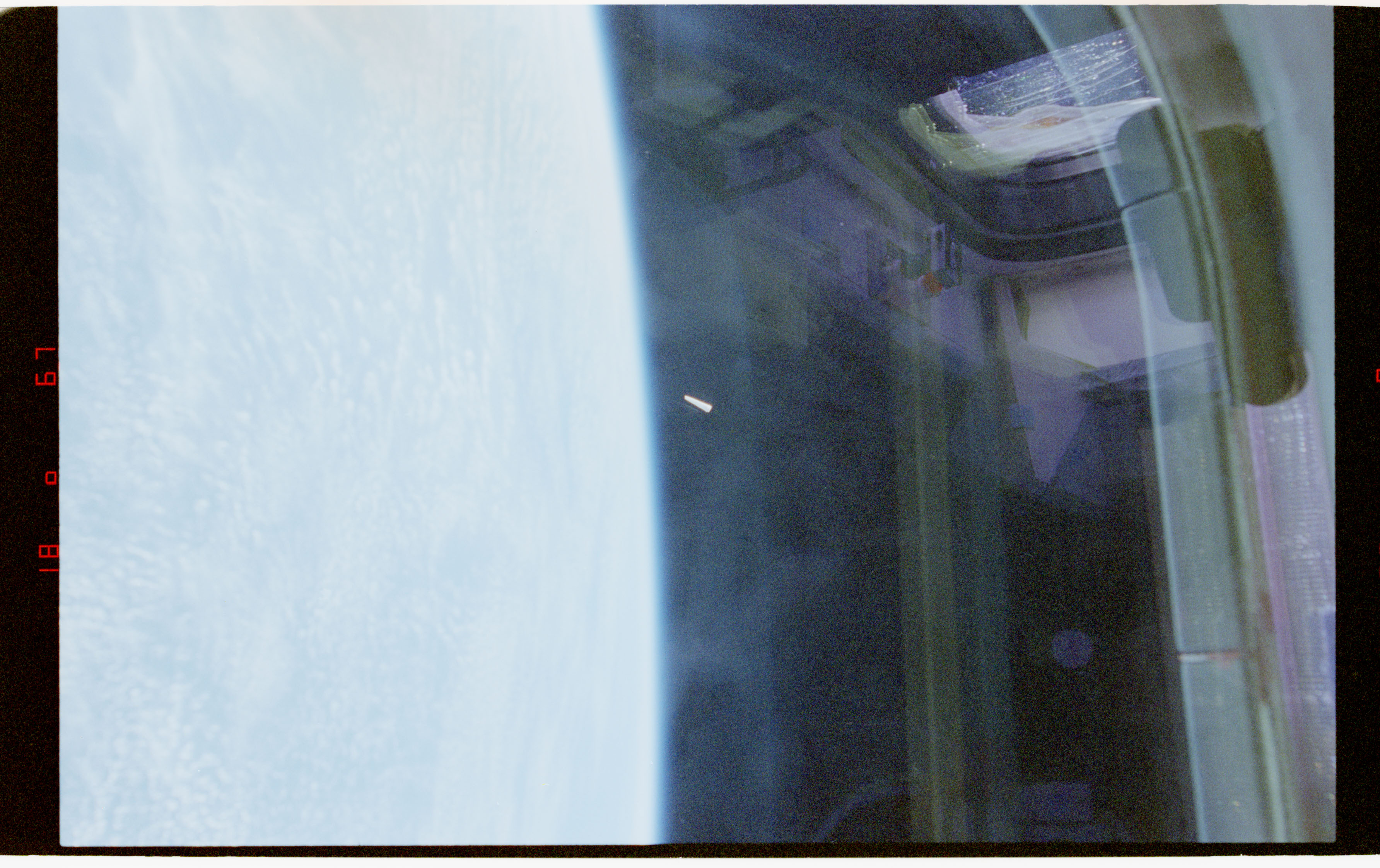
NASA-UAP-D030 — STS-80, objeto no identificado (imagen 1, 1996)
NASA / AARO (PURSUE Release 04) · Dominio público · obra del Gobierno de EE. UU. · abrir original
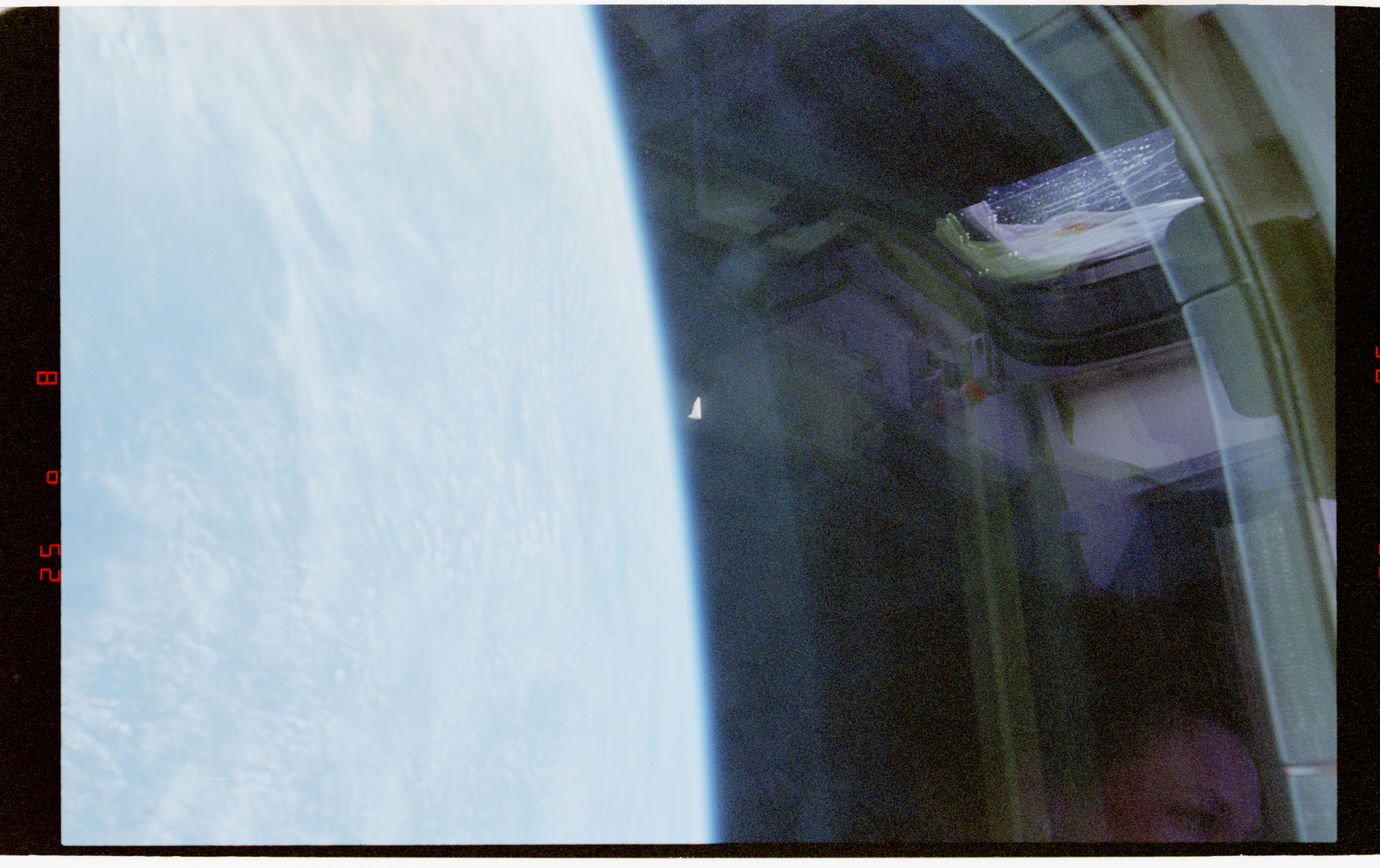
NASA-UAP-D031 — STS-80, objeto no identificado (imagen 2, 1996)
NASA / AARO (PURSUE Release 04) · Dominio público · obra del Gobierno de EE. UU. · abrir original
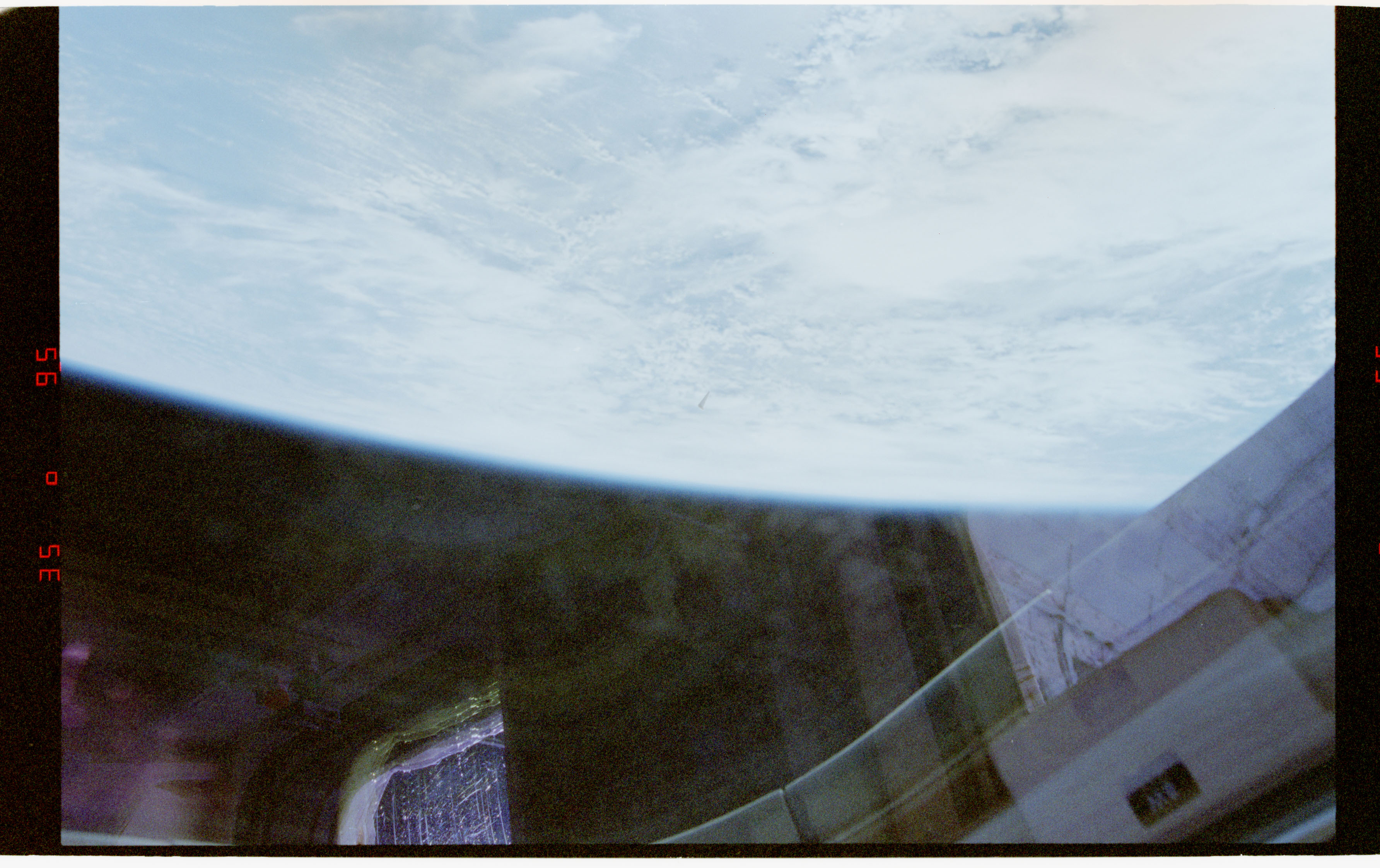
NASA-UAP-D032 — STS-80, objeto no identificado (imagen 3, 1996)
NASA / AARO (PURSUE Release 04) · Dominio público · obra del Gobierno de EE. UU. · abrir original
La noche en cuestión
La misión STS-80, del transbordador espacial Columbia, voló entre el 19 de noviembre y el 7 de diciembre de 1996 y fue (con más de 17 días) la más larga de todo el programa del transbordador. Como en casi todos los vuelos, la tripulación dedicó tiempo a la fotografía de observación de la Tierra desde las ventanas de la cubierta de vuelo. En dos de los tres fotogramas publicados se ve un pequeño objeto blanco, alargado en uno y casi triangular en el otro, sobre el fondo negro del espacio, a poca distancia del limbo iluminado del planeta (la franja azul-blanquecina de nubes y atmósfera), con la estructura de la ventana y de la bahía de carga en el encuadre y con reflejos del interior de la cabina en el cristal, entre ellos el rostro de un tripulante. En el tercero, que muestra la Tierra y la bahía de carga, el objeto aparece sobre las nubes, como una mancha blanca alargada.
La NASA identificó y catalogó tres de estas tomas como imágenes de «objeto no identificado» de STS-80, que fueron desclasificadas en 2026 dentro del UAP Records de la Oficina de Resolución de Anomalías de Todos los Dominios (AARO), con los códigos NASA-UAP-D030, D031 y D032. Es importante subrayar qué son y qué no son: son tres fotografías fijas, tomadas con una sola cámara, sin telemetría, sin radar y sin ningún dato de distancia o velocidad asociado. La etiqueta «no identificado» significa exactamente eso (que no se identificó el objeto en la foto), no que se haya establecido nada anómalo sobre su naturaleza.
La explicación convencional para este tipo de imagen es sólida y está bien documentada por analistas del programa espacial. En órbita, el orbitador está permanentemente rodeado de una nube de partículas propias: escamas de hielo desprendidas de los propulsores de maniobra y de las líneas de agua, fragmentos de aislamiento o de pintura, y pequeños restos liberados por el vehículo. Iluminadas por el Sol contra el fondo oscuro del espacio o el fondo brillante de la Tierra, esas partículas cercanas aparecen como «objetos» luminosos cuyo tamaño y distancia son imposibles de estimar en una imagen monocular: una escama de milímetros a pocos metros de la ventana es ópticamente indistinguible de una nave grande a kilómetros. A ello se suman los reflejos y dobles imágenes que produce el cristal de varias capas de las ventanas del transbordador. Sin triangulación desde dos puntos, ni datos de radar, la fotografía por sí sola no puede resolver la ambigüedad, el mismo límite que gobierna el caso previo STS-48 (1991).
Por qué importa
El caso importa por su valor de calibración, no por su contenido: es el ejemplo de manual de cómo una imagen espectacular puede tener casi nada de información utilizable. Forma parte del lote de imágenes de la NASA en el release 04 de la AARO (es un ítem institucional documentado, con cadena de custodia), pero la explicación mundana (una partícula cercana al orbitador) basta para lo que muestran las fotos. Ponerlo junto a STS-48 (1991) permite al lector comparar dos episodios del mismo tipo y ver que la etiqueta oficial «no identificado» describe una limitación de los datos, no una propiedad del objeto.
El error que este caso corrige es el más común en la cobertura popular de UAP: tratar «no identificado» como sinónimo de «anómalo» o «no humano». Una sola cámara, sin distancia ni radar, no puede distinguir una escama de hielo de una nave; y la historia del programa del transbordador está llena de estas «apariciones» que, cuando hubo datos adicionales, resultaron ser desechos orbitales o de la propia nave. Lo que queda como residuo es modesto: la NASA fotografió algo que no identificó positivamente, y sin más sensores no se puede cerrar del todo. Esa incertidumbre es lo que impide catalogarlo directamente como resuelto, y la debilidad de los datos es lo que impide darle más peso.
Lo que queda en papel
Evidencia documentada
- Tres fotografías fijas de «objeto no identificado» de STS-80 (NASA-UAP-D030/031/032, 1996), desclasificadas en 2026 (AARO release 04)
- Contexto: misión STS-80 del Columbia (19 nov – 7 dic 1996), la más larga del programa del transbordador
- Objeto blanco pequeño visible en las tres fotos: en dos, sobre el fondo negro junto al limbo iluminado; en la tercera, sobre las nubes de la Tierra; estructura de ventana/bahía de carga y reflejos de la cabina en el cristal
- Sin radar, telemetría ni datos de distancia: imagen de una sola cámara (monocular)
- Explicación propuesta: partícula cercana al orbitador (hielo / aislamiento / pintura) iluminada por el Sol, indistinguible de un objeto lejano sin triangulación
Fuentes
- NASA / AARO — «STS-80 Unidentified Object» (imágenes 1–3, 1996) — Fotografías desclasificadas en 2026 en el UAP Records de la AARO, release 04, códigos NASA-UAP-D030, D031 y D032. Índice oficial PURSUE en war.gov/UFO/.
- Wikipedia — STS-80 (fuente secundaria: datos de la misión)
- Wikipedia — James Oberg (fuente secundaria sobre el analista) — Explicación estándar de los objetos de ventana de transbordador como partículas próximas al orbitador (hielo/desechos).
- Tom Jones — «Did UFOs Visit STS-80 Columbia?», Flight Notes (18 abr 2011)
Casos relacionados
misma explicación · mismo país · misma época
El «Caballero Negro» · la tapa perdida en la misión STS-88
1998 · Tier S
misma explicación · mismo país · misma época
STS-48 NASA
1991 · Tier A
misma explicación · mismo país
Skylab · destellos y objeto rojizo (NASA, PURSUE)
1973 · Tier B
misma explicación · mismo país
Apolo 11 · observaciones del Technical Crew Debriefing (NASA, PURSUE)
1969 · Tier B