1972·NASA · archivo fotográfico Apollo 17 (superficie lunar, Taurus-Littrow)
Estados Unidos / espacio cislunar.Apollo 17 · formación triangular VM6 (PURSUE)
La placa VM6 de Apollo 17 (diciembre de 1972) muestra, al ampliar el cuadrante inferior derecho del cielo lunar, tres puntos luminosos en triángulo regular.
Seguir leyendo el resumen
Circulaba desde hacía décadas en catálogos amateur; en 2026, dentro de PURSUE, el Departamento de Guerra abrió el caso NASA-UAP-VM6, y un análisis preliminar del Gobierno, tras obtener el film original para un análisis conjunto con la NASA, la describió como «potencialmente el resultado de un objeto físico en la escena». La lectura escéptica histórica es un artefacto fotográfico (defecto de la emulsión, destello de lente o reflejo en la ventanilla), que ese análisis pone en duda.
Tier A · Aceptable¿Qué significan? →
Evidencia institucional: varios testigos independientes identificados, o documentación oficial de la época, sin un registro instrumental que los corrobore.
Qué fue
68%causa natural o humana
Explicación más probable: defecto de película o foto
Ver el reparto entre las seis explicaciones
Causa natural o humana
Sin causa conocida
Documento primario · PDF
NASA-UAP-VM6 · placa Apollo 17 (PURSUE Release 01)
Documento primario oficial en war.gov/UFO. Mirror accesible: github.com/wretcher207/the-ufo-files.
Documentos primarios
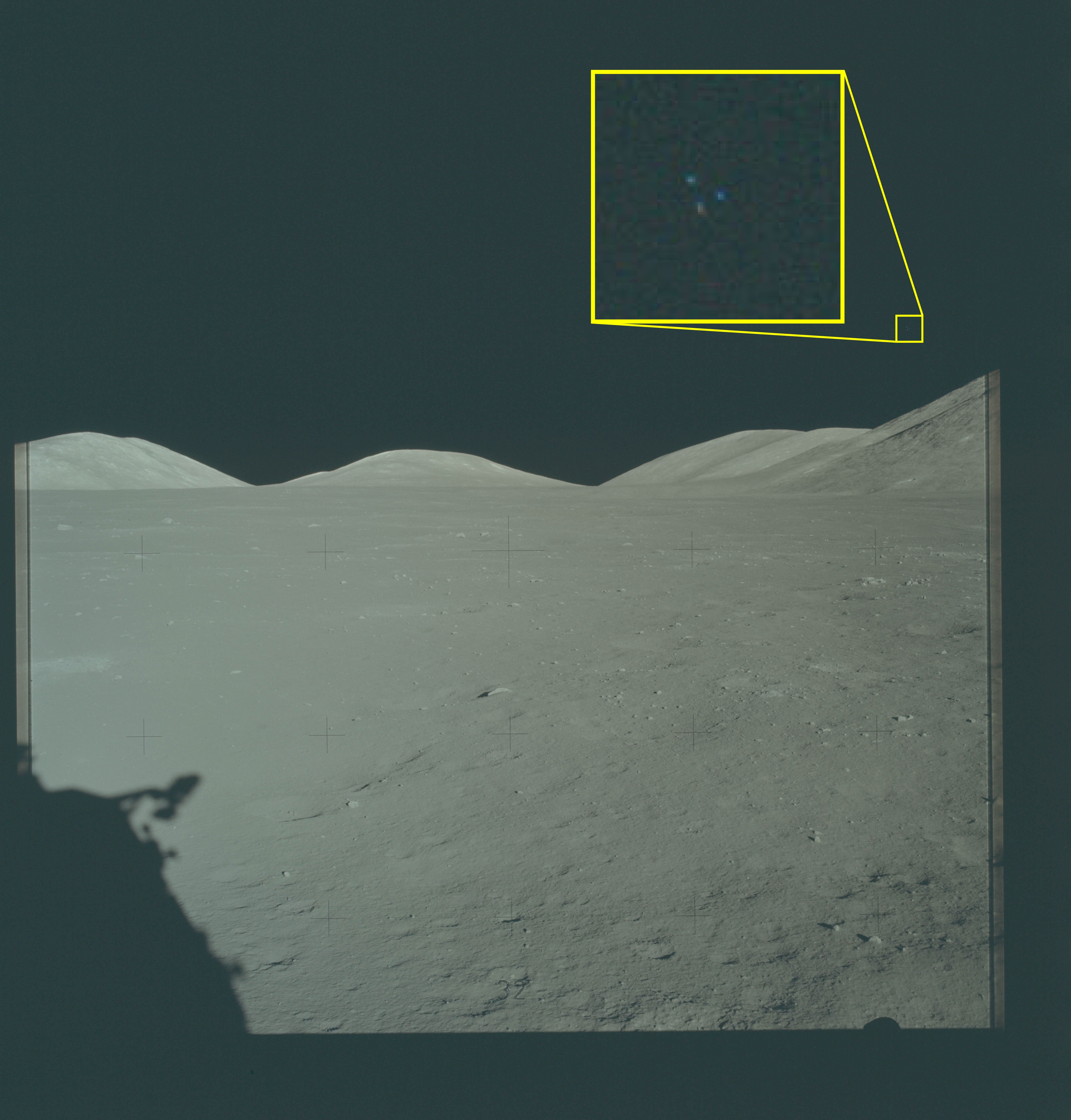
NASA-UAP-VM6 — placa de Apollo 17 con la formación triangular
NASA · Department of War (PURSUE Release 01) · Dominio público · obra del Gobierno de EE. UU. · abrir original
NASA-UAP-D2 — transcripción aire-tierra de Apollo 17 (dic 1972): partículas, destellos y 'streaks'
NASA · Department of War (PURSUE Release 01) · Dominio público · obra del Gobierno de EE. UU. · abrir original
NASA-UAP-D5 — debriefing científico de Apollo 17 (8 ene 1973): fondo UV/rayos-X inesperado
NASA · Department of War (PURSUE Release 01) · Dominio público · obra del Gobierno de EE. UU. · abrir original
NASA-UAP-D6 — debriefing técnico de tripulación de Apollo 17 (1973)
NASA · Department of War (PURSUE Release 01) · Dominio público · obra del Gobierno de EE. UU. · abrir original
La noche en cuestión
La imagen VM6 pertenece al archivo fotográfico de la misión Apollo 17 (diciembre de 1972), la última misión tripulada a la superficie lunar del programa Apollo. En una de las placas de archivo, al ampliar el cuadrante inferior derecho del cielo lunar sobre el horizonte, aparecen tres puntos luminosos dispuestos en una formación triangular regular. La anomalía pasó esencialmente inadvertida durante décadas: la fotografía circuló en foros y catálogos amateur, pero sin un estatus oficial que la respaldara. Los propios astronautas, durante la misión, comentaron partículas brillantes que veían pasar junto a la nave ('unas cuantas partículas o fragmentos muy brillantes que pasan a la deriva mientras maniobramos', dijo Ron Evans) y especularon que fueran fragmentos de hielo o pintura desprendidos de la etapa S-IVB; pero esos comentarios se refieren a lo que veían por la ventanilla, no a esta placa. El pie oficial de la placa no recoge ninguna explicación y dice que 'no hay consenso sobre la naturaleza de la anomalía'.
“unas cuantas partículas o fragmentos muy brillantes que pasan a la deriva mientras maniobramos”
Lo que cambió en 2026 no fue la fotografía sino su lectura institucional. Dentro del sistema PURSUE (el release federal de archivos UAP ordenado por la administración Trump y ejecutado por el recién renombrado Departamento de Guerra, con participación de la NASA) el Departamento de Guerra abrió un caso oficial sobre la placa, NASA-UAP-VM6 («DOW has opened a case», dice el pie), y la incluyó en la primera tanda publicada en war.gov/UFO el 8 de mayo de 2026. Al evaluarla, la agencia empleó un lenguaje notablemente menos evasivo que el habitual en sus fichas: según el pie, un «nuevo análisis preliminar del Gobierno de EE.UU.» sugiere que la anomalía es 'potencialmente el resultado de un objeto físico en la escena'. Para una oficina que en la inmensa mayoría de sus expedientes se refugia en la 'no-identificación' sin comprometerse con ninguna interpretación, afirmar que algo es 'potencialmente un objeto físico' es un matiz deliberado, no una fórmula de archivo.
El pie acompañó la reevaluación con una medida concreta: el Gobierno «ha obtenido el film original de la misión Apollo 17», y los resultados del análisis completo de la NASA y del Departamento de Guerra se publicarán cuando termine. El pie no detalla el método de ese análisis. Seguía pendiente y sin resultados publicados, de modo que el caso permanece formalmente sin resolver. Es importante separar las dos capas: la capa fotográfica (tres puntos en triángulo sobre el horizonte lunar) y la capa institucional (una agencia federal reclasificando una placa histórica con lenguaje más fuerte y reabriendo el material primario). La segunda capa es lo realmente nuevo; la primera lleva medio siglo disponible.
La lectura escéptica que circulaba antes de 2026 es la de un artefacto fotográfico: defectos de la emulsión, destellos de lente o luz reflejada en la ventanilla del módulo lunar. Un negativo de 1972 expuesto en el vacío lunar, sin atmósfera que lave las partículas, es un candidato natural a contaminación por hielo, escamas de pintura del módulo, polvo en el plano focal o reflexiones internas del objetivo; tres puntos alineados en triángulo no exigen un objeto extraterrestre cuando un trío de fragmentos a distintas profundidades de campo produce exactamente esa firma. El análisis preliminar del Gobierno apunta en la dirección contraria a la del artefacto: sugiere 'un objeto físico en la escena', no un fallo de la cámara. Lo que impide cerrarlo del todo como artefacto trivial es, otra vez, la capa institucional: el Departamento de Guerra podría haberlo archivado como reflejo y no lo hizo, eligiendo en cambio obtener el film y declarar 'potencialmente un objeto físico'. Esa elección no convierte la placa en evidencia de nada no humano (no lo es), pero sí la convierte en un caso de reencuadre oficial cuyo desenlace depende de un reanálisis técnico aún no entregado.
Por qué importa
Este caso importa por su valor institucional, no por su fuerza probatoria. Como evidencia física, una placa de archivo de 1972 con tres puntos en triángulo es débil: las explicaciones mundanas (defecto de la emulsión, destello de lente, reflejo en la ventanilla, hielo o pintura desprendidos) cubren el fenómeno sin esfuerzo. Lo que lo hace relevante es la capa de reencuadre: el Departamento de Guerra, dentro del primer release PURSUE, optó por no archivar la placa como reflejo trivial y en su lugar la catalogó formalmente, la describió como 'potencialmente un objeto físico' (lenguaje más comprometido que su estándar habitual) y obtuvo el film original para un nuevo análisis. Ese gesto es el dato analítico relevante: una agencia federal eligiendo elevar, en lugar de enterrar, un material histórico de origen NASA, y exponiéndolo en un portal público con URL estable. El desenlace del caso queda atado a un reanálisis técnico todavía no publicado; hasta entonces, su lugar es el de un ejemplo de cómo el aparato de divulgación de 2026 reprocesa archivos antiguos con criterios nuevos, no el de una prueba sobre la naturaleza del fenómeno. La placa por sí sola no mueve ninguna de las narrativas de fondo; el reencuadre oficial sí ilustra el patrón de transparencia institucional en tiempo real que define el ciclo PURSUE.
Lo que queda en papel
Evidencia documentada
- Placa de archivo NASA-UAP-VM6 de la misión Apollo 17 (diciembre 1972): tres puntos luminosos en formación triangular sobre el horizonte lunar
- Caso oficial abierto por el Departamento de Guerra dentro del primer release PURSUE (war.gov/UFO, 8 may 2026)
- Pie oficial, citando un análisis preliminar del Gobierno de EE.UU.: 'potencialmente el resultado de un objeto físico en la escena', inusualmente directo para estas fichas
- El Gobierno obtuvo el film original de Apollo 17 para un análisis conjunto de la NASA y el Departamento de Guerra (resultados pendientes)
- Lectura escéptica histórica: artefacto fotográfico (emulsión, destello de lente, reflejo en la ventanilla); los astronautas especularon con hielo o pintura de la S-IVB para las partículas que veían por la ventanilla, no para esta placa
Fuentes
- war.gov/UFO — NASA-UAP-VM6 (PURSUE Release 01, documento primario) — Placa oficial publicada en el portal del Departamento de Guerra.
- the-ufo-files — apollo-17-vm6 (mirror público accesible del release PURSUE) — Mirror curado con writeup y referencia al documento primario.
- Department of War — 'Releases Unidentified Anomalous Phenomena Files in Historic Transparency Effort' — Comunicado oficial del primer release que incluye el material NASA.
- WION (Tarun Mishra) — 'Declassified: The Bizarre Truth Behind Apollo 17's Lunar Triangular Formation', 10 may 2026 — Resume la lectura escéptica histórica de la placa como artefacto fotográfico.
- CBS News — 'UFO files reveal Apollo 17 crew saw mysterious objects, lights' — Cita las frases de la tripulación sobre partículas y destellos (Evans, Schmitt, Cernan).
Casos relacionados
mismo objeto · misma época
Lago de Cote · IGN aerial photo
1971 · Tier A
misma explicación · mismo país · misma época
Malmstrom · apagado de ICBMs
1967 · Tier A
misma explicación · mismo país
STEREO y SOHO · los «ovnis» junto al Sol
2011 · Tier S
misma explicación · mismo país
Cuando el propio sensor explica por qué el objeto parpadea
2019 · Tier A