Caso Nº 137·Australia
1966·Pine Gap, cerca de Alice Springs, Territorio del Norte
Australia.Pine Gap · Joint Defence Facility (programa)
Joint Defence Facility Pine Gap, base de inteligencia conjunta Australia–EE.UU. establecida en 1966 bajo el código 'Rainfall', presentada inicialmente como sitio de investigación espacial y convertida en uno de los nodos satelitales más importantes del 5-Eyes. Es el equivalente estructural australiano de los grandes programas clasificados estadounidenses: contrato bilateral firmado, presupuesto continuo, mandato escrito y reconocimiento institucional sostenido por seis décadas. Los reportes UAP recurrentes en la región circundante (Wycliffe Well, Alice Springs) — incluyendo el incidente de tres testigos en diciembre 1989 con descripción de craft metálico saliendo de una puerta camuflada — son tracking periférico de su importancia institucional, no su núcleo.
Año
1966
Tier
S
Probabilidad
70%
Categoría
Documento
Evidencia fuerte: registro de sensor instrumental + múltiples testigos (típicamente militar). Tres ejes independientes: el «tier» mide la fuerza de la evidencia; la «probabilidad» estima cuán genuinamente inexplicado está el caso —un fenómeno natural puede seguir sin explicación, así que no equivale a «no-prosaico»—; y la partición de explicaciones (abajo) dice qué fue más plausiblemente. Por eso un caso bien documentado puede tener como causa más plausible un posible fraude, y un Tier B no es, por eso, un fraude.
Documentos primarios · visor
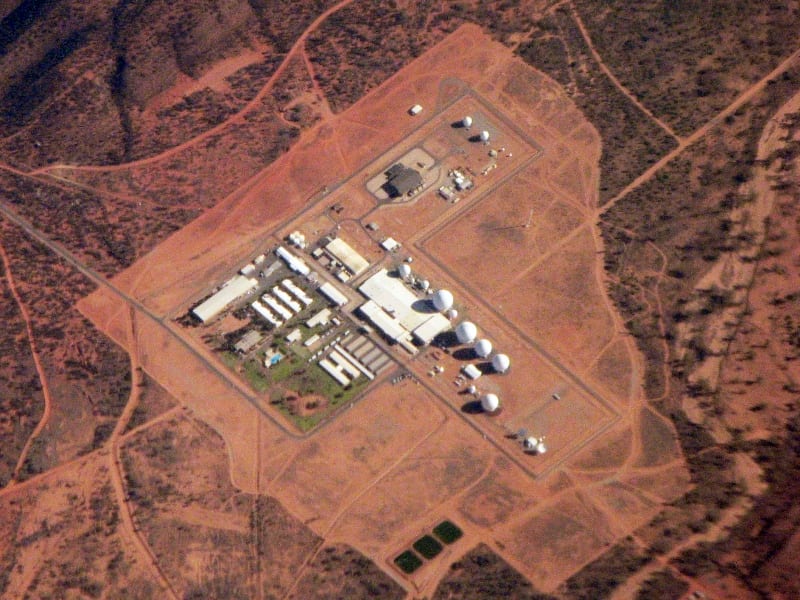
Contexto · la instalación de Pine Gap, cerca de Alice Springs (Australia)
Pine Gap by Skyring.jpg · Wikimedia Commons · CC BY-SA 3.0 · abrir original
Parte 01
El expediente en cuestión
El Joint Defence Facility Pine Gap fue establecido mediante un tratado bilateral firmado entre Australia y Estados Unidos el 9 de diciembre de 1966, en una explanada desértica a unos 18 km al suroeste de Alice Springs (Territorio del Norte). El nombre público inicial de la instalación fue 'Joint Defence Space Research Facility', y su justificación declarada fue la 'investigación espacial' y de la alta atmósfera — una caracterización que fuentes posteriores describen como deliberadamente engañosa, destinada a no revelar su misión real. El tratado estipulaba que, tras un período inicial de nueve años, cualquiera de las dos partes podía cancelar el acuerdo con un año de aviso; en la práctica ha sido renovado de forma continua durante casi seis décadas. La base entró en operaciones plenas el 19 de junio de 1970 con el lanzamiento de su primer satélite asociado, de nombre clave Rhyolite, dedicado a interceptar transmisiones soviéticas, incluidas las telemetrías de su programa de misiles. Durante sus primeras décadas la estación fue operada bajo dirección de la CIA. Hoy es uno de los nodos centrales de la red satelital de Signals Intelligence (SIGINT) de la alianza 5-Eyes — Australia firmó el acuerdo de intercambio de inteligencia de señales UKUSA en 1956 — junto con instalaciones como Menwith Hill (Reino Unido) y Misawa (Japón).
“ y acumula reportes desde la Segunda Guerra Mundial. En diciembre de 1989, tres hombres que regresaban de una expedición de caza cerca de Pine Gap reportaron observar una ”
La infraestructura visible incluye más de una docena de radomos blancos característicos que albergan antenas para el control de satélites geoestacionarios y el procesamiento de tráfico SIGINT. Su rol fue confirmado públicamente en los documentos desclasificados por Edward Snowden (2013–2014): procesamiento de datos de targeting para operaciones militares estadounidenses, apoyo a operaciones con drones y monitoreo de comunicaciones del hemisferio sur. Su personal combinado supera las 800 personas; el contingente estadounidense proviene mayoritariamente de la National Security Agency (NSA) y de la National Reconnaissance Office (NRO), con personal australiano del Australian Signals Directorate (ASD). En todo este plano — el institucional — Pine Gap no es objeto de controversia: su existencia, su tratado fundacional, su presupuesto y su función SIGINT están documentados en fuentes primarias y secundarias verificables.
La dimensión UAP del caso es de naturaleza distinta y mucho más débil epistémicamente, y conviene marcarlo con claridad. La región circundante de Pine Gap es uno de los hotspots UAP más sostenidos de Australia: Wycliffe Well, a unos 380 km al norte, se autodenomina 'capital OVNI de Australia' y acumula reportes desde la Segunda Guerra Mundial. En diciembre de 1989, tres hombres que regresaban de una expedición de caza cerca de Pine Gap reportaron observar una 'puerta camuflada' abriéndose en una formación rocosa, revelando un disco metálico gris que salió a alta velocidad — un relato puramente testimonial, sin instrumentación ni corroboración independiente. El periodista australiano Ross Coulthart ha sostenido en investigaciones públicas que la base ha sido escenario de incidentes UAP recurrentes, citando fuentes anónimas del Australian Defence Force. Ninguno de estos incidentes ha sido reconocido oficialmente por el gobierno australiano ni por el Pentágono. La explicación más parsimoniosa para una correlación de reportes anómalos alrededor de una instalación militar de máxima clasificación es directa: una base con satélites, antenas, posibles ejercicios y tráfico aéreo restringido genera de forma natural observaciones difíciles de explicar para el público civil, sin necesidad de invocar un fenómeno exótico.
Parte 02
Por qué este caso movió la aguja
Es la pieza institucional ancla de Australia en el corpus, equivalente estructural de AAWSAP para EE.UU. y de Operação Prato/CINDACTA para Brasil. Lo que importa no es un incidente puntual sino la existencia continua de un programa federal multi-soberano con contrato firmado, presupuesto sostenido y reconocimiento sostenido por seis décadas, en un sitio donde los reportes UAP se acumulan cronológicamente. Cierra el gap geográfico-institucional del corpus: sin Pine Gap, Australia quedaba representada solo por incidentes individuales (Westall, Valentich) sin pieza institucional que articule su rol estructural en el ecosistema 5-Eyes. El reconocimiento de Pine Gap como nodo SIGINT por documentos Snowden hace la base institucionalmente verificable; los reportes UAP asociados son tracking periférico calibrado en consecuencia.
Parte 03
Lo que queda en papel
Evidencia documentada
- Pine Gap Treaty firmado en 1966 entre Australia y EE.UU., código original 'Rainfall', justificación pública inicial 'investigación espacial'
- Operación plena desde 1970, más de una docena de radomos visibles, mandato confirmado en documentos desclasificados por Snowden (2013–2014)
- Rol confirmado: procesamiento SIGINT en banda Ka/Ku/X, targeting de operaciones militares estadounidenses, coordinación drones, monitoreo hemisferio sur
- Personal combinado >800: contingente EE.UU. de NSA y NRO + personal australiano del Australian Signals Directorate (ASD)
- Reportes UAP recurrentes en la región circundante (Wycliffe Well, autodenominada 'UFO capital of Australia') desde la Segunda Guerra Mundial
- Incidente diciembre 1989: tres testigos reportan disco metálico saliendo de 'puerta camuflada' en formación rocosa cerca de la base
- Investigaciones de Ross Coulthart (periodista australiano) citando fuentes anónimas del Australian Defence Force sobre incidentes UAP recurrentes en la base
Fuentes
- Pine Gap Treaty 1966 — Australia/United States bilateral agreement (texto en archivos federales) — Documento fundacional del Joint Defence Facility.
- Snowden, E. — NSA documents declassified 2013–2014 (vía The Guardian, Der Spiegel) — Confirmación pública del rol SIGINT de Pine Gap en la red 5-Eyes.
- Coulthart, R. — investigación periodística sobre Pine Gap (multiple outlets australianos) — Reporte sostenido sobre incidentes UAP asociados a la base.
- UFO Research Queensland — Pine Gap case file — Archivo de incidentes en la región.
- Australian Geographic — 'Wycliffe Well: Australia's outback UFO hotspot' (jun 2025) — Documentación del hotspot UAP regional.
Patrones que exhibe (3)
Ubicación
Pine Gap, cerca de Alice Springs, Territorio del Norte · -23.80°, 133.74°
Casos relacionados
3 patrones
Conferencia del Capitolio · Grusch + legisladores (9 jun 2026)
2026 · Tier A · 80%
3 patrones
Programa SETKA · investigación estatal soviética de UAP (1978–1991)
1978 · Tier S · 90%
3 patrones
Programa de inmunidad a denunciantes UAP · iniciativa Luna
2026 · Tier B · 68%
3 patrones
Aldo Rebelo · confirmación de Varginha y promesa de disclosure
2026 · Tier B · 60%