1988·Entre Madura y Mundrabilla, Llanura de Nullarbor, Australia Occidental
Australia.Familia Knowles · Llanura de Nullarbor
El 20 de enero de 1988, hacia las 4:20, Faye Knowles y sus tres hijos adultos viajaban por la Eyre Highway (llanura de Nullarbor) cuando dijeron que un objeto luminoso de un metro, con forma de huevo en copa, los persiguió y levantó y sacudió el auto, con humo en el interior y voces alteradas.
Seguir leyendo el resumen
En Ceduna, el sargento de policía que examinó el coche dijo a UPI que estaba cubierto de «una gruesa capa de ceniza negra»; pero, según el meteorólogo A. T. Brunt, las inspecciones «no mostraron nada inusual» y el análisis del polvo no halló material anómalo. En 1989 Brunt explicó la luz como faros de un camión deformados por un espejismo superior.
Tier A · Aceptable¿Qué significan? →
Evidencia institucional: varios testigos independientes identificados, o documentación oficial de la época, sin un registro instrumental que los corrobore.
Qué fue
77%causa natural o humana
Explicación más probable: vehículo
Ver el reparto entre las seis explicaciones
Causa natural o humana
Sin causa conocida
Documentos primarios
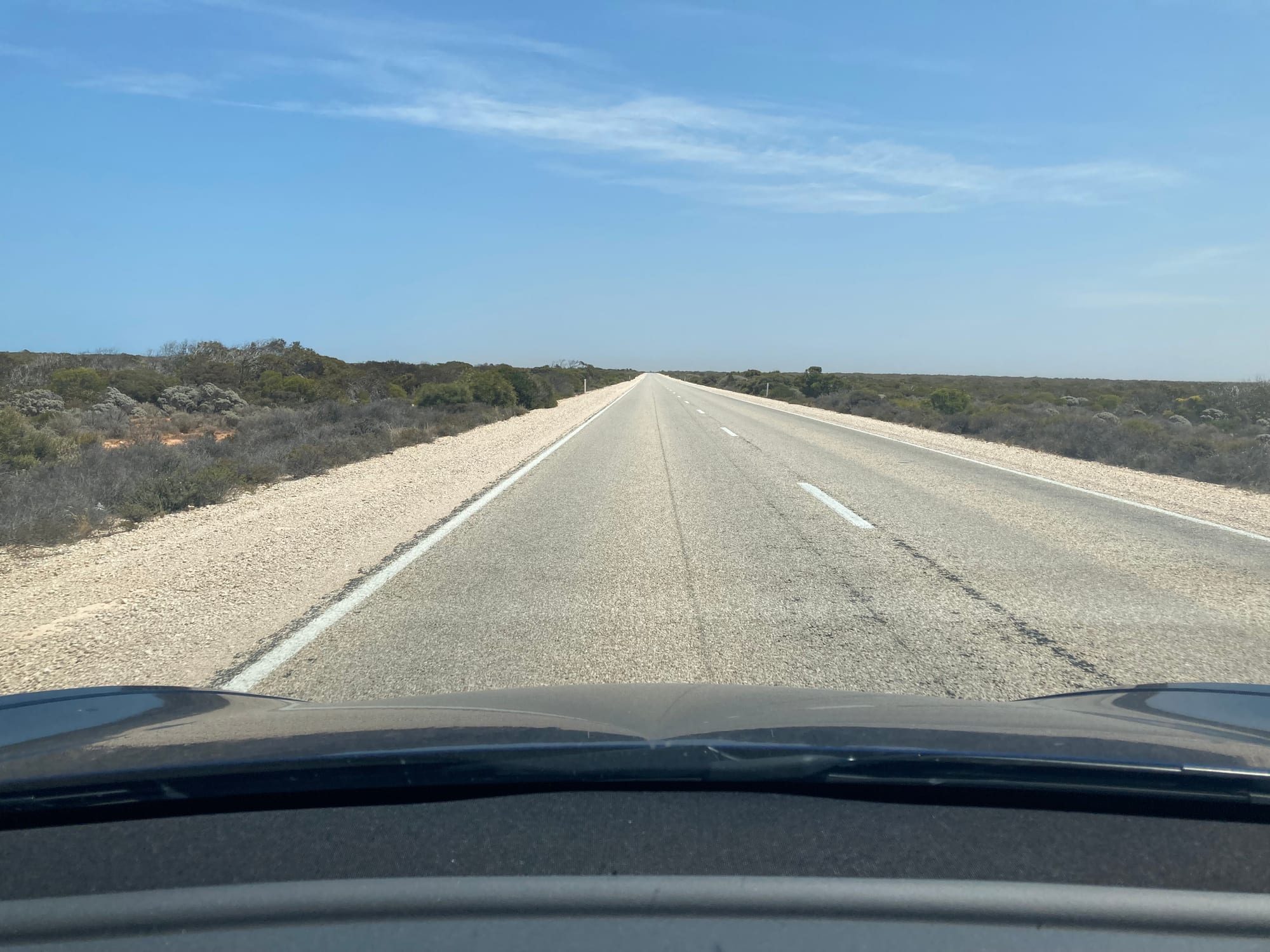
Contexto · la llanura de Nullarbor (Australia), escenario del caso de la familia Knowles
Eyre Highway, South Australia (on Nullarbor Plain).jpg · Wikimedia Commons · CC BY-SA 4.0 · abrir original
«The Mundrabilla Incident – January 20th 1988», informe de UFO Research Australia (segunda edición, 26 de enero de 1988)
Informe redactado seis días después por Keith Basterfield y Ray Brooke, que entrevistaron a la familia Knowles en Adelaida y recopilaron las entrevistas de prensa y televisión. Sitúa cinco vehículos repartidos en 10-15 km; cita al camionero Graham Henley, que vio por el retrovisor una luz blanca sobre los faros del coche y después a la familia aterrada en el motel de Mundrabilla, y recoge que la policía de Ceduna tomó declaraciones por escrito y una muestra del «hollín». Advierte que la secuencia exacta seguía confusa y que la familia no vio el coche separarse del suelo. Es obra de una asociación privada con derechos vigentes: va solo como enlace.
UFO Research Australia / UFO Research South Australia, vía archive.org · ver fuente
La noche en cuestión
Hacia las 4:20 (hora de verano de Australia central) del 20 de enero de 1988, la familia Knowles, Faye y sus tres hijos adultos Patrick (24), Sean (21, conductor) y Wayne (18), viajaba hacia el este en su Ford Telstar por la Eyre Highway, unos 40 km al oeste del Mundrabilla Roadhouse, en plena Llanura de Nullarbor (Australia Occidental), región remota y de baja densidad poblacional. Según Brunt, vieron una luz sobre la carretera, por delante; al principio pensaron que era un camión que venía del este, pero la luz se hizo más brillante y grande y los asustó. El conductor dijo que aparecía y desaparecía «tras dar unos saltos», y la describió «como un huevo en una huevera y de alrededor de 1 metro de ancho», «brillante y blanca con un centro amarillo». Brunt y los relatos posteriores ponen al volante a Sean; la nota de UPI del 21 de enero, que cita a la policía, dice en cambio que conducía la señora Knowles.
Según el testimonio convergente, el objeto se posicionó sobre el auto. La familia reportó varios efectos físicos: el vehículo fue 'levantado' brevemente del pavimento, sacudido, y depositado con fuerza (con una llanta dañada en la maniobra); humo o niebla negra con olor extraño penetró la cabina; las voces de los ocupantes se alteraron (más lentas, distorsionadas); y el perro de la familia, que viajaba con ellos, entró en pánico. Faye Knowles contó que sacó la mano por la ventanilla y tocó «la capota» (así lo recoge UPI): «era blanda, tibia y esponjosa». Sean dijo que iban a unos 110 km/h cuando el objeto se les puso encima y levantó el coche. Un camionero, Graham Henley, que circulaba hacia el este por delante de los Knowles, dijo haber visto una luz «demasiado alta para ser otro camión u otro vehículo», que «desaparecía y reaparecía», y más tarde se encontró con la familia en Mundrabilla. Según Brunt, de los vehículos que circulaban a 30 o 40 km fue el único cuyo ocupante informó de una luz extraña; esa noche la tripulación de un atunero en la Gran Bahía Australiana, a cientos de kilómetros, vio además una luz alargada en vertical, y el sargento de Ceduna habló de cuatro avisos en total (la familia, el camionero, una avioneta de avistamiento de atún y un pesquero). Henley no presenció el 'levantamiento': según Skeptoid, nunca se presentó ningún testigo de ese episodio, y como Henley iba unos 10-15 kilómetros por delante, la luz que vio por el retrovisor pudo ser la del propio coche de los Knowles.
La familia continuó hasta Ceduna (Australia del Sur), donde se presentó en la comisaría. El sargento James Fennell declaró a UPI al día siguiente: «Inspeccioné el coche cuando llegó a Ceduna. Estaba cubierto de una gruesa capa de ceniza negra y había ceniza dentro del coche. Había daños leves en el techo», y añadió que la familia estaba «extremadamente angustiada» y que «algo pasó allí fuera»; el agente Bob Hagen dijo que, tras revisar el coche y verlos, creían que «podría haber algo». Pero el meteorólogo A. T. Brunt, que revisó el caso en 1989, escribe que el coche fue inspeccionado a fondo en varias ocasiones por la policía y por grupos de investigación ovni de Australia, y que «ninguna de esas inspecciones mostró nada inusual en el coche»: «no había ceniza negra ni dentro ni fuera del coche», solo un depósito negro en las llantas de las dos ruedas delanteras compatible con el material de los forros de freno; la rueda trasera derecha reventó «de forma normal», como cabe esperar a gran velocidad; y «las abolladuras del techo eran insignificantes, y no había prueba de que no estuvieran antes del suceso». Las muestras de polvo tampoco dieron nada. El Australian Mineral Development Laboratory analizó la ceniza externa y concluyó que eran partículas de arcilla y sal, compatibles con un vehículo que cruzó la Nullarbor; una inspección encargada por una cadena de televisión no observó «polvo significativo»; y aunque el Dr. Richard Haines, del NASA Ames Research Center, concluyó que el polvo interior difería del exterior, los análisis posteriores de otros laboratorios no encontraron material anómalo. Skeptoid lo resume como una afirmación de «polvo extraño en el coche que resultó no ser nada». Las abolladuras se evaluaron también como compatibles con un portaequipajes.
Para la luz en sí hay una explicación publicada. Brunt, ex director regional de la Oficina de Meteorología de Australia del Sur, comprobó que esa madrugada había una marcada inversión térmica a lo largo de toda la costa sur de Australia Occidental y concluyó que la primera impresión de la familia era correcta (un camión que se acercaba desde el este) y que lo aterrador fue la imagen de sus faros deformada por un espejismo superior. Skeptoid (2020) suscribió esa lectura y le sumó un «pánico de grupo pequeño» y el reventón de una rueda a unos 200 km/h, que según el propio Sean Knowles ocurrió cuando creyeron que el objeto se posaba en el techo; en enero de 1988, en cambio, Sean habló a la policía de unos 110 km/h.
Por qué importa
El caso Knowles conjuga: cohorte familiar de cuatro testigos con testimonio convergente, intervención policial formal, evidencia material que las inspecciones no confirmaron (polvo, abolladuras, ceniza), análisis de laboratorios académicos y de NASA sin hallazgos anómalos, y una explicación publicada por un meteorólogo (los faros de un camión vistos a través de un espejismo superior) que da cuenta de la luz.
Lo que queda en papel
Evidencia documentada
- Testimonio convergente de cuatro miembros de la familia Knowles (Faye, Patrick 24, Sean 21, Wayne 18) reportando objeto luminoso ~1m con forma de 'huevo en copa' y centro amarillo, 20 ene 1988 ~4:20
- Graham Henley, camionero que iba unos 10-15 km por delante hacia el este, vio una luz «demasiado alta para ser otro camión»; Skeptoid señala que pudo ser la del propio coche de los Knowles y que nunca se presentaron testigos del «levantamiento»
- Ceduna (Australia del Sur): el sargento Fennell declaró a UPI (21 ene 1988) que el coche llegó «cubierto de una gruesa capa de ceniza negra», con ceniza dentro y daños leves en el techo; según Brunt (1989), las inspecciones de la policía y de grupos ovni «no mostraron nada inusual en el coche», sin ceniza y con abolladuras insignificantes
- Análisis del Australian Mineral Development Laboratory sobre ceniza externa: partículas de arcilla y sal, consistente con vehículo que cruzó la Nullarbor
- Investigación independiente comisionada por estación de TV: 'no se observó polvo significativo' en inspección posterior del vehículo
Ver 3 evidencias más
- Análisis del Dr. Richard Haines (NASA Ames Research Center) sobre polvo interior del vehículo: difería del polvo exterior; análisis posteriores no hallaron material anómalo (Skeptoid: «resultó no ser nada»)
- Análisis posteriores por laboratorios independientes: no encuentran material anómalo, abolladuras compatibles con uso de portaequipajes
- Explicación de A. T. Brunt (The Skeptic, 1989): la luz era la imagen de los faros de un camión que venía desde el este, deformada por un espejismo superior
Fuentes
- UFO Research Queensland — 'The Knowles Family UFO Incident 1988' — Reconstrucción detallada con cronología y entrevistas.
- UFO Evidence — Knowles Family Mundrabilla case file — Archivo con material primario y análisis.
- The Museum of Lost Things — 'Aliens on the Nullarbor' — Cobertura cultural y geográfica del caso.
- Chalker, B. — 'The Knowles Family Encounter' (multiple articles, 1988+) — Investigación del ufólogo australiano más riguroso del periodo.
- Brunt, A. T. — «The 1988 Nullarbor UFO Mystery – Solved», The Skeptic 3(5), 1989 (reeditado en skeptic.org.uk, 5 dic 1989) — Análisis de un ex director regional de la Oficina de Meteorología de Australia del Sur: concluye que la luz eran los faros de un camión vistos a través de un espejismo superior.
- Dunning, B. — «The Knowles Family UFO Incident», Skeptoid n.º 715 (18 feb 2020) — Espejismo superior de faros lejanos, pánico de grupo pequeño y reventón de una rueda a unos 200 km/h; el polvo «resultó no ser nada».
- UPI — «Australian family tells of close encounter with UFO» (21 ene 1988, prensa de la época) — Declaraciones del sargento Fennell (ceniza negra dentro y fuera, daños leves en el techo, cuatro avisos esa noche) y de Faye y Sean Knowles.
Casos relacionados
mismo objeto
Escuela de Broad Haven · Gales
1977 · Tier B
mismo objeto
Luces de Marfa · Texas
1883 · Tier B
misma explicación · misma época
Ilkley Moor 1987 · el policía, el humanoide verde y la foto borrosa
1987 · Tier B
misma explicación · misma época
Greifswald · luces masivas + 6 videos (RDA)
1990 · Tier A