1966·Horseshoe Lagoon, cerca de Tully, Queensland
Australia.Nidos de Tully · investigación RAAF
El 19 de enero de 1966, el bananero George Pedley dijo haber visto durante unos 15 segundos un objeto gris mate «como dos platillos cara a cara», de unos 25 pies, elevarse de Horseshoe Lagoon, cerca de Tully (Queensland). Quedó una depresión casi circular de juncos aplanados de 32 por 25 pies, el «nido»; pronto se informó de dos más.
Seguir leyendo el resumen
Investigaron la policía y la Fuerza Aérea australiana (RAAF), que confirmó que no había aeronaves en la zona y atribuyó las depresiones a «pequeñas trombas de agua aisladas»; la Universidad de Queensland halló que los juncos murieron por inmersión, sin quemaduras, y las pruebas de radiactividad dieron negativo.
Tier A · Aceptable¿Qué significan? →
Evidencia institucional: varios testigos independientes identificados, o documentación oficial de la época, sin un registro instrumental que los corrobore.
Qué fue
65%causa natural o humana
Explicación más probable: atmosférico
Ver el reparto entre las seis explicaciones
Causa natural o humana
Sin causa conocida
Documentos primarios
RAAF, expediente A703 580/1/1 parte 5 (extracto, 5 págs.): carta del Operational Command con el veredicto de las trombas, formulario de avistamiento de Townsville y seguimiento
National Archives of Australia, A703 580/1/1 Part 5 (espejo de The Black Vault con permiso del NAA); se omiten los recortes de prensa · Dominio público (obra del Gobierno de Australia anterior a 1975) · abrir original
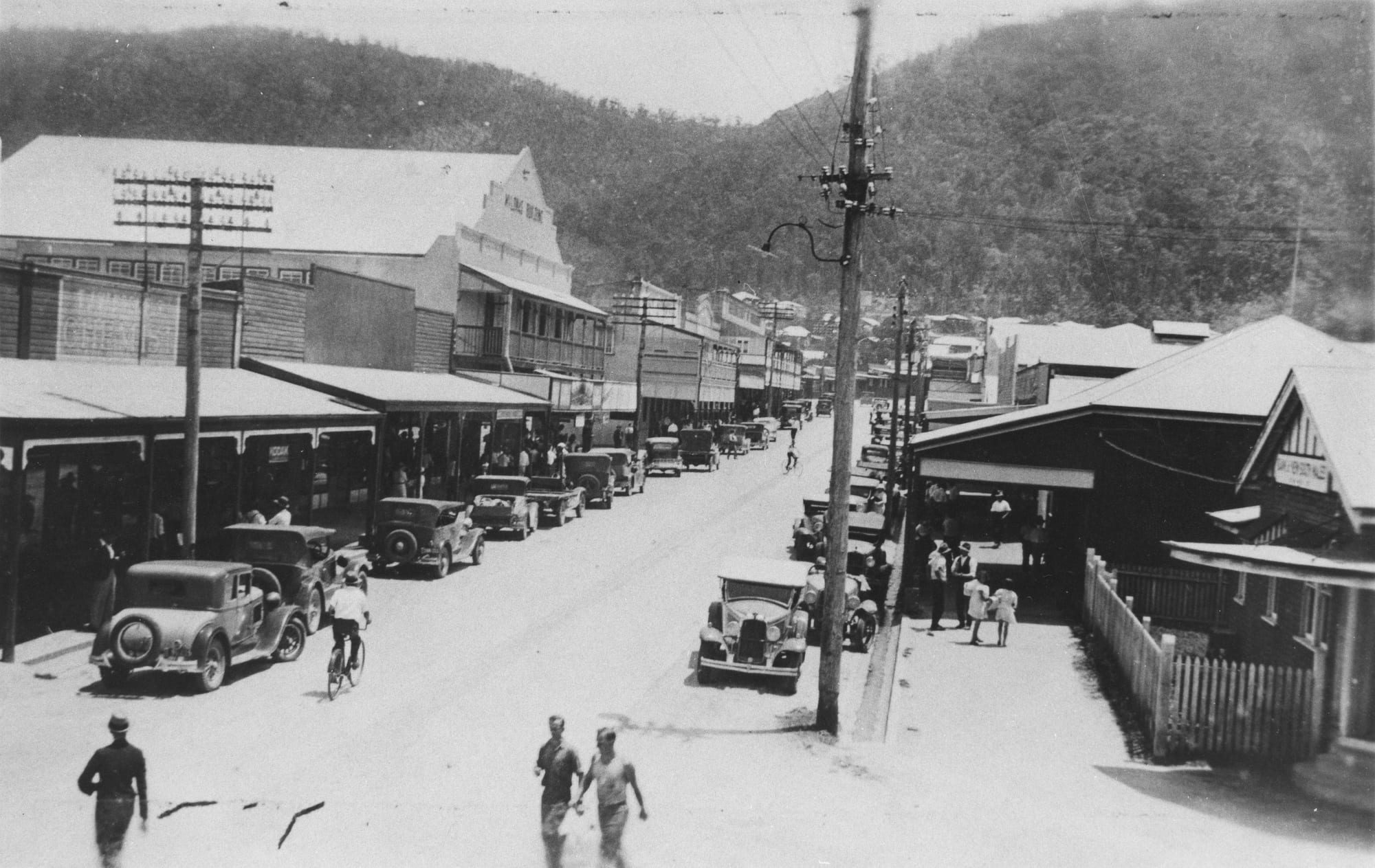
Contexto · Tully (Queensland), cerca de la laguna de los 'nidos de platillo'
Butler Street, Tully, Queensland, 1935.jpg · Wikimedia Commons · Dominio público · abrir original
La noche en cuestión
El 19 de enero de 1966, alrededor de las 9:00 am, George Pedley, bananero de 28 años, conducía su tractor a media milla de la casa de Albert Pennisi, en Rockingham Road (Euramo), cerca de Tully (Queensland tropical, norte de Australia), cuando le llamó la atención un fuerte silbido que se oía por encima del motor, «parecido al aire que escapa de un neumático». Según el formulario de la RAAF que rellenó con la policía, vio un objeto definido, sin luces, a unas 25 yardas por delante y a unos 30 pies de altura, que se elevaba en vertical; era gris claro, mate y no reflectante, con forma de «dos platillos cara a cara», de unos 25 pies de largo y 8 a 9 de grosor, sin detalle estructural visible. Subió en vertical hasta unos 60 pies, pareció girar todo el tiempo y se alejó hacia el suroeste trepando a unos 45°, «extremadamente rápido», «mucho más rápido que un avión», hasta perderse en el aire. No dejó estela. La observación duró unos 15 segundos.
Al acercarse al sitio donde el objeto había estado, Pedley encontró una depresión «claramente definida» y casi circular, de unos 32 pies de largo por 25 de ancho, con la hierba del pantano aplanada sobre la superficie de unos 4 pies de agua y dispuesta en curvas en sentido horario (la palabra está corregida a máquina en el formulario), el «nido». Informó a la policía de Tully a las 19:30 de ese día y de nuevo a las 7 de la mañana siguiente. El sargento A. V. Moylan, que lo acompañó al sitio, no notó olor a combustión ni hierba o árboles chamuscados; la hierba aplanada estaba bastante verde por la mañana y por la tarde se había vuelto marrón. Según el Courier-Mail del 24 de enero, en pocos días se informó de un segundo y un tercer nido, hallados alrededor de la laguna por el cañero Tom Warren y el maestro Hank Penning; relatos posteriores elevan la cifra.
La Royal Australian Air Force (RAAF) abrió expediente. El sargento Moylan telefoneó a la base de Townsville la mañana del 20 de enero; la RAAF le envió el formulario para Pedley, le pidió una muestra de hierba, que él tomó el 21 de enero, y confirmó que no había aeronaves militares ni civiles operando en la zona a la hora del avistamiento. Moylan se formó primero la opinión de que la depresión la había hecho un helicóptero pequeño y que el sol de la mañana sobre el rotor confundió a Pedley, aunque él mismo objetó que a 200 yardas había terreno despejado donde aterrizar con más seguridad; un electricista de Tully, Wallace Evans, le aseguró haber visto marcas parecidas en un pantano de Kurrimine Beach hechas por un remolino que succionó agua en una tromba. El 17 de febrero el Mando Operacional de la RAAF cerró su parte: «este cuartel general cree que las depresiones de la hierba del pantano fueron causadas por pequeñas trombas de agua aisladas». Pennisi, que se metió en la laguna de cinco pies de hondo, contó que raíces y barro que suelen estar en el fondo flotaban encima, «deben haber sido succionados por algo». El Departamento de Botánica de la Universidad de Queensland (Dr. R. F. Langdon) concluyó que los juncos, en un sector bajo inundado por las lluvias, habían muerto por inmersión, sin infección parasitaria ni «indicio alguno de quemado», aunque advirtió que sus hallazgos no eran concluyentes sin datos de vientos, corrientes y topografía; las pruebas de radiactividad de Física dieron negativo.
Quedan dos matices. Primero, la explicación de las trombas cubre los nidos, no el objeto: la RAAF descartó por escrito el tráfico aéreo, y Pedley describió un objeto definido, sin luz, que subió en vertical y se alejó trepando más rápido que un avión. Segundo, Pedley nunca aceptó la lectura del torbellino: declaró que conocía bien los remolinos húmedos y de polvo de la zona y que 'sé lo que vi'. El ufólogo australiano Bill Chalker (químico de formación) investigó el caso durante décadas y mantiene un archivo documental con muestras y entrevistas que ha sido referenciado en literatura UAP internacional.
Por qué importa
Tuvo una investigación militar oficial sobre evidencia material física (patrón circular en vegetación), anticipando por una década el paradigma posterior de 'crop circles'. Importa por tres razones: primero, la investigación RAAF + University of Queensland es un caso temprano de cadena de custodia de muestras y análisis de laboratorio en territorio civil; segundo, el caso enseña una lección metodológica: un patrón geométrico inusual puede tener explicación natural (trombas de agua, turbulencia) sin que eso invalide el reporte testimonial original; tercero, la RAAF confirmó que no había aeronaves militares ni civiles en la zona, lo que deja fuera el helicóptero que el sargento de Tully sospechó al principio, dejando dos hipótesis vigentes (fenómeno natural raro y disco no convencional) sin discriminación instrumental. Hubo investigación oficial y evidencia material disputada, y la explicación natural se sostiene plausible.
Lo que queda en papel
Evidencia documentada
- Formulario de la RAAF rellenado con la policía: el bananero George Pedley (28) vio un objeto gris claro y mate, «dos platillos cara a cara», de ~25 × 8-9 pies, subir en vertical desde Horseshoe Lagoon y alejarse al suroeste trepando a ~45°, 19 ene 1966 ~09:00, durante unos 15 segundos
- Depresión casi circular de ~32 × 25 pies en la hierba del pantano, aplanada en curvas en sentido horario; sin olor a combustión ni chamuscado según el sargento Moylan; dos nidos más hallados en pocos días (Courier-Mail, 24 ene 1966)
- Investigación de la Royal Australian Air Force (RAAF): sin aeronaves militares ni civiles en la zona; el Mando Operacional (17 feb 1966) atribuye las depresiones a «pequeñas trombas de agua aisladas»
- Universidad de Queensland: Botánica (Dr. R. F. Langdon) halla juncos muertos por inmersión, sin infección ni quemado, con resultado no concluyente; Física, radiactividad negativa
- El sargento Moylan pensó primero en un helicóptero pequeño; la RAAF confirmó que no había aeronaves operando, y el dueño del terreno vio raíces y barro del fondo flotando encima, «succionados por algo»
- Investigación sostenida de Bill Chalker (ufólogo australiano, químico): archivo documental con muestras y entrevistas referenciadas internacionalmente
Fuentes
- RAAF — informe de la investigación sobre Tully Saucer Nests (1966) — Documento militar australiano primario.
- Chalker, B. — 'The Tully Saucer Nest' (Project 1947 archive) — Investigación sostenida del caso con muestras y entrevistas.
- theozfiles — 'The 1966 Tully Flying Saucer Nest Revisited' (2017) — Reconstrucción reciente con documentación adicional.
- UFO Research Queensland — 'The Tully Saucer Nest 1966' — Archivo de UFOR Queensland.
- UFO Evidence — '1966 Tully Saucer Nest' case file — Documentación primaria del caso.
- RAAF — expediente A703 580/1/1 parte 5 (NAA; espejo de The Black Vault), págs. 165-172 del PDF: carta del Operational Command del 17 feb 1966 — Veredicto de la RAAF: las depresiones en la hierba del pantano se debieron a pequeñas trombas aisladas. Incluye el formulario de RAAF Townsville y el seguimiento policial.
Casos relacionados