Caso Nº 188Case No. 188·Estados UnidosUnited States
1998·Pocantico Conference Center, Tarrytown, Nueva YorkPocantico Conference Center, Tarrytown, New York
Estados UnidosUnited States.Panel Sturrock · revisión científica de evidencia física (1998)Sturrock Panel · scientific review of physical evidence (1998)
En 1997 el astrofísico de Stanford Peter Sturrock convocó un panel de científicos para revisar la evidencia física asociada a casos UAP. El informe (1998) concluyó que algunos casos presentan datos físicos sin explicar que merecen estudio científico — sin afirmar origen extraterrestre, pero rompiendo el tabú de que el tema no es investigable.In 1997 Stanford astrophysicist Peter Sturrock convened a panel of scientists to review the physical evidence associated with UAP cases. The report (1998) concluded that some cases present unexplained physical data deserving scientific study — without asserting extraterrestrial origin, but breaking the taboo that the subject is not investigable.
AñoYear
1998
TierTier
A
ProbabilidadProbability
60%
CategoríaCategory
DocumentoDocument
Evidencia institucional: múltiples testigos verificables o documentación oficial. Tres ejes independientes: el «tier» mide la fuerza de la evidencia; la «probabilidad» estima cuán genuinamente inexplicado está el caso —un fenómeno natural puede seguir sin explicación, así que no equivale a «no-prosaico»—; y la partición de explicaciones (abajo) dice qué fue más plausiblemente. Por eso un caso bien documentado puede tener como causa más plausible un posible fraude, y un Tier B no es, por eso, un fraude.Institutional evidence: multiple verifiable witnesses or official documentation. Three independent axes: the «tier» measures the strength of the evidence; the «probability» estimates how genuinely unexplained the case is —a natural phenomenon can remain unexplained, so it does not equal «non-prosaic»—; and the partition of explanations (below) says what it most plausibly was. So a well-documented case can have a possible hoax as its most plausible cause, and a Tier B is not, for that reason, a hoax.
Documentos primarios · visorPrimary documents · viewer

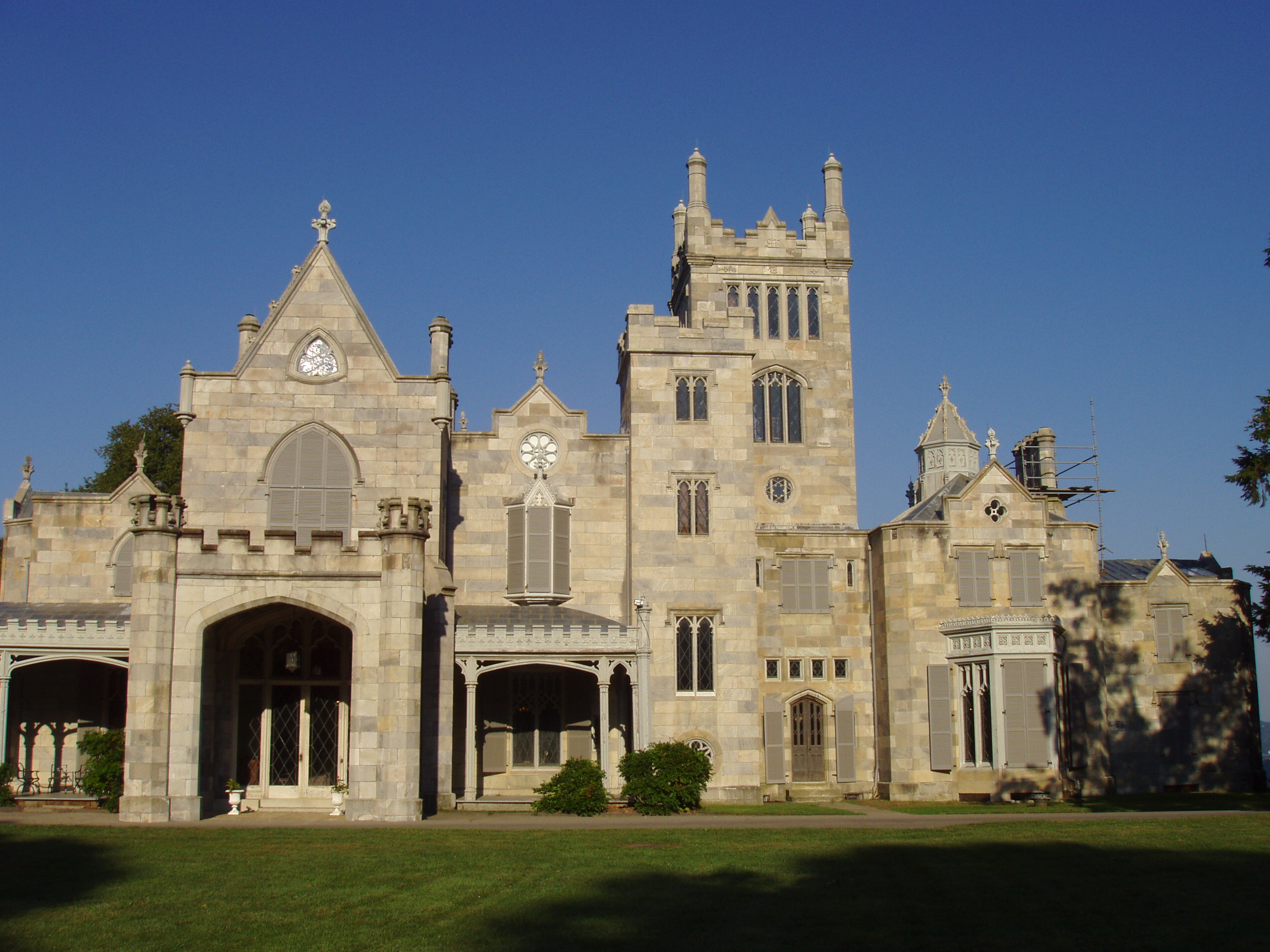
Contexto · Tarrytown (Nueva York), sede del panel Sturrock en PocanticoContext · Tarrytown (New York), venue of the Sturrock panel at Pocantico
Lyndhurst Tarrytown NY - front facade.jpg · Wikimedia Commons · CC BY-SA 3.0 · abrir originalopen original
Parte 01Part 01
El expediente en cuestiónThe file in question
El astrofísico de la Universidad de Stanford Peter A. Sturrock organizó, con auspicio de la Society for Scientific Exploration y financiamiento del filántropo Laurance Rockefeller, un taller celebrado en el Pocantico Conference Center de Tarrytown (Nueva York) del 29 de septiembre al 4 de octubre de 1997. El taller reunió a un panel de nueve científicos imparciales —físicos en su mayoría— para examinar, por primera vez en décadas y de forma independiente, la evidencia física reportada en casos UAP. Durante cuatro días, investigadores presentaron ante el panel casos con rastros materiales de distinto tipo: marcas en el suelo, efectos sobre vehículos (fallos en el funcionamiento de automóviles), daño y alteraciones en la vegetación, quemaduras en testigos, fotografías, detecciones de radar y luces recurrentes sobre determinadas localidades.
El propósito explícito del taller no era decidir si los OVNIs existen, sino evaluar si la adquisición e investigación adicional de esta clase de evidencia física tenía probabilidades de ayudar a resolver el problema. El informe resultante, publicado en 1998 y luego en el Journal of Scientific Exploration, concluyó que, aunque ningún caso constituía prueba de origen extraterrestre, un subconjunto presentaba fenómenos físicos sin explicación convencional que justificaban un estudio científico serio y continuado. Recomendó que la comunidad científica tratara el tema como un problema empírico legítimo y que se mejorara la calidad instrumental de los datos. El panel Sturrock es el precursor directo, más de dos décadas antes, del enfoque que la NASA adoptaría en su informe de 2023: ni afirmación exótica ni descarte, sino llamado al rigor sobre los datos físicos. Entra al corpus como documento de método científico, no como evidencia del fenómeno.
Stanford University astrophysicist Peter A. Sturrock organized, under the auspices of the Society for Scientific Exploration and with funding from philanthropist Laurance Rockefeller, a workshop held at the Pocantico Conference Center in Tarrytown, New York, from September 29 to October 4, 1997. The workshop gathered a panel of nine impartial scientists —physicists for the most part— to examine, for the first time in decades and independently, the physical evidence reported in UAP cases. Over four days, investigators presented to the panel cases with material traces of various kinds: ground marks, effects on vehicles (malfunctions in automobiles), damage and alterations to vegetation, burns to witnesses, photographs, radar detections and recurring lights over certain locales.
The workshop's explicit purpose was not to decide whether UFOs exist, but to assess whether the further acquisition and investigation of this class of physical evidence was likely to help solve the problem. The resulting report, published in 1998 and later in the Journal of Scientific Exploration, concluded that, although no case constituted proof of extraterrestrial origin, a subset presented physical phenomena without conventional explanation that warranted serious and continued scientific study. It recommended the scientific community treat the subject as a legitimate empirical problem and improve the instrumental quality of the data. The Sturrock panel is the direct precursor, more than two decades earlier, of the approach NASA would adopt in its 2023 report: neither exotic assertion nor dismissal, but a call for rigor on the physical data. It enters the corpus as a scientific-method document, not as evidence of the phenomenon.
Parte 02Part 02
Por qué este caso movió la agujaWhy this case moved the needle
Es el puente entre el folklore y la ciencia: el primer panel de físicos en décadas que revisó la evidencia física UAP de forma estructurada y concluyó que parte de ella merece estudio — rompiendo el tabú heredado del Condon Report (1969), cuya conclusión oficial de que el tema no justificaba más investigación había congelado durante una generación el interés científico institucional. El gesto del panel Sturrock es deliberadamente modesto y por eso poderoso: no reivindica ningún caso como prueba, no afirma origen extraterrestre, no entra en el terreno especulativo. Se limita a sostener que un residuo de evidencia física resiste la explicación convencional y que, en ciencia, un residuo así es razón para investigar, no para cerrar.
Su importancia es metodológica y de legitimación, no probatoria. El valor del documento para el corpus no es lo que dice sobre el fenómeno —dice poco y con cautela— sino lo que dice sobre cómo debe tratarse: como un problema empírico abierto cuya resolución pasa por mejores instrumentos y mejores datos, no por el descrédito a priori. Anticipa en un cuarto de siglo el marco que NASA haría suyo en 2023 y la lógica del propio corpus: pesar la evidencia, no proclamar conclusiones. Su límite es evidente y el panel lo asume: revisó evidencia preexistente de calidad heterogénea, sin recolectar datos nuevos, y su producto es una recomendación de método, no un hallazgo. Por eso su peso es mínimo y opera solo erosionando levemente la narrativa mundano/natural —la lectura de que todo el fenómeno se reduce a identificación errónea—, porque científicos calificados, mirando el conjunto, no pudieron descartar todo el residuo físico. Tier A por la solidez del proceso (panel científico nombrado, publicación revisada por pares), no por una conclusión sobre la naturaleza del fenómeno.
It is the bridge between folklore and science: the first panel of physicists in decades to review UAP physical evidence in a structured way and conclude that part of it merits study — breaking the taboo inherited from the Condon Report (1969), whose official conclusion that the subject did not justify further investigation had frozen institutional scientific interest for a generation. The Sturrock panel's gesture is deliberately modest and therefore powerful: it claims no case as proof, asserts no extraterrestrial origin, enters no speculative ground. It merely holds that a residue of physical evidence resists conventional explanation and that, in science, such a residue is a reason to investigate, not to close.
Its importance is methodological and legitimizing, not probative. The document's value to the corpus is not what it says about the phenomenon —it says little, and cautiously— but what it says about how the subject should be treated: as an open empirical problem whose resolution runs through better instruments and better data, not through a priori discredit. It anticipates by a quarter century the framework NASA would adopt in 2023 and the logic of the corpus itself: weigh the evidence, do not proclaim conclusions. Its limit is evident and the panel accepts it: it reviewed pre-existing evidence of heterogeneous quality, without collecting new data, and its product is a recommendation of method, not a finding. That is why its weight is minimal and operates only by slightly eroding the mundane/natural narrative —the reading that the whole phenomenon reduces to misidentification—, because qualified scientists, looking at the set, could not dismiss the entire physical residue. Tier A for the solidity of the process (named scientific panel, peer-reviewed publication), not for a conclusion about the nature of the phenomenon.
Parte 03Part 03
Lo que queda en papelWhat's left on paper
Evidencia documentadaDocumented evidence
- Pocantico Workshop (1997) convocado por el astrofísico Peter A. Sturrock (Stanford), financiado por Laurance RockefellerPocantico Workshop (1997) convened by astrophysicist Peter A. Sturrock (Stanford), funded by Laurance Rockefeller
- Panel de físicos/científicos revisó evidencia física: marcas de suelo, efectos en vehículos, vegetación, fotos, radarPanel of physicists/scientists reviewed physical evidence: ground marks, vehicle effects, vegetation, photos, radar
- Informe (1998), luego en el Journal of Scientific ExplorationReport (1998), later in the Journal of Scientific Exploration
- Conclusión: ningún caso prueba origen ET, pero un subconjunto presenta física sin explicación que merece estudio serioConclusion: no case proves ET origin, but a subset presents unexplained physics meriting serious study
- Recomendación: tratar el tema como problema empírico legítimo; mejorar la calidad instrumental de los datosRecommendation: treat the subject as a legitimate empirical problem; improve instrumental data quality
FuentesSources
- Sturrock, P. et al. — 'Physical Evidence Related to UFO Reports' (Pocantico Report, 1998), Journal of Scientific Exploration — Documento primario. · Original (enlace caído): https://www.scientificexploration.org/docs/12/jse_12_2_sturrock.pdfPrimary document. · Original (dead link): https://www.scientificexploration.org/docs/12/jse_12_2_sturrock.pdf
- Pocantico / Sturrock Panel — entrada enciclopédica — Original (enlace caído): https://en.wikipedia.org/wiki/Sturrock_panelOriginal (dead link): https://en.wikipedia.org/wiki/Sturrock_panel
Patrones que exhibe (2)Patterns it exhibits (2)
UbicaciónLocation
Pocantico Conference Center, Tarrytown, Nueva YorkPocantico Conference Center, Tarrytown, New York · 41.09°, -73.86°
Casos relacionadosRelated cases
mismo país · 2 patronessame country · 2 patterns
NASA · informe del UAP Independent Study Team (2023)NASA · UAP Independent Study Team report (2023)
2023 · Tier A · 60%
mismo país · 1 patrónsame country · 1 pattern
JAL 1628JAL 1628
1986 · Tier S · 85%
mismo país · 1 patrónsame country · 1 pattern
Washington FlapWashington Flap
1952 · Tier S · 78%
mismo país · 1 patrónsame country · 1 pattern
RB-47 ECM EncounterRB-47 ECM Encounter
1957 · Tier S · 88%