1908·Río Podkámennaya Tunguska, Siberia
Rusia (Imperio ruso).Evento de Tunguska
El 30 de junio de 1908, una colosal explosión en el aire sobre el río Tunguska, en la remota Siberia, derribó unos 80 millones de árboles en unos 2.000 km² sin dejar cráter. El consenso científico lo atribuye al estallido atmosférico de un asteroide o cometa pequeño. Décadas después, una novela soviética de 1946 popularizó la idea de una nave extraterrestre, que la ciencia descartó.
Tier S · Sólido¿Qué significan? →
Evidencia fuerte: un registro instrumental de la época (radar, sensor, película o foto con procedencia conocida) que corrobora a varios testigos independientes.
Qué fue
90%causa natural o humana
Explicación más probable: meteoro o bólido
Ver el reparto entre las seis explicaciones
Causa natural o humana
Sin causa conocida
Documentos primarios
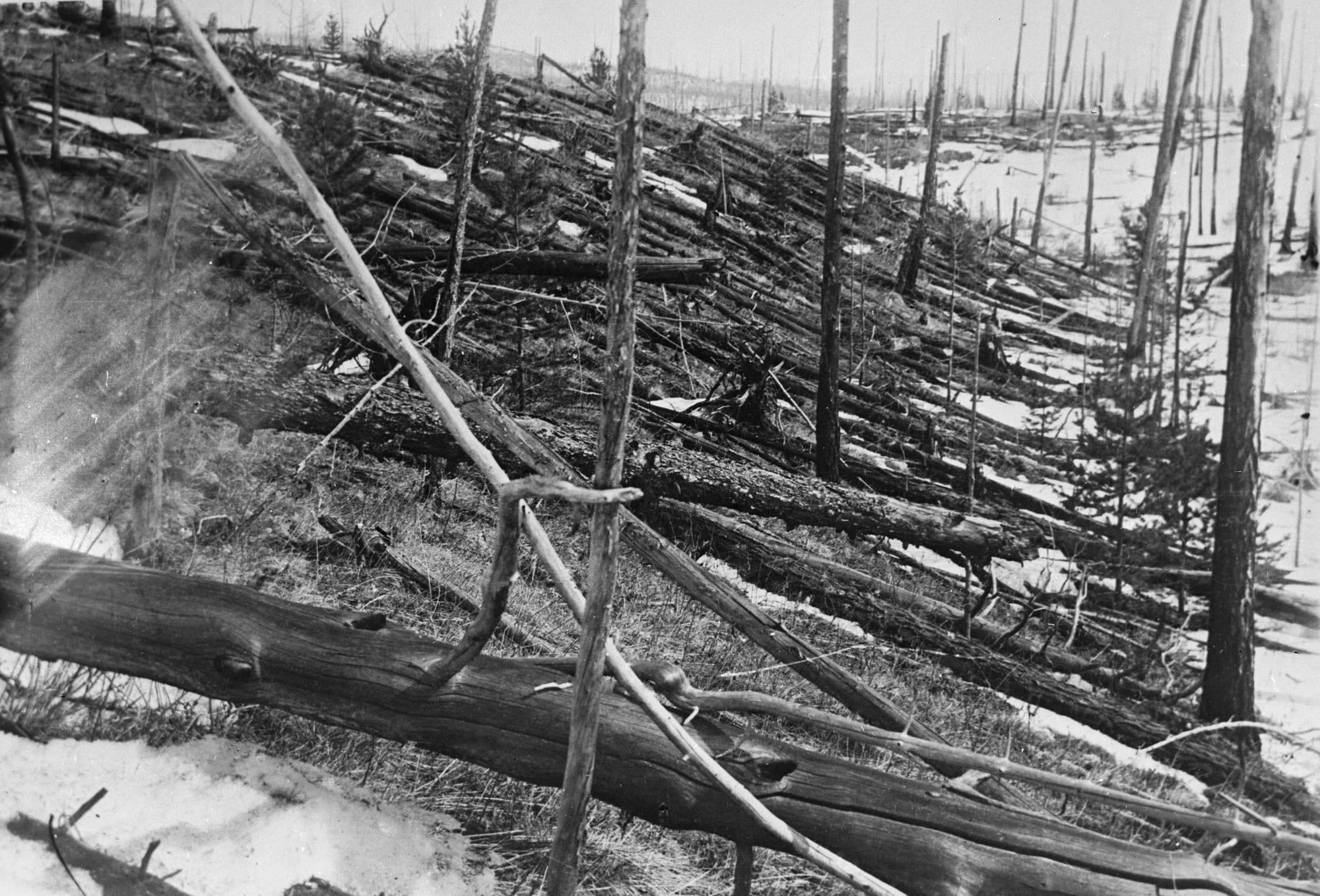
Árboles derribados en Tunguska · fotografía de la expedición de Leonid Kulik
Expedición Kulik (1927-1938) vía Wikimedia Commons · Dominio público · abrir original
La noche en cuestión
En la mañana del 30 de junio de 1908, sobre la cuenca del río Podkámennaya Tunguska, en una región casi deshabitada de la Siberia central, se produjo la mayor explosión de origen cósmico registrada en la historia. Testigos lejanos describieron una columna de luz azulada casi tan brillante como el Sol, seguida de un destello, una onda de calor y una serie de detonaciones que se oyeron a cientos de kilómetros. La onda expansiva derribó alrededor de 80 millones de árboles en una superficie de unos 2.000 kilómetros cuadrados, disponiéndolos radialmente en torno a un epicentro. Curiosamente, en el centro mismo algunos árboles quedaron en pie pero despojados de ramas y corteza (el llamado 'bosque de postes de telégrafo'), un patrón que indica que la fuerza llegó desde arriba, casi vertical.
La lejanía y el caos político de la Rusia de inicios del siglo XX retrasaron las expediciones científicas. La primera importante, liderada por Leonid Kulik, no llegó a la zona hasta 1927. En su informe a la Academia de Ciencias, Kulik describió el bosque derribado «en filas generalmente paralelas», con las copas apuntando en sentido contrario al centro, troncos en pie sin ramas ni corteza y huellas de una quemadura «uniforme y continua» en una zona de varias decenas de kilómetros. Tomó la cuenca central por «un enorme cráter» y anotó decenas de «craterlets» recientes, de varios metros a decenas de metros, que proponía excavar; recogió además los testimonios de los vecinos de la factoría de Vanovara, a unos cien kilómetros: S. B. Semenov dijo que un calor repentino casi le quemó la camisa y que la explosión lo arrojó del porche, y P. P. Kossolapov, que algo le quemó las orejas y que el estallido rompió un cristal y arrancó la puerta del horno. Pero no halló un meteorito, y nunca se ha recuperado un fragmento macroscópico del objeto ni confirmado un cráter de impacto. Esa ausencia alimentó durante décadas el misterio y un abanico de hipótesis exóticas.
El consenso científico moderno es, sin embargo, sólido: el evento fue un airburst, la desintegración explosiva de un cuerpo cósmico (un asteroide pétreo pequeño, de algunas decenas de metros, o un fragmento cometario) a una altura de entre 5 y 10 kilómetros. La explosión en altura explica a la vez la devastación masiva y la falta de cráter, así como el patrón del bosque de postes. La presencia de material rico en elementos propios de asteroides rocosos apoya la hipótesis del asteroide, mientras que las nubes noctilucentes observadas en Europa tras el evento se han usado como argumento para un cometa rico en agua. La lectura no humana (la idea de que fue la explosión del motor nuclear de una nave marciana) no surgió de la investigación, sino de un relato de ciencia ficción del escritor soviético Alexander Kazantsev en 1946; pocos años después, el respaldo científico a la teoría del airburst limitó esa especulación, que hoy se conserva solo como curiosidad histórica del folclore ovni.
Por qué importa
Tunguska importa como el caso histórico que ilustra con más claridad cómo una ausencia (la falta de un cráter) puede generar décadas de especulación exótica sobre un fenómeno que, bien entendido, es enteramente natural. Su valor es metodológico y pedagógico: muestra que un rasgo aparentemente anómalo (devastación masiva sin punto de impacto) tiene una explicación física precisa (un estallido en el aire) que el sentido común inicial no anticipaba, y que la hipótesis de la nave extraterrestre no nació de ningún dato de campo, sino de una obra de ficción que la cultura popular convirtió en 'teoría'.
La escala es lo que hace llamativa la falta de cráter: unos 80 millones de árboles derribados en unos 2.000 kilómetros cuadrados, en un patrón radial alrededor de un único epicentro. El airburst de un asteroide o cometa pequeño explica todos los rasgos observados: el destello, las detonaciones, el patrón radial de árboles caídos y el bosque de postes central. Lo que sigue abierto es la genuina (y acotada) discusión científica sobre la naturaleza exacta del cuerpo (asteroide pétreo frente a fragmento cometario) y el hecho de que no se recuperara un meteorito principal. Tunguska es el ancla que enseña que 'inexplicado en su momento' no es 'inexplicable', y que el mayor impacto cósmico de la historia documentada es, también, uno de sus casos mejor resueltos.
Lo que queda en papel
Evidencia documentada
- ~80 millones de árboles derribados en ~2.000 km² en un patrón radial (30 jun 1908)
- 'Bosque de postes de telégrafo' central: árboles en pie sin ramas, indicando fuerza desde arriba (airburst)
- Testimonios de un destello casi tan brillante como el Sol y detonaciones audibles a cientos de km
- Registros instrumentales de la época: los sismógrafos de Irkutsk, San Petersburgo y Jena registraron la vibración del suelo, estaciones meteorológicas de Rusia y Gran Bretaña detectaron fluctuaciones de presión durante unos 20 minutos, y el sismógrafo de Milne de la Universidad de Coimbra muestra en el rollo de esa semana una oscilación de unos 13 minutos que los técnicos de 1908 no advirtieron (Lopes, Gomes y Ribeiro, 2025)
- Expedición de Leonid Kulik (1927): bosque derribado en abanico, huellas de quemadura y testimonios de Vanovara; describió «craterlets», pero no halló meteorito, y nunca se ha recuperado un fragmento macroscópico ni confirmado un cráter
Ver 2 evidencias más
- Material con elementos propios de asteroides rocosos; nubes noctilucentes en Europa tras el evento (argumento cometario)
- Origen de la hipótesis 'ovni': relato de ciencia ficción de Alexander Kazantsev (1946), no datos de campo
Fuentes
- Wikipedia — Tunguska event
- Scientific American — 'The Tunguska Mystery, 100 Years Later'
- Space.com — 'Russian Alien Spaceship Claims Raise Eyebrows, Skepticism' (origen Kazantsev)
- L. Kulik, «On the Fall of the Podkamennaya Tunguska Meteorite in 1908» (Doklady de la Academia de Ciencias, 1927), trad. de L. La Paz y G. Wiens, Popular Astronomy 43(9), noviembre 1935, pp. 596-599 — Fuente primaria: informe de la expedición de 1927, con la descripción del bosque derribado, las huellas de quemadura, los «craterlets» y los testimonios de Semenov y Kossolapov.
- F. C. Lopes, A. I. Gomes y P. Ribeiro, «Registo instrumental dos efeitos físicos do Evento de Tunguska no Observatório Geofísico e Astronómico da Universidade de Coimbra», Comunicações Geológicas 112, Especial I (2025), pp. 479-482 (LNEG) — Resume los registros sísmicos (Irkutsk, San Petersburgo, Jena) y barométricos (Rusia y Gran Bretaña) de 1908 e identifica la oscilación en el sismograma de Coimbra; la perturbación magnética no aparece en Coimbra.
Casos relacionados