1967·South Ashburnham, Massachusetts, United States
United States.Andreasson Affair · a mother recounts an abduction at home
On January 25, 1967, the lights went out at the Andreasson home in South Ashburnham, Massachusetts, and a glow came through the kitchen window. According to Fowler, Betty, her daughter Becky and Betty's parents remembered the lights and the power cut; Betty had vague memories of beings entering, and her father signed a statement about figures hopping across the yard. Ten years later, under hypnosis, Betty said small beings took her to an object, examined her and gave her a small blue book. Fowler published the story in 1979. There is no physical evidence.
Tier B · IndicativeContact accountWhat do they mean? →
Limited evidence: it falls short of what Tier A requires. Any one of these is enough: a single testimony (or several witnesses who saw it together), testimony gathered years later, or an account without contemporary primary documentation.
What it was
55%suggestion
The most likely explanation.
- 55% suggestion
- 2% other earthly causes
- 43% no known cause
See the split across the six explanations
Earthly origin (human or natural)57%
No known cause43%
Ordinary cause the sources propose: suggestion
What happened
Betty Andreasson lived in South Ashburnham, a town in northern Massachusetts, with her seven children, aged 3 to 11. Her husband, James, was in the hospital after a car accident two days before Christmas 1966, and Betty's parents, Waino and Eva Aho, had moved in to help. The family ate supper early so Betty could visit her husband at night. On January 23, 1967, James was transferred to a veterans hospital near Boston and Betty stopped making those visits, but the early suppers continued. On Wednesday, January 25, there was a thaw, with a temperature of 54 °F (12 °C), and as night fell pockets of mist formed in the hollows behind the house.
According to Fowler, Betty, Becky and her grandparents consciously remembered the lights and the power cut. The younger children remembered nothing, and Betty had vague memories of creatures entering the house, which she said came back to her around 1969. Becky believed for years that it had been a bad dream. The details of the scene come from the hypnosis sessions. By the living-room clock that Becky said she saw then, it was 6:35 p.m.; Betty, who did not look at the clock, guessed it was seven. The electric light flickered and went out, and a pink glow came through the kitchen window, turning reddish-orange and pulsing. Betty sent the children into the living room and told them to stay quiet.
Her father looked out the pantry window. In a signed statement that Fowler reproduces and that carries no date, Waino Aho wrote that he saw creatures in the yard "just like Halloween freaks" that moved by jumping one after the other, "just like grasshoppers"; he thought they had put on "a funny kind of head-dress imitating a moon man." When they saw him, they stopped and the first one looked at him. He wrote that this was all he remembered. Years later, when Betty asked him by phone, he first said no and then confirmed it, but said he did not want to get involved.
The rest came out in 1977, under hypnosis. Betty said four beings came into the kitchen through the closed door, without opening it; in her 1975 letter she had written that there were five. They had gray skin, pear-shaped heads, large eyes and dark blue uniforms with an emblem on the left sleeve; the leader stood about four feet tall (1.2 m) and the others were somewhat shorter. The leader said his name was Quazgaa and communicated without moving his mouth. Betty offered them food, and they replied that they could only eat food "tried by fire"; she handed them a Bible and received a small blue book in exchange. According to Betty, her family sat in the living room as if time had stopped for them.
Betty said she followed the beings into the yard, where she saw an object resting on the ground in the mist, and went inside it. She described a half-bubble room and a transparent seat that enclosed her. In a medical examination, she said, long, flexible needles were inserted through her nose and navel, and Fowler mentions a small pellet (he calls it BB-like) that may have been left in her nose. She then said she traveled through dark tunnels to a place with red and green areas, where she saw a huge bird, the episode Fowler calls the vision of the phoenix. According to Betty, she was returned to the house around 10:40 p.m., the time she saw on the living-room clock.
In August 1975, Betty wrote to J. Allen Hynek, director of the Center for UFO Studies (CUFOS), to say that in 1967 she had had an encounter with the occupants of a UFO. Hynek left the letter unanswered for months and then passed it to the Mutual UFO Network (MUFON). In January 1977, investigator Jules Vaillancourt began looking into it. Hypnotist Harold Edelstein, director of the New England Institute of Hypnosis, regressed Betty, and in some sessions Becky as well, to that night, in fourteen sessions between April 3 and July 28, 1977. At the end of each session Edelstein suggested that she would remember what she had described, and Betty made drawings of the beings and of the inside of the object. Raymond Fowler, MUFON's national director of investigations, joined on June 4, 1977, at the eighth session.
The investigation checked details of that night against records. At first all that was known was that the event had happened in 1967. Using what Betty said (her husband in the hospital, snow, mist, the Saturday when Becky spoke of a "strange dream"), they consulted hospital, power company and weather records, and the date came out as Wednesday, January 25. The Ashburnham Municipal Light Company recorded a power failure in Betty's neighborhood that day, attributed to a defective "primary loop cutoff" that was replaced the next day; the time of the failure was not recorded. The U.S. Department of Commerce weather station in Ashburnham recorded a trace of snow on the ground and a misty night.
A television record confirmed that Bozo the Clown aired that day, as Becky remembered. According to Fowler's table, the show ran from 4:30 to 5:30 p.m., more than an hour before the time Becky said the lights went out. The investigators also examined the witnesses. A psychiatrist who asked to remain anonymous interviewed Betty without addressing the event. He found no thought disorders or obvious psychiatric problems. He concluded that she believed in the reality of her experience, although her strong religious commitment might compromise her objectivity as a witness. Ernest Reid, a certified analyst, gave Betty and Becky a voice stress analyzer test and concluded they were telling the truth about what happened in 1967.
Fowler summarized the work in a confidential three-volume, 528-page report, and in 1979 he published the book "The Andreasson Affair," with a foreword by Hynek.
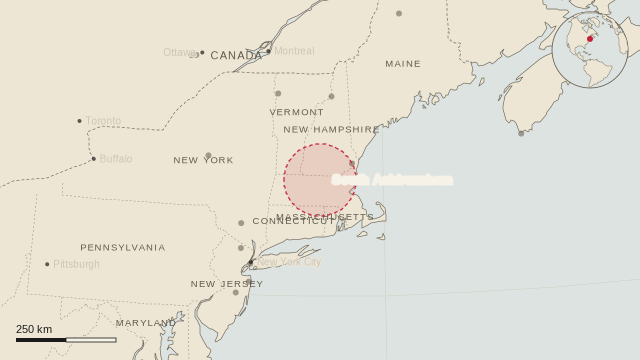
Where it happened
Why it matters
Betty Andreasson's case, like that of Betty and Barney Hill ↗ Barney and Betty Hill, rests on memories recovered through hypnosis, but it came with more material: recorded and transcribed sessions, drawings by Betty herself and an investigation that Fowler described as "probably the best documented case of its kind" to date. Hynek wrote in the foreword that "neither is there the slightest evidence of hoax or contrivance." He tied that to the premise that the whole series of events was not "some complex psychological drama played in concert"; if it was, he wrote, it would still be "a fine case study in abnormal psychology."
The 1967 records confirm the setting: a power cut in the neighborhood, mist and a thaw on the night of January 25. They say nothing about the beings or the object. The power cut also has a technical cause on record, a defective "primary loop cutoff," and the time was not recorded, so it cannot be tied to the moment Becky said she saw the clock. The date was fixed with those same records and with what Betty said, so the records show that the night was as they described it, not that what they described later took place.
Almost all of the story came out ten years later, under hypnosis. According to Fowler, Betty had read books and articles about UFOs after 1967, and her first letter to Hynek reflected ideas taken from uncritical UFO literature. The hypnotist, Edelstein, believed a good part of it reflected reality, but said he could not deduce how much was real and how much imagined. The skeptic Philip Klass analyzed the sessions and concluded, according to Robert Baker's review in the Skeptical Inquirer, that several parts of the story were "pure fantasy." For Klass, the case shows that a "basically honest, religious person" with a vivid imagination can invent a tale that credulous UFO researchers cannot dismiss. The review also notes that false memories are easy to implant under hypnosis.
Nothing physical supports the central part, and Fowler admits it: without physical evidence and with the conscious memory blocked, he writes, investigators cannot scientifically establish that a physical event took place as described. What several people perceived at the same time were the lights and, according to Waino Aho, some figures. All of them belonged to one family, Becky believed for years that it had been a dream and her grandfather first denied having seen anything. The youngest children remembered nothing. Waino Aho died on August 27, 1977, after the hypnosis sessions had ended.
The investigators themselves disagreed about the journey and the huge bird, which Betty experienced alone: they took it for a vision born of her religious beliefs, a vision induced by the beings, a symbolic rite or a deliberate deception by the beings. According to Fowler, none of them doubted that something had happened and all believed the witnesses were telling the truth as they knew it, and a minority thought the motive for telling it might also have been money, following a real experience.
Documents and sources
Documents
Fowler, "The Andreasson Affair" (1979)
Book by Raymond Fowler, a member of the team that investigated the case for the Center for UFO Studies and MUFON. It reproduces the hypnosis sessions with Betty and Becky Andreasson, Betty's drawings, Waino Aho's signed statement, the checks against power company and weather station records, the psychiatric examination, the voice stress analysis and a foreword by J. Allen Hynek. It summarizes a confidential 528-page report.
Baker, review of Klass's book on abductions (1988)
Review by Robert A. Baker, a psychology professor at the University of Kentucky, of "UFO-Abductions: A Dangerous Game" by Philip J. Klass, in The Skeptical Inquirer. It reports that Klass analyzed the Andreasson hypnosis sessions and concluded that several parts of the story were "pure fantasy," and reviews the skeptical argument about suggestion and false memories under hypnosis.
Documented evidence
- Signed, undated statement by Waino Aho, Betty's father, who from the pantry window saw creatures in the yard "just like Halloween freaks" that moved "just like grasshoppers"; Fowler reproduces it in his 1979 book. Years later, when Betty asked him by phone, he first denied having seen anything and then confirmed it without wanting to get involved.
- Records of the Ashburnham Municipal Light Company: a power failure in Betty's neighborhood on January 25, 1967, attributed to a defective "primary loop cutoff" that was replaced the next day; the time of the failure was not recorded.
- Record of the U.S. Department of Commerce weather station in Ashburnham: a trace of snow on the ground from January 23 to 27, 1967, a misty night and a thaw to 54 °F (12 °C) on the 25th.
- Hospital records: James Andreasson was transferred to a veterans hospital near Boston on January 23, 1967 and was not released until March 17.
- Fourteen hypnosis sessions with Harold Edelstein between April 3 and July 28, 1977, recorded and transcribed: the account of the abduction, the description of the beings and the journey come from them, together with the drawings Betty made.
Show 3 more facts
- Psychiatric interview of Betty by an anonymous doctor: no thought disorders or obvious psychiatric problems; he concluded she believed in the reality of her experience.
- Voice stress analysis (PSE) by Ernest C. Reid, a certified analyst, who concluded that Betty and Becky were telling the truth about what happened in 1967.
- Robert A. Baker's review of Philip J. Klass's book (The Skeptical Inquirer, Summer 1988): Klass concludes that several parts of Betty's story were "pure fantasy."
Sources
- Raymond E. Fowler, "The Andreasson Affair: The Documented Investigation of a Woman's Abduction Aboard a UFO" (1979) — Account of the investigation by one of its members: hypnosis sessions, power and weather records, psychiatric examination, voice stress analysis and a foreword by Hynek.
- Robert A. Baker, review of "UFO-Abductions: A Dangerous Game" by Philip J. Klass, The Skeptical Inquirer, vol. 12, Summer 1988 — Reports Klass's conclusion on the Andreasson case and the objections to accounts obtained under hypnosis.
Entity form (1)
Related cases
Cases this case cites and cases with the same likely cause.
Cited in this case · Same country · Within 10 years
Barney and Betty Hill · the light that followed their car
1961 · Tier A
Suggestion · Same country · Within 10 years
Buff Ledge · two camp workers see a light and lose track of time
1968 · Tier B
Psychological, medical or social cause · Same country · Within 10 years
Herbert Schirmer · a patrolman sees an oval craft over the road
1967 · Tier A
Psychological, medical or social cause · Same country · Within 10 years
Cisco Grove · a hunter says two humanoids besieged him
1964 · Tier B
Associated actors (1)
