Caso Nº 261Case No. 261·Estados UnidosUnited States

1968·Campamento Buff Ledge, Colchester, VermontBuff Ledge Camp, Colchester, Vermont

Estados UnidosUnited States.Buff Ledge · Lago ChamplainBuff Ledge · Lake Champlain

El 7 de agosto de 1968, dos empleados de un campamento a orillas del lago Champlain (Vermont), Michael Lapp (16) y Janet Cornell (19), vieron una luz que se dividió en otras menores 'como perlas'; despertaron en el muelle con una hora 'perdida'. Diez años después, el investigador Walter Webb reconstruyó bajo hipnosis sendos relatos de abducción que coincidían entre sí.On 7 August 1968, two employees of a camp on Lake Champlain (Vermont), Michael Lapp (16) and Janet Cornell (19), saw a light that split into smaller ones 'like pearls'; they woke on the dock with a 'lost' hour. Ten years later, investigator Walter Webb reconstructed under hypnosis two abduction accounts that matched each other.

AñoYear

1968

TierTier

B

ProbabilidadProbability

22%

CategoríaCategory

IncidenteIncident

Evidencia limitada: testigo único, local o sin verificación primaria. Tres ejes independientes: el «tier» mide la fuerza de la evidencia; la «probabilidad» estima cuán genuinamente inexplicado está el caso —un fenómeno natural puede seguir sin explicación, así que no equivale a «no-prosaico»—; y la partición de explicaciones (abajo) dice qué fue más plausiblemente. Por eso un caso bien documentado puede tener como causa más plausible un posible fraude, y un Tier B no es, por eso, un fraude.Limited evidence: single-witness, local or without primary verification. Three independent axes: the «tier» measures the strength of the evidence; the «probability» estimates how genuinely unexplained the case is —a natural phenomenon can remain unexplained, so it does not equal «non-prosaic»—; and the partition of explanations (below) says what it most plausibly was. So a well-documented case can have a possible hoax as its most plausible cause, and a Tier B is not, for that reason, a hoax.

Documentos primarios · visorPrimary documents · viewer

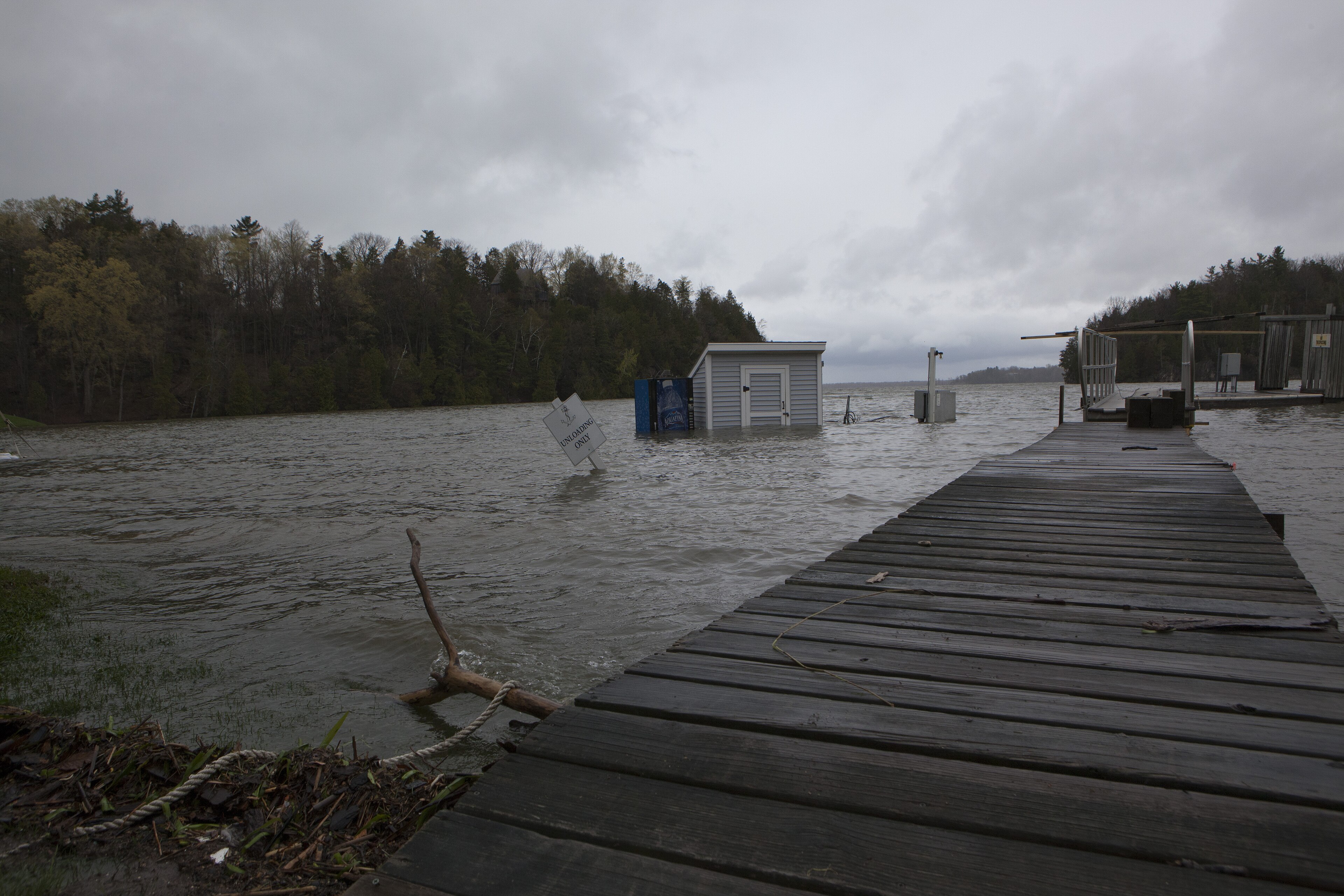
Contexto · el lago Champlain (Vermont), junto al campamento Buff Ledge

Contexto · el lago Champlain (Vermont), junto al campamento Buff LedgeContext · Lake Champlain (Vermont), by Camp Buff Ledge

Lake Champlain flooding.jpg · Wikimedia Commons · CC BY 2.0 · abrir originalopen original

Parte 01Part 01

La noche en cuestiónThe night in question

La noche del 7 de agosto de 1968, en el campamento de verano Buff Ledge, a orillas del lago Champlain en Colchester (Vermont), dos jóvenes empleados se encontraban junto al agua mientras el resto del personal había salido a una competición. Michael Lapp, de 16 años, y Janet Cornell, de 19, observaron aparecer una luz extraña en el cielo crepuscular. Según relataron, el objeto pareció dividirse en tres luces menores; Cornell las describió 'como pequeñas perlas que caían de la grande'. Una de esas luces se aproximó lentamente hacia el muelle del campamento.

estaban en el muelle, y comprobaron que había transcurrido alrededor de una hora de la que no podían dar cuenta —el clásico episodio de

El recuerdo consciente inmediato de ambos se detenía ahí: cuando 'volvieron en sí' estaban en el muelle, y comprobaron que había transcurrido alrededor de una hora de la que no podían dar cuenta —el clásico episodio de 'tiempo perdido'—. Durante una década no hicieron nada con la experiencia. En 1978, Lapp escribió al astrónomo y veterano investigador Walter N. Webb, del Center for UFO Studies (CUFOS), que había trabajado junto a J. Allen Hynek. Webb localizó a Cornell para comparar versiones y, ante el bloqueo de la memoria, propuso recurrir a la hipnosis regresiva.

En sesiones separadas con el doctor Harold Edelstein, y sin contacto ni colaboración entre ellos, Lapp y Cornell describieron haber sido elevados en un haz de luz e introducidos en una nave, donde recordaban entidades y una especie de examen. Lo notable del caso es la concordancia entre los dos relatos obtenidos por separado, y que la investigación de Webb localizó testigos adicionales que habían visto luces extrañas sobre el lago aquella noche; además, otros dos empleados del campamento referían una experiencia similar semanas antes. Tras diez años de entrevistas, transcripciones, perfiles psicológicos y verificaciones cruzadas, Webb concluyó que los testigos 'decían la verdad, tal como la habían vivido', y publicó sus hallazgos en 1994 en una extensa monografía, 'Encounter at Buff Ledge: A UFO Case History'.

On the night of 7 August 1968, at the Buff Ledge summer camp, on the shore of Lake Champlain in Colchester (Vermont), two young employees were by the water while the rest of the staff had gone to a competition. Michael Lapp, 16, and Janet Cornell, 19, watched a strange light appear in the twilight sky. As they recounted, the object seemed to split into three smaller lights; Cornell described them 'like little pearls that fell out of the big one'. One of those lights slowly approached the camp dock.

Both their immediate conscious memory stopped there: when they 'came to' they were on the dock, and found that about an hour had passed which they could not account for —the classic 'lost time' episode. For a decade they did nothing with the experience. In 1978, Lapp wrote to astronomer and veteran investigator Walter N. Webb, of the Center for UFO Studies (CUFOS), who had worked alongside J. Allen Hynek. Webb tracked down Cornell to compare accounts and, faced with the memory block, proposed resorting to regression hypnosis.

In separate sessions with Dr. Harold Edelstein, and without contact or collaboration between them, Lapp and Cornell described being lifted in a beam of light and taken aboard a craft, where they recalled entities and a kind of examination. What is notable about the case is the agreement between the two separately obtained accounts, and that Webb's investigation found additional witnesses who had seen strange lights over the lake that night; moreover, two other camp employees reported a similar experience weeks earlier. After ten years of interviews, transcripts, psychological profiles and cross-checks, Webb concluded that the witnesses 'were telling the truth, as they experienced it', and published his findings in 1994 in a lengthy monograph, 'Encounter at Buff Ledge: A UFO Case History'.

Parte 02Part 02

Por qué este caso movió la agujaWhy this case moved the needle

Buff Ledge importa al corpus como uno de los casos de abducción mejor investigados y como un espécimen casi ideal para examinar el peso —y los límites— de la concordancia entre dos testigos. A diferencia de la mayoría de abducciones, de testigo único, aquí hay dos protagonistas que, interrogados por separado bajo hipnosis y sin colaboración, produjeron relatos que encajaban, además de testigos independientes del fenómeno luminoso sobre el lago. La exhaustividad de la investigación de Walter Webb —diez años, perfiles psicológicos, verificaciones— lo coloca por encima del relato anecdótico y lo convierte en un buen banco de pruebas metodológico.

Ahora bien, la honestidad analítica reparte el posterior entre la narrativa mundano/misid y la indeterminación, sin cargar sobre lo no humano. El elemento que limita el caso es central: el grueso del relato de abducción —las entidades, el examen, la nave— se recuperó mediante hipnosis regresiva, una técnica que la psicología asocia de forma documentada con la creación de falsos recuerdos vívidos y con la convergencia de relatos cuando los sujetos comparten un mismo marco cultural y un mismo investigador que guía las sesiones. La concordancia entre Lapp y Cornell es real y notable, pero no excluye un origen compartido en una experiencia inicial ambigua (una luz mal identificada sobre el lago, quizá un objeto astronómico o una aeronave) seguida de una elaboración paralela. Los testigos de las 'luces' refuerzan que algo se vio en el cielo, no que hubiera una abducción. La masa que se concede a lo no humano abierto reconoce la calidad inusual del caso sin elevarlo a prueba. En el corpus, Buff Ledge es el caso que mejor ilustra que dos relatos coincidentes pesan más que uno, pero que la hipnosis sigue siendo un cimiento epistémicamente frágil.

Buff Ledge matters to the corpus as one of the best-investigated abduction cases and as an almost ideal specimen for examining the weight —and limits— of agreement between two witnesses. Unlike most abductions, which are single-witness, here there are two protagonists who, questioned separately under hypnosis and without collaboration, produced matching accounts, plus independent witnesses to the luminous phenomenon over the lake. The thoroughness of Walter Webb's investigation —ten years, psychological profiles, verifications— places it above the anecdotal account and makes it a good methodological test bench.

That said, analytical honesty splits the posterior between the mundane/misid narrative and indeterminacy, without loading onto the non-human. The element that limits the case is central: the bulk of the abduction account —the entities, the examination, the craft— was recovered through regression hypnosis, a technique psychology documentedly associates with the creation of vivid false memories and with the convergence of accounts when subjects share a cultural frame and a single investigator guiding the sessions. The agreement between Lapp and Cornell is real and notable, but it does not exclude a shared origin in an initial ambiguous experience (a misidentified light over the lake, perhaps an astronomical object or an aircraft) followed by parallel elaboration. The 'lights' witnesses reinforce that something was seen in the sky, not that an abduction occurred. The mass granted to the non-human open acknowledges the case's unusual quality without raising it to proof. In the corpus, Buff Ledge is the case that best illustrates that two matching accounts weigh more than one, but that hypnosis remains an epistemically fragile foundation.

Parte 03Part 03

Lo que queda en papelWhat's left on paper

Evidencia documentadaDocumented evidence

  1. Testimonio de Michael Lapp (16) y Janet Cornell (19) de una luz que se dividió en otras 'como perlas' sobre el lago Champlain (7 ago 1968)Testimony of Michael Lapp (16) and Janet Cornell (19) of a light that split into others 'like pearls' over Lake Champlain (7 Aug 1968)
  2. Episodio de 'tiempo perdido' de ~1 hora al despertar en el muelle'Lost time' episode of ~1 hour on waking up on the dock
  3. Investigación de 10 años de Walter N. Webb (CUFOS); relatos de abducción recuperados bajo hipnosis en sesiones separadas10-year investigation by Walter N. Webb (CUFOS); abduction accounts recovered under hypnosis in separate sessions
  4. Concordancia entre los dos relatos obtenidos sin contacto ni colaboraciónAgreement between the two accounts obtained without contact or collaboration
  5. Testigos adicionales de luces sobre el lago esa noche; otros dos empleados con experiencia similar semanas antesAdditional witnesses to lights over the lake that night; two other employees with a similar experience weeks earlier
  6. Monografía de Webb 'Encounter at Buff Ledge: A UFO Case History' (1994)Webb's monograph 'Encounter at Buff Ledge: A UFO Case History' (1994)

Patrones que exhibe (1)Patterns it exhibits (1)

UbicaciónLocation

Campamento Buff Ledge, Colchester, VermontBuff Ledge Camp, Colchester, Vermont · 44.55°, -73.25°

Distribución de explicacionesDistribution of explanations

Este caso se clasifica entre las hipótesis del modelo: la barra reparte el 100% según cuánto pesa cada explicación (la incertidumbre se reparte entre las hipótesis que el caso apoya). Sumadas en todo el corpus producen la partición comparable. Es una pregunta distinta de la Probabilidad de arriba: aquella estima qué tan probable es que el caso sea un fenómeno genuinamente no explicado; esta reparte cuál sería la explicación.This case is classified among the model's hypotheses: the bar splits 100% by how much each explanation weighs (the uncertainty is spread across the hypotheses the case supports). Summed across the corpus they produce the comparable partition. It is a different question from the Probability above: that one estimates how likely the case is a genuinely unexplained phenomenon; this one splits which the explanation would be.

MisidentificaciónMisidentification74%
No-humano sin gestión estatalNon-human, no state management18%
Tecnología humana clasificadaClassified human technology4%
No-humano + encubrimiento estatalNon-human + state cover-up4%

Hipótesis modalModal hypothesis: MisidentificaciónMisidentification 74% · suma 100%sums to 100%

Se confundió conConfused with: Sin objeto único identificadoNo single object identified

Juicio analítico estructurado, no frecuencia calibrada. Clasificación forzada: la masa que la evidencia no permite asignar se reparte entre las hipótesis que el caso sí apoya.Structured analytical judgment, not a calibrated frequency. Forced classification: the mass the evidence cannot assign is spread across the hypotheses the case does support.

Casos relacionadosRelated cases