Case No. 168·United States
1973·Bank of the Pascagoula River, Mississippi
United States.Pascagoula · abduction reported by two fishermen (USA, 1973)
On the night of October 11, 1973, Charles Hickson (42) and Calvin Parker (19) were fishing on the bank of the Pascagoula River (Mississippi) when, by their account, they heard a whirring sound, saw blue lights and an oval object from which three beings emerged and took them aboard the craft. They reported it to the USAF's Keesler base and to the Jackson County sheriff. Officers left them alone in a room and secretly recorded their conversation hoping to catch them in a lie; instead, the recording showed two genuinely terrified men, worried about their families and with no sign of deception. It is one of the best-known close-encounter (CE4) cases in the U.S.: sincere, consistent testimony, but with no physical evidence.
Year
1973
Tier
B
Probability
25%
Category
Incident
Limited evidence: single-witness, local or without primary verification. Three independent axes: the «tier» measures the strength of the evidence; the «probability» estimates how genuinely unexplained the case is —a natural phenomenon can remain unexplained, so it does not equal «non-prosaic»—; and the partition of explanations (below) says what it most plausibly was. So a well-documented case can have a possible hoax as its most plausible cause, and a Tier B is not, for that reason, a hoax.
Primary documents · viewer
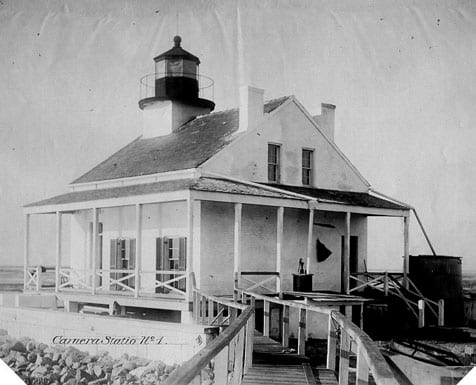
Context · Pascagoula (Mississippi), by the river where the reported abduction occurred
East Pascagoula River Light.JPG · Wikimedia Commons · Dominio público · open original
Part 01
The night in question
At dusk on October 11, 1973, Charles Hickson, 42, and Calvin Parker, 19, were fishing from an abandoned pier on the west bank of the Pascagoula River, on the Mississippi coast. By both accounts, they heard a whirring sound and saw flashes of blue light on the water; looking up, they found an oval object about 10 to 12 meters wide. From it, gliding, came three robotic-looking figures —wrinkled, grayish skin, claw-like hands, what looked like conical protrusions on the face— that immobilized them and took them inside the craft, where they described being examined by a kind of optical instrument before being returned to the bank. Parker, the younger man, was paralyzed by terror; Hickson recounted that his own body floated toward the craft.
Shaken, they first called the USAF's Keesler Air Force Base, which referred them to the Jackson County Sheriff's Department, where they arrived around 11:00 p.m. There the detail that made the case famous occurred: Sheriff Fred Diamond, suspecting a hoax, left Hickson and Parker alone in a room with a hidden recorder running, hoping to catch them laughing or coordinating a lie. The tape revealed the opposite —two deeply distressed men, talking to each other about their fear, praying, worried about how their families would take it— with no trace of shared invention; at one point Parker, alone, shows signs of genuine panic. That record of sincerity, more than any material proof, is what sustains the case.
Later checks reinforced the impression of good faith without supplying material proof. Both men were evaluated at Keesler for possible radiation exposure, with no abnormal findings reported in contemporary coverage. Both took and passed polygraph tests, and were questioned under hypnosis by investigator James Harder, a session that had to be cut short when Hickson became too distressed to continue. The investigators who dealt with them recorded that the pair's account never wavered.
Pascagoula is a close encounter of the fourth kind (CE4): an abduction experience. There is no physical evidence —no marks, traces or images— and the account belongs to the corpus's hardest genre to evaluate, where the burden falls entirely on the credibility and state of the witnesses. Hickson maintained his version until his death; Parker, who avoided speaking for decades and shunned attention, later reaffirmed it in books and interviews, until his death in 2023. The evident sincerity does not amount to confirmation of the event's nature, but it distinguishes Pascagoula from an ordinary hoax.
Part 02
Why this case moved the needle
It is one of the best-known and best-documented abduction (CE4) cases in the United States, and it enters the corpus as a reference for the genre of greatest strangeness and least evidence. Its distinctive feature —the sheriff's secret recording that, far from exposing a hoax, captured genuine distress— raises it above the ordinary hoax and makes it a case study on the limits of testimony: two sincere witnesses, consistent over decades, describing something for which no material proof exists. Precisely for that reason it is Tier B and low probability: sincerity is not evidence of the event's nature, and an abduction experience with no traces, photos or instrumental corroboration cannot weigh like the corpus's multi-sensor cases. It stands as an honest anchor for the experiential extreme of the phenomenon. The passed polygraphs and the aborted hypnosis session add color but not evidential weight: polygraphy is not a reliable detector of truth, and hypnosis can amplify rather than recover memory. What endures is the asymmetry the case forces the corpus to hold —overwhelming subjective conviction on one side, a complete absence of objective trace on the other— and the discipline to score it accordingly.
Part 03
What's left on paper
Documented evidence
- Consistent account by two witnesses —Charles Hickson (42) and Calvin Parker (19)— on October 11, 1973 on the bank of the Pascagoula River, Mississippi
- Immediate report to the USAF's Keesler Air Force Base and the Jackson County Sheriff's Department
- Officers' secret recording: far from exposing a hoax, it captured genuine distress and consistency between the two when alone
- Description of an oval object (~10-12 m) and three robotic-looking figures with claw-like hands
- Sustained reaffirmation of the account by both witnesses over decades (Hickson until his death; Parker later)
- Absence of physical evidence: no marks, traces or images — a CE4 (abduction) type case
Sources
- Wikipedia — Pascagoula incident — Chronology, witnesses and the sheriff's recording.
- Hinds Community College Library — Paranormal Mississippi: The Pascagoula Abduction (1973 recording) — Documentation and audio of the secret recording.
Patterns it exhibits (1)
Entity form (1)
Location
Bank of the Pascagoula River, Mississippi · 30.37°, -88.56°
Distribution of explanations
This case is classified among the model's hypotheses: the bar splits 100% by how much each explanation weighs (the uncertainty is spread across the hypotheses the case supports). Summed across the corpus they produce the comparable partition. It is a different question from the Probability above: that one estimates how likely the case is a genuinely unexplained phenomenon; this one splits which the explanation would be.
Modal hypothesis: Possible hoax 67% · sums to 100%
Structured analytical judgment, not a calibrated frequency. Forced classification: the mass the evidence cannot assign is spread across the hypotheses the case does support.
Related cases
same country · 1 pattern
Coyne Helicopter
1973 · Tier S · 85%
same country · 1 pattern
Skinwalker Ranch · AAWSAP and field experiments
2008 · Tier A · 60%
same country · 1 pattern
Socorro (Zamora)
1964 · Tier S · 75%
same country · 1 pattern
Yemen — Orb / Hellfire Missile Strike (MQ-9, 2024)
2024 · Tier A · 62%
Associated actors (2)