Case No. 336·United States
1941·Near Cape Girardeau, Missouri (exact site disputed)
United States.Cape Girardeau · the family account of a crash six years before Roswell
In the spring of 1941, Reverend William Guy Huffman —newly arrived pastor at Cape Girardeau's Red Star Baptist Church, Missouri— was called by police to what he was told was a plane crash. According to the account his granddaughter Charlette Mann made public decades later, Huffman found a split-open disc, three small bodies in metallic-looking suits, and unidentified symbols inside; the military cordoned off the site, confiscated a photograph, and demanded silence. For six years it stands as the oldest crashed-craft-with-bodies claim in American ufology —predating Roswell— but with not a single surviving document, photograph, or independent witness to corroborate it.
Year
1941
Tier
B
Probability
10%
Category
Document
Limited evidence: single-witness, local or without primary verification. Three independent axes: the «tier» measures the strength of the evidence; the «probability» estimates how genuinely unexplained the case is —a natural phenomenon can remain unexplained, so it does not equal «non-prosaic»—; and the partition of explanations (below) says what it most plausibly was. So a well-documented case can have a possible hoax as its most plausible cause, and a Tier B is not, for that reason, a hoax.
Primary documents · viewer
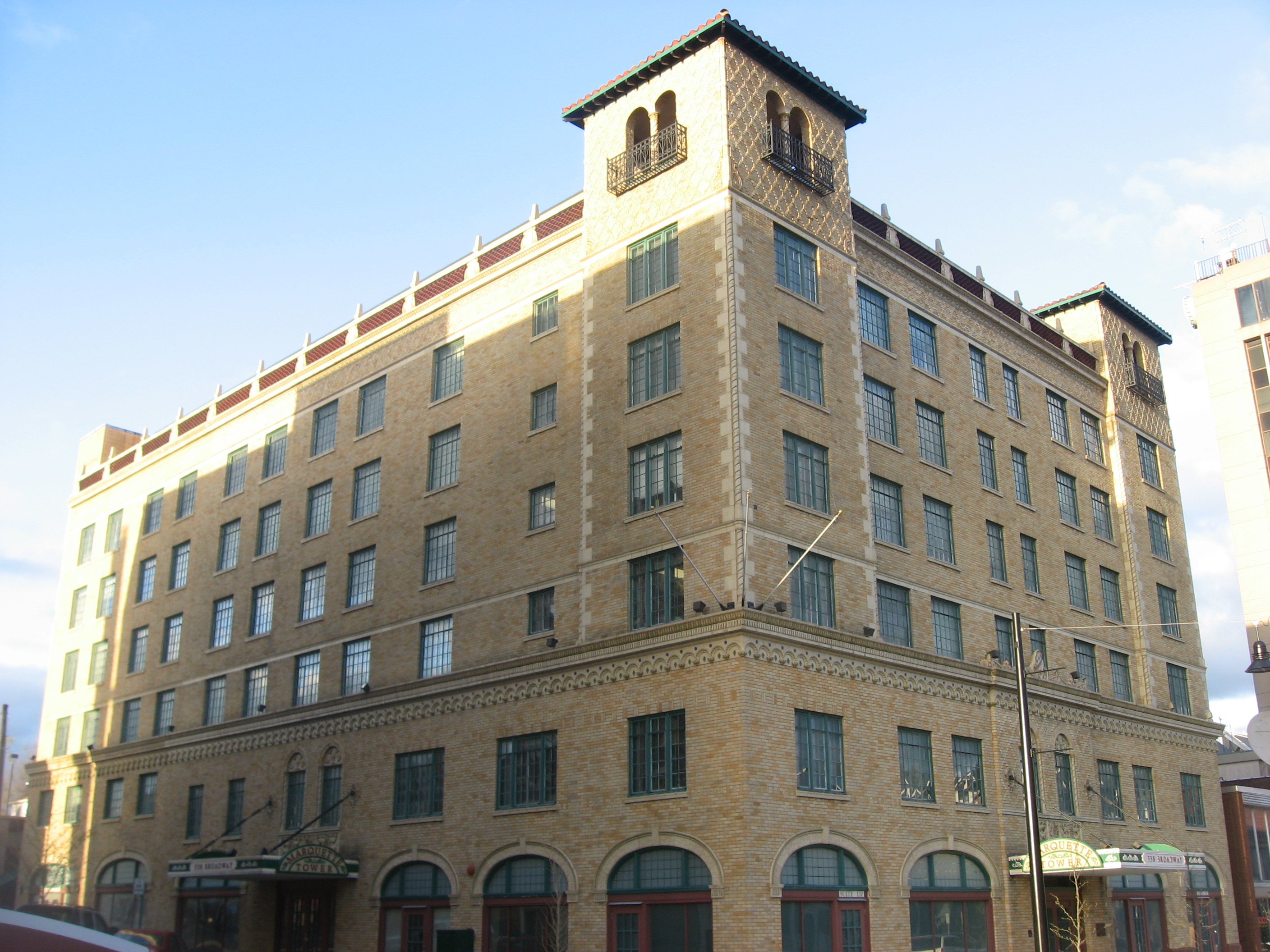
Context · the Marquette Hotel, Cape Girardeau, Missouri (built 1928)
Marquette Hotel, Cape Girardeau.jpg · Nyttend · Wikimedia Commons · Dominio público · open original
Part 01
The file in question
In the spring of 1941, Reverend William Guy Huffman had recently taken the pastorate of Red Star Baptist Church in Cape Girardeau, in southeastern Missouri. By the account passed down through his family, local police called him out one night to attend what they described as a plane crash roughly fifteen minutes south of town. On arriving, Huffman reportedly found not a plane but a disc-shaped object, split in two, its interior panels showing knobs, dials, and what looked to him like hieroglyphic symbols. Near the object were three small bodies, covered head to toe in something resembling crinkled aluminum foil; by the family's version, one was still alive when Huffman arrived and died in his presence, prompting the reverend —in his pastoral role— to administer last rites, as he would have for any human casualty.
Military personnel arrived shortly after, cordoned off the area, confiscated a photograph reportedly taken that night by a local newsman —showing, per the family, one of the bodies propped between two men— and warned everyone present not to discuss the incident. Huffman kept his public silence but told his wife and children what he had seen. The story stayed within the family for decades: his granddaughter, Charlette Mann, says she heard it from her grandmother on her deathbed, and it was Mann who made it public to researchers and media starting in the 1990s. The original photograph never resurfaced.
When journalists and researchers approached the relevant agencies, both the FBI and the Air Force said they held no record of the incident. In 1998, researcher James Westwood traveled to Cape Girardeau to examine local archives and cross-check the family's timeline; the Southeast Missourian documented his work, which found inconsistencies in the available records concerning Huffman himself —dates and details that do not cleanly match the account. Westwood's reconstruction, however, did not arrive at a demonstrated alternative explanation: he identified a possible year mix-up, not a concrete cause replacing the story. The case has continued circulating on podcasts and specialized programs through 2026 —including a segment on Coast to Coast AM that July— precisely because it sits in that middle ground: neither confirmed nor solidly debunked.
Part 02
Why this case moved the needle
Cape Girardeau's value to the corpus lies not in its evidentiary strength —which is nearly nil— but in its chronological position: if the account holds any grain of truth, it would be the oldest crashed-craft-with-recovered-non-human-bodies claim in American ufology, six years before Roswell. That makes it the symbolic point of origin for the entire 'recovery and cover-up' narrative genre running through the corpus to the present —from Roswell to AAWSAP, from Bob Lazar to Grusch, from Majestic-12 to this very week's testimony from Bigelow about recovered craft. Studying where that narrative tradition begins is as relevant as studying any of its later chapters.
Epistemologically, the case belongs to the same family as Majestic-12 and Boyd Bushman's confession: an extraordinary claim with not a single contemporary document, surviving photograph, or living independent witness, sustained only by oral family transmission across generations. The important difference is that, unlike Aztec 1948 —a proven Newton and GeBauer scam, with the con men identified— no demonstrated alternative explanation exists here. James Westwood's 1998 fieldwork found cracks in Huffman's public chronology, but Westwood himself acknowledged his archival reconstruction left the underlying question open, resting on a possibly misremembered year rather than a concrete alternative cause.
The posterior calibration reflects that honesty: the largest mass sits on `indet` (0.40), followed by `mundano_natural` (0.35, `misid`) under the most parsimonious hypothesis —that the original police call, literally described as a 'plane crash,' is the real seed of the story, with extraterrestrial iconography accreting onto that core across generations of oral retelling. A non-trivial mass is reserved for `nohumano_encubierto` (0.15) because, taken literally, the account would fit exactly that category, and because the case has been taken seriously by credentialed researchers in the field (Ryan Wood, among others) precisely for the internal consistency of the family testimony across decades. None of this can be verified today: the FBI and Air Force deny holding any record, and the sole physical evidence ever claimed —the photograph— is lost.
Part 03
What's left on paper
Documented evidence
- Account passed down by the Huffman family: Reverend William Guy Huffman attended an alleged disc crash with three non-human bodies near Cape Girardeau, Missouri, in spring 1941
- Public testimony from Charlette Mann (Huffman's granddaughter), who says she learned the account from her grandmother on her deathbed, first publicly disclosed in the 1990s
- Claimed photograph, taken by a local newsman the night of the event, confiscated per the account and never recovered
- FBI and U.S. Air Force respond they hold no documentary record of the incident when queried
- James Westwood's 1998 field investigation (reported by the Southeast Missourian): finds inconsistencies in records about Huffman, without reaching a demonstrated alternative explanation
- Sustained coverage in specialized media through 2026 (Coast to Coast AM, July 2026) as a case 'neither confirmed nor debunked'
Patterns it exhibits (1)
Location
Near Cape Girardeau, Missouri (exact site disputed) · 37.31°, -89.52°
Related cases
same country · 1 pattern
The Allagash Abductions
1976 · Tier B · 16%
same country · 1 pattern
Mothman · Point Pleasant
1966 · Tier B · 16%
same country · 1 pattern
Majestic 12 · the 'MJ-12' documents and the FBI's BOGUS verdict
1984 · Tier B · 8%
same country · 1 pattern
Boyd Bushman · Deathbed Confession
2014 · Tier B · 8%