1947·Maury Island, Puget Sound (Washington)
United States.Maury Island
In June 1947, days before Kenneth Arnold's sighting, Harold Dahl and Fred Crisman claimed to have seen six doughnut-shaped objects over Maury Island (Washington); one supposedly dropped metallic slag that injured his son and killed his dog. Dahl said he was visited by a 'man in black' who warned him to stay quiet. Two intelligence officers died when the B-25 carrying the 'samples' crashed. The FBI rated it a hoax, and Dahl himself admitted he would call it a fraud. It is the foundational case of the 'men in black' myth.
Tier B · IndicativeWhat do they mean? →
Limited evidence: a single witness, testimony gathered years later, or an account without contemporary primary documentation.
What it was
83%natural or human cause
Most likely explanation: possible hoax
See the split across the six explanations
Natural or human cause
No known cause
Read the full reasoning
The same essay notes that the 1952 account spawned rumours of a cover-up, and the FBI file qualifies the confession: a teletype from the Director notes, conditionally ('if such is the case'), that the two 'admit[ted] that the story was a hoax', while a Seattle teletype specifies that Dahl 'did not admit' it was a hoax but would say so if questioned by the authorities.Primary documents
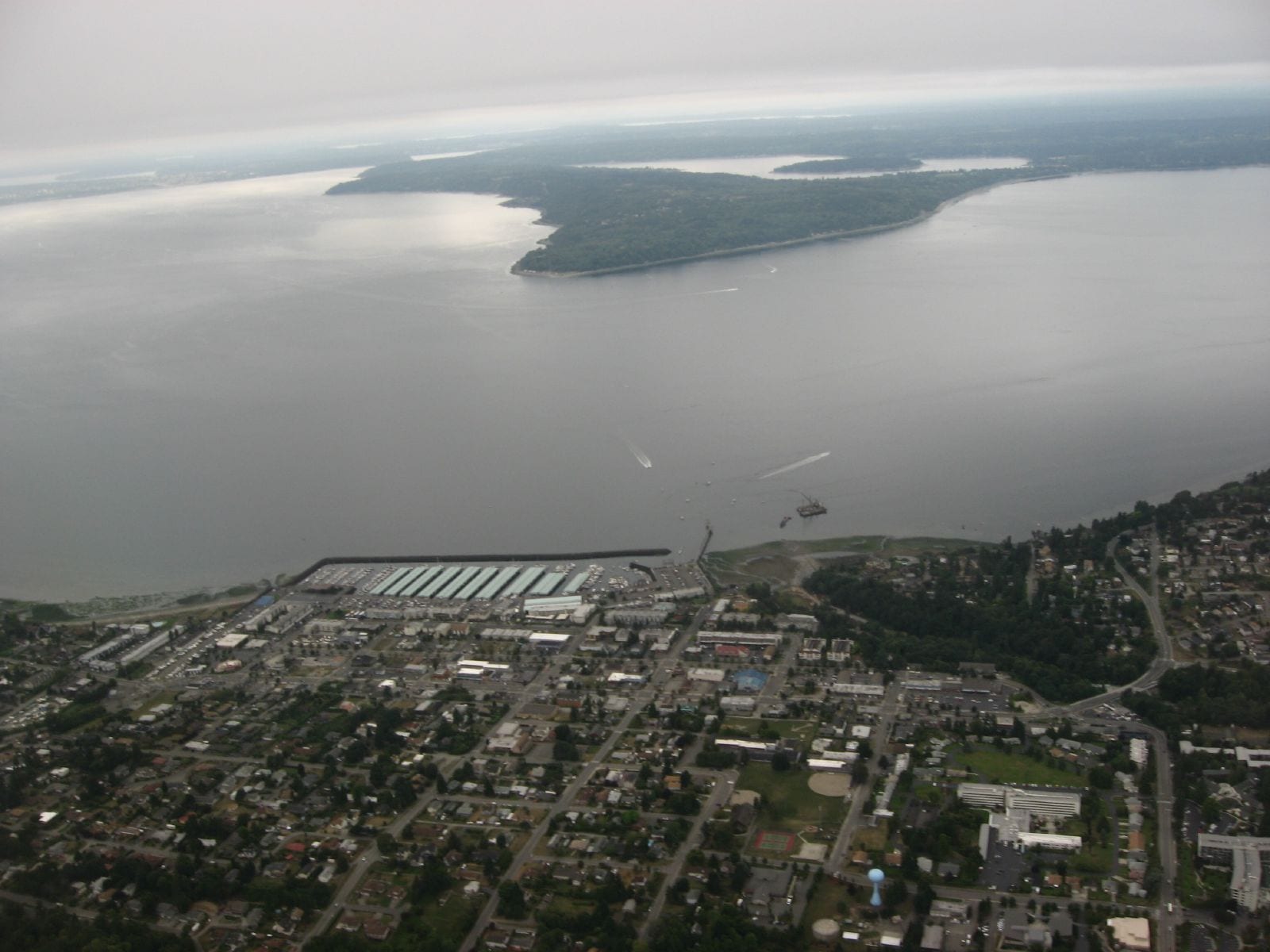
Context · Maury Island (Puget Sound, Washington)
Des Moines, Washington with Puget Sounds and Maury and Vashon Island (1292124062).jpg · Wikimedia Commons · CC BY-SA 2.0 · open original
62-HQ-83894 · Section 1 — FBI 'flying discs' file
File 62-HQ-83894 is the FBI's central 'flying discs' file, opened in the summer of 1947 when the Army Air Forces asked the Bureau for help, and fed with reports, testimony and correspondence into the 1970s. Incidents such as Maury Island and Kenneth Arnold's sighting passed through it. PURSUE declassified its serials in 2026; embedded here is a sample of Volume 1 (sections 1 to 10, the SUB A sub-file and seven serials), investigative correspondence from the 1947 wave. The FBI withdrew from active investigation at the end of that year. Most of the file is field work that resolved the bulk of reports as balloons, hoaxes or confusions: it documents how the wave was processed, not that the objects were anomalous.
FBI (PURSUE Release 01) · Public domain · US Government work · open original
62-HQ-83894 · Section 2 — FBI 'flying discs' file
FBI (PURSUE Release 01) · Public domain · US Government work · open original
62-HQ-83894 · Section 3 — FBI 'flying discs' file
FBI (PURSUE Release 01) · Public domain · US Government work · open original
Show the other 22 documents
62-HQ-83894 · Section 4 — FBI 'flying discs' file
FBI (PURSUE Release 01) · Public domain · US Government work · open document
62-HQ-83894 · Section 5 — FBI 'flying discs' file
FBI (PURSUE Release 01) · Public domain · US Government work · open document
62-HQ-83894 · Section 6 (part 1/2) — FBI 'flying discs' file
FBI (PURSUE Release 01) · Public domain · US Government work · open document
62-HQ-83894 · Section 6 (part 2/2) — FBI 'flying discs' file
FBI (PURSUE Release 01) · Public domain · US Government work · open document
62-HQ-83894 · Section 7 — FBI 'flying discs' file
FBI (PURSUE Release 01) · Public domain · US Government work · open document
62-HQ-83894 · Section 8 (part 1/6) — FBI 'flying discs' file
FBI (PURSUE Release 01) · Public domain · US Government work · open document
62-HQ-83894 · Section 8 (part 2/6) — FBI 'flying discs' file
FBI (PURSUE Release 01) · Public domain · US Government work · open document
62-HQ-83894 · Section 8 (part 3/6) — FBI 'flying discs' file
FBI (PURSUE Release 01) · Public domain · US Government work · open document
62-HQ-83894 · Section 8 (part 4/6) — FBI 'flying discs' file
FBI (PURSUE Release 01) · Public domain · US Government work · open document
62-HQ-83894 · Section 8 (part 5/6) — FBI 'flying discs' file
FBI (PURSUE Release 01) · Public domain · US Government work · open document
62-HQ-83894 · Section 8 (part 6/6) — FBI 'flying discs' file
FBI (PURSUE Release 01) · Public domain · US Government work · open document
62-HQ-83894 · Section 9 — FBI 'flying discs' file
FBI (PURSUE Release 01) · Public domain · US Government work · open document
62-HQ-83894 · Section 10 (part 1/2) — FBI 'flying discs' file
FBI (PURSUE Release 01) · Public domain · US Government work · open document
62-HQ-83894 · Section 10 (part 2/2) — FBI 'flying discs' file
FBI (PURSUE Release 01) · Public domain · US Government work · open document
62-HQ-83894 · Serial 130 (Vol. 1) — FBI investigative correspondence
FBI (PURSUE Release 01) · Public domain · US Government work · open document
62-HQ-83894 · Serial 153 (Vol. 1) — FBI investigative correspondence
FBI (PURSUE Release 01) · Public domain · US Government work · open document
62-HQ-83894 · Serial 164 (Vol. 1) — FBI investigative correspondence
FBI (PURSUE Release 01) · Public domain · US Government work · open document
62-HQ-83894 · Serial 220 (Vol. 1) — FBI investigative correspondence
FBI (PURSUE Release 01) · Public domain · US Government work · open document
62-HQ-83894 · Serial 403 (Vol. 1) — FBI investigative correspondence
FBI (PURSUE Release 01) · Public domain · US Government work · open document
62-HQ-83894 · Serial 438 (Vol. 1) — FBI investigative correspondence
FBI (PURSUE Release 01) · Public domain · US Government work · open document
62-HQ-83894 · Serial 449 (Vol. 1) — FBI investigative correspondence
FBI (PURSUE Release 01) · Public domain · US Government work · open document
62-HQ-83894 · Subfile A (SUB A) — FBI file attached material
FBI (PURSUE Release 01) · Public domain · US Government work · open document
The night in question
The Maury Island case is, chronologically, one of the first of the modern 'flying saucer' era, predating by a few days Kenneth Arnold's 24 June 1947 sighting that coined the term. Harold Dahl, a boat skipper from Tacoma (Washington), claimed that on 21 June 1947, while patrolling Puget Sound waters near Maury Island with his son, an employee and his dog, he saw six large doughnut-shaped objects over the bay. By his account, one of them seemed to malfunction and dropped first a shower of very light white metal, 'like thousands of newspapers', and then heavier, slag-like fragments that struck his boat, injured his son's arm and killed the dog.
What turned a dubious account into a historic episode was what came next. Dahl said that the next morning a man dressed in a dark suit met him for breakfast, recounted in detail what he had seen (despite not having been there) and warned him not to talk about it for his own and his family's sake. That scene is recurrently cited as the founding brick of what popular culture would later call 'men in black'. Fred Crisman, presented in the story as Dahl's superior and described by the FBI as his business partner, went to the island to 'verify' and said he too had seen an object. According to the signed statement both later gave the FBI, in early June they had picked up some rock formations from a gravel pit on Maury Island and sent a cigar box of them to Ray Palmer, an editor in Evanston (Illinois), only for analysis; days after the flying-disc stories began, Palmer called them and offered to pay for an exclusive story if the material was fragments of a disc. In that same statement they said they had told officers Davidson and Brown how they got the rock formations and that these had no connection with any flying disc. Palmer sent the case to the already-famous Kenneth Arnold himself.
Arnold, overwhelmed, contacted military intelligence. Two officers of the Fourth Air Force (Lieutenant Frank Brown and Captain William Davidson) travelled to Tacoma, interviewed the witnesses and left with samples of the material. In the early hours of 1 August 1947, the B-25 Mitchell bomber they were flying crashed near Kelso (Washington), killing both; according to the FBI Seattle teletype, they had no chance to escape when the wing broke off. That same day, a Tacoma Times reporter and a United Press wireman received anonymous calls claiming the plane had been sabotaged or shot down. The death of two officers returning with 'evidence' injected a lasting conspiratorial charge into the case: if the episode was nonsense, why had they died? That question, more than the sighting itself, kept the case alive for decades.
The evidence, however, points strongly to a hoax. The FBI investigated and concluded the claims were false. Its teletypes do not fully agree on the confession: one from the Director notes, conditionally ('if such is the case') and on the basis of an interrogation, that the two repeated their 'false story' about the material being disc fragments to the officers and only on the night of 2 August did 'admit that the story was a hoax'; a Seattle teletype of 14 August specifies that Dahl did not admit it was a hoax but stated that if questioned by authorities he was going to say it was a hoax 'because he did not want any further trouble over the matter'. The same teletype adds that the two probably made the anonymous calls in the hope of building up their story through publicity to a point where they could make a profitable deal with Fantasy magazine in Chicago. The 'slag', per the FBI, was rock or slag from a gravel pit on the island itself, not exotic material. The case is today widely regarded as a hoax even by most UFO researchers, and the tragic death of Brown and Davidson has a prosaic explanation: an engine fire on a B-25, according to the Army, an aircraft accident far from rare at the time. Crisman, moreover, would resurface years later at strange margins of American history, which fed the folklore without adding evidence. Maury Island survives, therefore, not as a mystery but as an object of study: the mould from which several tropes emerged (the men in black, the sample that disappears, the investigator who dies) that would reappear again and again in UFO mythology.
Why it matters
Maury Island matters for its foundational place, not its evidence: it is one of the first cases of the modern era and the documented cradle of several tropes that would structure all later mythology: the 'man in black' who warns the witness, the physical sample that is lost, the investigators who die with the 'evidence'. Its value is that of a control case on folklore: it shows how a probable, well-timed hoax, amplified by a real but accidental death (the B-25), generates a self-sustaining conspiracy that outlives its own debunking. The FBI closed it as false, Dahl said he would call it a hoax if questioned and, according to the two men's signed statement, the 'slag' was rock from a gravel pit on the island sent to an editor who offered to pay for a disc story. The case makes explicit that the 'men in black + vanished sample + dead witness' pattern was born from an admittedly false case, and that its later reappearances should be read in that light.
What's left on paper
Documented evidence
- Account of Harold Dahl and Fred Crisman (June 1947): six doughnut-shaped objects and a fall of 'slag' that injured his son and killed the dog.
- FBI teletypes (August 1947): the Director takes it that they admitted the hoax on the night of 2 August; Seattle specifies that Dahl only said he would call it a hoax if questioned by the authorities.
- Signed statement to the FBI: they picked up the rocks from a gravel pit on Maury Island in early June and sent them to Ray Palmer, who offered to pay for an exclusive if they were disc fragments.
- Death of Lt. Frank Brown and Capt. William Davidson when their B-25 crashed (1 Aug 1947) carrying samples; the FBI notes that the wing broke off and the Army attributed it to an engine fire.
- First documented appearance of the 'man in black' motif warning the witness.
Sources
- Maury Island incident — Wikipedia — Secondary source: case synthesis.
- HistoryLink.org — 'Dahl and Crisman report a flying saucer over Maury Island (1947)' — Documented historical review of Washington State.
- FBI — expediente «UFO», parte 1 (télex de Seattle del 14 de agosto de 1947), copia en archive.org — Teletypes on Dahl and Crisman: Dahl would say it was a hoax if questioned; anonymous calls to make a deal with Fantasy magazine.
- FBI — expediente «UFO», parte 3 (declaración firmada, accidente del B-25 y télex del director), copia en archive.org — Signed statement on the gravel-pit rocks, the B-25 crash and the admission of the hoax on 2 August.
- FBI Records: The Vault — 'Unidentified Flying Objects' (file 62-HQ-83894) — The full file and the FBI's note on the Hottel memo.
- war.gov/UFO — 62-HQ-83894 serials (PURSUE Release 01) — Serials from Volume 1 of the FBI file (sample embedded in the viewer).
Related cases
same explanation · same country · same period
Aztec · New Mexico
1948 · Tier B
same explanation · same country · same period
McMinnville · the Trent disc photographs (USA, 1950)
1950 · Tier A
same explanation · same country
Socorro (Zamora)
1964 · Tier A
same explanation · same country
Rex Heflin · Santa Ana
1965 · Tier A