1967·Cuban airspace
Cuba.Cuba · MiG-21 (NSA report)
According to an account attributed to a former U.S. Air Force security specialist of the 6947th Security Squadron, in March 1967 two MiG-21s of the Cuban Air Force were sent to intercept an unidentified object; one was supposedly destroyed in mid-air as it prepared to fire, and the loss was logged as 'equipment malfunction'. The story, which the informant told researcher Stanton Friedman in 1978 and which NICAP later circulated, rests on a single source and the NSA never confirmed it. It is a Cuban case, and an example of the fragility of single-source accounts.
Tier B · IndicativeWhat do they mean? →
Limited evidence: a single witness, testimony gathered years later, or an account without contemporary primary documentation.
What it was
53%no known cause
The evidence is not enough to decide between the explanations
See the split across the six explanations
No known cause
Natural or human cause
Primary documents
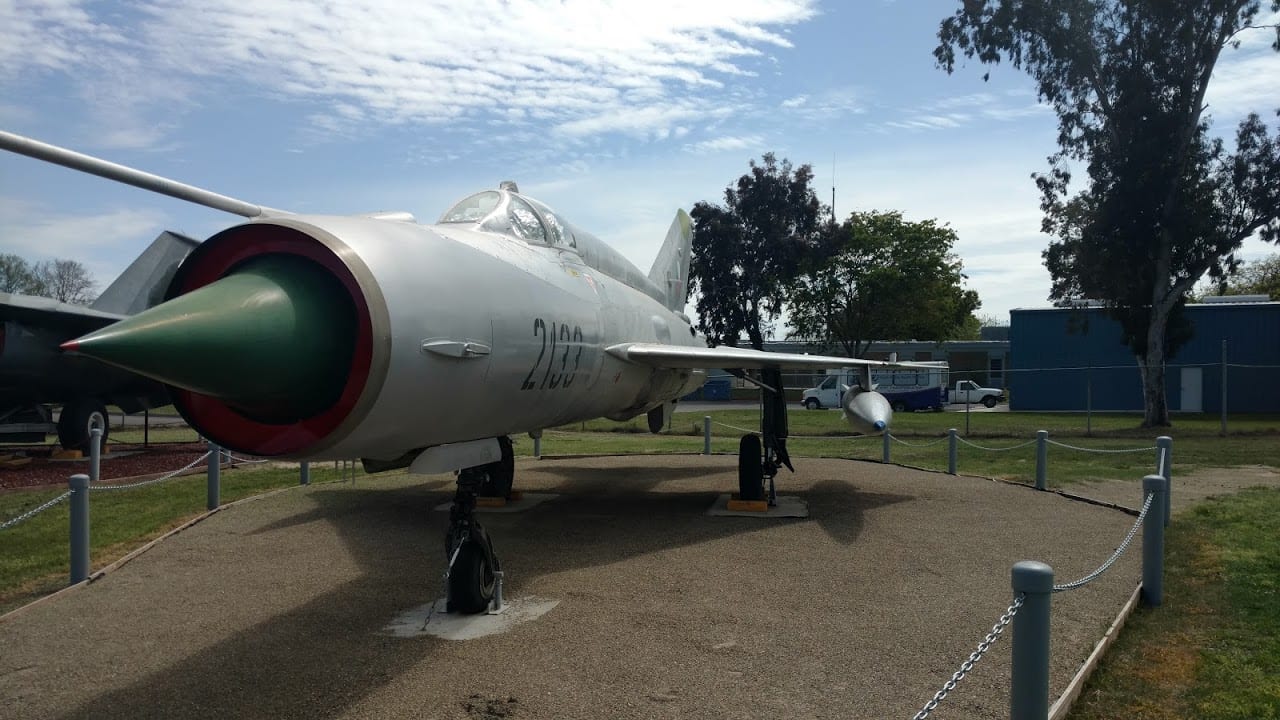
Context · a MiG-21 fighter, the Cuban type involved in the 1967 NSA report
Czech MiG-21 at CAM.jpg · Wikimedia Commons · CC BY-SA 4.0 · open original
Just Cause, vol. 1, no. 6 (September 1978, news through November): the NSA and Air Force letters to Robert Todd
CAUS newsletter transcribing the official replies to Robert Todd. The NSA, in a letter of 8 August 1978 signed by its General Counsel Daniel Silver, says it has located no record indicating that the incident occurred, but that information on how it was allegedly obtained is classified, and reminds him of the law against disclosing communications intelligence. Col. James Johnson of the Air Force Judge Advocate General's office writes on 14 September that he can neither confirm nor deny the statement or the existence of records, that "if authentic" it would be classified SECRET in its entirety, and withholds ten internal documents. The newsletter is under copyright, so it is linked rather than hosted.
Citizens Against UFO Secrecy (CAUS), vía archive.org · view source
The night in question
The 1967 Cuban MiG case is known almost entirely through a single account: that of an anonymous U.S. Air Force security specialist who in 1967 served with the 6947th Security Squadron, based at Homestead (Florida) with a detachment on Boca Chica Key near Key West, a Spanish-speaking intelligence unit that monitored Cuban Air Force communications and radars. According to that testimony, which the informant passed to researcher Stanton Friedman after one of his lectures in 1978, which a UPI dispatch spread on 13 January 1978, and which Robert Todd of the civilian group Citizens Against UFO Secrecy (CAUS), who received the statement through reporter Robert Pratt of the National Enquirer, then pursued, in March 1967 the detachment's operators heard Cuban air-defence radar controllers report an unidentified contact approaching from the northeast and entering the island's airspace at about 10,000 metres and nearly Mach 1. Two Soviet-built MiG-21 fighters of the Cuban Revolutionary Air Force were sent to intercept it.
The account continues thus: ground radar guided the fighters to within about five kilometres of the object, and the leader described it by radio as a bright metallic sphere with no visible markings or appendages. After an attempt at radio contact failed, air defence headquarters ordered him to arm his weapons and destroy the object; the leader reported that his radar was locked on and his missiles armed, and seconds later his wingman screamed to the controller that the leader's jet had exploded; once composed, he added that there was no smoke or flame, that the MiG had disintegrated. Cuban radar then reported that the object accelerated, climbed above 30,000 metres and headed south-southeast towards South America. According to the informant, his unit transmitted an 'Intelligence Spot Report' to NSA headquarters and, having received no mandatory acknowledgement, a follow-up report; within hours they received orders to send all tapes and data to the agency and to log the MiG's loss in squadron files as due to 'equipment malfunction'. The informant said fifteen to twenty people in the detachment were fully informed of the incident.
The case's problem is structural: virtually everything depends on that single source. According to CAUS's account, the NSA did not confirm the report's existence. Robert Todd sent information requests to the Air Force, the CIA, the NSA and the Navy between February and July 1978 without success (the CIA suggested he check with the Cuban government); on 14 July he told the NSA and the Air Force he would write to Cuba, and on 28 July two FBI agents visited him at home, asked whether he had written to foreign governments and began reading him the espionage laws; they said the NSA had asked for the investigation, and one of them, asked about the classification of the statement, replied: 'Some of the information is classified. Most of it is bullshit.' When Todd asked the Air Force for his request file, a colonel of the Judge Advocate General's office replied on 14 September that it could 'neither confirm nor deny the authenticity of this statement, nor the existence of any records concerning the incident', but that 'if authentic' it would be classified Secret in its entirety, and listed ten classified documents generated by his requests. According to the CAUS bulletin of August 1978, on 4 August Major Gordon Finley, head of the freedom-of-information branch of the Air Force Judge Advocate General's office, asked him by telephone to seal all copies of the statement in an envelope because, "assuming the security analyst's statement is true", it contained classified information, and NSA spokesman Charles Sullivan declined to comment. In the other direction, in 1996 General Rafael del Pino of the Cuban Air Force, who had defected to the United States in 1987, denied in a telephone interview with a local journalist, circulated by the Miami UFO Center and reported in CENAP Report no. 234, that there had ever been contacts between UFOs and his aircraft, and said that for Cuban air defence the phenomenon was no more than something related to the weather. The story's chain of custody (from an anonymous informant to a civilian organization and thence to the literature) is exactly the kind that demands most caution, because it allows verification neither of the witness's role nor of the content of the supposed reports.
The possible readings span the whole spectrum. At the prosaic end, the loss of a MiG-21 in 1967 could have an ordinary cause (a real mechanical failure, pilot error, an accident) on which an extraordinary narrative was later built; at the limit, the whole account could be an invention, which is the reading of the German sceptical group CENAP after Del Pino's denial. At the anomalous end, it would be one of the few cases asserting a hostile interaction with the loss of a military aircraft and a documented intelligence response. Without independent corroboration, the case cannot lean either way. Its interest is not evidential but methodological and geographic: a single-source account, however dramatic, is not evidence until something external sustains it.
Why it matters
The Cuban MiG case matters for two reasons that are not its evidence. The first is geographic: it extends the map to a Cold War actor rarely represented in the UAP literature. The second is methodological: it is the textbook example of the single-source account: an anonymous witness, no released primary documentation, no second witness, no confirmation from the cited agency. The case marks precisely that limit: however dramatic (a fighter destroyed, an intelligence response, an order to cover up the loss), none of it can be verified. It is the counterpoint to the cases with a documentary chain (AAWSAP, the MoD files): it shows what a case looks like when that chain is entirely absent. Treating it with skepticism is not disdain; it is the proper way to file a story that could be real, prosaic or invented, without the means to tell which.
What's left on paper
Documented evidence
- Single account attributed to a former U.S. Air Force security specialist of the 6947th Security Squadron, which monitored Cuban communications; passed to Stanton Friedman in 1978 and pursued by CAUS (Robert Todd); later circulated by NICAP.
- Claim of an 'Intelligence Spot Report' sent to the NSA and of an order to log the MiG's loss as 'equipment malfunction'.
- The NSA declined to comment (its spokesman, Charles Sullivan, on 31 July 1978) and the account names no other witness; the informant said fifteen to twenty people in the detachment knew of it.
- The case rests entirely on the informant's statement, circulated by CAUS in 1978.
- Visit by two FBI agents to Robert Todd on 28 July 1978, at the NSA's request according to the agents; in September the Air Force replied it could neither confirm nor deny the statement's authenticity or records of the incident, but that if authentic it would be classified Secret in its entirety.
Show 2 more items
- Call by Major Gordon Finley of the Air Force Judge Advocate General's office to Robert Todd on 4 August 1978: if the statement was true it contained classified information, "Secret" in his words (CAUS bulletin, August 1978)
- Denial in 1996 by Cuban General Rafael del Pino, who defected in 1987: there were never any contacts between UFOs and his aircraft (Miami UFO Center, reported in CENAP Report no. 234)
Sources
- The 1967 Cuban Jet Incident — NICAP — Reproduces CAUS's account in 'Clear Intent' (Greenwood and Fawcett, 1984, pp. 195-201), including the Air Force letter of 14 September 1978.
- Cuban MiG / 1967 incident — discusión crítica — Summary of the case and its verification problems (the NSA never confirmed).
- The Debrief — 'Have UFOs Ever Attacked Terrestrial Aircraft?' — Origin of the account (Stanton Friedman, 1978), CAUS's requests and the official neither-confirm-nor-deny reply.
- Just Cause (CAUS) — boletín de agosto de 1978 (Brad Sparks, «FBI interrogates…»), en la colección «Citizens Against UFO Secrecy (CAUS) Newsletter» (archive.org) — Contemporary primary source: the informant's statement as pieced together by CAUS, the FBI visit to Robert Todd, Major Gordon Finley's call and the replies of the FBI and NSA spokesmen.
- CENAP Report n.º 234 — «UFOs über Kuba?» (archive.org) — Critical secondary source: reports the Miami UFO Center note of 3 July 1996 with General Rafael del Pino's denial and treats the account as invented.
Related cases