1972·Braeside farm, Fort Beaufort, Eastern Cape
South Africa.Fort Beaufort · UFO fired on by police
On June 26, 1972, near Fort Beaufort (Eastern Cape), a farmer and a policeman fired at a low-altitude luminous object that changed color; later accounts add six town councillors who watched it through binoculars, and imprints were left in the hard clay that a Fort Hare University geologist said were 'definitely not animal or human'. A multi-witness case with police and municipal involvement, a physical trace and international press coverage, but no sensor record or formal military report.
Tier B · IndicativeWhat do they mean? →
Limited evidence: a single witness, testimony gathered years later, or an account without contemporary primary documentation.
What it was
53%natural or human cause
Most likely an ordinary cause that no one has identified
See the split across the six explanations
Natural or human cause
No known cause
Primary documents
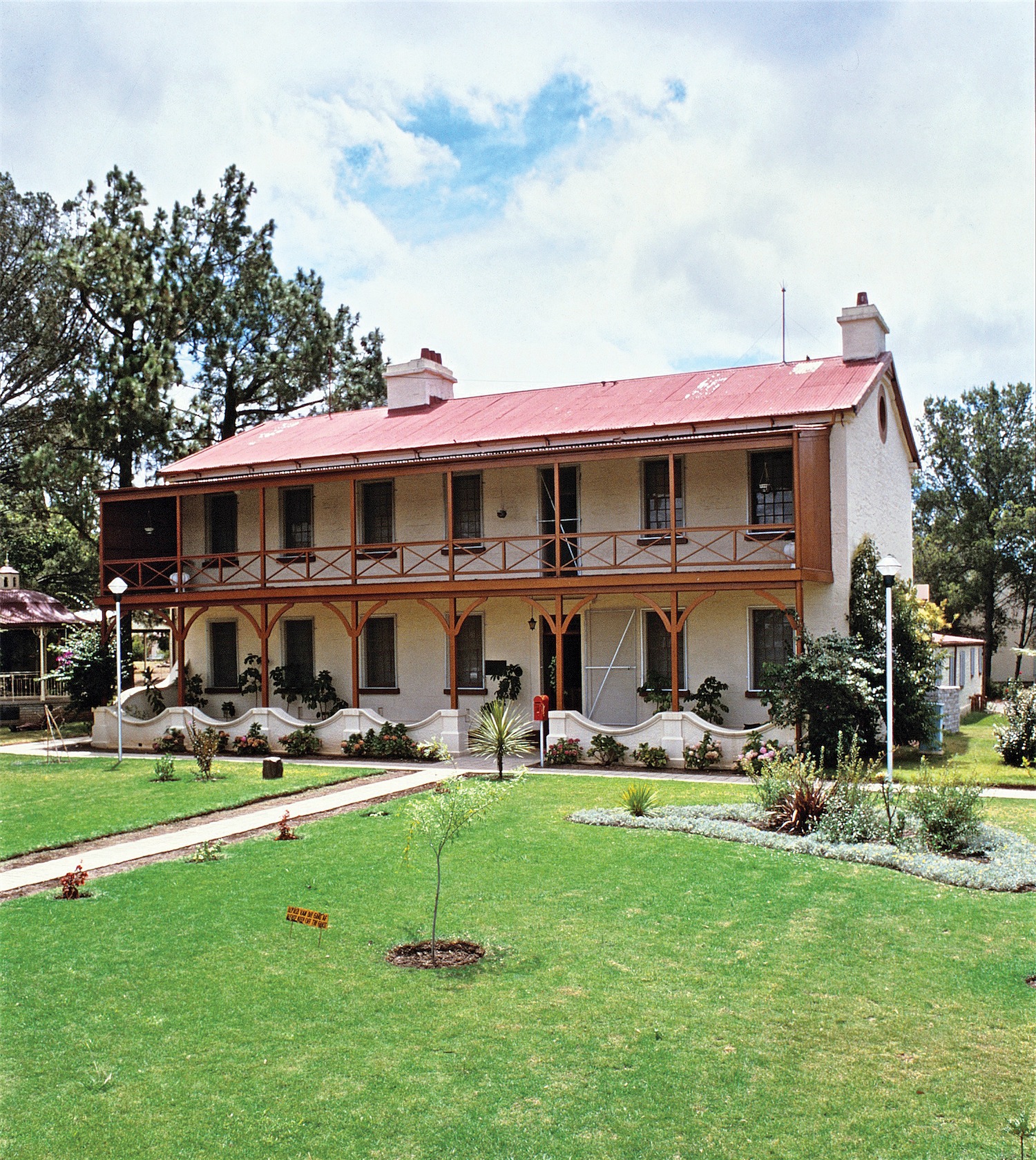
Context · Fort Beaufort (Eastern Cape, South Africa)
9 2 028 0011-Officers Mess Museum-Fort Beaufort-s.jpg · Wikimedia Commons · CC BY-SA 3.0 · open original
APRO Bulletin, September-October 1972, pp. 1, 3 and 4: 'The South African Flap'
The contemporary account, built from the South African press clippings sent by APRO representative Frank D. Morton. It gives Bennie Smit's story, of Braeside farm near Fort Beaufort: a labourer told him at 9 a.m. of a ball of fire at treetop height, about two and a half feet across, that changed colour; Smit fetched his .303 rifle, phoned the police and said he was sure his eighth shot hit it. Then that of Warrant Officer P. R. van Rensburg, the station commander, who arrived about 10 a.m. with Sgt. P. Kitching: after the shots they saw a round, black, shiny object about two and a half feet across come out from behind a tree, unaffected by the shots. According to the Pretoria News of 5 July, imprints were left on the farm that C. S. Kingsley, a geologist at Fort Hare University, judged 'definitely not animal or human'. A private magazine under copyright, so it is given as a link.
Aerial Phenomena Research Organization · Internet Archive (AFU) · view source
The night in question
On the morning of June 26, 1972, at Braeside farm near Fort Beaufort (Eastern Cape, South Africa), at about 9 a.m., a farm laborer reported smoke near a krans (cliff) and a 'ball of fire'. According to the account of the owner, farmer Bennie Smit, published by the APRO Bulletin from South African press clippings, it was a fiery ball about two and a half feet (some 75 cm) across, hovering at treetop height with flames shooting out; it moved sideways about 300 yards, left a smoke trail and changed from red to green to yellowish-white. Smit went back to the house for his .303 rifle, phoned the police and fired several shots; he said he was sure his eighth shot hit it, because he heard a thud.
At about 10 a.m. Warrant Officer P.R. van Rensburg, the Fort Beaufort station commander, and Sgt. P. Kitching arrived. According to van Rensburg, after Smit and Kitching had fired, they saw a round, black, shiny object about two and a half feet across emerge from behind a tree, disappearing and reappearing; shots had no effect and it shied away behind the bushes when anybody approached. Smit later saw it about 20 yards away, greyish-white, fired two more quick shots and the object, with a loud whirring noise, veered off over the treetops, cutting a pathway through the foliage. Smit told APRO's representative that the object seemed to respond to the human voice and the proximity of people, that it left no burned traces although it had been a ball of fire close to foliage, and that it was seen for almost four hours. Later accounts describe it as a 200-liter metal drum of dark gunmetal grey and add that six Fort Beaufort town councillors followed the episode through binoculars; the APRO Bulletin does not mention them.
A physical trace was left on the ground. According to the Pretoria News of 5 July, quoted by APRO, C. S. Kingsley, a geology lecturer at Fort Hare University, said the imprints at Braeside farm were 'definitely not animal or human': fine parallel streaks suggested metal, the imprints were round, 10 mm deep at the centre and shallower towards the edge, as if made by a spherical object, and the clay was so hard that the policemen's boots barely left a mark. Later accounts speak of nine imprints arranged like landing gear. Smit was asked to send clay samples by train to Pretoria for analysis, but (according to the account that circulated in the press) the samples were lost in transit and never reached the capital, leaving unverified the only materially analyzable element of the case.
The story drew international press coverage and sits within a South African wave of the early 1970s. The Grahamstown army regiment was reported to have taken an interest in the site, but the institution could not (or would not) provide records of the event. That is the case's epistemic line: institutional witnesses (the police and, according to later accounts, the town council) and a physical trace, but no sensor data, no soil samples and no formal military report to back it. The sources consulted propose no specific explanation, and no published conventional reconstruction accounts for the whole: the object's persistence under fire for hours, the color change and the ground imprints.
Why it matters
It is South Africa's best-documented case and the one with the most institutional weight: not an anonymous sighting but one involving police, councillors according to later accounts, and a physical trace. It is credible for the number and quality of witnesses, but limited by the absence of sensor data or a formal military report. The case neatly illustrates a recurring pattern: the friction between robust testimony and an evidence chain that breaks at the decisive link. Here the material did exist (the imprints, soil samples) but was lost before it could be analyzed, and the army's interest never became a recoverable file. That loss proves and disproves nothing; it leaves the case resting on the word alone of multiple, qualified observers.
Its famous counterpart, the alleged Kalahari shootdown (1989), is a documented hoax (↗), debunked by the pioneer of African ufology herself, Cynthia Hind, who spent decades investigating southern-African cases and separating the credible from the fabricated. The comparison separates a bounded case from a spectacular but discredited one.
What's left on paper
Documented evidence
- Shots fired by farmer Bennie Smit and Sgt. Kitching at the object, with no visible effect, in the presence of Warrant Officer van Rensburg; almost four hours of observation according to Smit.
- Later accounts add six Fort Beaufort town councillors who watched through binoculars (they do not appear in the 1972 APRO Bulletin).
- Round imprints 10 mm deep in hard clay; geologist C. S. Kingsley (Fort Hare) said they were 'definitely not animal or human'.
- International press coverage; the Grahamstown army regiment investigated the site but produced no records.
Sources
- Wikipedia — UFO sightings in South Africa (Fort Beaufort, 1971) — Secondary source.
- APRO Bulletin, September-October 1972 — 'The South African Flap' — Accounts by Bennie Smit and Warrant Officer van Rensburg taken from the South African press of the time, and the Pretoria News (5 Jul 1972) quote on the imprints.
- Cynthia Hind — investigación de casos del sur de África (contexto) — Hind documented African cases and debunked the Kalahari hoax (1989).
- AARO — Fiscal Year 2024 Consolidated Annual Report on UAP (Nov 14, 2024)