1989·Kalahari Desert (South Africa–Botswana border)
South Africa.The Kalahari Incident
It was claimed that on 7 May 1989 South African Air Force Mirage fighters shot down an unidentified object that fell in the Kalahari Desert, with the craft and two occupants recovered. The whole case rests on documents supplied by James van Greunen, examined and found fraudulent; he himself admitted faking details. Researcher Cynthia Hind dismantled it in 'Anatomy of a hoax'. The 'crash retrieval' account has been debunked.
Tier B · IndicativeWhat do they mean? →
Limited evidence: a single witness, testimony gathered years later, or an account without contemporary primary documentation.
What it was
90%natural or human cause
Most likely explanation: possible hoax
See the split across the six explanations
Natural or human cause
No known cause
Primary documents
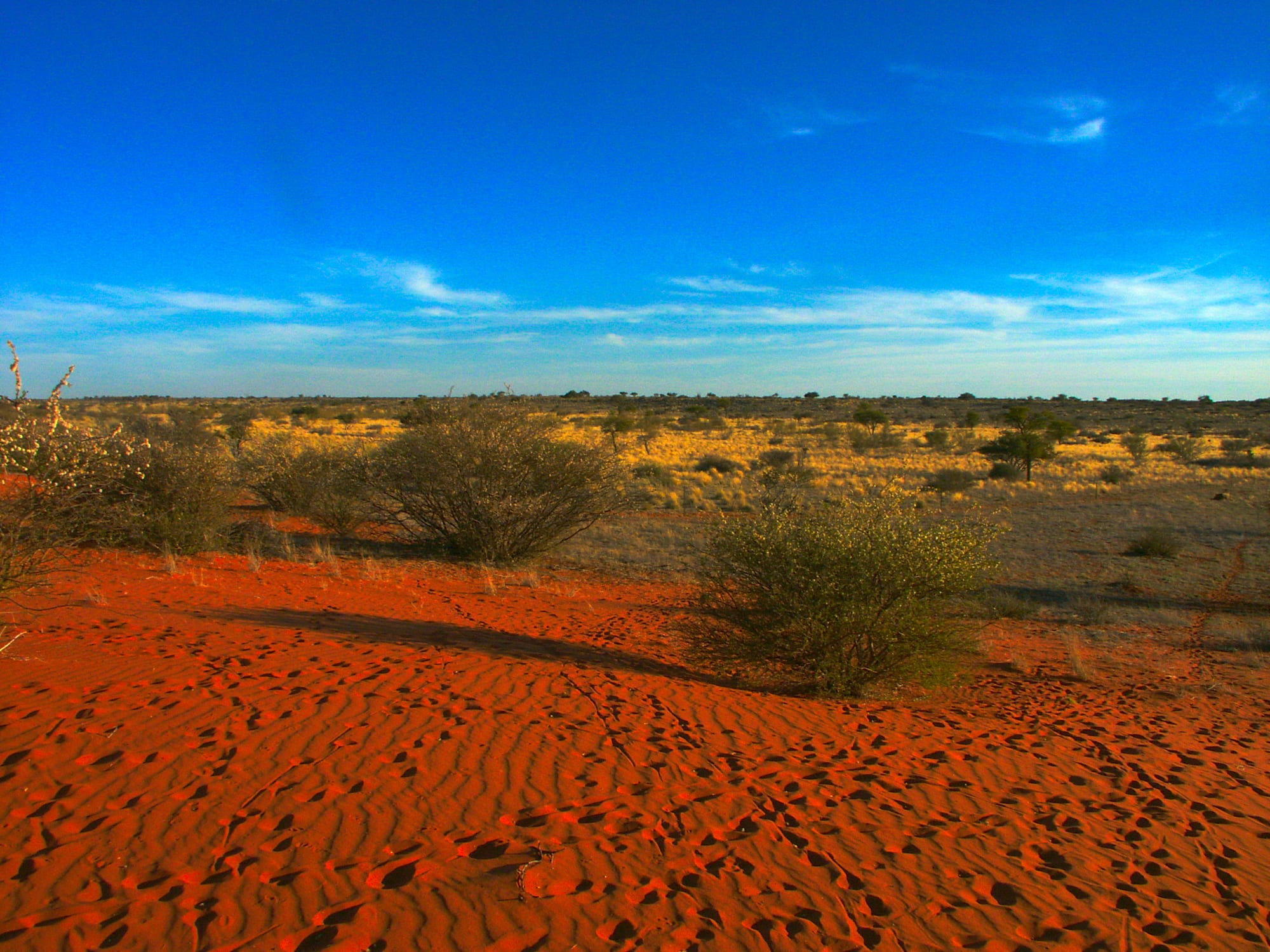
Context · the Kalahari desert, on the South Africa–Botswana border
Kalahari PICT0036.JPG · Wikimedia Commons · CC BY-SA 2.5 · open original
UFO Afrinews no. 3 (June 1990), pp. 5-13: Cynthia Hind, "UFO crash on Botswana/South African border (case no. 21)"
The first published examination of the documents, by Cynthia Hind in her newsletter. It summarizes what the circulated paper says, its first page on SAAF "Top Secret" paper: the frigate "White Swan" picked up the object at 13.45 on 7 May, two Mirages led by a "Squadron Leader Jones" fired a "Thor 2" laser cannon at it, it crashed 70 km inside Botswana and on 23 June it was flown with two occupants to Wright-Patterson. It lists the flaws raised by Hind, Maria Sullivan and David Powell (spelling, a rank the SAAF does not use, Valhalla, the Mirages' endurance) and tells what she learned of James van Greunen. Copyrighted newsletter: it is linked.
Cynthia Hind, UFO Afrinews n.º 3 (1990), vía archive.org · view source
The night in question
The alleged Kalahari incident is, on its face, a textbook 'crash retrieval' case: on 7 May 1989, an unidentified object supposedly penetrated South African airspace at high speed; South African Air Force (SAAF) Mirage fighters allegedly intercepted and fired on it, and the object, after being hit, supposedly crashed in the desert, about eighty kilometres north of the South Africa–Botswana border (seventy, in the revision Van Greunen himself made in 1990). According to the documents' own text, the frigate Tafelberg (the 'White Swan', in the summary Cynthia Hind published in 1990) picked it up on radar at 13:45, two Mirages scrambled and the flight leader fired on it with a supposed 'Thor 2 laser cannon'; the craft and its occupants were allegedly flown on 23 June to Wright-Patterson Air Force Base in the United States. By the account, military teams recovered the craft (described as disk-shaped) and two living non-human occupants, moved to a secure facility. The story combined all the ingredients of the Roswell myth with the appeal of supposedly deriving from leaked military documents.
The story first reached the British press: the Evening Post of 23 September 1989 reported that a South African intelligence officer had shown the material to Henry Azadehdel, who would later write as 'Armen Victorian'. But the documents that circulated rest on a single supplier: James van Greunen, who provided a series of documents presented as South African military ones. When those documents were examined closely, they were found fraudulent: formatting errors, stamps and references that did not match, and details incompatible with actual SAAF procedures. Confronted, Van Greunen admitted faking part of the material, though he insisted the core (an object downed at the border) was true and had been told to him in confidence by an SAAF pilot friend who had overheard it in the officers' mess. According to Michael Hesemann's report, which Hind quotes in UFO Afrinews no. 5, Van Greunen finally admitted that he had never been an SAAF captain or taken part in the incident, that these "were things that I was told", and named as his sources a real captain of SAAF intelligence and a professor at the University of South Africa. That retreat to an unverifiable third-hand source is the typical mark of a collapsing hoax. Hind nonetheless made clear in issue 4 (1991) that she called a hoax what Van Greunen said about the events, that she did not deny something might have happened on the border, and as late as January 1992 she kept the case open: there was not even firm evidence of the date, which could be 1988 or 1989.
The most authoritative debunking came from within African ufology itself. Cynthia Hind, an internationally reputed Zimbabwean researcher, devoted an article to the case titled 'Anatomy of a hoax: the UFO crash on the South African/Botswana border', documenting step by step how Van Greunen originated and propagated an elaborate deception. Hind, who had served three years in the South African Air Force, argued that no SAAF officer would have passed a document with so many spelling and military-terminology errors. In UFO Afrinews no. 3 (June 1990) Hind listed specific flaws in the account: Pretoria is a city, not an air base; Valhalla was a training and administrative base, and the nearest air base, Swartkops, had only propeller aircraft because its runway was too short for jets; the "Thor 2 laser cannon" was extremely doubtful, and Mirages, with their limited fuel, could never have circled the area until a recovery lasting several days was complete; the lecture Van Greunen had announced for 29 December 1989 in Johannesburg never took place: according to Cynthia Hind, more than twenty people turned up with tickets and he did not appear, and he later said he had not collected the money. Most researchers (skeptics and believers) conclude that the Kalahari incident did not happen as told, and that its 'evidence' was fabricated.
The case illustrates the mechanics of documentary fraud in the pre-internet era. The Kalahari shows how a single individual, supplying official-looking papers and a narrative that fits public expectations, can inject an entire 'case' into the literature, where it is cited and recycled for years even after being debunked. That it survives in 'best cases' collections despite its dismantling is itself a datum about the difficulty of killing a myth once printed. It is classified as a possible hoax, though not every ufologist accepts that: the German Michael Hesemann held that the documents were false but the events they describe essentially accurate.
Why it matters
The Kalahari matters as a control case on documentary fraud, not as evidence of a shootdown. It is a complete 'crash retrieval' account (interception, shootdown, recovery of craft and occupants) that has been dismantled: forged documents, a single supplier (Van Greunen) who admitted the forgery, no SAAF record cited and no second witness. Its value is methodological: alongside Maury Island and Dulce, it forms the series of cases where the most plausible candidate is fraud and where the instructive part is how it was determined (Cynthia Hind's work is a model of debunking from within the field itself). Cataloging it explicitly serves a hygiene function: it leaves on the record that a case cited for years as proof of retrieval is, in fact, the example of how such proof is manufactured.
What's left on paper
Documented evidence
- Claim of interception and shootdown by SAAF Mirage fighters on 7 May 1989, with recovery of craft and two occupants.
- 'Military' documents supplied by James van Greunen examined and found fraudulent (formatting, stamps, references incompatible with the SAAF).
- Van Greunen's own admission of faking part of the material; retreat to an unverifiable third-hand source.
- Researcher Cynthia Hind's article 'Anatomy of a hoax', documenting the deception step by step.
- Van Greunen was the only source of the documents; in 1990 Hind listed their errors about bases, aircraft and terminology, and according to Hesemann he admitted he had not taken part in the incident.
Sources
- The Kalahari Incident — A Bizarre Truth From Forged Documents (UFO Insight) — Summary of the case and the debunking of the forged documents.
- Hind, Cynthia — 'Anatomy of a hoax: The UFO crash on the South African/Botswana border' — Reference investigation that exposes Van Greunen as the originator of the fraud.
- Giacomo Casale — «L'UFO crash sudafricano del 1989» (USAC) — Secondary source: summarizes the documents' text, Cynthia Hind's investigation and Hesemann's thesis.
- Hind, Cynthia — «UFO Afrinews» n.º 5 (enero de 1992), caso n.º 21 (archive.org) — The investigator's reports in her own bulletin: the errors in the documents, Van Greunen's admission according to Hesemann and her decision to keep the case open in case the hoax rested on something real.
- Hind, Cynthia — «UFO Afrinews» n.º 3 (junio de 1990), «UFO crash on Botswana/South African border» (archive.org) — First report: Azadehdel's version and the list of technical objections to the documents.
Entity form (1)
Referenced by 1 case
Related cases