1989·Lower East Side / Brooklyn Bridge, New York
United States.Linda Napolitano · Brooklyn Bridge
In the early hours of 30 November 1989, Linda Napolitano claimed she was lifted by a beam of light from the 12th floor of her Lower East Side apartment in Manhattan and taken into a craft near the Brooklyn Bridge by three beings. The key alleged witnesses, 'Richard' and 'Dan', communicated only by letter and tape, first as police officers and then as bodyguards of a senior official, and Hopkins never met them. Investigator Budd Hopkins made it his flagship case in 'Witnessed' (1996), citing more than 20 anonymous witnesses.
Tier B · IndicativeWhat do they mean? →
Limited evidence: a single witness, testimony gathered years later, or an account without contemporary primary documentation.
What it was
64%natural or human cause
Most likely explanation: possible hoax
See the split across the six explanations
Natural or human cause
No known cause
Read the full reasoning
Jerome Clark, of CUFOS, found 'the charge that Linda hoaxed the entire event' 'simplistic and unconvincing', though he wrote: 'I have serious problems with the story ... some aspects of it seem to me to be impossible'. Klass reports that the New York police had no officers matching them and that Hopkins admitted he had never met them. In 2024, Carol Rainey suggested it might be a set-up.Primary documents
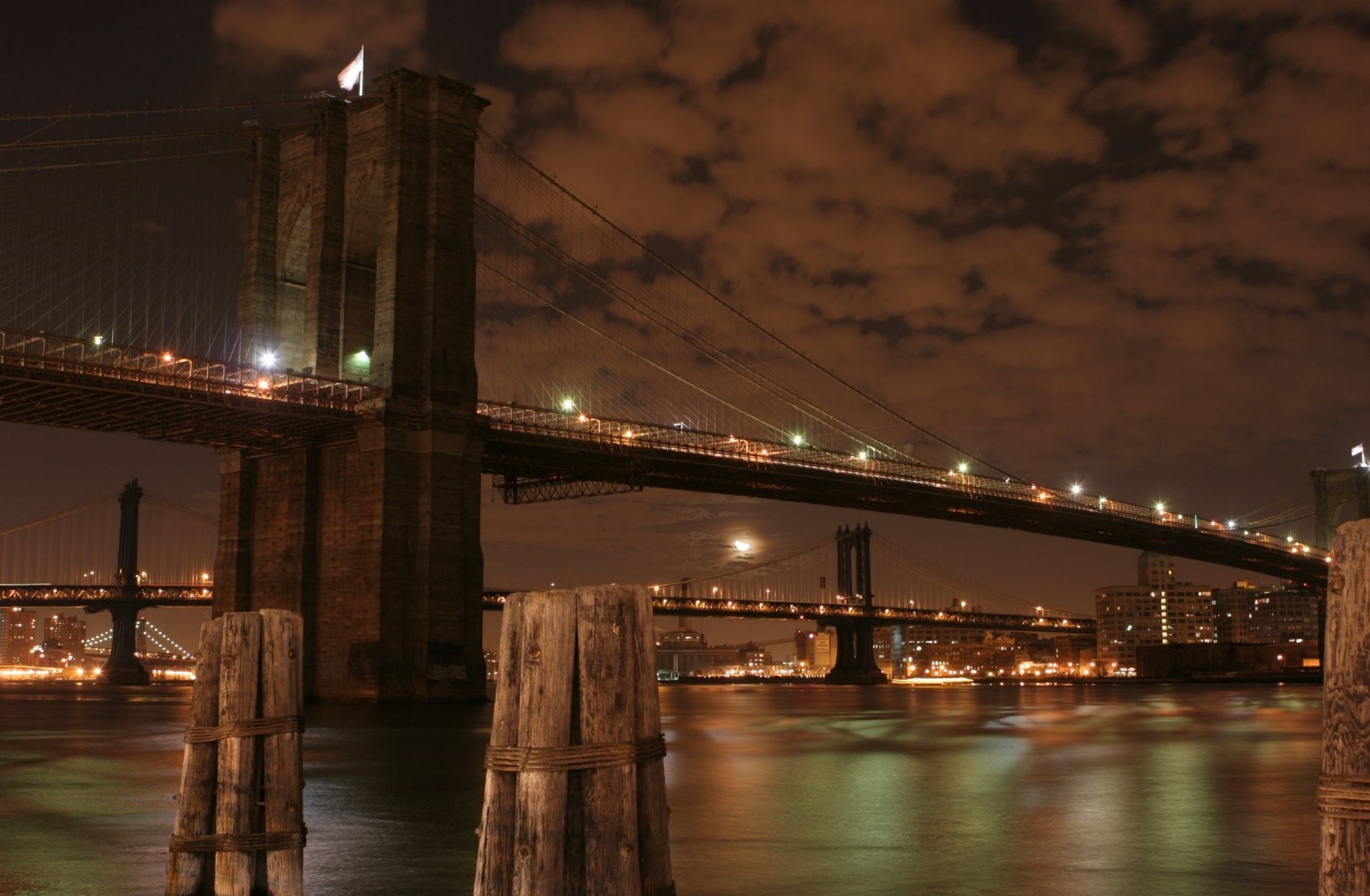
Context · the Brooklyn Bridge, near Linda Napolitano's alleged event
Brooklyn Bridge at Night.jpg · Wikimedia Commons · CC BY-SA 2.0 · open original
Stefula, Butler and Hansen, 'A Critique of Budd Hopkins' Case of the UFO Abduction of Linda Napolitano' (1993)
1993 report by Joseph Stefula, Richard Butler and George Hansen, who interviewed Linda Napolitano and met Hopkins, Jacobs, Andrus and Clark on October 3, 1992. It records that Linda called Hopkins on November 30, 1989 and under hypnosis recalled floating out of her 12th-floor window in a bluish-white beam; that the 'Richard' and 'Dan' letter arrived in February 1991 and there is no hard evidence they exist; that the heliport recorded no movements that night; and that the third man was said to be Pérez de Cuéllar. It notes parallels with the novel Nighteyes (April 1989) and criticizes the suppression of the attempted-murder report.
George P. Hansen, tricksterbook.com (1993) · view source
The night in question
The case of Linda Napolitano (also referred to as 'Linda Cortile', a pseudonym) is one of the most famous and disputed abductions in modern ufology. By her account, shortly after 3 a.m. on 30 November 1989, in her 12th-floor apartment on Manhattan's Lower East Side, three beings floated her out the window into a 'blue beam' that lifted her into a huge craft hovering over the buildings near the Brooklyn Bridge; by her account, the craft then plunged into the East River, where she said she saw the wreckage of an aircraft that had crashed there years before, and then returned her. That same morning she called Budd Hopkins, whose 'abductee' meetings she had been attending since spring 1989, and she later said her six-year-old son had been abducted two months earlier.
What set this case apart from other abductions (typically single-witness and uncorroborated) was the claim of independent witnesses. Linda contacted investigator Budd Hopkins, a central figure of the abductionist movement, who documented the case in interviews and, above all, in his 1996 book 'Witnessed: The True Story of the Brooklyn Bridge UFO Abductions', which he called the most important of his career. In February 1991, fifteen months later, Hopkins received a letter signed only with the first names 'Richard' and 'Dan', who said they were police officers and had watched through binoculars, from under the FDR Drive, three figures and a woman in a white gown float from a window up to the craft. Hopkins found no one matching them in the New York police, and a later letter admitted they were not police officers but escorts of a very important 'third man' whose car had stalled; Hopkins came to believe it was UN Secretary-General Javier Pérez de Cuéllar. To those witnesses he added a woman driving across the Brooklyn Bridge, and in the book he went on to speak of more than twenty observers. For many in the ufology community, that made Napolitano 'the greatest abduction case in the world'.
The case's apparent solidity eroded under scrutiny. Hopkins acknowledged in 1992 that he had never met 'Richard' or 'Dan': he only received letters and a tape on which a voice read a prepared script, and Linda was the only person who claimed to have met them. Linda also said the two men had kidnapped her twice in broad daylight and that one had tried to kill her, but she refused to report it to the police. MUFON investigators Joseph Stefula and Richard Butler, who had worked in VIP security, pointed out that the terminology of the letters was not that of bodyguards and brought a VIP security specialist, 'Mr. X', who also questioned it; George Hansen proposed that the kidnapping and attempted murder be reported to the police, and at a meeting at Hopkins's home in October 1992 the majority agreed to wait six months before investigating further. The key identities remain protected by pseudonyms in the sources consulted. Much of Linda's account was reconstructed through regression hypnosis, a technique psychologists associate with the creation of false memories. From the 1990s on, scientists and journalists questioned the reliance on hypnosis, the witnesses' anonymity and the lack of verifiable physical evidence. In 2024, Carol Rainey (Hopkins's former partner and collaborator) publicly challenged the investigation's evidentiary standards and suggested the story could be an elaborate hoax, reopening the debate over one of the founding cases of the abduction canon.
Why it matters
The Napolitano case matters as the highest-exposure test case of the abduction phenomenon: the episode its own defenders presented as definitive (the one that would finally have external witnesses, not just the abductee's account) and which, precisely for that reason, serves to examine what happens when serious evidentiary standards are applied to that tradition's best card. Its value is methodological: it shows that even the 'twenty-three witnesses' case rests, on examination, on unverifiable anonymous testimony, hypnosis-induced memories and zero physical evidence.
The strongest explanation requires accusing no one of deliberate lying: regression hypnosis documentedly generates vivid, false memories, and a sleep-paralysis experience with hypnopompic hallucinations (common and well studied) can seed the core of an abduction account that hypnosis then elaborates; the witnesses' anonymity also prevents ruling out a fabrication component, as Carol Rainey suggested. Whether the alleged witnesses existed and saw what is attributed to them is something the case never allowed to be checked. Napolitano is the counterpoint to testimony: the proof that the number of witnesses counts only if they are identifiable and auditable, and that the best-publicized abduction can be, at once, the worst documented.
What's left on paper
Documented evidence
- Linda Napolitano's account of abduction by a 'blue beam' from a 12th floor near the Brooklyn Bridge around 3:15 a.m. on 30 Nov 1989, with a craft that plunged into the East River
- Budd Hopkins's investigation, presented in 1992 (Cambridge and the MUFON conference in Albuquerque) and in the book 'Witnessed' (1996), which he called his most important case
- Letters from 'Richard' and 'Dan' from February 1991: first police officers, then escorts of a senior official; the New York police had no matching officers and Hopkins never met them
- Linda's later claims: two daylight kidnappings by those men and a murder attempt, never reported
- Reconstruction of part of the account through regression hypnosis (associated with false memories)
Show 2 more items
- Criticism by Stefula, Butler and Hansen (1992) and Jerome Clark's memo: 'I have serious problems with the story'
- Challenge by Carol Rainey (Hopkins's former collaborator) suggesting a possible hoax
Sources
- Wikipedia — The Manhattan Alien Abduction
- All That's Interesting — 'The Greatest Abduction Case In The World: ... Linda Napolitano'
- TODAY — 'The Manhattan Alien Abduction sparks controversy after subject sues Netflix' (incl. crítica de Carol Rainey)
- Philip J. Klass, Skeptics UFO Newsletter #18 (nov 1992) — The October 1992 meeting at Hopkins's home: Stefula, Butler and Hansen's suspicions about the alleged bodyguards and Jerome Clark's memo.
- Philip J. Klass, Skeptics UFO Newsletter #17 (sep 1992) — Account of Hopkins's presentation at the July 1992 MUFON conference, with quotes from the 'Richard' and 'Dan' letters.
Entity form (1)
Related cases
same explanation · same country · same period
Bob Lazar · S-4 / Area 51
1989 · Tier B
same explanation · same country · same period
Gulf Breeze · Florida
1987 · Tier B
same explanation · same country
Council Bluffs (molten metal)
1977 · Tier A
same explanation · same country
The Allagash Abductions
1976 · Tier B
Associated actors (1)