1976·Eagle Lake, Allagash Wilderness (Maine)
United States.The Allagash Abductions
In August 1976, four art students (twins Jack and Jim Weiner, Charlie Foltz and Chuck Rak) were camping at Eagle Lake, in Maine's Allagash wilderness. They reported a large luminous sphere, a beam of light and a missing-time episode; years later, under fifteen hypnosis sessions, the four separately described an abduction and an examination. The case became an abduction classic, until in 2016 one of them, Chuck Rak, admitted the abduction part was made up.
Tier B · IndicativeContacteeWhat do they mean? →
Limited evidence: a single witness, testimony gathered years later, or an account without contemporary primary documentation.
What it was
59%natural or human cause
Most likely explanation: possible hoax
See the split across the six explanations
Natural or human cause
No known cause
Primary documents
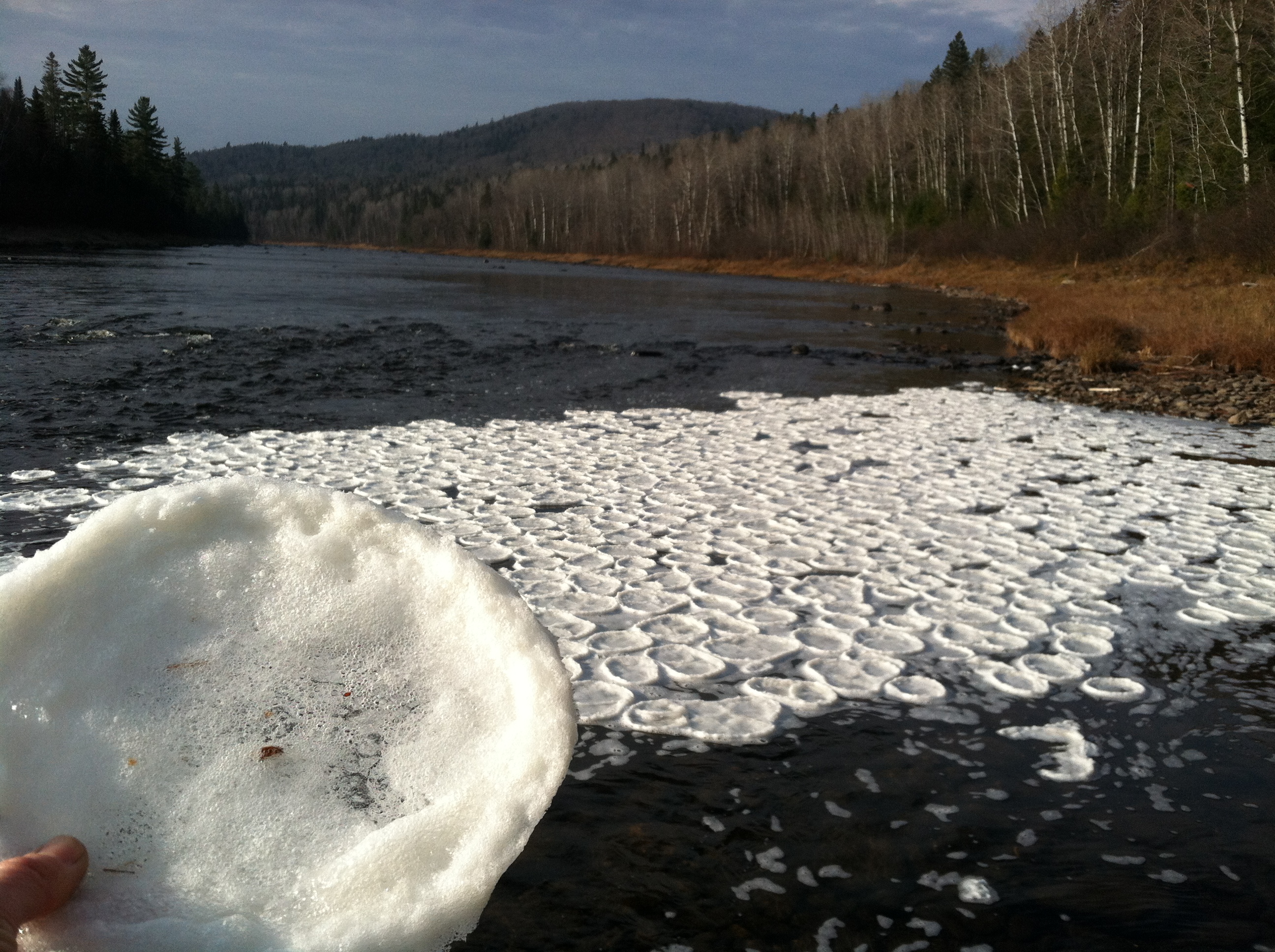
Context · the Allagash Wilderness Waterway (Maine)
Pancake ice on the Allagash River, Maine.jpg · Wikimedia Commons · Public domain · open original
The County, 21 Sep 2016 · Chuck Rak: the abduction 'did not happen'
First part of Jessica Potila's report in The County (September 21, 2016), based on a telephone interview with Chuck Rak on August 31, 2016. Rak says the abduction did not happen and that he supported the story 'because I wanted to make money', that his hypnosis produced no recall, and calls it 'brilliant storytelling', not a hoax. He maintains that the group saw a globe of light changing from white to red to green on Big Eagle Lake and two nights earlier on Chamberlain Lake, and that a ranger attributed it to a searchlight at a hardware store opening in Millinocket, 75 miles away. He attributes his break with the other three to a falling out.
The County (Presque Isle, Maine), 21 sep 2016 · view source
The night in question
In August 1976, four friends in their early twenties (identical twins Jack and Jim Weiner, Charlie Foltz and Chuck Rak, all art students) were on a canoeing and camping trip through the Allagash wilderness in northern Maine. On the night of 26 August they made camp at Eagle Lake and went out fishing at dusk, leaving a large bonfire burning as a beacon to guide their return. By their account, a huge oval, luminous object rose above the trees and engulfed them in a beam of light. The next thing they clearly recalled was being back on the shore, and the bonfire, which should have burned only a few minutes, reduced to embers, as if several hours had passed. That sense of "missing time" was, for years, all they had.
The full abduction narrative did not emerge until later, and by a route that calls for maximum caution: regressive hypnosis. Prompted by a fall that left Jim Weiner with seizures, after which he began having visions of beings floating above his bed and poking him with needles, the four underwent a long investigative process: per the file, fifteen hypnosis sessions over fourteen months, with background checks, medical records, diaries and psychological tests, in a final ten-volume report of more than seven hundred pages. Under hypnosis, the four separately described very similar experiences: being lifted from the canoe by the beam, seeing beings with large heads and thin necks, and being examined on a table while the other three watched, unable to intervene. The agreement among the four accounts was, for the case's defenders, its main strength.
That strength is also its Achilles' heel. Regressive hypnosis is well documented as a mechanism that generates vivid, confident false memories, not as a reliable retrieval technique; and when several people who lived through an ambiguous event together undergo the same process, in contact with each other and with the same investigators, the "agreement" may reflect contamination and mutual influence rather than independent memory. The non-hypnotic core (a light over the lake and a bonfire more burned down than expected) admits prosaic explanations: a misjudgement of time and of a fire's duration, plus later suggestion. The detailed abduction account rests entirely on the hypnotic phase.
The decisive blow to the case's credibility came in 2016, when Chuck Rak, one of the four, admitted in an interview that the abduction part had been made up and that he had gone along with the story: he supported it at first 'because I wanted to make money', and called it 'brilliant storytelling', not 'the truth'. He added that his own hypnosis produced no recall, although he had publicly claimed otherwise. Rak did not retract the light: he maintained that he saw 'a very, very bright globe of light' changing from white to red to green, and said the group also saw the craft two nights earlier, on Chamberlain Lake. He also said a park ranger told them at the time that what they saw was men operating a searchlight from the back of a pickup, for a hardware store grand opening in Millinocket; Rak rejects that explanation because the store was about 75 miles away and it was nine at night. The same interview gives the retraction's context: according to Rak, the group stayed together speculating it could make 'millions of dollars for each of us', made 'very little', and he began telling people the abduction never happened after falling out with the others; even so, he declined to call it a hoax. The other three (Jim and Jack Weiner and Charlie Foltz) have held to their version to this day. That internal fracture leaves the case in an awkward position: it is no longer a fourfold concordant testimony, but three witnesses who maintain an account and a fourth who says it was invented. It does not prove the other three are lying (sincere hypnotic confabulation is perfectly compatible with their conviction) but it removes the piece that made the case "exceptional". Allagash thus stands as a textbook example of how an ambiguous event, processed by hypnosis and sustained by a group, becomes a detailed abduction that no external evidence supports.
Why it matters
Allagash matters as a case study of group abduction and the limits of regressive hypnosis. For decades it was cited as exceptional for its "fourfold concordant testimony"; the case shows precisely why that agreement is not the strength it seems: four people who lived through an ambiguous event together, hypnotized by the same investigator and in contact with each other, can converge through contamination, not independent memory. Chuck Rak's 2016 retraction, admitting the abduction was made up, does not make the other three liars, but it removes the piece that made the case unique and returns it to its base: a light over a lake and a mis-timed bonfire. That is where it stands: sincere testimony from three of four, with not a single physical piece, and a detailed account that arises entirely from hypnosis.
What's left on paper
Documented evidence
- Account by the four witnesses of a luminous sphere and a beam of light over Eagle Lake (26 Aug 1976) and a "missing time" episode.
- Fifteen regressive-hypnosis sessions over 14 months; ten-volume final report (>700 pages) with background checks.
- Agreement among the four hypnotic accounts, weakened by possible mutual contamination (same investigator, witnesses in contact).
- Chuck Rak's retraction (August 2016 interview): he said the abduction did not happen and that he supported it 'because I wanted to make money', though he does not call it a hoax and maintains he saw the light; he recanted after falling out with the other three, who keep their version.
- Absence of physical evidence; the detailed account depends entirely on the hypnotic phase.
Sources
- The Allagash Abductions — UFO Evidence — Secondary source: summary of Raymond Fowler's investigation.
- Allagash Abduction 1976 — cobertura de la retractación de Chuck Rak (2016) — Includes Rak's admission that the abduction was fabricated.
- The County (Jessica Potila) — 'How much of 1976 UFO abduction is true?', 21 sep 2016 — Original interview with Chuck Rak: retraction of the abduction, the light he maintains he saw, and the searchlight explanation a park ranger gave.
Entity form (1)
Referenced by 1 case
Related cases
same explanation · same country · same period
Council Bluffs (molten metal)
1977 · Tier A
same explanation · same country · same period
Travis Walton (Snowflake)
1975 · Tier A
same explanation · same country
Gulf Breeze · Florida
1987 · Tier B
same explanation · same country
Rex Heflin · Santa Ana
1965 · Tier A
Associated actors (4)