1975·Apache-Sitgreaves National Forest, Arizona
United States.Travis Walton (Snowflake)
On 5 November 1975, Travis Walton and six fellow members of a forestry crew in Arizona said they saw a glowing disc-shaped object; by the account of all six, Walton approached it, was struck by a beam of light and vanished for five days. The six alerted the sheriff that same night, and in the police polygraph five passed and one was inconclusive; Walton's first test, paid for by the National Enquirer, concluded "gross deception" and was kept quiet.
Tier A · AcceptableWhat do they mean? →
Institutional evidence: several identified independent witnesses, or contemporary official documentation, without an instrumental record to corroborate them.
What it was
53%natural or human cause
Most likely explanation: possible hoax
See the split across the six explanations
Natural or human cause
No known cause
Primary documents
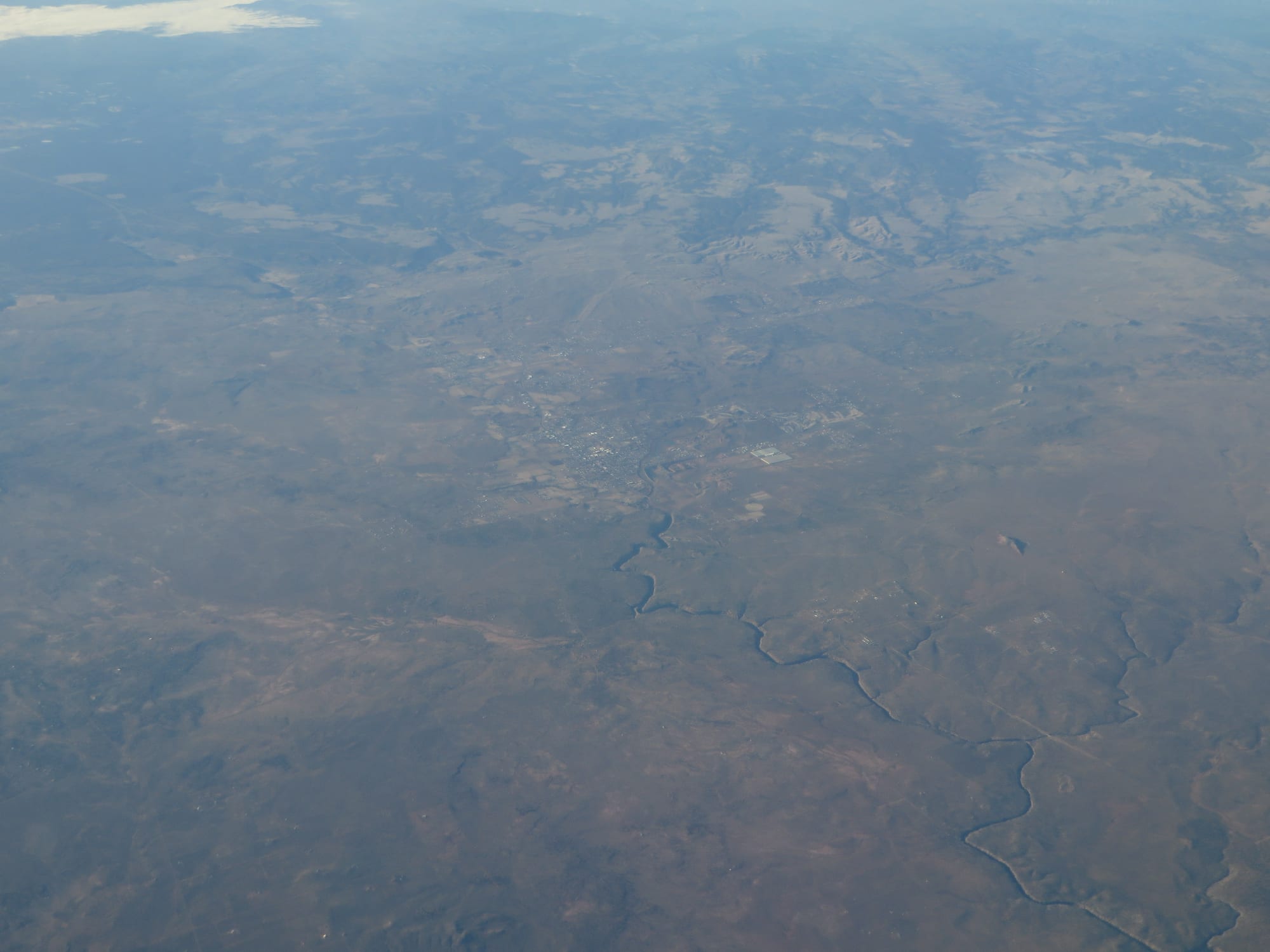
Context · Snowflake (Arizona), near where Travis Walton disappeared
Snowflake, Arizona (16259708031).jpg · Wikimedia Commons · CC BY-SA 2.0 · open original
"The A.P.R.O. Bulletin", vol. 24, no. 5 (November 1975): the Walton case
Issue of the Aerial Phenomena Research Organization carrying the report of field investigator Raymond Jordan, written days after the event. It gives Mike Rogers's seven-man crew, the object 75-90 feet away, the report to Deputy Sheriff Chuck Allison in Heber at 7:35 p.m. on 5 November, the searches of the following days and the 10 November polygraph by Cy Gilson of the Arizona Department of Public Safety: five passed and one was "inconclusive". This issue says Rogers asked for the test; the February 1976 bulletin corrects that. The magazine is a copyrighted APRO publication, so it is linked only.
Aerial Phenomena Research Organization (APRO), vía archive.org · view source
The night in question
On November 5, 1975, Travis Walton (22) and six teammates from his forestry crew, Mike Rogers (the foreman, who held the job contract), Allen Dalis, John Goulette, Steve Pierce, Kenneth Peterson and Duane Smith, were working a thinning-and-clearing operation in the Apache-Sitgreaves National Forest, in northern Arizona, under a contract Rogers's crew held with the US Forest Service. At dusk, returning to camp, they observed an incandescent disc-shaped object hovering near a clearing. According to the account of the six witnesses, gathered by APRO investigator Raymond Jordan, Walton got off the truck and approached the object; it emitted a light beam that struck and dropped him. The six teammates, panicking, drove off; when they returned, within fifteen minutes, Walton had vanished. Per the same report, the whole encounter lasted less than a minute and only one of them saw Walton hit the ground.
The six reported the incident that same night: at 7:35 p.m. they alerted the Navajo County sheriff's office in Heber, whose deputy described them as badly shaken. Over the following days the sheriff organized a search with 40 to 50 men, Forest Service staff, volunteers and a helicopter, with no trace of Walton. Shortly after midnight on November 11, Walton placed a collect call to his sister's home from a phone booth in Heber; his brother-in-law, Grant Neff, answered and went to fetch him with Duane Walton, his older brother. APRO's November 1975 bulletin already printed a detailed account of what Walton said he had experienced: waking on a table, three beings about five feet tall with large eyes, a room with a push-button chair, a man in a transparent helmet who led him down a ramp, and a large enclosure holding other craft. Between November 13 and 16, in a Phoenix hotel paid for by the Enquirer, APRO's research director James Harder put him under hypnosis "to alleviate the tension", according to the same bulletin.
The polygraph question is more tangled than the popular version suggests, and it is worth spelling out. The first test was the crew's: on November 10, at the sheriff's request, Cy Gilson, an examiner with the Arizona Department of Public Safety, tested all six. Three of his four relevant questions asked whether any of them had injured or killed Walton; the fourth, added at the last minute, whether they were telling the truth about seeing a UFO. Five passed and Allen Dalis's result was inconclusive; Gilson wrote that those five "did see some object that they believe to be a UFO" and had no prior knowledge of a hoax. Walton did not show up for the test the sheriff scheduled for him on November 14. On November 15, the National Enquirer (which was paying for the exclusive) arranged one with John J. McCarthy, Arizona's most senior examiner, who concluded "gross deception"; the Enquirer and APRO kept that session quiet and skeptic Philip J. Klass revealed it in June 1976. On February 7, 1976, APRO announced that Travis and Duane Walton had passed another test, given by George Pfeifer; Pfeifer's employer, Tom Ezell, later reviewed the charts, declared it invalid because the subject had dictated the questions, and said he could not give an opinion either way. Klass also proposed a motive: Rogers's crew was badly behind on its Turkey Springs thinning contract with the Forest Service, on a penalized extension with five days left and more than a hundred acres unfinished, and an 'act of God' would have let him close the contract without penalty. The participants have always denied that fraud hypothesis. The case later became the basis for Walton's book and the film 'Fire in the Sky' (1993).
Why it matters
It is an 'abduction'-type case that brings together: (a) six witnesses who reported the event that same night to the sheriff's office, before knowing the outcome; (b) a police polygraph, run on November 10 and focused on whether they had harmed Walton, in which five of the six affirmed seeing the object without showing deception; (c) the absence of an obvious financial benefit in the initial report: the National Enquirer money, the book and the film came later.
But the same case demands a serious skeptical reading. The polygraph is a disputed fact-validation tool, and here its history weighs more against than for the central part, Walton's own: the only test of Walton by a senior examiner in 1975-76 (McCarthy, Nov 15, 1975) concluded "gross deception" and was concealed by interested parties, and the favorable one of February 1976 (Pfeifer) was invalidated by the examiner's own employer. The memory of what happened 'inside' the object is the weakest component: it is not an uncontaminated recollection, since Harder hypnotized him between November 13 and 16 while the Enquirer kept him sequestered in a hotel; the defensible core is the six crewmen's sighting, not the interior narrative. Klass also raises an economic motive (the contract penalty with the Forest Service).
What's left on paper
Documented evidence
- Six witnesses (Mike Rogers's crew) alerted the Navajo County sheriff's office in Heber at 7:35 p.m. on November 5, 1975 (APRO Bulletin, November 1975)
- November 10, 1975 polygraph of the six crewmen (Cy Gilson, Arizona Department of Public Safety): five passed and Allen Dalis was inconclusive; three of the four relevant questions concerned whether they had harmed Walton
- November 15, 1975 polygraph of Walton (John J. McCarthy, paid for by the National Enquirer): "gross deception"; kept quiet until Philip J. Klass revealed it in June 1976
- February 1976 polygraph of Travis and Duane Walton (George Pfeifer): announced as passed by APRO and later invalidated by Tom Ezell, the examiner's employer, because the subject dictated the questions
- Hypnosis of Walton by James Harder (APRO) in Phoenix, November 13-16, 1975; APRO's November bulletin already prints the detailed onboard account
- Walton, Travis. 'The Walton Experience' (1978) [later retitled 'Fire in the Sky']: the protagonist's later narrative
Sources
- The A.P.R.O. Bulletin, November 1975 (vol. 24, no. 5) — field report by Raymond Jordan (archive.org) — Contemporaneous primary source: sheriff alerted at 7:35 p.m., Gilson polygraph (five pass, one inconclusive), call after midnight on November 11, onboard account and Harder's hypnosis (Nov 13-16).
- The A.P.R.O. Bulletin, February 1976 (vol. 24, no. 8) — corrections supplied by Travis Walton (archive.org) — Primary source: the polygraph was requested by the sheriff through Deputy Glen Flake and all six volunteered; other clarifications from Walton himself.
- Sheaffer, Robert. "The Selling of the Travis Walton 'Abduction' Story" (debunker.com) — Secondary skeptical source: summarizes chapters 18-23 of 'UFOs: The Public Deceived' (Klass, 1983) and quotes Gilson's report, McCarthy's "gross deception", Ezell's letter on the Pfeifer test and the Turkey Springs contract.
- Walton, Travis. 'The Walton Experience' (1978) — The protagonist's later narrative, written after the 1975 hypnosis sessions.
Entity form (1)
Related cases
same explanation · same country · same period
The Allagash Abductions
1976 · Tier B
same explanation · same country · same period
Council Bluffs (molten metal)
1977 · Tier A
same explanation · same country · same period
Rex Heflin · Santa Ana
1965 · Tier A
same explanation · same country
Socorro (Zamora)
1964 · Tier A
Associated actors (1)
