1969·NASA · post-mission debrief, Houston
United States / cislunar space.Apollo 12 · 'streaks of light' (NASA)
Audio from the Apollo 12 post-mission medical debrief (1969), declassified in the second PURSUE tranche (May 22, 2026): astronauts Conrad, Gordon and Bean describe 'streaks/flashes of light' they saw while trying to sleep in deep space. Science explains it well as cosmic rays interacting with the retina: a case included for documentary transparency, not for anomaly.
Tier B · IndicativeWhat do they mean? →
Limited evidence: a single witness, testimony gathered years later, or an account without contemporary primary documentation.
What it was
90%natural or human cause
Most likely explanation: natural phenomenon
See the split across the six explanations
Natural or human cause
No known cause
Primary documents
NASA-UAP-D1 — Apollo 12 air-to-ground transcript (Nov 1969): particles via telescope and debris
NASA · Department of War (PURSUE Release 01) · Public domain · US Government work · open original
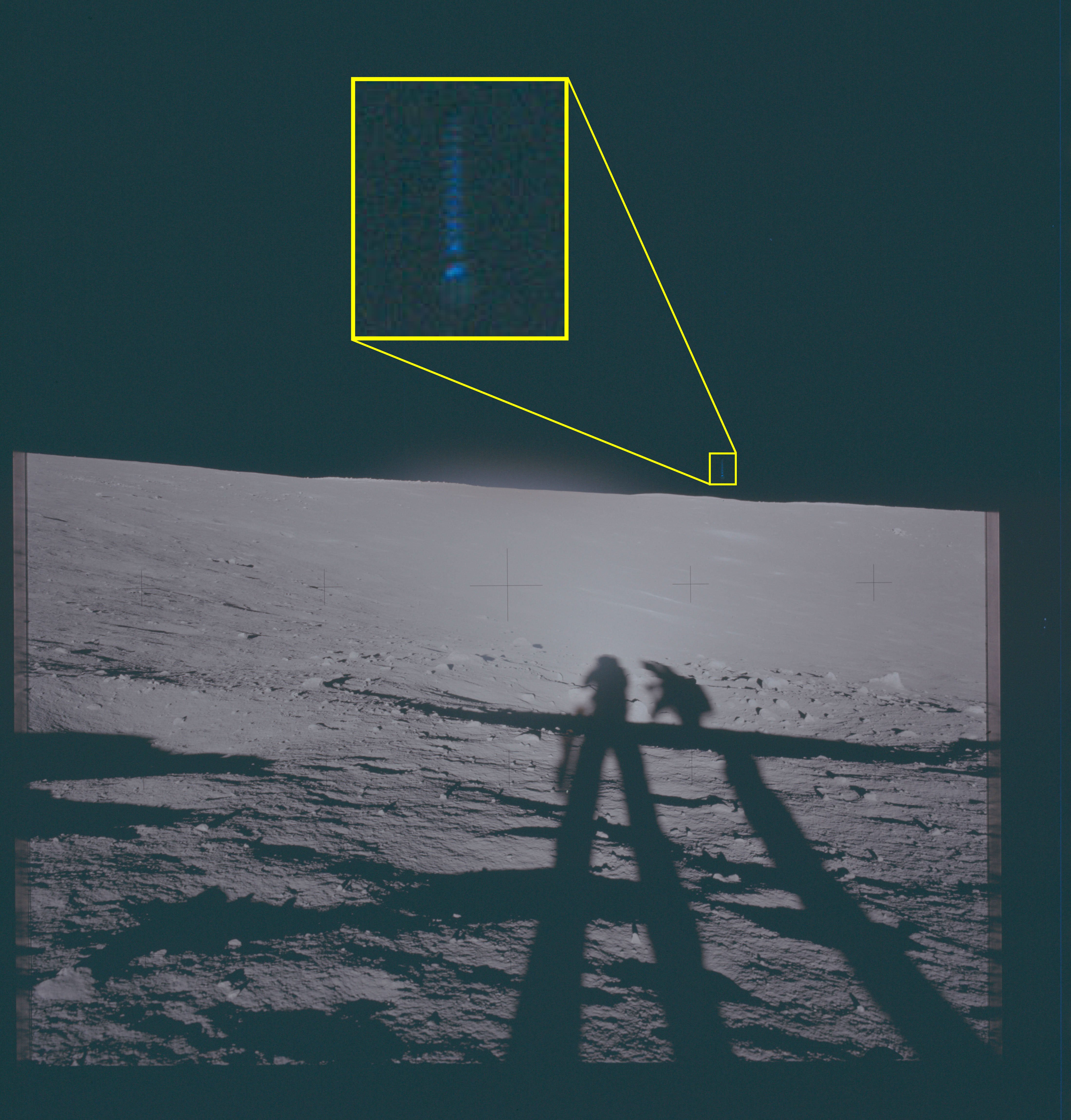
NASA-UAP-VM1 — Apollo 12 photographic plate (1969)
NASA · Department of War (PURSUE Release 01) · Public domain · US Government work · open original
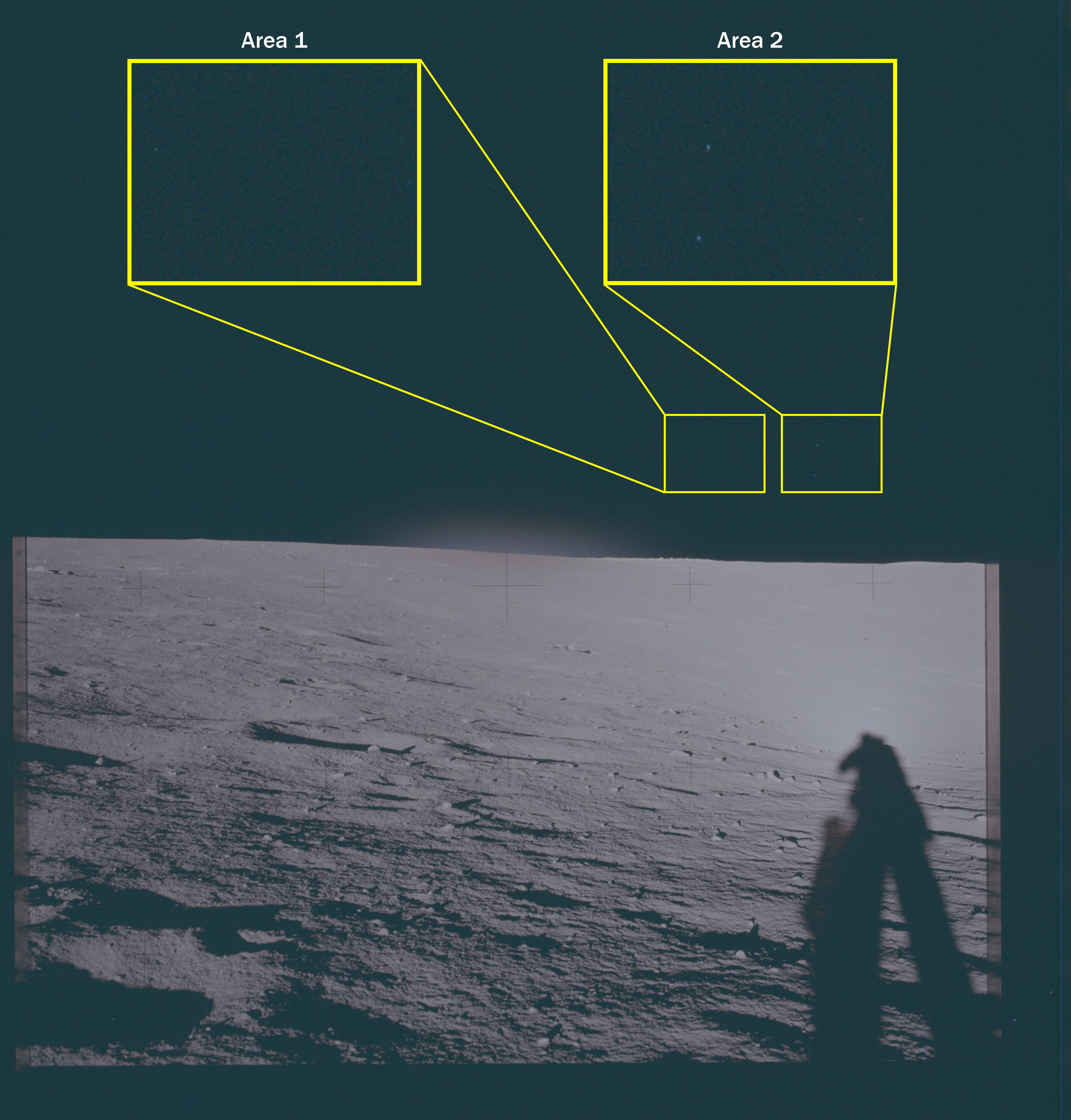
NASA-UAP-VM2 — Apollo 12 photographic plate (1969)
NASA · Department of War (PURSUE Release 01) · Public domain · US Government work · open original
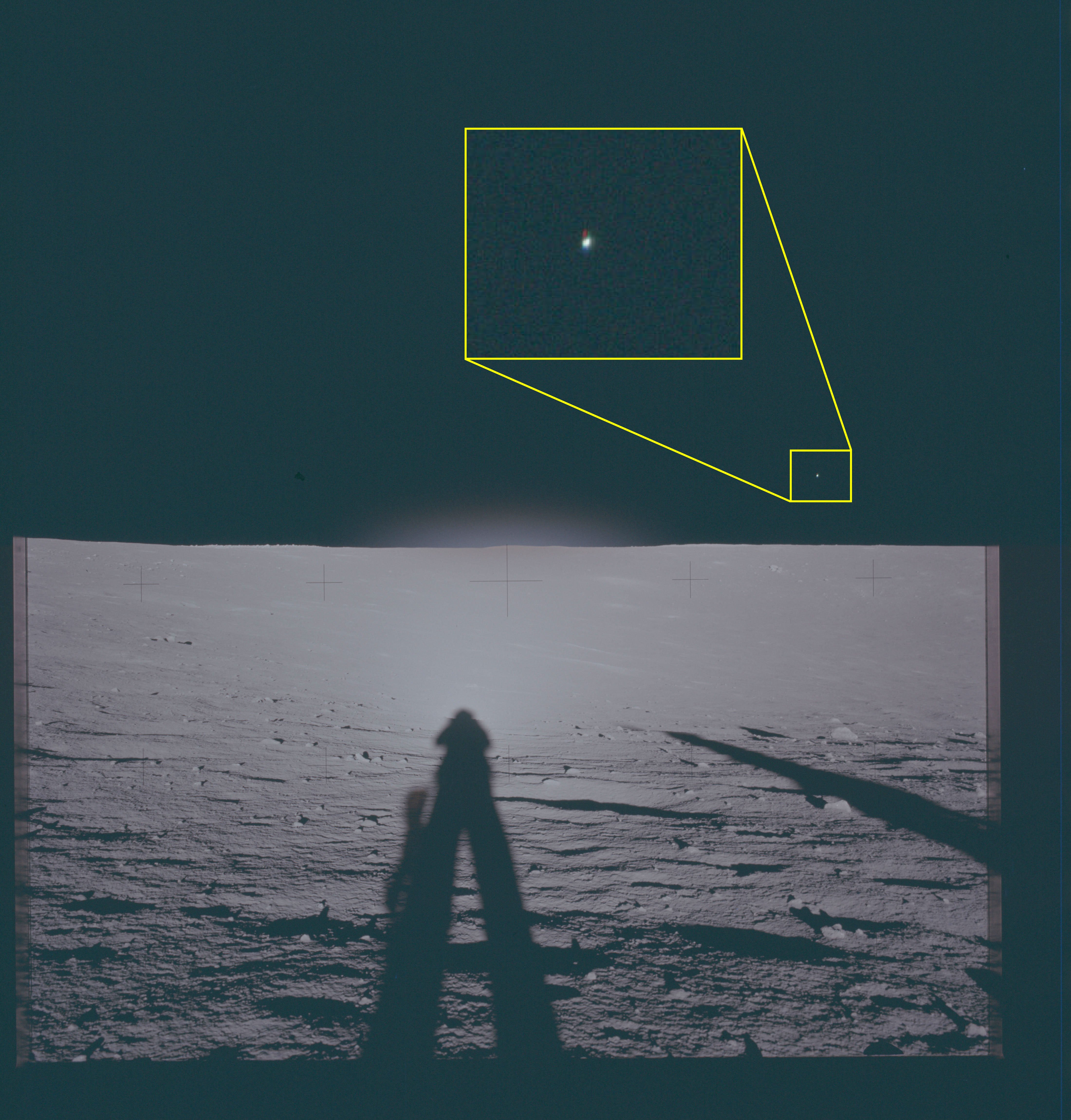
NASA-UAP-VM3 — Apollo 12 photographic plate (1969)
NASA · Department of War (PURSUE Release 01) · Public domain · US Government work · open original
Show the other 2 documents
NASA-UAP-VM4 — Apollo 12 photographic plate (1969)
NASA · Department of War (PURSUE Release 01) · Public domain · US Government work · open document
NASA-UAP-VM5 — Apollo 12 photographic plate (1969)
NASA · Department of War (PURSUE Release 01) · Public domain · US Government work · open document
The night in question
In the post-mission medical debrief of Apollo 12 (November 1969), astronauts Pete Conrad, Richard Gordon and Alan Bean described seeing 'streaks' and 'flashes of light' while trying to sleep en route to the Moon. On the tape (NASA-UAP-D008, 'Apollo 12 Medical Debriefing - Tape 12', 7 min 50 s), one of them explains that they noticed them from the first night out and that there were 'two kinds': a pinpoint flash or a streak, depending on whether the particle struck the eye head-on or parallel; another says his were horizontal, 'a little bit above the center', and went from right to left. In the same conversation a crew member agrees that it was 'the exact phenomenon that all three of us saw' and that it was not 'something external to you' but something happening inside the eye. The crew and medical staff also discussed whether the flashes were random or directional and whether they appeared in one eye or both, and one astronaut remarked that, after observing long enough, he could tell which eye had registered each flash. The medical staff reply on the same tape that they had long been looking for cosmic-ray and heavy-nucleus strikes, and that since the Mercury programme they had photographed retinas without finding any tracks. The DVIDS record accompanying the audio adds that the medical team considered whether similar phenomena reported by Buzz Aldrin on Apollo 11 were due to exposure of the retina to cosmic rays, and that NASA later determined that what the Apollo 12 crew described was internal to their vision rather than an external light source. The audio was declassified on May 22, 2026, as part of the second PURSUE tranche (war.gov/ufo).
Unlike the military-sensor cases, this one has a robust, long-standing scientific explanation: the phenomenon known as 'light flashes' or cosmic phosphenes, reported by astronauts in deep space, is attributed to high-energy charged particles (galactic cosmic rays, mostly protons and heavy nuclei) passing through the eyeball and interacting with the retina and optic nerve, producing the perception of flashes with no external light source. Beyond Earth's magnetic field, which at the surface shields us from much of this flux, exposure is far greater, which explains why the effect is notable precisely on the translunar leg. The hypothesis was already raised in the 1950s (Cornelius Tobias) and was systematically documented in later missions (the rest of the Apollo program, Skylab, and later onboard experiments such as ALTEA on the ISS), as well as partly reproduced in particle accelerators. It is therefore an 'unresolved' case in the PURSUE administrative sense, but well characterized in the physical sense, even though the exact neuronal mechanism (direct ionization versus Cherenkov radiation in the vitreous humor) remains under study.
Why it matters
It illustrates a methodological point: that a case sitting in an official 'unresolved' archive does not make it anomalous. PURSUE includes well-explained material alongside solid cases, and the two have to be told apart. Apollo 12 is the clean example of 'real phenomenon, known mundane explanation', useful as a calibrating contrast against the sensor cases that do exceed the envelope.
The case also works as an antidote to the sensationalist reading of declassifications. When the press headlines that the Pentagon 'declassifies astronaut audio describing unexplained flashes,' the adjective 'unexplained' is technically correct in the administrative sense (the file attaches no resolution) but misleading in the scientific sense (the cause has been known for half a century and is one of the founding findings of space radiobiology). It is a textbook example of a 'lights' report with a known physical cause, and the crew itself placed it inside the eye on the same tape: it reminds us that part of the official archive is well-understood mundane. It is a real datum, valuable as a calibrator, not as an anomaly. The value of such a case is to discipline one's own gaze: if the method cannot correctly classify the easy example (a phenomenon with a known cause labeled 'unresolved' by an archive) it does not deserve trust when it declares that a hard case exceeds the explicable either.
What's left on paper
Documented evidence
- Audio from the Apollo 12 post-mission medical debrief (1969) declassified in PURSUE Release 2 (May 22, 2026).
- Testimony from Conrad, Gordon and Bean: 'streaks/flashes of light' while trying to sleep in deep space, seen in one eye at a time and described by them as not external.
- Established scientific explanation: cosmic rays interacting with the retina (light flashes), documented in later missions and reproduced in experiments.
- Classified 'unresolved' in the PURSUE administrative sense, not the physical one.
Sources
- Fox News — 'Pentagon declassifies Apollo 12 audio of astronauts describing unexplained streaks of light' (22 may 2026)
- DVIDS / AARO — 'NASA-UAP-D008, Apollo 12 Medical Debriefing - Tape 12, 1969' (audio, 7:50, posted 22 May 2026) — Primary source: the debrief audio with its captions (automatic transcript) and the official description, according to which NASA determined the flashes were internal to the astronauts' vision.
- OANN — 'Pentagon declassifies Apollo 12 audio… Streaks of Light in deep space' (2026)
- PURSUE — war.gov/ufo (Release 2, audio Apolo 12)
Related cases
same explanation · same country · same period
Delphos · glowing hydrophobic soil ring (USA, 1971)
1971 · Tier B
same explanation · same country · same period
Dexter and Hillsdale: the 'swamp gas' sightings
1966 · Tier A
same explanation · same country · same period
New Mexico cattle mutilation wave (Dulce)
1975 · Tier A
same explanation · same country · same period
Wow! Signal · Big Ear
1977 · Tier A