1965·Low Earth orbit · Gemini 4 mission (NASA)
United States.Gemini 4 · McDivitt
In June 1965, during the Gemini 4 mission, astronaut James McDivitt saw and tried to photograph a white cylindrical object with a projection on one side, while the capsule drifted with its systems powered down over the Pacific. In NASA's postflight crew debriefing he called it a 'satellite'; the astronaut chapter of the Condon Report listed it among the observations that, in its author's judgment, had not been adequately explained. In 1999 McDivitt said it was probably ice or Mylar and that there was nothing unusual about it.
Tier A · AcceptableWhat do they mean? →
Institutional evidence: several identified independent witnesses, or contemporary official documentation, without an instrumental record to corroborate them.
What it was
66%natural or human cause
Most likely explanation: space object
See the split across the six explanations
Natural or human cause
No known cause
Primary documents
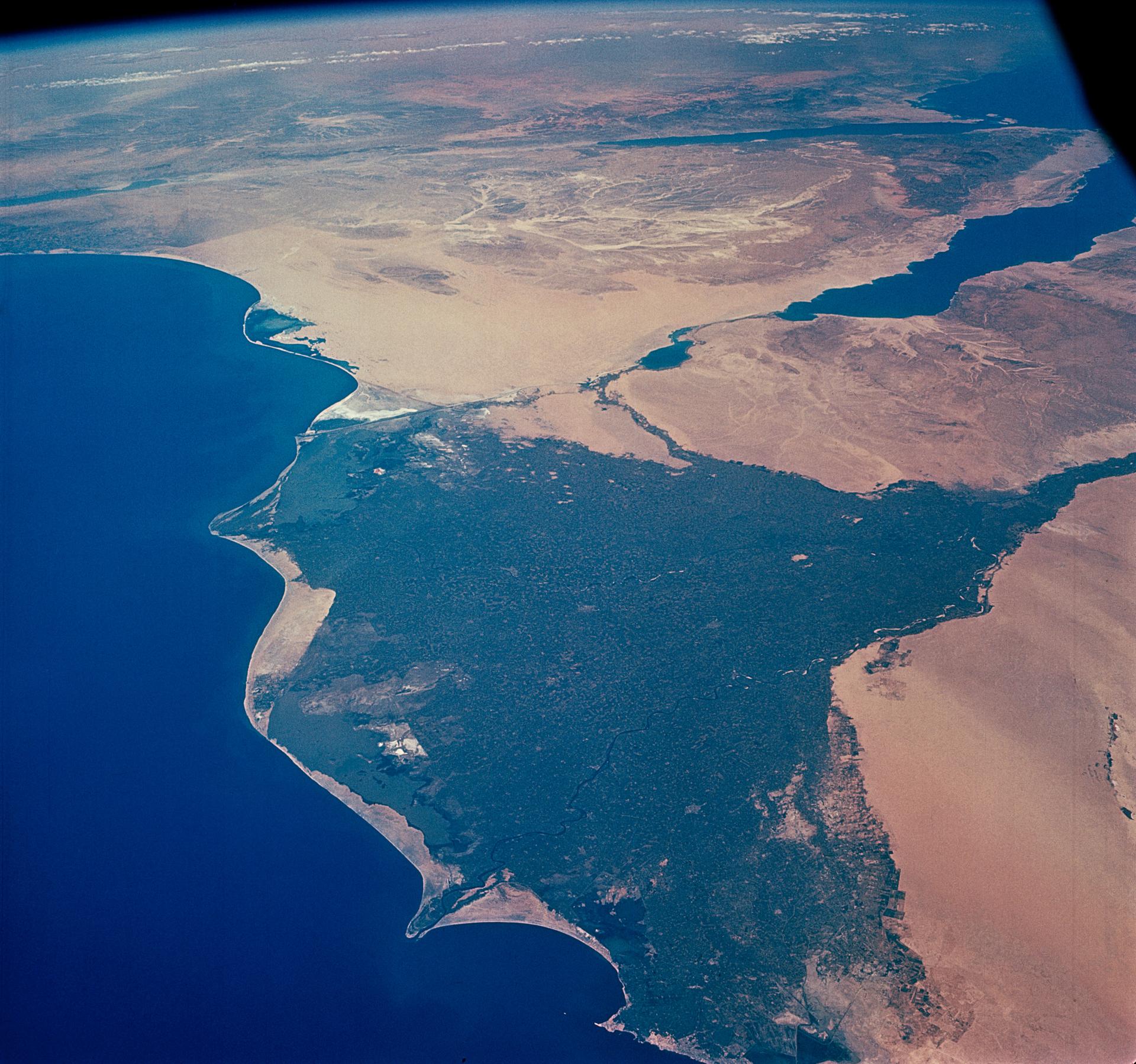
Gemini 4 · mission photograph (GT-4, Earth-sky and outer space, June 1965)
NASA · imagen s65-34776 (dominio público) · Public domain · NASA, US Government work · open original
NASA-UAP-D016 — Gemini 4, preliminary crew debriefing, part 1 (1965)
Eight NASA documents published in the third PURSUE release on June 12, 2026: the crew and technical debriefings of the Gemini 4, 5, 7 and 9 missions (1965-1966) and the Mercury-era Astronaut Scientific Debriefings (1962-1963). They are the primary source for the cylindrical object James McDivitt described and photographed on Gemini 4, the 'bogey' and 'fireflies' Frank Borman and Jim Lovell reported on Gemini 7, and John Glenn's 'fireflies' report. Most of the material is routine technical debriefing. NASA attributed the bogey to the Titan booster stage and the fireflies to ice and debris shed by the spacecraft; McDivitt's object was never securely identified.
NASA (PURSUE Release 03) · Public domain · US Government work · open original
NASA-UAP-D017 — Gemini 4, preliminary crew debriefing, part 2 (1965)
NASA (PURSUE Release 03) · Public domain · US Government work · open original
NASA-UAP-D018 — Gemini 4, experiment debriefing (1967)
NASA (PURSUE Release 03) · Public domain · US Government work · open original
The night in question
The Gemini 4 mission (3-7 June 1965), crewed by James McDivitt and Edward White, is remembered above all for the first American 'spacewalk', White's. At a moment when the capsule was drifting (with its control engines off and much of the instrumentation powered down to save battery) and while White slept, as McDivitt himself recounted in his 1999 oral history, he saw an object he could not identify appear in the window.
His description stayed essentially the same over the years: a white, cylindrical object with a projection sticking out of one side. In 1999 he compared it to 'a beer can or a pop can' with 'a little thing like maybe like a pencil or something sticking out of it'; the figure that it was about three times as long as its diameter circulates in secondary accounts, attributed to a 1975 interview, with no primary source located. In the crew's postflight technical debriefing, recorded days after splashdown, McDivitt spoke of 'this satellite that I saw over around Hawaii': he said they were closing on it, that he checked whether he had maneuver capability, that it 'might have been 5 miles out' or '50 miles out', and that he saw it for some 30 or 40 seconds until the Sun came across the window and he lost it. He added that the windows had 'a white film of material on the outside' that made it very hard to see with the Sun on them. He took one still picture and some movie exposures, and tried to maneuver to reacquire it, without success. The images NASA later circulated as 'the McDivitt photo' were rejected by the astronaut himself, who in 1999 attributed them to reflections of the window bolts across the window's several panes. On his own film there are two versions: according to the Condon Report, in 1967 McDivitt said that on inspecting it he had found, 'hazily', what he had seen; in 1999 he said that 'nothing ever showed up on the photographs'.
The Condon Report (1968) was the Air Force-funded study directed by Edward Condon, whose overall conclusion was skeptical. In the astronaut chapter, its author, Franklin Roach, listed three in-orbit observations that 'in the judgment of the writer' had not been adequately explained, and two of them were McDivitt's on Gemini 4: the cylindrical object with a protuberance and a moving bright light above the spacecraft. Roach noted that the appearance was 'something like the second phase of a Titan (not necessarily implying that that is actually what he saw)', and recorded that 'It is McDivitt's opinion that the object was probably some unmanned satellite.' NORAD suggested the Pegasus B satellite, then some 2,000 km away; 'McDivitt questions this identification', and Roach judged it suspect, since at that range the 'arms' could not have been resolved. The strongest skeptical hypothesis, later argued by spaceflight specialist James Oberg, is that McDivitt saw the second stage of his own Titan II, with which he had tried to station-keep early in the flight, distorted by the dirty window. Secondary accounts credit McDivitt with always rejecting that identification, but the denial does not appear in the primary sources consulted. McDivitt never spoke of a craft: in 1999 he said the object was surely in their own orbit, that it probably was a piece of ice that had fallen off the spacecraft or a piece of Mylar, and that there was 'nothing unusual about this at all'.
Why it matters
Gemini 4 was left on the list of unexplained observations in the astronaut chapter of the Condon Report, an official study with a skeptical conclusion. McDivitt, a test pilot and engineer, described a concrete geometry, rejected the spurious photos attributed to him, and never presented it as a craft. From the first postflight debriefing he treated it as a satellite, and later as ice or Mylar. The legend of 'McDivitt's UFO' was built against the witness's own opinion.
Even so, the Condon stamp should not be over-read: 'not adequately explained' is Roach's personal judgment, not a verdict of the study, and it is not 'inexplicable'. The hypothesis of an orbital object (the Titan II second stage, Pegasus B or another) or of debris from the capsule itself, distorted by a dirty window and with no distance reference, explains both the cylindrical shape and the projection without invoking anything exotic. No conclusive orbital correlation was ever confirmed: the NORAD list held no nearby candidate, and the witness gave two different versions of whether his film had captured it. The observation still lacks a formal identification, and the witness himself never considered it anomalous.
What's left on paper
Documented evidence
- Crew postflight technical debriefing (NASA, June 1965): McDivitt describes 'this satellite that I saw over around Hawaii', which they seemed to be closing on, seen for 30 or 40 seconds and lost when the Sun hit the dirty window
- White cylindrical object with a lateral projection ('a beer can or a pop can' with 'a pencil or something sticking out of it', 1999 oral history), seen during drift with systems powered down; the three-times-its-diameter proportion appears only in secondary sources
- One still picture and some movie exposures; McDivitt rejected the photos NASA circulated as 'the McDivitt photo' and in 1999 attributed them to reflections of the window bolts
- Two versions of his film: in 1967 he told Roach he had found the object, hazily, on it; in 1999, that 'nothing ever showed up on the photographs'
- Condon Report (1968), Roach's chapter: two McDivitt observations among the three that, 'in the judgment of the writer', were not adequately explained; McDivitt's opinion: 'probably some unmanned satellite'; he questioned NORAD's Pegasus B identification
Show 2 more items
- James Oberg's skeptical hypothesis: the second stage of the mission's own Titan II; McDivitt's denial of that identification appears only in secondary sources
- NASA oral history (1999): McDivitt attributes it probably to ice or Mylar shed by the capsule and says there was 'nothing unusual about this at all'
Sources
- NASA — Preliminary Gemini 4 Crew Debriefing, part 1 (June 1965), OCR text from the archive.org mirror — Primary source. McDivitt describes 'this satellite that I saw over around Hawaii', the uncertain range (5 to 50 miles), the 30 or 40 seconds of observation and the white film on the windows.
- Condon Report — Scientific Study of Unidentified Flying Objects (1968), section III, ch. 6 (F. Roach), pp. 306-308, full text — Primary source. Records Roach's conversation with McDivitt (3 October 1967), his opinion that it was 'probably some unmanned satellite', the NORAD table and the doubt about Pegasus B.
- Condon Report — DTIC edition (AD0680975, volume 1), scan on archive.org — Primary source. Scan of the report; the section I summary mentions the three unidentified astronaut sightings.
- NASA JSC Oral History Project — James A. McDivitt, interviewed by Doug Ward (29 June 1999) — Primary source. Pp. 12-45 to 12-47: White asleep, systems off, 'beer can', probably ice or Mylar, 'nothing ever showed up on the photographs' and 'nothing unusual'.
- UFO Evidence — 'Gemini 4 / Astronaut James McDivitt sighting of cylindrical object in space' — Secondary source. UFO compilation; origin of the 1975 quote about the three-times-the-diameter proportion.
- James Oberg — 'The Gemini 4 UFO' (skeptical analysis, reproduced on UFO Evidence) — Secondary source. Argues that the object was the mission's Titan II second stage.
Related cases
same explanation · same country · same period
Gemini 7 · Borman & Lovell
1965 · Tier A
same explanation · same country · same period
Big Sur · the UFO and the test warhead (Vandenberg, 1964)
1964 · Tier B
same explanation · same country · same period
Glenn's Fireflies · Friendship 7
1962 · Tier A
same explanation · same country · same period
Apollo 11 · Technical Crew Debriefing observations (NASA, PURSUE)
1969 · Tier B