1952·Oloron-Sainte-Marie (and Gaillac), France
France.Oloron / Gaillac · Angel Hair
On 17 October 1952, many residents of Oloron-Sainte-Marie (southwest France) described a tilted cylinder preceded by about 30 'red spheres with a ring' moving in zigzagging pairs, while a white filamentous substance ('angel hair') fell on wires and roofs and vanished when touched. Ten days later it recurred almost identically in Gaillac.
Tier B · IndicativeWhat do they mean? →
Limited evidence: a single witness, testimony gathered years later, or an account without contemporary primary documentation.
What it was
64%natural or human cause
Most likely explanation: animal
See the split across the six explanations
Natural or human cause
No known cause
Read the full reasoning
But, as the same page notes, 'another witness of another observation that day strongly disputed it'. The letter deals only with Oloron (Gaillac is left out), its author is unnamed on the published page, and it does not account for the 'cigar': 'I do not claim to want to explain the issue of the flying saucers or cigars', he writes.Primary documents
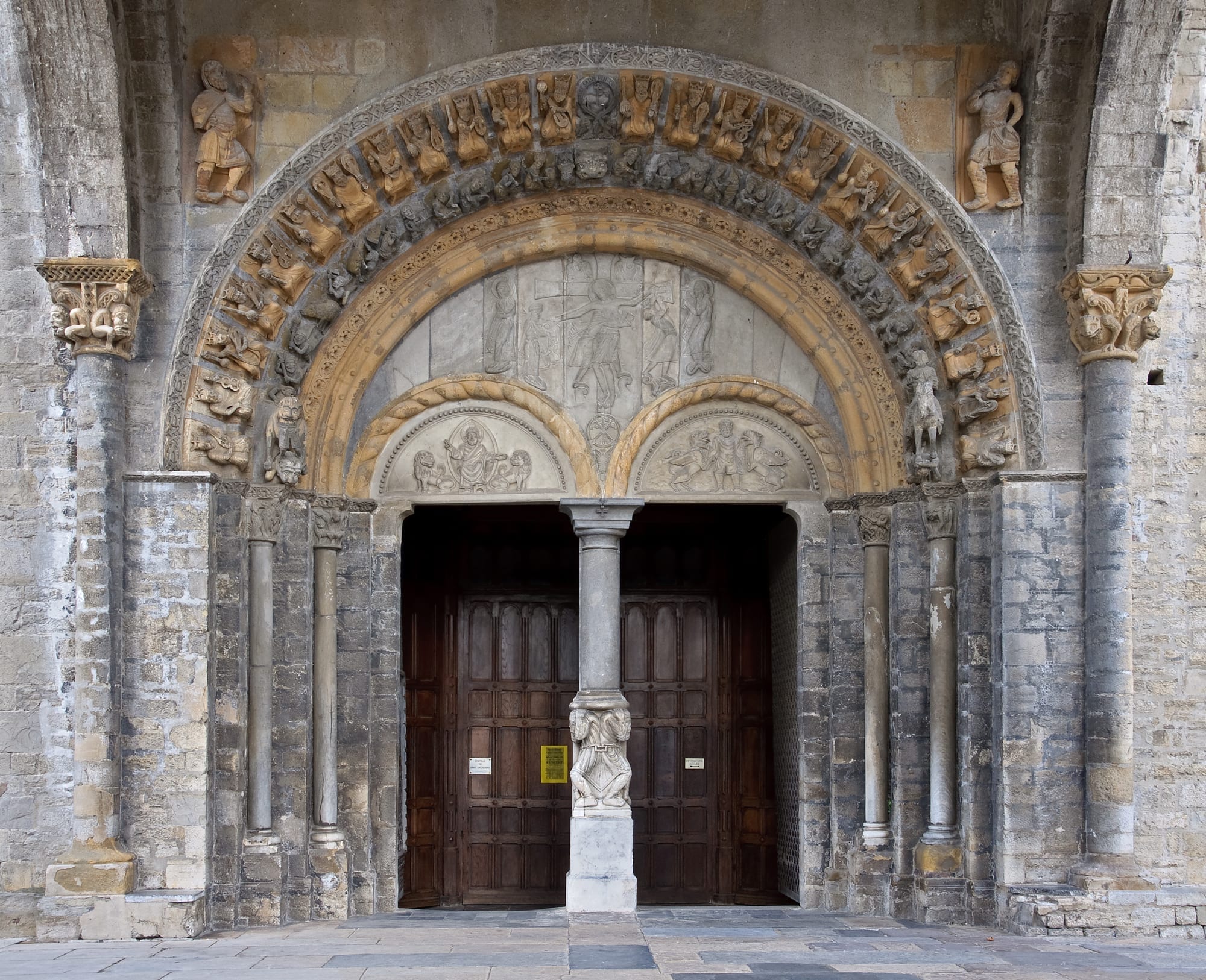
Context · Oloron-Sainte-Marie (France), where the 1952 'angel hair' fell
Cathedrale Sainte-Marie Oloron portail.jpg · Wikimedia Commons · CC BY-SA 3.0 · open original
Letter from an Oloron physician about the 'cigar' and 'saucers' of 17 October 1952 (27 Nov 1952)
A contemporary letter, on an Oloron physician's letterhead and dated 27 November 1952, which Patrick Gross reproduces in translation. It explains that on 22 October the same journalist from a Paris children's newspaper interviewed Prigent, the school's chief supervisor, and the physician; that on 28 October multicoloured balls joined by filaments were seen again, with threads up to 6 to 8 millimetres hanging from roofs and cables; and that this 'confirmed' that the 17 October event was a migration of field spiders carried by gossamer threads. The addressee is not identified. A private letter under its author's copyright, so it is given as a link.
Patrick Gross, «The attic» (ufology.patrickgross.org) · view source
The night in question
The Oloron episode is one of the emblematic cases of the great 1952 European wave. In the early afternoon of 17 October 1952, over the town of Oloron-Sainte-Marie, in the French Atlantic Pyrenees, the high-school superintendent Jean-Yves Prigent and his family (along with many residents) observed an unusual formation in the sky. They described it as a 'cottony cloud of strange shape' above which, moving in a straight line to the southwest, was a long cylinder tilted about 45 degrees, from whose upper end a column of white smoke seemed to escape.
Ahead of that cylinder advanced about thirty smaller objects which, seen through binoculars, proved to be red spheres each surrounded by a yellow ring. Witnesses recounted that these 'spheres' moved in pairs, following broken trajectories of rapid, short zigzags, and that when two of them separated a kind of whitish streak, like an electric arc, was produced between them. The detail that gave the case its name and notoriety was what fell from the sky: as the formation advanced, a white filamentous substance detached from it and settled on telephone wires, tree branches and roofs. When residents tried to collect it and rolled it into a ball, the material turned gelatinous and vanished between their fingers, leaving no analyzable sample: the characteristic trait of the so-called 'angel hair' (cheveux d'ange).
Ten days later, on 27 October 1952, an almost identical sequence recurred over the town of Gaillac, several hundred kilometres away: again a cylinder or 'spindle', a cortege of ringed spheres moving in pairs, and the same rain of white filaments that evaporated when handled. The coincidence between the two episodes, separated by days and distance, cemented the Oloron-Gaillac pairing as one of the best-attested 'angel hair' accounts in history, reported in the French press of the time and in later ufological catalogs.
The natural explanation was put forward in Oloron almost at once. A local doctor, interviewed on 22 October by the same journalist who took down Prigent's account, attributed the phenomenon to a spider migration, and in a letter of 27 November 1952 he recounted that his opinion was hotly debated in the local press until 28 October, when multicoloured balls joined by filaments were seen again over Oloron, flying low and in twos, with the same iridescent colours as on the 17th, and threads up to 6 to 8 millimetres thick were left hanging from roofs and power cables. For him, this 'confirmed' that the event of 17 October was a migration of field spiders carried by 'gossamer threads', and the colours 'the refraction of the sun's rays'; but he stated that he did not claim to explain 'the issue of the flying saucers or cigars'. Another witness of another sighting that day strongly disputed the explanation.
Why it matters
Oloron-Gaillac matters as the reference case for the 'angel hair' phenomenon and, at the same time, as a clear example of why the substance that seems most promising can be the most misleading clue. Its morphological interest is real: a larger cylinder-type object accompanied by a swarm of sub-objects moving in formation is exactly the pattern 8b (mother + sub-objects), which recurs across decades, and the almost identical recurrence at Gaillac ten days later gives it an internal consistency uncommon for a 1952 mass sighting.
The strongest explanation of 'angel hair' is biological: the mass flight of migrating spiders (ballooning), which in autumn release long silk threads to drift on the wind; that silk accumulates on wires and branches, and 'vanishes' when rolled up because it compacts and breaks, just as the witnesses described. The aerial component (cylinder and spheres) admits optical and meteorological readings (cloud formations, reflections, even the illuminated silk clusters themselves), amplified by the context of the intense 1952 wave, which predisposed people to read the sky in 'saucer' terms. That the key material always evaporates before it can be analyzed is not a mystery but, in itself, a fact consistent with spider silk, not with technology. Even so, the 'angel hair' accounts have not been closed with a conclusive laboratory sample, and the doctor who proposed the spiders did not explain the cylinder. The case is the reminder that 'physical evidence' which disappears when touched weighs less, not more.
What's left on paper
Documented evidence
- Testimony of Jean-Yves Prigent (high-school superintendent) and his family, plus many Oloron residents (17 Oct 1952)
- Cylinder tilted ~45° with 'smoke' at the end, preceded by ~30 red spheres with a yellow ring moving in pairs
- Fall of white filamentous substance ('angel hair') on wires and roofs, turning gelatinous and vanishing when handled
- Almost identical recurrence at Gaillac ten days later (27 Oct 1952)
- Coverage in the French press of the time, amid the 1952 European wave
- Naturalistic explanation proposed in 1952 by an Oloron doctor: a spider migration (ballooning); on 28 October balls joined by filaments were seen again over Oloron and threads 6 to 8 mm thick hung from roofs and cables (letter of 27 Nov 1952)
Sources
- HowStuffWorks — 'Angel Hair UFOs in Oloron, France'
- Patrick Gross / UFO-Logie — dossier sobre Oloron y Gaillac 1952
- UFO Casebook — '1952 - UFOs Drop Angel Hair - Oloron, France'
- Carta de un médico de Oloron, 27 nov 1952 — publicada por P. Gross, «The angel hair affair in Oloron in 1952, the MD's explanation» — Period document: spider-migration explanation and recurrence of the phenomenon over Oloron on 28 October.
Related cases
same explanation · same period
Tremonton film · Navy photographer footage (Utah)
1952 · Tier A
same explanation · same period
Flatwoods Monster · Braxton County
1952 · Tier B
same explanation · same period
Lubbock Lights · photographed formation over Texas (USA, 1951)
1951 · Tier A
same country · same period
Orange-Caritat · the silver object chased by two Vampires
1951 · Tier A