1953·Lake Superior (off Kinross AFB, Michigan)
United States.Kinross Incident · F-89 lost over Lake Superior
On November 23, 1953, an F-89C Scorpion fighter took off from Kinross AFB to intercept a radar target classified as "Unknown" over Lake Superior. Ground radar showed the aircraft and the target merge into a single blip, and the F-89, with Lt. Felix Moncla and radar operator Robert Wilson, vanished without a trace. The USAF accident report identified the target as an off-course Royal Canadian Air Force Dakota (C-47), which Canada later denied; neither the aircraft nor the bodies were ever found.
Tier S · SolidWhat do they mean? →
Strong evidence: a contemporary instrumental record (radar, sensor, film or photo of known provenance) that corroborates several independent witnesses.
What it was
61%natural or human cause
Most likely explanation: airplane
See the split across the six explanations
Natural or human cause
No known cause
Primary documents
USAF accident report on F-89C 51-5853A (Form 14) and statements by the controller and the investigating officer, 7 pp.
Report by the USAF Directorate of Flight Safety Research on F-89C 51-5853A, lost over Lake Superior on 23 November 1953. It concludes the aircraft probably crashed in Canadian waters just before or at the time of interception and that instrument flying conditions could be a factor; its analysis identifies the target as RCAF Dakota VC-912, Winnipeg to Sudbury, at 7,000 feet and about 30 miles off course. It includes the statement of the GCI controller, Lt. Stuart, and that of Capt. David C. Collins on his talk with the Dakota pilot, who said he had neither seen nor heard the F-89.
USAF, Directorate of Flight Safety Research; escaneos publicados por UFO*BC · Public domain · US Government work · open original
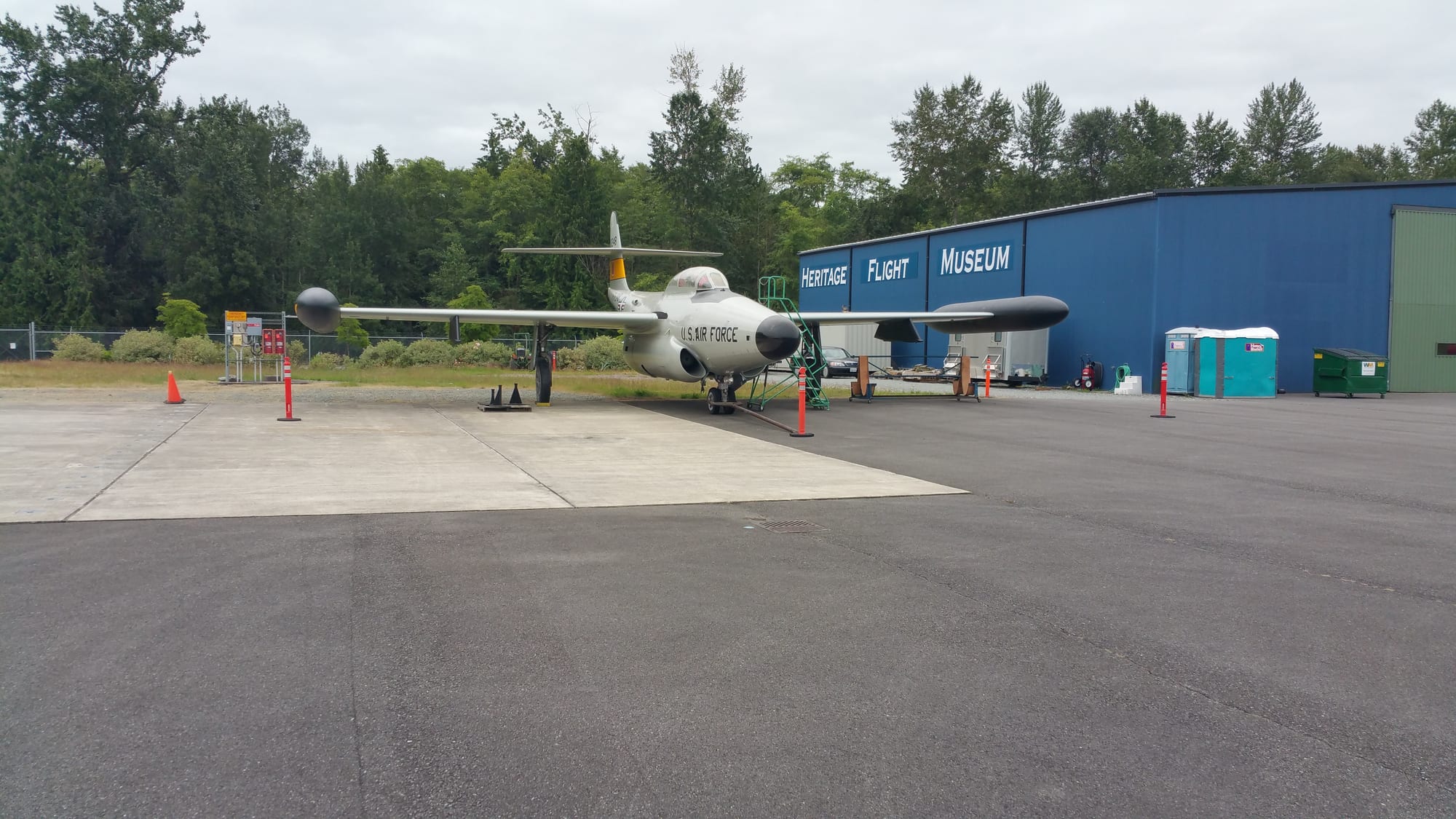
Context · a Northrop F-89 Scorpion, the interceptor type lost over Lake Superior
Northrop F-89 Scorpion at the Heritage Flight Museum.jpg · Wikimedia Commons · CC BY-SA 4.0 · open original
The night in question
On the night of November 23, 1953, amid the Cold War's defensive tension over the Great Lakes, an Air Defense Command (ADC) ground-controlled intercept (GCI) radar station tracked a target over Lake Superior that matched no flight plan. According to the statement of the controller, 2nd Lt. Douglas A. Stuart, when the target was picked up "it was believed to be VC-912", a Royal Canadian Air Force (RCAF) flight, "but because the aircraft was off the flight plan course by about 30 miles, it was classified as 'Unknown'." From Kinross Air Force Base (Michigan) an all-weather F-89C Scorpion interceptor of the 433rd Fighter-Interceptor Squadron's detachment was scrambled, crewed by First Lt. Felix Moncla (pilot) and Second Lt. Robert L. Wilson (radar operator), to identify the target.
ADC ground controllers tracked on radar as the F-89 was vectored toward the target. The fighter took off at 18:22 Eastern Standard Time, climbed to 30,000 feet and, by then under the control of the "Pillow" station, was cleared to descend to 7,000 feet to approach the target. After about 30 minutes of flight, some 110 km off Keweenaw Point, at the moment of interception the two returns (the interceptor and the target) merged into a single blip on the screen. The controller assumed for a couple of minutes that the fighter was flying formation with the target; shortly afterwards the F-89's IFF return disappeared. According to the report, the other aircraft's return continued on its original flight path, while the F-89's never reappeared: the fighter did not answer radio calls and was never found, neither aircraft nor bodies, despite a USAF, RCAF and Coast Guard search that, per the report, covered 80 percent of the area.
The file is not a Project Blue Book case but a USAF Directorate of Flight Safety Research accident report (Form 14). In its analysis (paragraph 6) it identifies the intercepted target as an RCAF Dakota (C-47), serial VC-912, flying from Winnipeg to Sudbury, crossing northern Lake Superior from west to east at 7,000 feet and about 30 miles south of its intended track. Its formal conclusions state that the F-89 "probably crashed in the Canadian waters of Lake Superior just prior to or at the time of interception", and the prevailing instrument flying conditions "could be a cause factor"; those same conclusions (2b and 2c) still call the target an "unidentified aircraft". The same file includes the statement of the investigating officer, Capt. David C. Collins, on his conversation with the Dakota's pilot, who said he was flying at 7,000 feet in the clear, did not know he was being intercepted and had neither seen nor heard the F-89. The disputes came later: in 1961 and 1963 RCAF spokesmen told NICAP such an intercept seemed unlikely, and in 2006 Gerald Fosberg, identified as the pilot of that flight, denied in the documentary "The Moncla Memories" that he had been the target. The other versions in circulation (a Canadian airliner, pilot vertigo, an in-flight explosion) come from Donald Keyhoe's account, based on letters from a Moncla relative about what two officers told the family; they are not among the report's conclusions, and neither is the placement of the target over the Soo Locks. The prosaic explanation (that Moncla, flying at night in instrument conditions, became disoriented and struck the water while closing on the Dakota, with the merging of returns being the normal crossing of two targets at close range) is consistent with the report; but with no wreckage, no flight recorder and the later Canadian denial, it cannot be confirmed. The file documents a military event fully recorded by radar and by the documented loss of an aircraft and its crew, with a concrete but disputed official explanation and a cause of loss that was never established.
Why it matters
There is a lost aircraft, two crew dead, an ADC ground-radar track and an inescapable institutional record, although that record is an accident file, not a Blue Book case. The 1953 report identified the target by name and serial; later legend turned it into an object that swallowed the fighter and attributed to the USAF contradictory versions the file does not contain. The legitimate doubts lie elsewhere: the RCAF and the Dakota's pilot later denied the intercept, and the report does not explain what caused the loss.
A complete and plausible prosaic hypothesis exists, and it is the report's own: a night flight in instrument conditions, an approach to an off-course Dakota and impact with the lake at the moment of interception, with the merging of returns as the normal crossing of two targets at close range. That reading requires nothing exotic and is probably the most economical. But it remains an inference, not a finding: with no wreckage, no flight recorder and the target's identification disputed on the Canadian side, the case stays formally open. The case shows how much mystery the chain of retellings adds once the file stops being read.
What's left on paper
Documented evidence
- F-89C Scorpion (serial 51-5853A) launched from Kinross AFB at 18:22 EST on Nov 23, 1953 to intercept a target classified "Unknown" over Lake Superior
- Crew: Lt. Felix Moncla (pilot) and Lt. Robert L. Wilson (radar operator)
- Statement of controller Douglas A. Stuart: the target "was believed to be VC-912" but was about 30 miles off its flight plan
- GCI radar recorded the merging of the fighter's and the target's returns; the target's return continued on its original path while the F-89's return and IFF disappeared
- Form 14: target identified as RCAF Dakota (C-47) VC-912, Winnipeg to Sudbury at 7,000 ft; the F-89 "probably crashed" in Canadian waters
Show 2 more items
- Neither the aircraft nor the bodies were ever found (USAF, RCAF and Coast Guard search)
- Later dispute: the RCAF (1961 and 1963) and pilot Gerald Fosberg (2006) denied the intercept
Sources
- USAF · Informal Report of Special Investigation of Major Aircraft Accident, F-89C 51-5853A (Form 14) and attached statements — scans at UFO*BC — Primary source. Index of the Form 14 pages (conclusions, identification of Dakota VC-912), controller Stuart's statement and the C-47 pilot's account recorded by Capt. Collins.
- USAF · Form 14, page 2 (investigation and analysis) — Primary source. Merging of returns, the target continuing on its original path and the identification of Dakota (C-47) VC-912.
- Statement of 2nd Lt. Douglas A. Stuart, GCI controller (page 1 of 3) — Primary source. The target was believed to be VC-912 but classified "Unknown" for being 30 miles off its flight plan; takeoff and control times.
- Statement of Capt. David C. Collins on the C-47 pilot — Primary source. The Dakota's pilot was flying at 7,000 ft in the clear and did not know he was being intercepted.
- NICAP · The Kinross Incident (433rd FIS unit history obtained via FOIA) — Secondary. Transcribes the unit history (July to December 1953) and reproduces Keyhoe's account of the versions given to the family.
- NICAP · Richard Hall, Kinross AFB / F-89 Disappearance — Secondary. Records the RCAF replies to NICAP in 1961 and 1963 and Menzel's phantom-echo explanation.
Related cases
same object · same country · same period
Mariana film · Great Falls, Montana
1950 · Tier A
same object · same country · same period
RB-47 ECM Encounter
1957 · Tier S
same object · same country · same period
Kirtland AFB · controllers and Blue Book
1957 · Tier A
same object · same country
USS Gyatt · the Puerto Rico radar contact and the classified Mach 3 jet
1964 · Tier S