1949·La Jolla, San Diego, California
United States.La Jolla · a woman sees a round, chrome-like object
At about 11:10 a.m. on June 17, 1949, the wife of a Navy commander saw from her backyard in La Jolla, California, a round object the size of a DC-4 airliner, which she described as a chrome-plated pie tin. It was in the direction of San Diego, moving rapidly away, and was gone in about 30 seconds. About two hours later two Air Force agents interviewed her. Her report was filed together with that of a witness in Glendale on the same day, and the case was closed as "aircraft" on a card that describes only the Glendale sighting.
Tier A · AcceptableWhat do they mean? →
Institutional evidence: several identified independent witnesses, or contemporary official documentation, without an instrumental record to corroborate them.
What it was
55%airplane
The most likely explanation.
- 55% airplane
- 6% other earthly causes
- 39% no known cause
See the split across the six explanations
Earthly origin (human or natural)61%
No known cause39%
Ordinary cause the sources propose: airplane
Record of the event
DOW-UAP-D213 — OSI memo on the La Jolla witness and the file of case 372 (La Jolla and Glendale), 1949
The June 17, 1949 memo in which Thomas J. McArdle, head of the Air Force Office of Special Investigations (OSI) detachment in San Diego, records his interview with Mrs. S. G. Selby that same day.
Read more
The file runs to 17 pages. The first is the "Project 10073 Record" card, no. 372: Glendale, California, June 17, 1949, two objects, a minute and a half, conclusion "AIRCRAFT" and the note "No data presented to indicate objects could not have been A/C." Next come the questionnaire for incident 372A (Glendale), dated August 1, 1949, with its second sheet, the red note "A/C" and Charles E. Whitton's name; the questionnaire for incident 372 (La Jolla), with the time 11:10, "Round like pie pan (Disc)," "Chromium," 4,000 feet, four miles to the southeast and 30 seconds, and its second sheet with the witness's name, the judgment "Intelligent and stable" and a summary copied from the memo; the July 18, 1949 letter from Colonel W. R. Clingerman of the Air Materiel Command (AMC) asking for Whitton to be interviewed, with the August 24 reply from the Air Force office at Lockheed's Burbank plant and, on the back, that office's July 21 receipt stamp; Whitton's pencil sketch, signed and dated "6/17/49 3:30 P.M.," with its blank back; two AMC routing slips; the July 8, 1949 memo from Clarence L. Johnson of Lockheed; the three sheets of the Glendale questionnaire with Whitton's answers; the 18th OSI District's cover letter of June 21, 1949; and McArdle's memo. Another 12-page copy is in the Project Blue Book collection on archive.org (file "Glendale, California, 372"), with the names blacked out and without the La Jolla questionnaire.
U.S. Department of War — PURSUE, Release 08 (DOW-UAP-D213) · open original
What happened
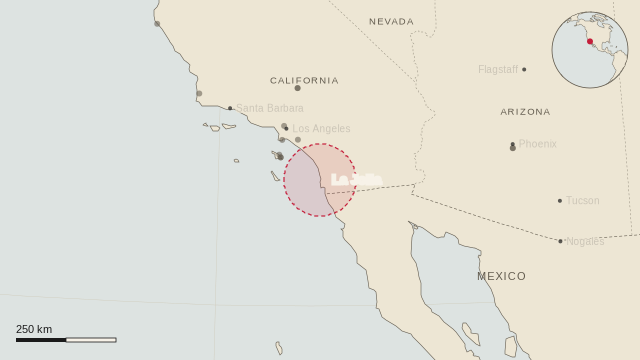
On Friday, June 17, 1949, at about 11:10 a.m., a woman was in the backyard of her home in La Jolla, the coastal neighborhood in northern San Diego, California, when she saw a large, round object in the air. She was the wife of Commander S. G. Selby of the Navy, and the case papers call her "Mrs. S. G. Selby." According to her account, the object was roughly the size of a Douglas DC-4 airliner, about four miles to the southeast, toward San Diego, and about 4,000 feet up, and it was moving rapidly away from her.
She described it as "a chromium plated pie tin" and said that "It was much brighter than the ordinary aircraft." She was sure it had no projections, no wings or tail fins, as it turned in a wide arc away from her. Asked about smoke or vapor trails, she said she had seen none. She was firm about what it was not: "it was definitely not a jet aircraft," although its speed was closer to a jet's than to a conventional plane's. It was in sight for about 30 seconds.
Word traveled fast. According to the memo that records the case, Mrs. Selby reported by phone that she had just seen what she thought was a flying disc, and her husband, whom the memo describes as a submarine commander of the 11th Naval District (the Navy region headquartered in San Diego), passed the word to the district's intelligence office. At 11:30, twenty minutes after the sighting, that office's executive officer, Charles Moorehead, telephoned the Air Force Office of Special Investigations (OSI), which reported to the Air Force inspector general, in case it wanted to act.
Thomas J. McArdle, head of the OSI detachment in San Diego, went to the house with another special agent, and they interviewed her at about 1:05 p.m. That same day McArdle wrote the memo to the head of the 18th OSI District, the regional office over his detachment, at Maywood, near Los Angeles. It describes the witness as a woman of about thirty, "intelligent and stable," and notes that she would contact the office if she saw anything similar again. On June 21 the district commander sent the memo "as being of possible interest" to the Air Materiel Command (AMC) at Wright-Patterson Air Force Base in Dayton, Ohio, whose intelligence department was then studying flying-object reports. It was logged there on June 27, and its details were copied onto the questionnaire for incident 372, the number under which the case was filed.
That same Friday, at about 3:30 p.m., another witness saw something in Glendale, near Los Angeles. Charles E. Whitton, a Lockheed employee who had once been an animator at one of the local studios, was driving at 30 mph near Grand Central Airport when he saw through his windshield two oval objects with a metallic shine, reflecting the sun; according to his questionnaire, they crossed the valley slowly, tilted and sped off to the north-northwest within a minute and a half.
His report came by another route: on July 8 Clarence L. "Kelly" Johnson, Lockheed's chief research engineer, who would report his own sighting in 1953 (↗ Agoura), wrote to a company colleague, John L. Hill, asking him to find out whether the Air Force wanted to interview him. The AMC asked for the interview on July 18, and Whitton's questionnaire gives August 1 as the interview date. His account was filed as incident 372A: the La Jolla case number with an A added.
Where it happened
Why it matters
Mrs. Selby is an identified witness whom two OSI agents interviewed about two hours after her sighting, and the memo that records it is dated the same day. Her description is specific: size, distance, height, color, no wings and no trail, a wide turn and the duration. But she is a single witness, and the file holds no instrument record; the distance, height and size are by-eye estimates made over 30 seconds.
The only official evaluation names Mrs. Selby, but does not examine her account. The 1949 case index in the archive of Project Blue Book, the Air Force program that inherited these reports in 1952, lists a single case on June 17. It places it in Glendale, gives the observers as "Whitton, Selby" and evaluates it as "AIRCRAFT." The case card, numbered 372 like the La Jolla questionnaire, places the event in Glendale, counts two objects over a minute and a half, which are Whitton's details, and justifies the conclusion in one line: no data show the objects could not have been aircraft. Neither known copy of the file, the Blue Book archive copy on archive.org or the one released in 2026, holds another card or any analysis of the La Jolla account.
An airplane is thus a proposed cause, but an unexamined one. Against it, the witness said it was not a jet and saw no wings or tail fins as it turned. In the card's favor, nothing in the file measures the distance, height or size she estimated. It remains to be seen whether any record of flights over San Diego that morning could settle it.
The U.S. Department of War (the name the Department of Defense has used since 2025) released the file in 2026 through PURSUE, its program for publishing files on anomalous phenomena, under the title "Unresolved UAP Report," although the index and the card give a cause. That copy includes, with the names visible, the La Jolla questionnaire that is missing from the Blue Book copy on archive.org.
Documents and sources
Documented evidence
- Memo by Thomas J. McArdle, head of the OSI detachment in San Diego, dated June 17, 1949: at 11:30 a.m. he took a call from Charles Moorehead of the 11th Naval District intelligence office; at about 1:05 p.m. he and another agent interviewed Mrs. S. G. Selby, who at about 11:10 a.m. saw a round object the size of a DC-4, about four miles to the southeast and about 4,000 feet up, for about 30 seconds; the phone message Moorehead passed on, by contrast, had the disc "flying over her home"
- Same memo: the witness said "it was definitely not a jet aircraft," described it as "a chromium plated pie tin" with no wings or tail fins, and saw no smoke or trails; McArdle judged her to be about thirty, "intelligent and stable"
- Cover letter from the 18th OSI District at Maywood, June 21, 1949, sending the memo to the Air Materiel Command "as being of possible interest"; the AMC routing slip logs it on June 27
- Questionnaire for incident 372 (La Jolla), with an interview date of June 17, 1949: "Round like pie pan (Disc)," color "Chromium," direction "SE (inferred)," speed "Rapidly like jet," luminosity "Brighter than ordinary a/c" and the maneuver "Turned in wide arc away from observer"; unlike the Glendale questionnaire, it does not carry the red note "A/C"
- "Project 10073 Record" card no. 372: Glendale, California, June 17, 1949, two objects, a minute and a half, conclusion "AIRCRAFT" and the note "No data presented to indicate objects could not have been A/C"; its summary describes only the Glendale account
Show 2 more facts
- Blue Book archive's 1949 case index, June page: a single entry on the 17th, "Glendale, California," observers "Whitton, Selby," evaluation "AIRCRAFT"
- Memo by Clarence L. Johnson, Lockheed's chief research engineer, July 8, 1949, about Charles E. Whitton, who saw two discs over the San Fernando Valley on June 17; AMC letter of July 18 asking for him to be interviewed, and the Glendale questionnaire with an interview date of August 1, 1949 (incident 372A)
Sources
- war.gov/UFO — DOW-UAP-D213, "Unresolved UAP Report, California, 1949" (PURSUE Release 08) — 17-page primary document, embedded in the viewer: McArdle's memo, the 18th OSI District's cover letter, the La Jolla and Glendale questionnaires, Kelly Johnson's memo, Whitton's sketch and the card for case 372.
- Project Blue Book — file 1949-06-6314586, Glendale, California, 372 (archive.org) — Independent 12-page scan, with the names blacked out: the same card, McArdle's memo and the Glendale papers; it does not include the La Jolla questionnaire.
- Project Blue Book — 1949 case index, page "1 - 30 June Sightings 1949" (archive.org) — Unredacted version of the 1949 index: June 17 shows a single case, "Glendale, California," with the observers "Whitton, Selby" and the evaluation "AIRCRAFT."
Related cases
Cases this case cites and cases with the same likely cause.
Cited in this case · Same country · Within 10 years
Agoura · Kelly Johnson and a test-flight crew see a dark object
1953 · Tier A
Airplane · Same country · Within 10 years
Great Falls · a baseball manager films two silver objects
1950 · Tier A
Airplane · Same country · Within 10 years
Kenneth Arnold · nine bright objects near Mount Rainier
1947 · Tier B
Airplane · Same country · Within 10 years
Kinross · a fighter vanishes over Lake Superior
1953 · Tier S