2007–2008·Mezcala, Guerrero
Mexico.Mezcala (three-day sighting)
Between 31 December 2007 and 2 January 2008, residents of Mezcala (Guerrero, Mexico) reported three luminous objects, one of which stayed over a nearby hill emitting flashes for "more than 30 hours" and two nights, according to La Crónica of Chilpancingo, or nearly 72 hours according to ufologist Ana Luisa Cid, who documented it with videos and interviews. There were mass witnesses.
Read the rest of the summary
Apart from that local press report, the documentation is from popular ufology, with no technical analysis. A fixed luminous object fits a misidentified celestial body, but the press report also describes it crossing the town and flashing by day, and the case was never resolved.
Tier B · IndicativeWhat do they mean? →
Limited evidence: a single witness, testimony gathered years later, or an account without contemporary primary documentation.
What it was
79%natural or human cause
Most likely an ordinary cause that no one has identified
See the split across the six explanations
Natural or human cause
No known cause
Read the full reasoning
The witness interviewed by Espacio Misterio rejects it because "there is no electricity on that part of the mountain". The absence of a published analysis is not evidence against an ordinary cause: in 2024 AARO resolved 174 cases, all to prosaic objects, though 'many other cases remain unresolved'.Primary documents
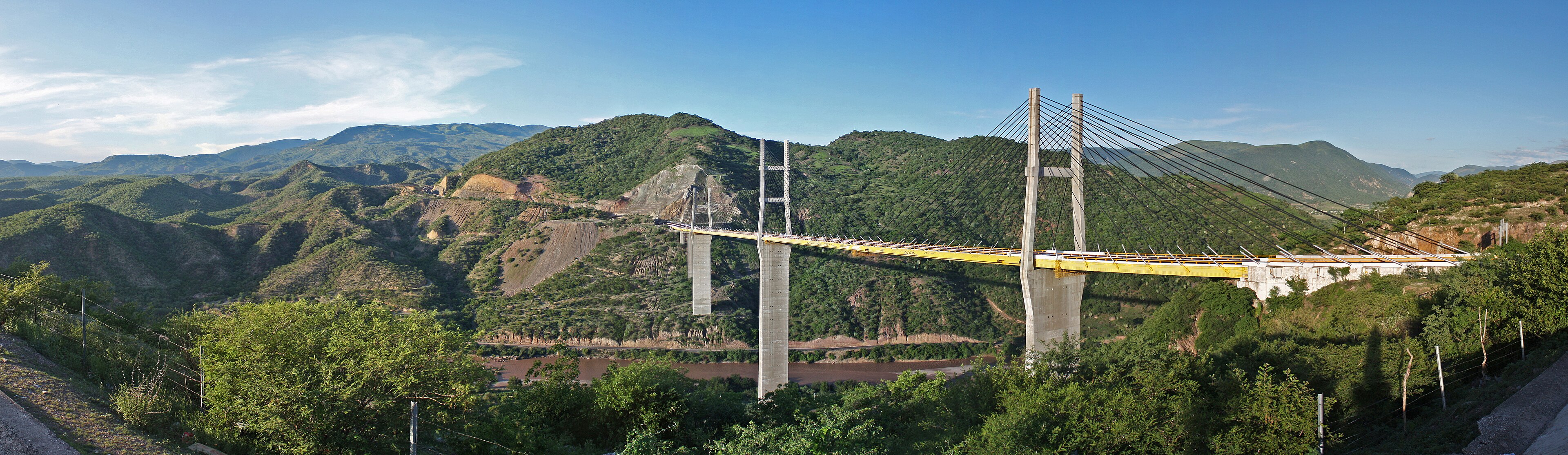
Context · Mezcala (Guerrero, Mexico)
Mezcala Bridge - Mexico edit1.jpg · Wikimedia Commons · CC BY-SA 3.0 · open original
Francisco Rangel Cruz, report in La Crónica Vespertino of Chilpancingo (10 January 2008), reproduced on a blog
The press report closest to the event, written ten days later. It says nearly the whole town saw a light that passed over the square and settled on the Pie de Mina hill, where it flashed for "more than 30 hours"; it quotes two residents who filmed it, Alfonso Ramírez Maya, some 5 km away, and Jesús Santana Hernández; it reports, without naming the witnesses, that a group got within about 50 metres, and mentions supposed meteors that fell on 1 January at Amojileca and Xochipala. It adds that the two local officials went up several times, found nothing and said it was high-voltage cables clashing in the wind. Copyrighted report: the reproduction is linked.
La Crónica Vespertino (Chilpancingo), reproducida en ovnisyfenomenosparanormales.wordpress.com · view source
The years in question
On the night of 31 December 2007, residents of Mezcala (a town in the Eduardo Neri municipality, in Guerrero, Mexico) began reporting strange lights in the sky. According to the accounts gathered by Ana Luisa Cid, three luminous objects appeared (two medium-sized ones which, according to the witness who filmed them, were spinning), and the largest, described as an ovoid glowing with bluish tones, settled over a nearby hill (identified in the reports as Cerro Pie de Minas) and stayed there for a prolonged period, from 31 December 2007 to 2 January 2008 (nearly three days, according to Cid's report), motionless and emitting strong flashes. The press report closest to the event, Francisco Rangel Cruz's piece in La Crónica of Chilpancingo on 10 January 2008, gives a shorter duration: the light flashed over the hill for "more than 30 hours", and the population "could not sleep for two nights in a row". According to that report, before settling on the hill the light passed over the main square at about 300 metres, and from the hill it could be seen "even by day emitting strong flashes upward". The episode became a mass sighting: much of the town watched it over those year-end days.
Reactions varied. Some witnesses said they got within a few meters of the object and claimed to have filmed and photographed it; others, panic-stricken, locked themselves in their homes. Rangel Cruz's report records, without naming the witnesses, that a group got within about fifty metres of the object and that their vehicles' engines died; it also says that when as many as 20 or 30 pickup trucks tried to approach on the night of 1 January, "as they approached the light went out", that most of the videos were shot from 5 or 6 kilometres away and that on that same day supposed meteors had been reported falling in Amojileca and Xochipala. Residents said the electricity dropped whenever the light grew brighter, but according to the summary that accompanies the report, the Federal Electricity Commission substation detected no voltage changes. A local explanation circulated (a short-circuit of cables producing sparks): according to the same report, it came from the community's two local officials, who went up to the site several times with groups of residents and found nothing, "to calm the population"; the witness Cid interviewed ruled it out on the grounds that there is no power line in that part of the mountain.
Mexican investigator Ana Luisa Cid took up the case, gathered videos and interviews with witnesses, and was among the first to spread it; the episode later appeared in productions such as History Channel and in popular ufology magazines (Año Cero, Espacio Misterio). Here is the case's limit: apart from that local press report, which also leans toward the UFO reading and reaches us through a blog that cites Cid as its source, all of its documentation comes from popular-ufology channels, with no independent technical analysis (photogrammetry, triangulation, examination of the original videos) or skeptical evaluation to establish what it really was. The account also has an internal tension. A luminous object that stays fixed in the same position for days is, in casework, the typical pattern of a misidentified bright celestial body: a planet or low star on the horizon that reappears at the same point night after night and is perceived as 'settled over the hill'; the bluish tones and the flickering are, moreover, characteristic of the atmospheric twinkle of a bright star (for example, Sirius) near the horizon. That reading would economically explain the multi-day immobility, though not the light's passage over the square or the daytime flashes described in Rangel Cruz's report. The claims of approaching within a few meters, not instrumentally corroborated, are also incompatible with a celestial object and could not be independently verified. The case was left with no formal resolution.
Why it matters
Mezcala matters as a good example of the epistemic ceiling of popular ufology. It is a mass, prolonged and filmed sighting, striking ingredients, but everything we know passes through a local press report and through popular ufology, with not a single independent technical analysis. It calls for caution, not because 'nothing happened', but because the way it was documented does not allow going beyond folklore. It serves as a contrast with cases like the 2004 Mexican FLIR, where there was rigorous analysis (the Cantarell flares): when a case is studied technically, it tends to clear up; when it is only publicized, it remains an anecdote. Reported anomaly, pending conclusion.
There is also a specific calibration lesson: duration is not, in itself, a credential of anomaly. That a luminous object stays almost motionless over a single point for days is in fact a strong indication in favor of an astronomical explanation, because no craft needs or tends to hold fixed relative to the ground for that long, whereas a bright celestial body does exactly that to a ground observer. The case is therefore not included as evidence in favor of anything, but as an example of a highly-participated sighting whose mode of documentation prevents going beyond folklore; an astronomical explanation would fit the immobility, though not the daytime flashes or the passage over the square recorded in the 2008 report, and no source has proposed it.
What's left on paper
Documented evidence
- Mass sighting in Mezcala (Guerrero) from 31 Dec 2007 to 2 Jan 2008: a luminous object fixed over a hill, with flashes, for "more than 30 hours" and two nights according to La Crónica of Chilpancingo (10 Jan 2008) and nearly 72 h according to Ana Luisa Cid
- Witness videos and photographs; interviews gathered by ufologist Ana Luisa Cid
- Explanation of clashing high-voltage cables, given by the local officials after going up and finding nothing, ruled out by a resident (no power line in that part of the hill)
- Apart from the La Crónica of Chilpancingo report, documentation from popular ufology (Cid, Año Cero, Espacio Misterio, History Channel); no independent technical or skeptical analysis
Sources
- Francisco Rangel Cruz, La Crónica of Chilpancingo, 10 Jan 2008, reproduced on the blog Ovnis y fenómenos paranormales (“El ovni de Mezcala, México”, 5 Aug 2014) — Local press report written ten days later: a light over the Pie de Mina hill for "more than 30 hours", two nights, witnesses who filmed it and the local officials' explanation.
- Espacio Misterio / Año Cero — 'Mezcala: un avistamiento de tres días' — Popular ufology coverage of the case.
- Ana Luisa Cid — 'Ovnis en Mezcala' (analuisacid.net) — Material from the investigator who documented the case.
- AARO — Fiscal Year 2024 Consolidated Annual Report on UAP (Nov 14, 2024)
Related cases