2004·Bay of Campeche, near Ciudad del Carmen, Mexico
Mexico.Campeche · Mexican Air Force FLIR
On 5 March 2004, around five in the afternoon, the crew of a Mexican Air Force Merlin C-26/A (501st squadron), on an anti-narcotics patrol between Chiapas and Campeche, recorded with its Star SAFIRE II infrared camera as many as eleven heat sources that no one on board could see with the naked eye and that seemed to surround the aircraft; the few returns on its radar lay in other directions.
Read the rest of the summary
SEDENA handed the recordings to UFOlogist Jaime Maussan, who presented them at a press conference on 11 May. The sensor's own readouts, analyzed by Robert Sheaffer and by pilot Alejandro Franz, point to the flares of the Cantarell oil platforms, offshore in the Bay of Campeche.
Tier S · SolidWhat do they mean? →
Strong evidence: a contemporary instrumental record (radar, sensor, film or photo of known provenance) that corroborates several independent witnesses.
What it was
70%natural or human cause
Most likely explanation: industrial flare
See the split across the six explanations
Natural or human cause
No known cause
Primary source · PDF
Analysis of the Campeche infrared video (Skeptical Inquirer, 2004)
Develops the Cantarell flares hypothesis, the parallax effect and why the radar did not detect the heat sources.
Primary documents
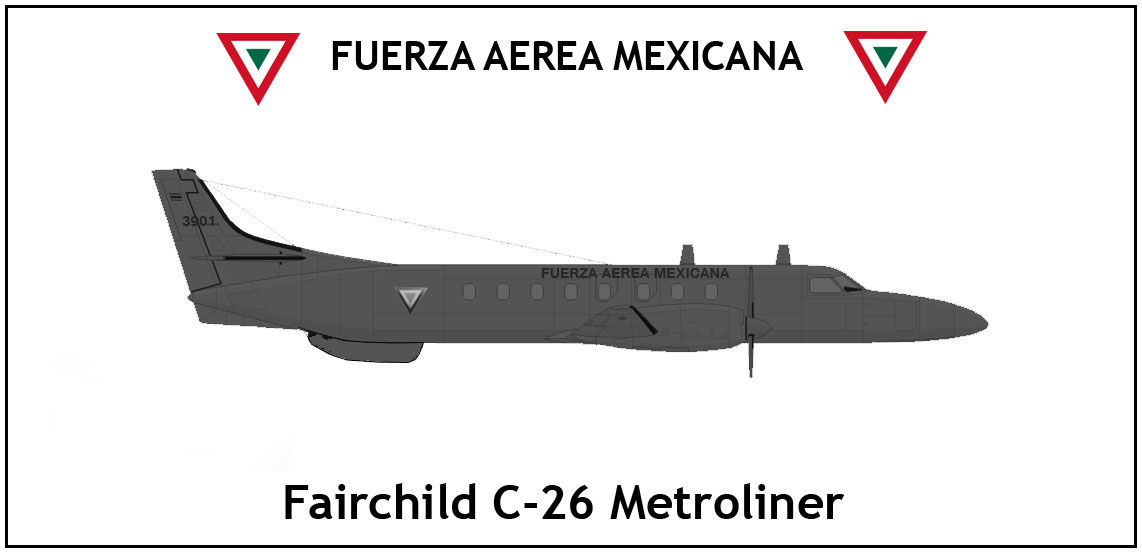
Illustration of a Fairchild C-26 Metroliner in Mexican Air Force livery — the aircraft type that recorded the FLIR footage
Wikimedia Commons · «Fairchild C-26 Metroliner FAM.jpg» (SOY GRANDE) · CC BY-SA 4.0 · SOY GRANDE (Wikimedia Commons) · open original
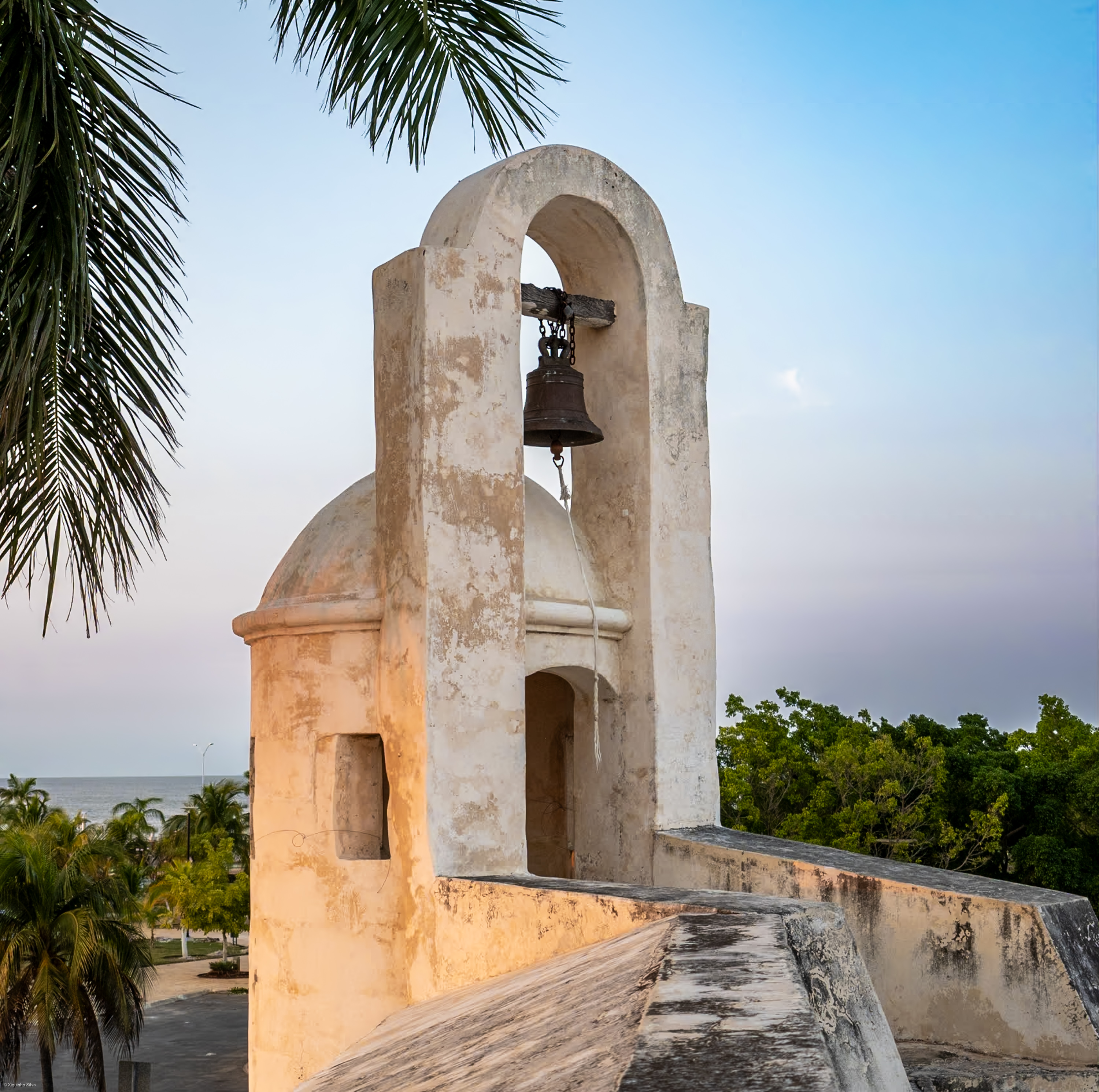
Context · Campeche (Mexico), area of the Mexican Air Force FLIR video
San Francisco de Campeche, Campeche Mexico, dic 2023 - 13.jpg · Wikimedia Commons · CC BY 2.0 · open original
The night in question
On March 5, 2004, between 17:00 and 17:30, a twin-engine Merlin C-26/A of the Mexican Air Force's 501st air squadron was flying a routine anti-narcotics patrol between Chiapas and Campeche, near Ciudad del Carmen, at about 3,500 meters. It carried two sensors: a Star SAFIRE II infrared imaging system, made by FLIR Systems and meant to detect the heat of clandestine light aircraft or boats, and an APS-143 search radar. According to the interviews the crew gave later, the radar first showed an unknown echo and the pilot, Major Magdaleno Castañón Muñoz, turned toward it thinking of an illicit plane. Then the infrared operator, Lieutenant Mario Adrián Vázquez Téllez, began to see bright points to the left of the aircraft, as many as eleven at the peak. No one on board saw them with the naked eye. The radar operator, Lieutenant Germán Marín Ramírez, stated that those eleven never appeared on his screen: the radar had only three targets, one ahead, one at one o'clock and one behind, with sudden changes of speed and course, while the infrared saw the group at nine o'clock. Hence the impression of being "surrounded": the pilot told Reuters that there was a moment when the screens showed them "behind us, to the left and in front of us", and that at that point he felt "a bit tense". The crew kept recording about half an hour of thermal video. In his interview, the radar operator added that his targets' speed changes were sudden ("60-120-300 knots, according to the radar information") and that their courses "showed 90 degrees at first then, suddenly, 130 degrees". On the cockpit audio, around 17:26:30, a voice says: "The Radar has them. The FLIR has them. […] it has an opposite course to us but it doesn't leave us, it's two miles behind us." And the pilot recounted that when they gave up the pursuit and made a complete turn, "the objects then also turned - but in OUR direction and began following us".
The episode became public through the institutional route. According to the reconstruction of the case compiled by Patrick Gross, on April 20, 2004 journalist and TV producer Jaime Maussan met senior officers at the Secretariat of National Defense (SEDENA), and two days later received a copy of the infrared recordings with permission to release them; the Secretary of Defense, General Clemente Vega García, approved making the material public, and on May 1 Maussan interviewed the pilot and the radar and infrared operators at the Secretariat itself. SEDENA neither published the footage itself nor analyzed it in public: it put it in the hands of a private broadcaster known for promoting sensational cases, although the ministry confirmed to Reuters that it had provided the video filmed by the Air Force on 5 March. On May 11 Maussan presented it at a press conference picked up by the Associated Press, CNN, Reuters, MSNBC, USA Today and Fox News. The material came from a country's Defense Ministry, not from an amateur.
The first explanations from Mexican academics were hasty (Julio Herrera of UNAM spoke first of electrical flashes in the atmosphere and then of ball lightning; others proposed weather balloons, plasma sparks or meteorite fragments) and ufologists easily ridiculed them. By May 20, skeptical analysts proposed another source: the gas flares of the offshore oil platforms in the Bay of Campeche, the center of Mexico's oil industry, with more than two hundred wells on nine platforms, whose flames burn more or less continuously; one of the voices recorded on board can be heard saying the objects are "at Carmen". On May 26, Captain Alejandro Franz Navarrete, a former pilot who had flown extensively in the region and a member of the Mexican organization Alcione, independently reached the same conclusion: the Cantarell complex, Mexico's largest oil field, lies about 80 kilometers offshore, and the lights would be the steady flames of its platforms, between 50 and 90 kilometers from Ciudad del Carmen. Franz published photographs of the platforms and their flames to compare them with the video frames.
Robert Sheaffer developed the analysis in Skeptical Inquirer (September-October 2004), advised by infrared engineer John Lester Miller. He corrected Franz on one point: the aircraft was not flying north but east, at about 80 degrees, which the video itself confirms when, twenty-six minutes in, the crew zooms in on a large round object and realizes, laughing, that it is the Moon rising. During the main part of the episode the sensor was pointing about 134 degrees to the left of the nose, toward "seven o'clock", and within a degree or two of the horizon; plotted on a map, that bearing runs toward the largest platform complex in the gulf. At the narrowest electronic zoom, each light resolves into individual flames, nine or more, which match Franz's daytime photos. The objects' apparent motion against the clouds is explained by the aircraft moving relative to the clouds while the sensor tracked distant sources, and the halos by scatter from the camera's diffractive optics. On the radar, Sheaffer noted that no data were recorded, that the returns the crew described lay in another direction, mainly ahead of the aircraft, and matched the infrared ones in neither number nor position, that the military radar at Ciudad del Carmen showed nothing unknown, and that researcher Brad Sparks placed some, though not all, of those echoes over federal Highway 186, with a measured speed of 52 knots, consistent with trucks. Maussan objected that the platforms were too far away to be seen; Sheaffer replied that from 3,500 meters the horizon lies about 211 kilometers away, and atmospheric refraction extends it somewhat. Sheaffer speaks of two radar targets; the operator, in his interview, of three. SEDENA has issued no later official conclusion confirming or rejecting that identification.
Why it matters
Eight months before the USS Nimitz incident, a country's air force recorded unidentified objects on its sensors, and six to seven months before it, its Defense Ministry handed over for release a sensor record of unidentified objects captured by its air force, without classifying or denying it: military aircraft, calibrated sensor, a continuous half-hour recording with cockpit audio and interviews with the three key crew members. That gesture of institutional transparency about military data prefigures the shift the United States would only formalize in 2020-2021, although it had a clear limit: SEDENA handed the material to a UFO broadcaster without publishing or analyzing it. As a governance precedent it still carries weight, because it showed that a defense ministry could treat the phenomenon as a publishable operational datum.
As evidence of the phenomenon itself, however, its lesson is one of method: military sensor data, by itself, resolves nothing, and official disclosure says nothing about the nature of what was recorded. The error the case dismantles is the most tempting one in serious ufology, "a military sensor recorded it, therefore it is anomalous". The recorded evidence is infrared only: no one saw the objects with the naked eye, the radar returns the crew mentioned lay in another direction and were not recorded, and the infrared signature turned out to be consistent, in bearing, elevation and shape, with the flames of oil platforms seen through a hot, humid atmosphere. Campeche does not combine radar, infrared and visual observation of the same object, and so it illustrates how a single sensor, without cross-corroboration, can generate a convincing but fragile anomaly.
It also teaches something about the quality of public debate. The first skeptical explanations, given in a rush, were as flimsy as the ufological ones and let the whole skeptical camp be ridiculed; the solid identification came weeks later, from the work of a pilot who knew the area and from a careful reading of the data the video itself records: heading, azimuth, elevation, zoom and even the moonrise. A documented residue remains: the radar operator's testimony about sudden speed (60, 120 and 300 knots) and course changes, of which no record survives; radar returns that no one has fully identified (Sparks attributed some, not all, to trucks); the cockpit line in which radar and infrared both had an object two miles behind; the account that the objects turned and followed the plane when it turned back; and the absence of an official SEDENA reconstruction.
What's left on paper
Documented evidence
- About half an hour of recording from the Star SAFIRE II infrared sensor of a Mexican Air Force Merlin C-26/A (501st squadron), March 5, 2004, between 17:00 and 17:30, with cockpit audio
- As many as eleven heat sources on infrared, to the left of the aircraft and with no visual detection; the radar operator stated that those eleven never appeared on his screen, that he had only three targets (ahead, at one o'clock and behind), and no radar data were recorded; Radar operator (interview compiled by Patrick Gross): speed changes of "60-120-300 knots" and courses from 90 to 130 degrees; cockpit audio at 17:26:30: "The Radar has them. The FLIR has them… it's two miles behind us"
- The pilot, Major Magdaleno Castañón, told Reuters that at one point the screens showed the objects "behind us, to the left and in front of us"; According to the pilot, when they turned back the objects "also turned - but in OUR direction and began following us"; Sheaffer counts two radar targets and the operator three
- Institutional release: SEDENA received Jaime Maussan on April 20, 2004, gave him a copy of the recordings with General Clemente Vega García's approval and let him interview the crew on May 1; press conference on May 11; the ministry confirmed to Reuters that it had provided the video
- Data from the video itself analyzed by Sheaffer: aircraft heading of about 80 degrees (confirmed by the moonrise at minute 26), objects about 134 degrees left of the nose and within a degree or two of the horizon, in the direction of the largest platform complex in the Bay of Campeche; At the narrowest zoom, each light resolves into nine or more individual flames that match the daytime photographs of the Cantarell platforms published by Alejandro Franz (Alcione)
Show 3 more items
- The military radar at Ciudad del Carmen showed no unknown objects; per Sheaffer, the onboard radar returns lay ahead of the aircraft, in a different direction from the infrared traces, and Brad Sparks placed some of them over federal Highway 186, at 52 knots, consistent with trucks
- Maussan's objection (platforms 125-200 km away, too far) and Sheaffer's reply: from 3,500 m the horizon lies about 211 km away, more with refraction
- Early explanations from Mexican academics: electrical flashes and then ball lightning (Julio Herrera, UNAM), weather balloons, plasma sparks; SEDENA has issued no later official conclusion confirming or rejecting the identification
Sources
- Robert Sheaffer — "The Campeche, Mexico 'Infrared UFO' Video", Skeptical Inquirer 28 (5), September-October 2004, pp. 36-39 — Analysis based on the sensor's own heading, azimuth, elevation and zoom readouts, with infrared engineer John L. Miller: flames resolved by zoom, parallax against the clouds, radar with no recorded data and in another direction; reports Franz's independent conclusion and Herrera's explanations. Web version: skepticalinquirer.org/2004/09/the-campeche-mexico-infrared-ufo-video/
- Reuters, via ABC News (Australia) — "Mexico Air Force video creates UFO stir" (12 May 2004) — Contemporary wire report: the ministry confirms it provided the video; statements by Major Castañón; initial radar detection.
- Alejandro Franz (Alcione) — post on the UFO UpDates forum (26 May 2004), quoted by Sheaffer — Identifies the lights as the steady flames of the Cantarell platforms, 50 to 90 km from Ciudad del Carmen, and provides daytime photographs of the platforms at alcione.org; includes no FLIR replications.
- Gross, P. — dossier «The big news Mexican military UFO report of 2004» (ufologie.patrickgross.org) — Compilation of the case: the patrol, SEDENA's release, Maussan's interviews with the pilot and the radar and infrared operators (translated by Santiago Yturria) and the cockpit audio transcript.
- SEDENA México — comunicado oficial 2004
- Maussan, J. — press conference (May 11, 2004), video archive — Primary material available
- UFO Evidence — Campeche 2004 case file — Secondary source. UFO compilation of the chronology and the disseminated material.
Related cases
Associated actors (3)