1942·Los Ángeles, California
Estados Unidos.'Battle of Los Angeles' · barrera antiaérea sobre LA
La noche del 24-25 de febrero de 1942, en pleno pánico de invasión tras Pearl Harbor, las baterías antiaéreas del Ejército de EE.UU. dispararon 1.440 proyectiles contra uno o varios objetos no identificados sobre Los Ángeles. No se confirmó ninguna aeronave enemiga ni derribo. La historia oficial de las fuerzas aéreas del Ejército apunta a globos meteorológicos como causa de la alarma inicial y a las propias explosiones antiaéreas, iluminadas por los reflectores, tomadas por aviones; la cultura UAP lo cita como avistamiento masivo temprano.
Tier A · Aceptable¿Qué significan? →
Evidencia institucional: varios testigos independientes identificados, o documentación oficial de la época, sin un registro instrumental que los corrobore.
Qué fue
88%causa natural o humana
Explicación más probable: globo
Ver el reparto entre las seis explicaciones
Causa natural o humana
Sin causa conocida
Documentos primarios
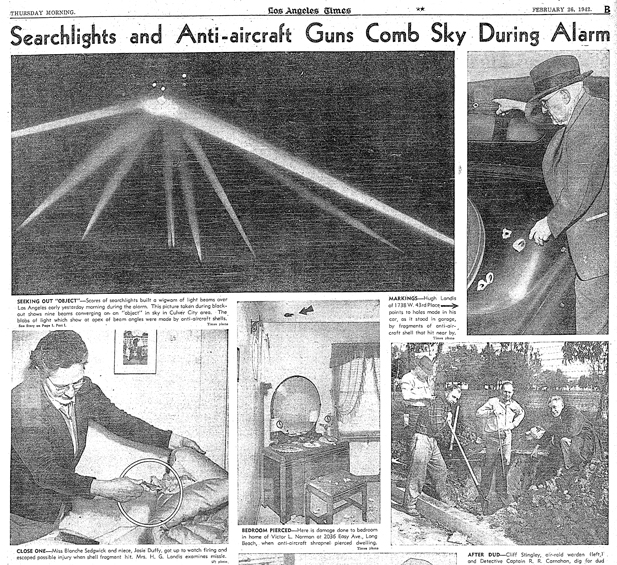
«La batalla de Los Ángeles» · fotografía de Los Angeles Times (25 feb 1942)
Los Angeles Times (1942) vía Wikimedia Commons · Dominio público · obra de 1942, sin renovación de copyright · abrir original
La noche en cuestión
El contexto lo es todo. Apenas tres meses después de Pearl Harbor, la costa oeste de Estados Unidos vivía en una alerta de invasión casi histérica. La noche del 23 al 24 de febrero de 1942, un submarino japonés (el I-17) había emergido frente a Santa Bárbara y bombardeado la instalación petrolera de Ellwood: el primer ataque del Eje sobre suelo continental estadounidense desde la guerra de 1812. El daño material fue mínimo, pero el efecto psicológico fue enorme. Apenas veinticuatro horas después, la inteligencia naval había advertido que podía esperarse un ataque sobre la zona en las próximas diez horas. Esa tarde se reportaron bengalas y luces intermitentes cerca de plantas de defensa, y una primera alerta, decretada a las 19:18, se levantó a las 22:23. De madrugada, los radares captaron un blanco no identificado a 120 millas al oeste de Los Ángeles y lo siguieron hasta pocas millas de la costa, donde parece haberse desvanecido. A las 02:21 se ordenó el apagón; a las 02:43 se reportaron aviones cerca de Long Beach y un coronel de artillería costera vio «unos 25 aviones a 12.000 pies». Según la historia oficial, a las 03:06 se vio sobre Santa Mónica un globo con una bengala roja y cuatro baterías antiaéreas abrieron fuego; en total se dispararon 1.440 proyectiles mientras los reflectores barrían la oscuridad, hasta el amanecer.
El resultado es lo más revelador. No cayó ninguna bomba enemiga, no se confirmó ninguna aeronave hostil, no hubo derribos, aunque circularon reportes de cuatro aviones enemigos abatidos y de uno caído en llamas en un cruce de Hollywood. Los testigos describieron de uno a varios cientos de aparatos, a alturas de unos pocos miles a más de 20.000 pies. Según la historia oficial, los únicos daños fueron los causados por la excitación (al menos una muerte por infarto), los accidentes de tráfico en las calles a oscuras y la metralla de la propia artillería. Terminada la guerra, los japoneses declararon que no habían enviado aviones sobre la zona durante esa alerta. La metralla de los propios proyectiles antiaéreos (que vuelven a caer) dañó casas y vehículos en tierra. La respuesta oficial fue inmediatamente contradictoria: el Secretario de Marina Frank Knox calificó el episodio, ya el 25 de febrero, de falsa alarma producto de los nervios de guerra; el Ejército, cuyo Mando de Defensa Occidental había anticipado esa misma mañana que la mayoría de los reportes resultarían «muy exagerados» y cuya Cuarta Fuerza Aérea creía que no había habido aviones, cambió de criterio tras interrogar a testigos, y el Secretario de Guerra Henry Stimson anunció que de uno a cinco aviones no identificados habrían sobrevolado la zona: aparatos comerciales operados por el enemigo desde campos secretos en California o México, o avionetas lanzadas desde submarinos japoneses. Esa discrepancia entre dos departamentos del mismo gobierno es, paradójicamente, lo que mantuvo vivo el misterio durante décadas.
La famosa fotografía publicada por Los Angeles Times el 26 de febrero (media docena de haces de reflector convergiendo sobre un punto luminoso en el cielo) se convirtió en el ícono visual del episodio y es citada hasta hoy por la cultura OVNI como prueba de un objeto sólido. Sin embargo, análisis posteriores establecieron que la imagen fue fuertemente retocada en el cuarto oscuro, una práctica editorial rutinaria de la época para 'limpiar' y dramatizar fotografías de prensa; lo que parece un disco iluminado es en buena medida un artefacto del retoque. La historia oficial de las fuerzas aéreas del Ejército (Craven y Cate, publicada en 1948 y reeditada en 1983 por la Office of Air Force History) concluyó que un estudio cuidadoso de las pruebas sugiere que globos meteorológicos, que se sabe que se soltaron sobre Los Ángeles, pudieron causar la alarma inicial, teoría apoyada porque la artillería antiaérea fue criticada oficialmente por disparar contra blancos que se movían demasiado despacio para ser aviones; y que probablemente buena parte de la confusión vino de que las explosiones antiaéreas, iluminadas por los reflectores, se tomaron a su vez por aviones enemigos. Añade que, iniciado el fuego, el humo de las explosiones dificultaba observar; que el comandante en funciones de la brigada antiaérea declaró que primero estuvo convencido de ver quince aviones, pero pronto concluyó que veía humo; y que corresponsales como Ernie Pyle y Bill Henry presenciaron el tiroteo y escribieron que nunca lograron distinguir un avión. Es un evento institucional plenamente documentado cuya interpretación como fenómeno anómalo es débil.
Por qué importa
Un ejército occidental abrió fuego masivo contra un objeto no identificado y dejó un registro oficial abiertamente contradictorio: la Marina lo declaró falsa alarma el mismo día y el Departamento de Guerra insistió en aeronaves reales. Esa tensión entre dos ramas del Estado es justamente el material que documenta el procesamiento institucional del fenómeno; aquí, sin embargo, sirve de calibración escéptica, no de evidencia de anomalía.
Su valor pedagógico es doble. Primero, muestra con claridad de manual cómo se fabrica un 'caso UAP' sin que medie ningún fenómeno extraordinario: un contexto cargado (pánico de invasión tras Pearl Harbor y el bombardeo de Ellwood), un estímulo banal (un globo meteorológico a la deriva), un mecanismo de contagio (explosiones antiaéreas tomadas por aviones enemigos) y una imagen de prensa retocada que sella la leyenda. Segundo, ilustra el riesgo opuesto al que la ufología suele temer: no que las autoridades oculten un avistamiento real, sino que el aparato militar genere, por sí mismo y bajo presión, un evento espectacular a partir de la nada. La lectura convencional es la de la historia oficial de las fuerzas aéreas. Se incluye por su documentación institucional y su utilidad como contraejemplo disciplinado, no por su anomalía.
Lo que queda en papel
Evidencia documentada
- 1.440 proyectiles antiaéreos disparados sobre Los Ángeles la madrugada del 25 feb 1942, tras un blanco de radar a 120 millas que se desvaneció cerca de la costa
- Sin bombas enemigas ni derribos; daños por la metralla propia, accidentes de tráfico y al menos una muerte por infarto
- Registros oficiales contradictorios: Marina (Knox) = falsa alarma; Guerra (Stimson) = de uno a cinco aviones no identificados
- Fotografía de Los Angeles Times (26 feb 1942) fuertemente retocada
- Historia oficial de las AAF: globos meteorológicos como probable causa de la alarma inicial; explosiones antiaéreas iluminadas tomadas por aviones
Fuentes
- Wikipedia — Battle of Los Angeles — Fuente secundaria (enciclopedia).
- W. F. Craven y J. L. Cate (eds.), «The Army Air Forces in World War II», vol. I, cap. 8 (1948; reed. Office of Air Force History, 1983) — Historia oficial basada en los registros de la época: cronología de alertas, munición disparada y explicación.
Casos relacionados
mismo objeto · mismo país · misma época
Roswell
1947 · Tier A
mismo objeto · mismo país · misma época
Discos sobre Muroc Army Air Field
1947 · Tier A
mismo objeto · mismo país · misma época
Gorman Dogfight · F-51 vs. luz maniobrante (Fargo)
1948 · Tier A
mismo objeto · mismo país · misma época
Fort Monmouth · el caso que reactivó Grudge
1951 · Tier A