1990·Calvine, Perthshire, Escocia
Reino Unido.Calvine · Perthshire
El 4 de agosto de 1990, dos hombres fotografiaron sobre los páramos de Calvine (Escocia) un gran objeto en forma de diamante suspendido en silencio, con un caza, probablemente un Harrier, visible en varias de las seis imágenes. El Daily Record no publicó las fotos y las envió a la RAF; el Ministerio de Defensa analizó los negativos y los devolvió al diario en cuatro días, y su paradero posterior se desconoce. En 2022 David Clarke dio a conocer una copia que había guardado el oficial de prensa de la RAF Craig Lindsay.
Tier B · Indiciario¿Qué significan? →
Evidencia limitada: un solo testigo, un testimonio recogido años después o un relato sin documentación primaria de la época.
Qué fue
57%causa natural o humana
Explicación más probable: tecnología humana clasificada
Ver el reparto entre las seis explicaciones
Causa natural o humana
Sin causa conocida
Documentos primarios
Expediente DEFE 24/1940: nota del incidente de Calvine, minuta del 14 de septiembre de 1990 y líneas para responder al Daily Record
Tres páginas del expediente DEFE 24/1940 del Ministerio de Defensa. Una nota manuscrita, «UFO Incident: Saturday 4th August 90», sitúa el avistamiento en Calvine, 20 millas al norte de Pitlochry junto a la A9, hacia las 21:00: un ovni en forma de diamante suspendido unos 10 minutos antes de ascender en vertical a gran velocidad, mientras un avión de la RAF que se cree un Harrier hacía pasadas a baja cota. La minuta de Sec(AS)2a del 14 de septiembre dice que los seis negativos llegaron el 10 de septiembre, que el avión es un Harrier, con un segundo apenas visible, que no hay conclusión sobre el objeto ni registro de Harriers en la zona, y que los negativos se devolvieron al periódico.
The National Archives (Reino Unido), DEFE 24/1940, págs. 114-116 del PDF; copia digital en archive.org (BritishUFOFiles) · Open Government Licence v3.0 (Crown copyright, Ministerio de Defensa) · abrir original
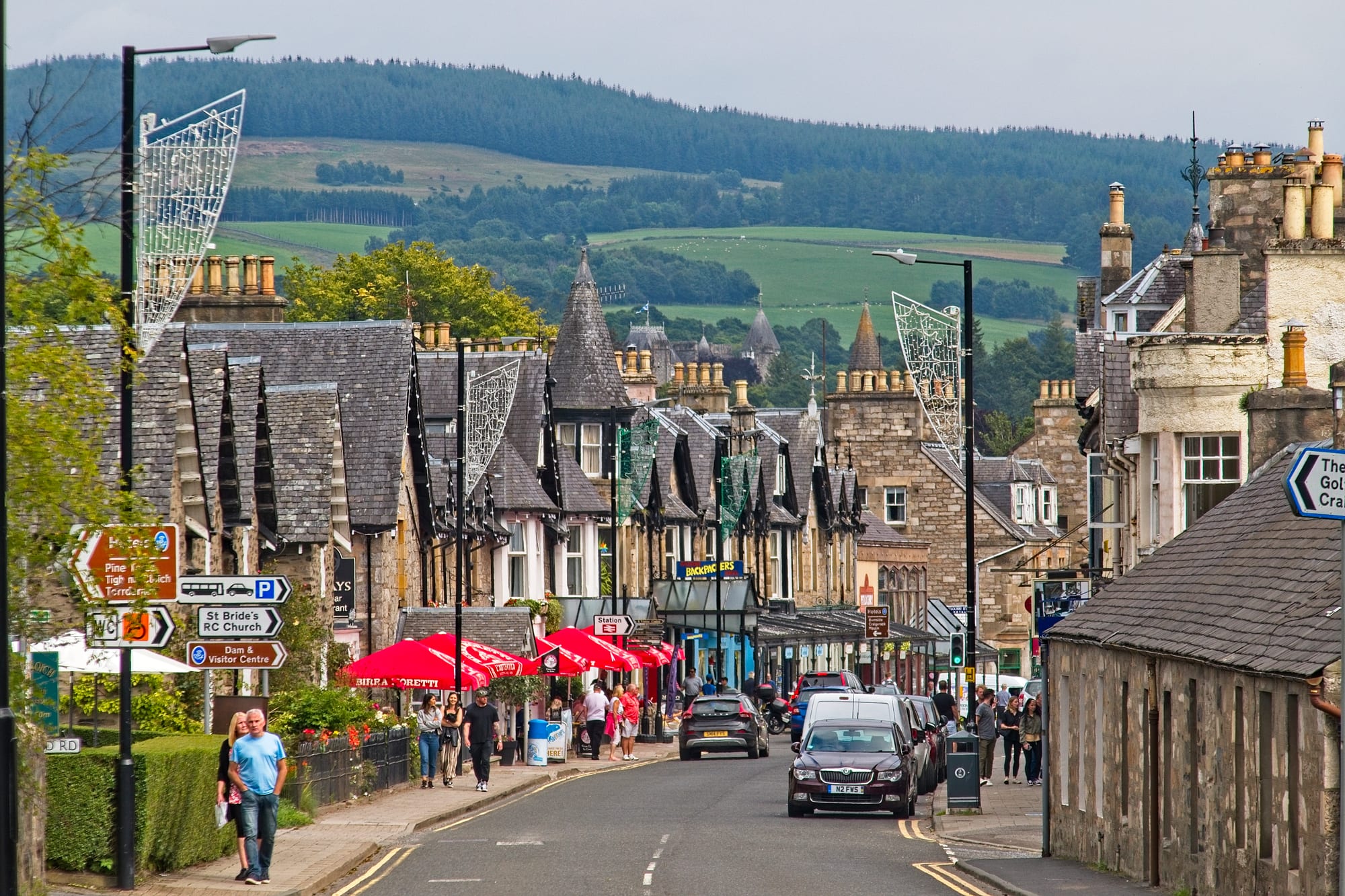
Contexto · Pitlochry (Perthshire, Escocia), cerca de donde se tomó la fotografía de Calvine
Pitlochry, Perthshire (50248925367).jpg · Wikimedia Commons · CC BY 2.0 · abrir original
La noche en cuestión
En la tarde-noche del 4 de agosto de 1990, dos hombres (según el relato, dos cocineros de un hotel cercano que paseaban por los páramos sobre la aldea de Calvine, en Perthshire, Escocia) observaron un gran objeto en forma de diamante suspendido en silencio en el cielo. Buscaron refugio bajo unos árboles y desde allí tomaron una serie de seis fotografías; según los testigos, el objeto permaneció suspendido en silencio cuatro o cinco minutos y luego ascendió lentamente en vertical, ganando velocidad poco a poco. La nota manuscrita que abrió el expediente del Ministerio de Defensa recoge otra versión: el objeto estuvo suspendido unos 10 minutos antes de ascender en vertical a gran velocidad, y mientras tanto un avión de la RAF, que se creyó un Harrier, hizo varias pasadas a baja cota durante 5 o 6 minutos. En al menos cuatro de las seis imágenes aparece, además del objeto en forma de diamante, lo que se ha interpretado como un caza militar (probablemente un Harrier) volando a poca distancia, un detalle decisivo porque sugiere que había aviones militares en la escena. Según el expediente del MoD citado por Clarke (DEFE 24/1940/1), sus especialistas establecieron que el avión era un Harrier e identificaron «un segundo avión apenas visible, de nuevo probablemente un Harrier»; pero, según la nota informativa del propio ministerio, no constaba que hubiera Harrier operando en la zona a la hora de las fotos. Un antiguo funcionario de inteligencia de defensa le dijo después a Clarke que los dos aviones eran estadounidense y británico y que iban «escoltando el objeto», afirmación que ningún documento respalda.
Los testigos llevaron las fotos al periódico escocés Daily Record, que en lugar de publicar la primicia envió una copia a la oficina de prensa de la RAF en Pitreavie. Su oficial de prensa, Craig Lindsay, la fotocopió y la mandó por fax a la oficina de ovnis del Ministerio de Defensa (MoD), que pidió los negativos; según un documento del propio MoD, llegaron a Londres el 10 de septiembre, se analizaron, se redactó una respuesta para posibles preguntas en el Parlamento y el 14 de septiembre se devolvieron al Daily Record. Qué pasó después con ellos se desconoce, y el diario nunca publicó la historia. Una fotocopia de la imagen salió en los archivos del MoD que publicó el Archivo Nacional en 2009, pero durante más de tres décadas las fotografías en sí estuvieron fuera del alcance público; uno de los testigos, además, nunca volvió a hablar públicamente del asunto.
Tras años de investigación, el académico, periodista y ex asesor de los archivos británicos David Clarke localizó al entonces ex oficial de prensa de la RAF Craig Lindsay, quien por iniciativa propia había conservado durante más de 30 años una copia de uno de los positivos junto con el sobre y las fotocopias que en su día había manejado para el MoD. En 2022 Lindsay le mostró ese material y la imagen se hizo pública por primera vez. Un análisis fotográfico realizado por Andrew Robinson, de la Sheffield Hallam University, concluyó que la copia es «sin duda» de la fotografía original que analizó el MoD, que la imagen es una fotografía genuina de una escena delante de la cámara y que, si hubo manipulación o montaje, ocurrió en la escena y no en la cámara ni en el revelado, aunque no halló pruebas de ello. También advirtió que la copia no permite confirmar ni la fecha ni el lugar, que «no hay datos suficientes» para concluir qué es el objeto y que trabajar sobre una copia (y no sobre los negativos originales, todavía desaparecidos) impide un veredicto forense definitivo.
Por qué importa
En Calvine, el peso está en lo que pasó con la imagen. El núcleo analítico es el comportamiento institucional, aunque es menos opaco de lo que contó la leyenda: el diario prefirió consultar a la RAF antes que publicar, el Ministerio de Defensa analizó los negativos en cuatro días, preparó una respuesta para el Parlamento y los devolvió al diario, y a partir de ahí se pierde su rastro. Lo que sí es notable es que el resultado de ese análisis no se conozca, que la imagen solo saliera en 2009 como fotocopia, y que el caso emergiera en 2022 porque un oficial de prensa de la RAF guardó por su cuenta una copia.
Ahora bien, conviene separar dos cosas que el entusiasmo suele fundir. Una es la conducta del MoD, que está documentada y deja preguntas abiertas. La otra es la naturaleza del objeto, que sigue sin determinarse y admite lecturas mundanas serias. Las teorías publicadas desde 2022 son en su mayoría de fraude en la escena, como un adorno colgado de un hilo cerca de la cámara, algo que el análisis de Robinson no puede excluir aunque no halló indicios; otra lectura seria es que el objeto en forma de diamante pudiera ser un fenómeno óptico, un reflejo, o incluso un programa aéreo clasificado propio o aliado (la presencia del caza en la escena es compatible con un ejercicio militar, y varios miembros de la RAF y del MoD contaron a Clarke que creyeron ver en ella un F-117 o un prototipo secreto estadounidense o británico), lo que explicaría la imagen sin necesidad de invocar origen no humano. Lo que Calvine demuestra con solidez es que las autoridades examinaron las imágenes y no dijeron qué vieron en ellas; qué fue lo fotografiado sigue sin demostrarse. La pérdida de los negativos originales es, irónicamente, lo que impide cerrar el caso en cualquier dirección.
Lo que queda en papel
Evidencia documentada
- Serie de seis fotografías tomadas el 4 de agosto de 1990 por dos testigos sobre los páramos de Calvine
- Un caza, probablemente un Harrier, junto al objeto en al menos cuatro de las seis imágenes
- Documento del MoD (DEFE 31/179): los negativos llegaron a Londres el 10 de septiembre de 1990 y se devolvieron al Daily Record el 14; su paradero posterior se desconoce
- Fotocopia de la imagen publicada por el Archivo Nacional británico en 2009; copia en papel conservada por Craig Lindsay hasta 2022
- Análisis de Andrew Robinson (Sheffield Hallam): fotografía genuina de una escena ante la cámara, sin pruebas de montaje y sin datos para identificar el objeto
Fuentes
- David Clarke — Calvine UFO photograph (investigación y publicación, 2022) — Recuperó la copia conservada por Craig Lindsay y la hizo pública.
- Newsweek — 'Best UFO Picture Ever, the Calvine Photo, Found After 30 Years Missing' (2022)
- A. Robinson — 'Photographic Analysis of the Calvine UFO Photograph', Sheffield Hallam University — Informe de 34 páginas con las conclusiones del análisis y extractos de los documentos del MoD (DEFE 24/1940 y DEFE 31/179)
- Clarke, D. — «Calvine UFO revisited» (Substack) — Investigación de quien recuperó la copia: el Harrier en cuatro de las seis imágenes, las teorías de fraude y los testimonios de personal de la RAF y del MoD
Casos relacionados
misma explicación · mismo país
Bower y Chorley · la confesión de los círculos de las cosechas
1978 · Tier B
misma explicación · misma época
Incidente del Kalahari
1989 · Tier B
misma explicación · misma época
Bob Lazar · S-4 / Área 51
1989 · Tier B
misma explicación · misma época
Linda Napolitano · Puente de Brooklyn
1989 · Tier B
Actores asociados (1)