1993·RAF Cosford / RAF Shawbury, Shropshire
Reino Unido.Incidente de Cosford
La noche del 30 al 31 de marzo de 1993, una oleada de avistamientos con decenas de testigos cruzó el Reino Unido. En RAF Cosford una patrulla de la Policía de la RAF vio dos luces blancas brillantes, sin haz; en RAF Shawbury un oficial meteorológico describió un objeto grande que barría el campo con un haz de luz antes de alejarse muy rápido.
Seguir leyendo el resumen
Nick Pope, del MoD, lo calificó de «considerable importancia para la defensa». Buena parte de la oleada coincide con la reentrada de la segunda etapa de un cohete ruso; el avistamiento de Shawbury, hora y media después, quedó como residuo discutido, y en 2005 su testigo aceptó que pudo ser un helicóptero policial.
Tier A · Aceptable¿Qué significan? →
Evidencia institucional: varios testigos independientes identificados, o documentación oficial de la época, sin un registro instrumental que los corrobore.
Qué fue
78%causa natural o humana
Explicación más probable: reentrada
Ver el reparto entre las seis explicaciones
Causa natural o humana
Sin causa conocida
Leer el porqué completo
El avistamiento de Shawbury, hora y media después, es otra: Clarke recoge que en 2005 se atribuyó a un helicóptero de la policía de Dyfed-Powys que iluminaba la A5 con su foco, mientras que Nick Pope sostuvo en 1993 que la reentrada no explicaba los avistamientos a baja altura ni el zumbido.Documentos primarios
Expediente DEFE 24/2086: informe de la Policía de la RAF en Cosford y minutas de Sec(AS)2a del 16 y el 22 de abril de 1993
Seis páginas del expediente DEFE 24/2086 del Ministerio de Defensa británico. Abre el informe de un cabo de la Policía de la RAF: el 31 de marzo de 1993, a la 01:15, en patrulla por RAF Cosford, vio dos luces circulares color crema volar en silencio hacia el sureste a unos 1.000 pies durante un minuto; ninguna base ni aeropuerto consultado tenía aviones en el aire, y a las 02:50 el observador meteorológico de Shawbury llamó para contar lo que había visto. Siguen la minuta de Sec(AS)2a del 16 de abril, que descarta la reentrada de un cohete ruso a las 00:10 y pide investigar un objeto «de considerable significación para la defensa» no detectado por radar, y la minuta al ACAS del 22 de abril.
The National Archives (Reino Unido), DEFE 24/2086, págs. 57-58, 75-76 y 52-53 del PDF; copia digital en archive.org (BritishUFOFiles) · Open Government Licence v3.0 (Crown copyright, Ministerio de Defensa) · abrir original
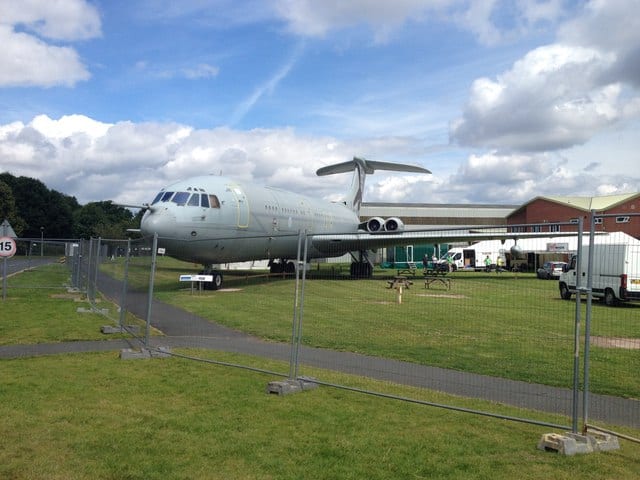
Contexto · RAF Cosford (Shropshire, Inglaterra)
RAF Cosford - Vickers VC10 - geograph.org.uk - 5047934.jpg · Wikimedia Commons · CC BY-SA 2.0 · abrir original
La noche en cuestión
Entre la noche del 30 y la madrugada del 31 de marzo de 1993, el Reino Unido vivió una oleada de avistamientos que se extendió por buena parte del país (desde Devon y Cornualles, en el suroeste, hasta las Midlands), con decenas de testigos (unos 70 en Gran Bretaña según David Clarke), entre ellos agentes de policía y personal militar; semanas después llegaron relatos parecidos de Irlanda, el norte de Francia y España. El núcleo de los avistamientos, fechado entre la 1:10 y la 1:15, coincidía notablemente: dos luces blancas brillantes que corrían hacia el horizonte sureste dejando estelas luminosas; algunos vieron una tercera luz que daba la impresión de un triángulo, y unos pocos relatos de otras horas y lugares no encajaban en el patrón. En la base de la RAF en Cosford (Shropshire), una patrulla de la Policía de la RAF vio pasar a la 1:15 dos luces blancas brillantes, sin haz y con un leve resplandor rojo por detrás, y llamó a la cercana RAF Shawbury, donde le dijeron que no había aviones volando; a las 2:50 fue el observador meteorológico de Shawbury quien llamó a la patrulla para contar lo que había visto, y el incidente escaló dentro del Ministerio de Defensa británico (MoD), que aún mantenía abierto un canal oficial para recibir y evaluar reportes de fenómenos aéreos. Las cintas de radar se revisaron y no mostraron ningún intruso.
“. Su jefe de sección planteó al ACAS que los avistamientos coincidían con algunas características del supuesto avión espía ”
El episodio que dio peso al caso ocurrió más tarde en la cercana RAF Shawbury: según el registro de la Met Office, a las 01:40 GMT, es decir, a las 2:40 hora local. Un oficial observador de la Met Office (Wayne Elliott), un testigo familiarizado con el tráfico aéreo militar, relató haber visto un objeto grande proyectando un haz de luz estrecho hacia el suelo a unos 400–500 pies de altura, y estimó su tamaño en algo entre un avión de transporte C-130 Hercules y un Boeing 747 cuando pasó sobre su cabeza a unos 4.000 pies. Describió que el objeto se desplazaba lentamente mientras el haz barría el campo más allá de la valla perimetral 'como si buscara algo', y que luego aceleró y se alejó a gran velocidad con un zumbido. En su relato de 1996 para la revista de la Met Office añadió que había trabajado en aeródromos de reactores y helicópteros militares y que el objeto se movía demasiado deprisa para ser un helicóptero, «which seemed to be the obvious answer». Fue, por la credibilidad de su testigo, el avistamiento más impactante de toda la oleada, y el resumen que el MoD presentó el 22 de abril de 1993 al subjefe del Estado Mayor del Aire (ACAS) lo destacaba.
El caso cayó en el escritorio de Nick Pope, entonces a cargo de la sección de OVNIs del MoD (Sec(AS)2A). En una 'loose minute' interna escribió que 'parece que un objeto no identificado de origen desconocido estaba operando en la Región de Defensa Aérea del Reino Unido sin ser detectado por radar; esto parecería de considerable importancia para la defensa, y recomiendo que investiguemos más, dentro del MoD o con las autoridades de EE.UU.'. Su jefe de sección planteó al ACAS que los avistamientos coincidían con algunas características del supuesto avión espía 'Aurora'; el agregado aéreo británico en Washington no obtuvo nada en el Pentágono, y a Pope se le indicó: «I suggest you now drop this subject». Esa frase (y el rango oficial de quien la firmaba) convirtió a Cosford en el caso emblemático del paso de Pope por el aparato británico.
Del lado escéptico, la organización civil BUFORA, con su astrónomo consultor Gary Anthony, identificó enseguida la causa probable, y David Clarke la documentó después con los expedientes del MoD (DEFE 24/2086 y DEFE 23/254): la segunda etapa del cohete Tsiklon que había puesto en órbita el satélite Cosmos 2238 la tarde del 30 de marzo reentró en la atmósfera partiéndose en dos o más trozos, y la simulación con datos del US Space Command y la NASA la sitúa sobre Irlanda a la 1:07 y cruzando Devon y Cornualles entre la 1:10 y la 1:15. La estación de seguimiento de RAF Fylingdales dijo primero a Pope que la reentrada fue poco después de medianoche y luego que fue a las 2:20 «con un margen de error de una hora»; según Clarke, el catálogo de restos espaciales del US Space Command y la NASA da la 1:15 hora local, y el catálogo GCAT de Jonathan McDowell la fecha, con signo de duda, a las 23:45 UTC del 30 de marzo (00:45 hora local). El 7 de mayo de 1993 Pope objetó a la inteligencia de defensa que la reentrada podía explicar los avistamientos a gran altura, pero no los de baja altura, el zumbido ni el informe de Elliott; en marzo de 1994, tras recibir del investigador Vicente-Juan Ballester Olmos la confirmación de la NASA y el NORAD de que la trayectoria de la oleada por tres países encajaba con la órbita del cohete, escribió que «most of the UFO sightings that occurred on the night in question can be attributed to this event». Sobre Shawbury, que la reentrada no cubre, un aviador de la base dijo en 2005 al Daily Mail que el objeto fue un helicóptero de la policía de Dyfed-Powys que seguía a un coche robado por la A5 iluminándolo con su foco. Elliott contó a Clarke ese mismo año que, tras el aviso de Cosford, estaba predispuesto a ver un ovni, y que ahora estaba convencido de que lo que vio tenía explicación: «the noise like a humming and the beam of light are very similar to what you would expect of a police helicopter». Los registros de vuelo de los helicópteros policiales de la época ya se habían destruido, así que no se puede confirmar con certeza. Clarke recoge otra posibilidad del propio expediente: según el astrónomo de BUFORA Gary Anthony, el punto 9 del memorando del MoD del 19 de abril de 1993 sobre la revisión de las cintas de radar muestra un avión con transpondedor a más de 20.000 pies directamente sobre Shawbury durante el avistamiento de Elliott, aunque Pope descartó en 2006 que fuera la explicación; el residuo del caso es ese avistamiento, sin respaldo instrumental que lo eleve por encima del testimonio de un observador.
Por qué importa
Cosford importa como el caso emblemático de la etapa de Nick Pope dentro del aparato oficial británico, y como un caso de manual sobre cómo una oleada se descompone bajo escrutinio. El grueso de los avistamientos de la noche tiene una explicación prosaica sólida (la reentrada de los restos de un cohete ruso, fechada por catálogos de desechos espaciales del US Space Command y la NASA) que encaja con la geografía, la dirección común de las luces y los horarios. Lo que queda es un único avistamiento cercano (Shawbury), hora y media posterior, cuyo testigo aceptó en 2005 que el zumbido y el haz encajaban con un helicóptero de la policía, sin que exista registro de radar, fotografía o sensor que lo respalde.
El valor analítico del caso es doble y opera en direcciones opuestas. Primero, muestra que un memo interno del MoD que habla de 'considerable importancia para la defensa' no equivale a evidencia de tecnología no humana: es la lectura de un funcionario sobre un único testimonio, no un dato instrumental. La frase de Pope ha circulado durante décadas como prueba de que 'el gobierno británico tomó en serio un OVNI', cuando lo que prueba es que un canal burocrático registró y elevó un reporte (exactamente lo que un canal así debe hacer). Segundo, ilustra la asimetría entre el momento del avistamiento, cuando un caso parece sólido, y la reconstrucción posterior, cuando la física conocida y la propia matización del testigo lo erosionan. Cosford ilustra, en suma, un patrón: anomalía aparente, explicación mundana mayoritaria, y un residuo pequeño que no alcanza el estándar de evidencia. Sirve de contrapeso frente a los casos con respaldo multisensor.
Lo que queda en papel
Evidencia documentada
- Oleada del 30–31 marzo 1993 con decenas de testigos (unos 70 en Gran Bretaña), incluidos policías y personal militar; núcleo de avistamientos entre la 1:10 y la 1:15
- Avistamiento cercano en RAF Shawbury: objeto grande con haz de luz barriendo el campo (observador meteorológico Wayne Elliott, 01:40 GMT = 2:40 hora local)
- 'Loose minute' de Nick Pope (MoD): objeto no detectado por radar, de 'considerable importancia para la defensa'
- Explicación prosaica mayoritaria: reentrada de la segunda etapa del Tsiklon del Cosmos 2238, lanzado el 30 mar 1993 (BUFORA; Clarke); en 1994 Pope admitió que explicaba la mayoría de los avistamientos
- Shawbury atribuido en 2005 a un helicóptero de la policía de Dyfed-Powys con foco; Elliott lo aceptó como explicación, aunque los registros de vuelo ya no existían
Fuentes
- Nick Pope — 'Open Skies, Closed Minds' (1996) — Relato del responsable del MoD UFO desk sobre el caso.
- Clarke, D. — 'Case Closed: 30th anniversary of the Cosford UFO flap' — Reconstrucción escéptica con extractos de DEFE 24/2086, DEFE 23/254 y DEFE 24/1967 y del registro meteorológico de Shawbury: reentrada del cohete, testimonio de Elliott en 2005.
- The National Archives (UK) — DEFE 24/2086, «UFO reports of sightings, 30-31 March 1993» — Ficha de catálogo del expediente del MoD sobre la noche de Cosford.
- Jonathan McDowell — General Catalog of Artificial Space Objects (GCAT), satcat: 22586 (1993-018B, Tsiklon-2 etapa 2) — Lanzamiento el 30 mar 1993 a las 12:04 UTC; reentrada «1993 Mar 30 2345?» UTC.
Casos relacionados
Actores asociados (1)
.png?width=400)