1997·Howden Moors, Peak District, frontera South Yorkshire/Derbyshire
Reino Unido.Howden Moor · operativo de rescate por un objeto fantasma
La noche del 24 de marzo de 1997, tras reportes de un objeto que se estrelló o explotó sobre los Howden Moors (Peak District), los servicios de emergencia montaron uno de los mayores operativos de búsqueda de la región (~200 personas, £50.000+).
Seguir leyendo el resumen
El British Geological Survey registró dos 'eventos sónicos' esa noche, a las 21:52 y a las 22:06, y muchos testigos vieron cazas militares a baja altura, aunque el Ministerio de Defensa solo reconoció vuelos de entrenamiento reservados hasta las 21:07. Ningún avión apareció y los radares consultados no mostraron nada significativo. Caso multi-agencia sobre un objeto que el aparato oficial buscó pero nunca confirmó.
Tier A · Aceptable¿Qué significan? →
Evidencia institucional: varios testigos independientes identificados, o documentación oficial de la época, sin un registro instrumental que los corrobore.
Qué fue
74%causa natural o humana
Explicación más probable: avión
Ver el reparto entre las seis explicaciones
Causa natural o humana
Sin causa conocida
Leer el porqué completo
Un sismólogo del British Geological Survey dijo que la señal «la causó con toda seguridad una aeronave, probablemente militar, a velocidad supersónica». Jacqueline Mitton propuso un bólido, que según Clarke Fylingdales descartó al parecer; la RAF negó al principio todo vuelo, y Clarke cree que parte del ejercicio fue encubierto.Documentos primarios
Hansard: respuestas escritas a Helen Jackson sobre la noche del 24 de marzo de 1997 (30 de marzo y 7 de abril de 1998)
Respuestas escritas de la Cámara de los Comunes a la diputada Helen Jackson. El 30 de marzo de 1998 el ministro John Spellar dice que varios aviones militares tenían reservado vuelo a baja cota en el norte de Inglaterra esa noche, que Defensa recibió 13 quejas y ningún aviso de «ovnis», que la zona de peligro del 25 de marzo sobre el embalse de Howden era para un helicóptero de rescate de la RAF que buscaba a petición de la policía, y que no consta ningún estampido sónico de aviones de la RAF o la OTAN. Interior añade que la policía no halló rastro del avión que se creyó estrellado. El 7 de abril fija la reserva sobre el Peak District de 20:30 a 21:07. El PDF reproduce el texto de la edición digital de Hansard (api.parliament.uk), no es un escaneo del volumen impreso.
Hansard, Cámara de los Comunes: HC Deb 30 mar 1998 vol 309 cc393W y 414-415W; 7 abr 1998 vol 310 c222W (texto de api.parliament.uk/historic-hansard, maquetado en PDF) · Open Parliament Licence v3.0 · abrir original
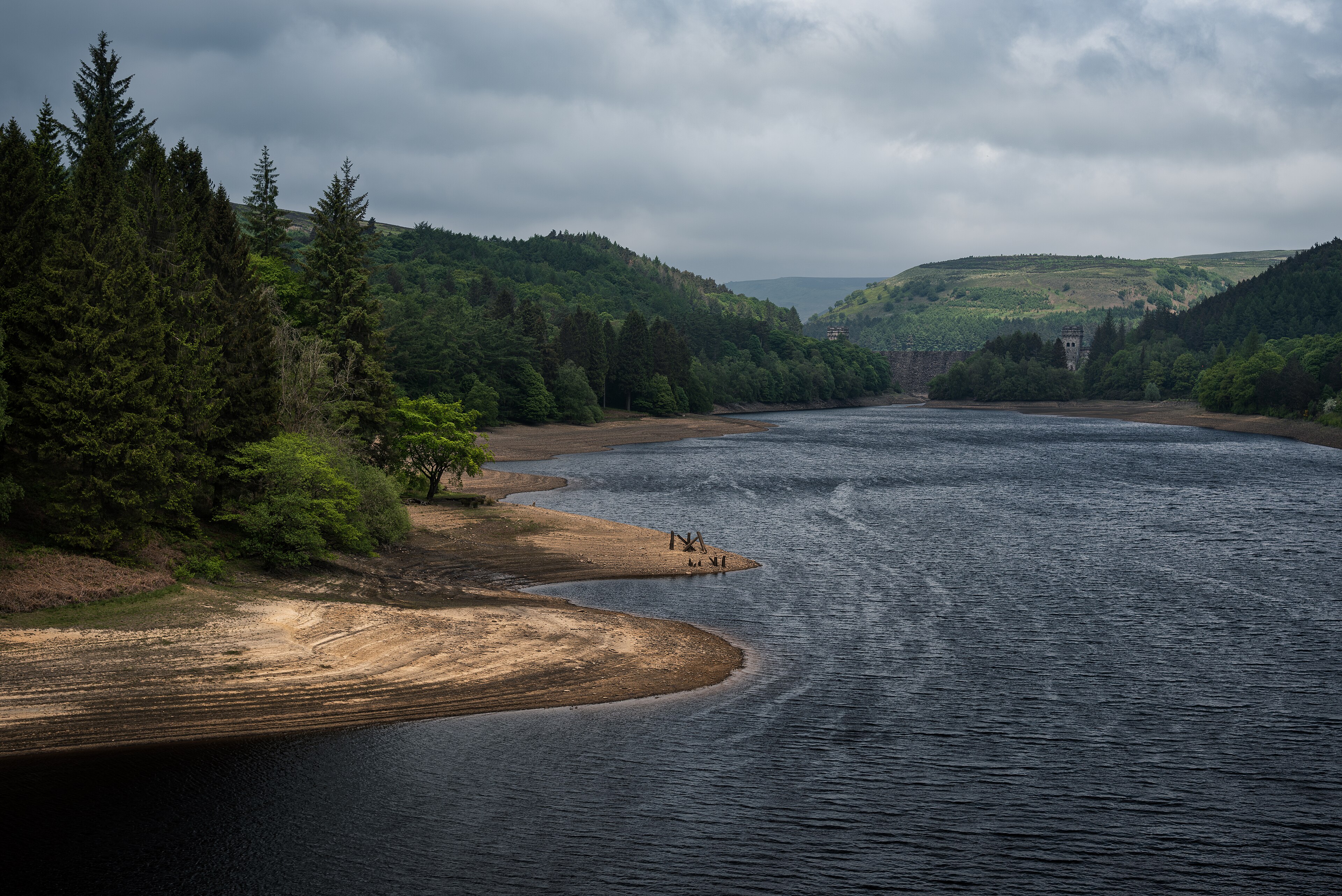
Contexto · Howden (Peak District, Inglaterra)
Howden Dam Upper Derwent Reservoir 2023 01.jpg · Wikimedia Commons · CC BY 4.0 · abrir original
La noche en cuestión
La noche del lunes 24 de marzo de 1997, clara, fría y con muchos vecinos en los páramos para ver el cometa Hale-Bopp, varios testigos vieron entre las 20:30 y las 21:50 formaciones de cazas militares a baja altura y, poco después de las 22:00, un único avión que volaba bajo hacia el oeste sobre los páramos del noroeste de Sheffield. A las 22:15 dos granjeros de Bolsterstone llamaron a la policía: habían visto un avión con luces de navegación volando bajo y despacio desaparecer tras la loma de Featherbed Moss, seguido de un resplandor naranja, varias columnas de humo y olor a quemado; unos guardas de Strines oyeron una explosión que tapó el sonido del televisor, y una agente auxiliar de policía que conducía con su marido, piloto, vio un avión ligero muy bajo que parecía a punto de chocar con el páramo. Todo ocurrió en los Howden Moors, en la frontera entre South Yorkshire y el Peak District de Derbyshire. La secuencia era compatible con un avión estrellándose. La policía de South Yorkshire respondió movilizando, junto a los servicios de bomberos y ambulancias y con apoyo de cuatro condados, uno de los mayores operativos aéreos y terrestres de rescate de la historia reciente de la región: del orden de 200 efectivos y un costo superior a las £50.000, sobre la hipótesis de trabajo de un desastre aéreo. La búsqueda, con un helicóptero de la policía, un Sea King de la RAF y 141 voluntarios de los siete equipos de rescate de montaña del Peak District, duró unas 15 horas, hasta las 14:00 del día siguiente.
La búsqueda no encontró nada: ningún avión derribado, ningún resto, ningún herido. Las llamadas a los aeropuertos civiles y militares dieron negativo (nadie reportaba aeronaves perdidas sobre los páramos); según el registro policial, el centro de rescate de la RAF en Kinloss revisó las cintas de radar y no halló nada significativo («nothing significant is indicated»), y el radar de Manchester no mostraba nada en la zona («nothing in the area at the time»). Sin embargo, sí quedó evidencia instrumental: el micrófono de baja frecuencia de la Universidad de Leeds, de la red del British Geological Survey, grabó dos 'eventos sónicos' separados por 14 minutos, a las 21:52 y a las 22:06, y el segundo, que coincide con la explosión oída en Strines, llegó también a dos sismógrafos; según el BGS, la señal era de origen atmosférico, procedía de la dirección de Sheffield y no era compatible con un impacto en el suelo. Muchos testigos de Dronfield y Sheffield vieron cazas militares a baja altura entre las 21:30 y las 21:50.
David Clarke, que cubrió el suceso para el Sheffield Star y luego reconstruyó la noche con el registro policial, los datos del BGS y entrevistas a los testigos, examinó dos explicaciones. La astrónoma Jacqueline Mitton propuso un bólido, que explicaría las luces y el estampido; pero, según Clarke, la estación de seguimiento de la RAF en Fylingdales descartó al parecer meteoritos y restos espaciales. El sismólogo del BGS Glenn Ford dijo que la señal la causó «on the balance of probabilities» una aeronave, probablemente militar, a velocidad supersónica, y que creía que se trataba de una operación encubierta. La RAF negó esa noche cualquier vuelo militar; un año después, en respuestas parlamentarias a la diputada Helen Jackson, el Ministerio de Defensa admitió que varios aviones militares tenían reservado entrenamiento a baja altura sobre el Peak District entre las 20:30 y las 21:07, recibió 13 quejas por actividad aérea ese día y dijo no tener registro de estampidos sónicos de aviones de la RAF o la OTAN. Unos operarios de Yorkshire Water contaron a Clarke que la policía les mandó retirarse porque la RAF había admitido que un reactor en ejercicio nocturno rompió la barrera del sonido, algo que la policía y el coordinador de rescate dicen que la RAF les negó. La última entrada del registro policial habla de «a combination of circumstances that would lead people to believe a plane might have crashed», y la policía de South Yorkshire clasificó el incidente como «unexplained».
El encuadre es deliberadamente cauto. Lo documentado con solidez es la respuesta institucional masiva y el registro acústico y sísmico independiente del BGS, no la naturaleza del objeto. No hubo objeto confirmado por radar ni resto recuperado, y la explicación más económica combina fenómenos mundanos: un ejercicio de vuelo a baja altura, un estampido supersónico y la percepción de un público que miraba el cielo por el cometa. Es un caso del límite: un evento real lo bastante creíble como para movilizar al Estado a gran escala, pero cuyo núcleo (qué cruzó exactamente el cielo de los Howden Moors esa noche) nunca se cerró.
Por qué importa
Documenta algo poco común: el Estado movilizando un operativo de rescate de gran escala por un objeto que nunca apareció ni en el terreno ni en el radar, con registro sísmico independiente del British Geological Survey. Es un caso fuerte en respuesta institucional y débil en identificación del objeto. Su valor analítico es precisamente esa asimetría: muestra que un despliegue estatal masivo no equivale a una anomalía confirmada. La movilización prueba que muchos testigos, incluidos policías, percibieron algo real y alarmante; no prueba que ese algo fuera exótico. Distinguir la solidez de la respuesta institucional de la solidez de la identificación del fenómeno es el ejercicio central, y Howden Moor lo encarna casi en estado puro.
Fue investigado por David Clarke, periodista y académico que curó los archivos OVNI del Ministerio de Defensa británico; su trabajo aportó precisamente la lectura mundana: cazas militares a baja altura en un ejercicio nocturno, con el bólido como hipótesis ajena que él no adopta. Que la fuente principal sea un escéptico riguroso, y no un promotor, refuerza la fiabilidad del registro factual sin inflar la interpretación.
Lo que queda en papel
Evidencia documentada
- Uno de los mayores operativos de rescate de la región (~200 efectivos, £50.000+), policía de South Yorkshire + servicios de emergencia.
- El British Geological Survey registró dos 'eventos sónicos' de origen atmosférico, a las 21:52 y a las 22:06 del 24 de marzo de 1997, desde la dirección de Sheffield.
- Muchos testigos vieron cazas a baja altura; el MoD admitió en 1998 entrenamiento a baja altura reservado sobre el Peak District hasta las 21:07, pero no estampidos de la RAF.
- Ningún avión hallado; según el registro policial, los radares de Kinloss y Manchester no mostraron nada significativo.
Fuentes
- Dr David Clarke — Secret Files: The Howden Moor Incident — Reconstrucción del periodista que cubrió el suceso en 1997; cita el registro de incidente de la policía de South Yorkshire, el comunicado del BGS del 27 mar 1997 y las respuestas parlamentarias de 1998.
- Wikipedia — UFO sightings in the United Kingdom (Howden Moor, 1997) — Fuente secundaria.
- The National Archives (UK) — DEFE 24/1988, «UFO reports» (ene-jul 1997) — Ficha de catálogo del expediente del MoD del periodo.
Casos relacionados
Actores asociados (1)