Caso Nº 154·Canadá
En desarrollo2025·Oficina del Asesor Científico Jefe de Canadá (OCSA), Ottawa
Canadá.Sky Canada Project · revisión científica federal del reporte UAP
El Sky Canada Project es la revisión que la Oficina del Asesor Científico Jefe de Canadá (OCSA), bajo Mona Nemer, dedicó al estado del reporte público de fenómenos aéreos no identificados. Iniciado en 2022, su informe — 'Management of Public Reporting of Unidentified Aerial Phenomena in Canada' — tuvo preview en enero de 2025 y publicación completa a mediados de 2025. Constata que Canadá recibe entre 600 y 1.000 reportes UAP al año pero que desde 1995 ningún organismo federal tiene el mandato de recolectarlos: quedan dispersos entre la RCMP, Transport Canada y la Agencia Espacial Canadiense. Recomienda crear un líder nacional único que estandarice, recolecte y publique los datos. Es el primer reconocimiento científico-federal canadiense de que el sistema de reporte está roto; no investiga avistamientos ni se pronuncia sobre su naturaleza.
Año
2025
Tier
A
Probabilidad
62%
Categoría
Documento
Evidencia institucional: múltiples testigos verificables o documentación oficial. Tres ejes independientes: el «tier» mide la fuerza de la evidencia; la «probabilidad» estima cuán genuinamente inexplicado está el caso —un fenómeno natural puede seguir sin explicación, así que no equivale a «no-prosaico»—; y la partición de explicaciones (abajo) dice qué fue más plausiblemente. Por eso un caso bien documentado puede tener como causa más plausible un posible fraude, y un Tier B no es, por eso, un fraude.
Documentos primarios · visor
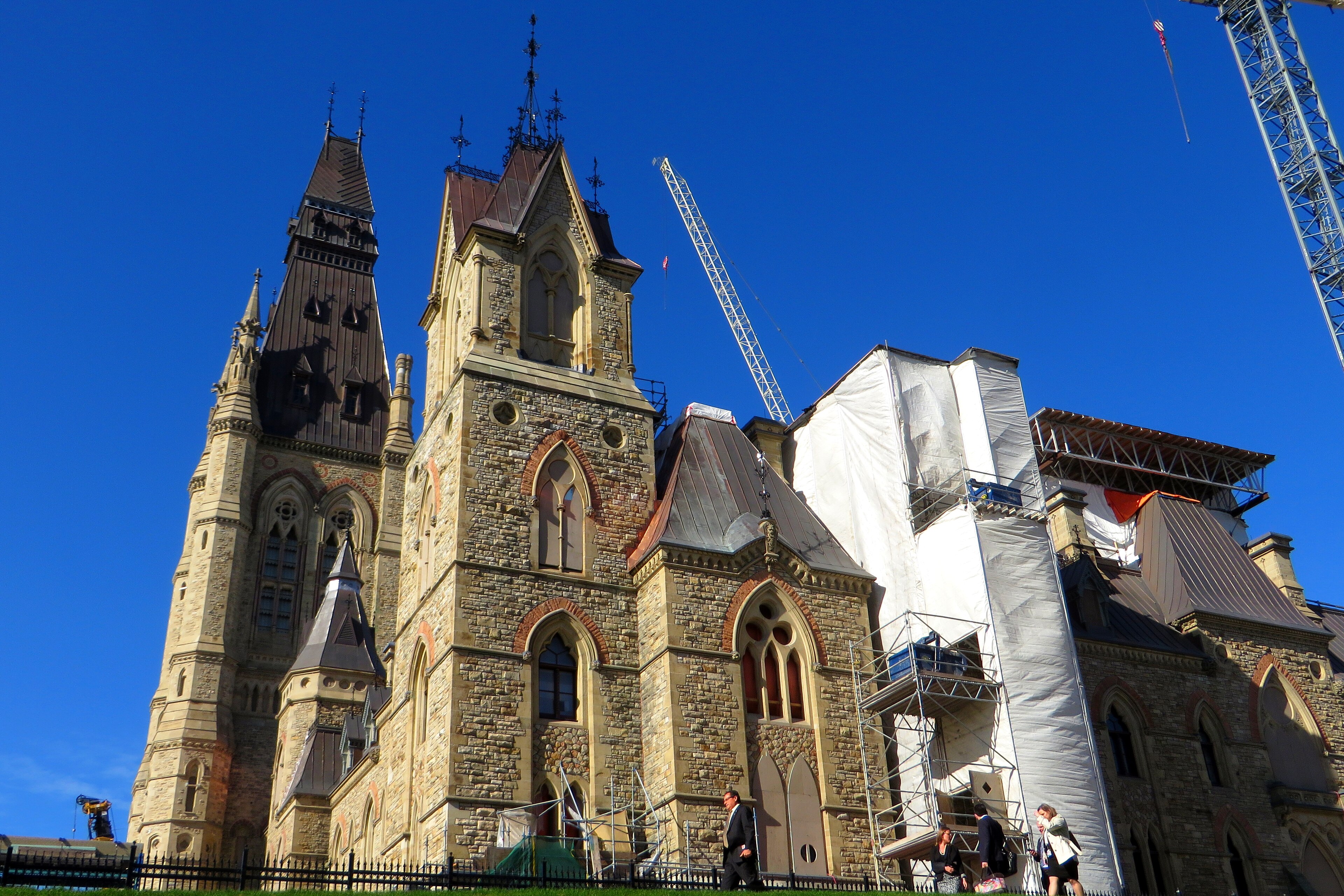
Contexto · el West Block del Parlamento en Ottawa (Canadá)
West Block, Parliament Hill, Ottawa, Ontario (29442366923).jpg · Wikimedia Commons · CC BY-SA 2.0 · abrir original
Parte 01
El expediente en cuestión
En 2022, la Oficina del Asesor Científico Jefe de Canadá (Office of the Chief Science Advisor, OCSA), encabezada por Mona Nemer —bioquímica y científica cardiovascular nombrada asesora científica jefa del gobierno federal en 2017—, lanzó el Sky Canada Project: una revisión sistemática de cómo el gobierno canadiense gestiona el reporte público de fenómenos aéreos no identificados (UAP). No se concibió como una investigación de avistamientos ni como un esfuerzo por probar o refutar vida extraterrestre — su objeto era el mecanismo de reporte en sí, no los datos de primera mano. El proyecto no recolectó ni analizó fotos, videos o testimonios individuales; en su lugar examinó cómo, dónde y por quién se reciben actualmente los reportes en Canadá, qué se hace con ellos y qué buenas prácticas existen en otras jurisdicciones.
“Management of Public Reporting of Unidentified Aerial Phenomena in Canada”
El informe resultante, 'Management of Public Reporting of Unidentified Aerial Phenomena in Canada', tuvo una versión preview en enero de 2025 y publicación completa a mediados de 2025. Su diagnóstico es directo: los canadienses reportan entre 600 y 1.000 avistamientos UAP por año, y una encuesta nacional comisionada para el proyecto halló que aproximadamente uno de cada cuatro encuestados (en torno al 27%) afirma haber observado algo que no pudo identificar en el cielo a lo largo de su vida — pero desde 1995, cuando se cerró el último canal centralizado, ningún organismo federal tiene el mandato de recolectar o investigar esos reportes de forma sistemática. El resultado es un sistema fragmentado: los reportes se dispersan entre la Real Policía Montada del Canadá (RCMP), Transport Canada (vía la base CADORS de incidentes de aviación civil), la Agencia Espacial Canadiense y operadores privados como observatorios y plataformas de ciencia ciudadana, sin que ninguno los compile ni los analice con metodología común. La consecuencia, según el informe, es doble: se pierde información potencialmente útil para la seguridad aérea, y el vacío de un canal creíble deja el campo abierto a la desinformación.
Las recomendaciones apuntan a cerrar ese vacío institucional. La principal es designar un líder nacional único —una organización científica de confianza, y el informe sugiere explícitamente a la Agencia Espacial Canadiense— que estandarice y centralice la recolección de testimonios, investigue casos y publique sus análisis. A ello se suman habilitar un servicio dedicado de reporte (con línea y aplicación), abrir los datos y proveer herramientas de ciencia ciudadana, y publicar hallazgos y conclusiones de forma transparente. El informe también recomienda específicamente que Transport Canada anime a pilotos, tripulaciones de cabina y controladores aéreos a reportar avistamientos sin temor al estigma profesional. El marco general subraya el rigor científico y el combate a la desinformación como justificación: sin un canal creíble y documentado, el vacío lo llenan el estigma, la especulación y las narrativas no verificadas. El informe es claro en lo que no hace —no investiga avistamientos concretos ni emite juicio sobre su naturaleza—; su producto es un diagnóstico de gobernanza y un conjunto de recomendaciones que el gobierno puede adoptar o no.
Parte 02
Por qué este caso movió la aguja
Es el análogo canadiense del ciclo institucional que el corpus ya rastrea en EE.UU. (AARO, PURSUE, UAP Disclosure Act): un Estado occidental reconoce a nivel científico-federal que el reporte UAP merece infraestructura formal. Su peso es procedural, no probatorio — el informe explícitamente no investiga casos ni se pronuncia sobre su naturaleza — pero reestructura el problema en Canadá: documenta que durante tres décadas no hubo dueño institucional del dato, y nombra el costo de ese vacío (estigma, desinformación, 600-1.000 reportes anuales perdidos sin análisis). A diferencia de PURSUE (Tier S: directiva ejecutiva con portal operativo y mandato), Sky Canada es advisory: recomienda, no ordena, y su implementación quedó pendiente de decisión del gobierno. De ahí el Tier A. Encaja con Project Magnet/Second Storey (1950) como los dos polos del involucramiento estatal canadiense: un programa operativo a mitad del siglo XX y una auditoría científica del reporte 75 años después. El contraste interno canadiense completa el cuadro: Paul Hellyer, ministro de Defensa Nacional (1963-1967), fue desde 2005 el funcionario de mayor rango del mundo en afirmar públicamente la presencia extraterrestre, sin exhibir jamás un documento; Sky Canada es el mismo Estado abordando el tema por la vía opuesta — gobernanza del dato y canal de reporte creíble, sin cosmología.
Parte 03
Lo que queda en papel
Evidencia documentada
- Informe oficial 'Management of Public Reporting of Unidentified Aerial Phenomena in Canada' de la Oficina del Asesor Científico Jefe de Canadá (OCSA)
- Sky Canada Project iniciado en 2022; versión preview publicada en enero de 2025 e informe completo a mediados de 2025
- Diagnóstico documentado: 600-1.000 reportes UAP por año en Canadá; encuesta nacional de 2024 con 27% de observación de algo no identificable
- Constatación de que desde 1995 ningún organismo federal tiene mandato para recolectar o investigar reportes públicos UAP
- Recomendación de un líder nacional único (se sugiere la Agencia Espacial Canadiense) más portal público, datos abiertos y ciencia ciudadana
- Reportes actualmente dispersos entre RCMP, Transport Canada (base CADORS) y la Agencia Espacial Canadiense, sin compilación sistemática
Fuentes
- Office of the Chief Science Advisor of Canada — Sky Canada Project (portal oficial) — Página primaria del proyecto.
- Management of Public Reporting of Unidentified Aerial Phenomena in Canada — informe (gov.ca) — Informe completo y recomendaciones.
- CBC News — 'Canada needs agency to manage public UFO sightings, says new federal report' — Cobertura periodística del lanzamiento y las recomendaciones.
- The Debrief — 'Canada's UAP Challenges: Will the Government Act on the Sky Canada Project Report?' — Análisis del estado de implementación pendiente.
- EarthSky — 'UFOs in Canada? Official new report' — Síntesis divulgativa del informe.
Patrones que exhibe (1)
Ubicación
Oficina del Asesor Científico Jefe de Canadá (OCSA), Ottawa · 45.42°, -75.70°
Casos relacionados