1968·Hoia-Baciu forest, near Cluj
Romania.Cluj · the Emil Barnea photographs
On August 18, 1968, around midday, technician and former Romanian army officer Emil Barnea photographed over the Baciu forest (today Hoia-Baciu), near Cluj, a round object of metallic appearance first spotted by his companion Zamfira Matea. The accounts differ: in 1968 Barnea spoke of three photos and of believing 'the whole time' that it was a balloon; Ion Hobana's later account speaks of four photos and four witnesses. A Cluj laboratory declared the negative genuine; the director of the observatory attributed it to a hoax or a weather balloon, and one was launched that Sunday 4 to 5 km away.
Tier A · AcceptableWhat do they mean? →
Institutional evidence: several identified independent witnesses, or contemporary official documentation, without an instrumental record to corroborate them.
What it was
57%natural or human cause
Most likely explanation: balloon
See the split across the six explanations
Natural or human cause
No known cause
Context image (not a document from the case)
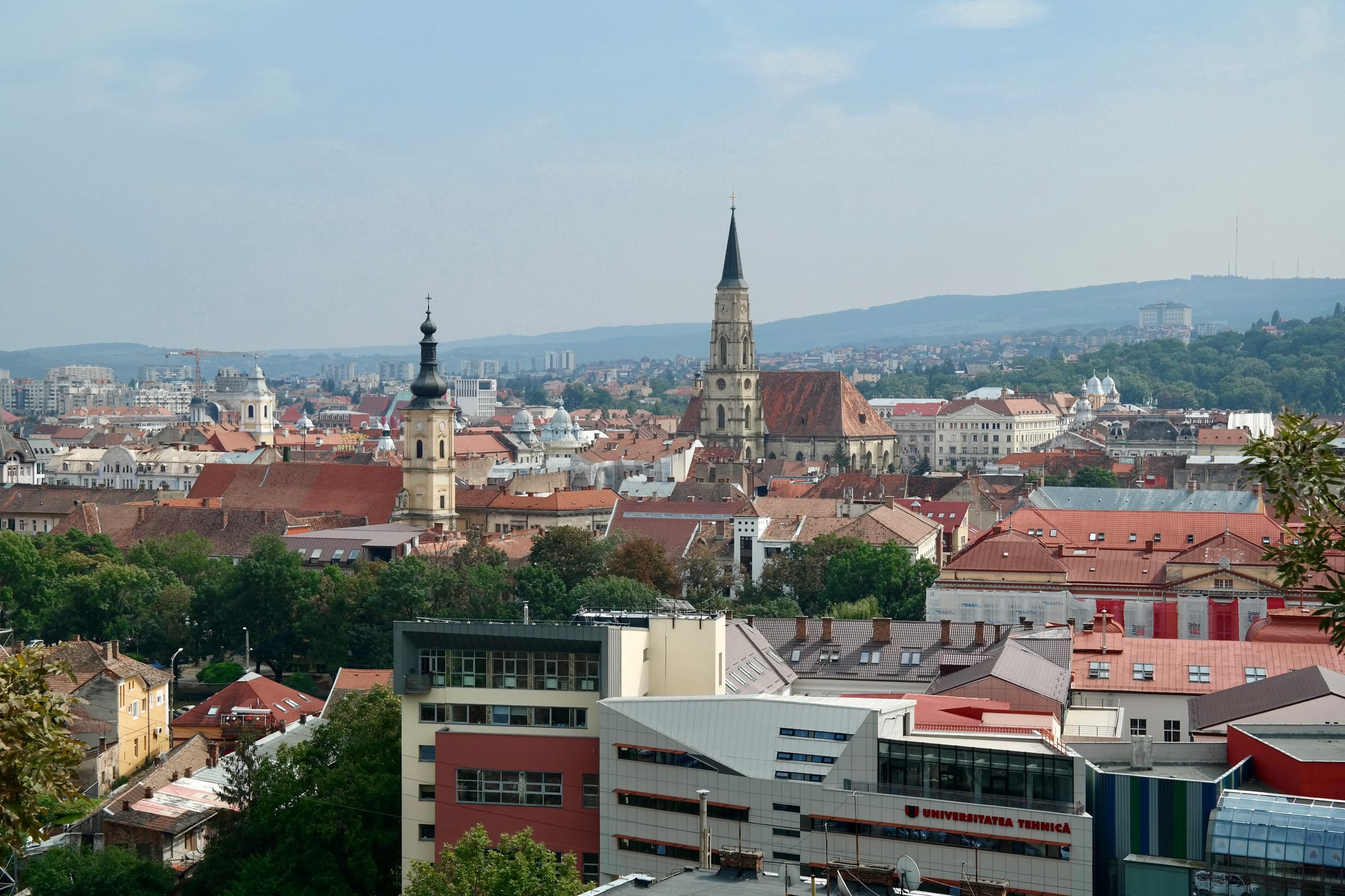
Context · Cluj (Romania), where Emil Barnea took the photographs
Cluj-Napoca as seen from Cetățuia Park.jpg · Wikimedia Commons · CC BY-SA 4.0 · open original
The night in question
August 18, 1968, was a hot, sunny Sunday, around 36 °C in the sun according to the later investigation. Emil Barnea, a 45-year-old construction technician who had been an army officer and whom acquaintances described as a person of integrity, left Cluj in the morning with his companion Zamfira Matea, 34, for the Baciu forest (today known as Hoia-Baciu), in the hills west of the city, in Romanian Transylvania. According to the account published by Ion Hobana and Julien Weverbergh on the basis of engineer Florin Gheorghiță's investigation, they were with two other people, a man and a woman whose identity was not disclosed, and around midday they stopped in a clearing far from the Cluj-Bucharest road. Barnea was gathering firewood when Matea called him because she saw 'something': when he came back, above the forest was a large, round object of metallic appearance, shining silver in the sun and making no sound.
Barnea ran to his rucksack for his camera, a FED 2 loaded with 17 DIN ORWO film. In the Gheorghiță and Hobana version, the object advanced slowly, changed direction and brightness, then abruptly accelerated, climbed and vanished; Barnea took four photos, the last with the object already reduced to a dot, and it was 13:23. Barnea's own statements to the press in September 1968 do not fully match that account: he said he was with Matea, that there was a group of hikers some distance away in the clearing to whom he did not speak, that he took 'three photographs', and that he was convinced 'the whole time' it was a balloon; only when he developed the film, some two weeks later, did he think it was something else. In that same interview, however, he said that the object, metallic in sheen and silent, 'did not resemble any of the bodies I have seen so many times, from balloons to turbojets', and that it 'vanished suddenly, vertically, in less than a minute', an ending that did not fit a balloon. The time given in those 1968 reports does not match either, ranging from 13:15 to 15:50. According to Gheorghiță, no books on UFOs circulated in Cluj at the time, and neither Barnea nor Matea had any prior framework to interpret what they saw.
Barnea showed the photos to Gheorghiță, who studied them, reconstructed the trajectory and estimated the object's height and diameter, and the official Agerpres agency released the story on September 18, 1968; its dispatch described a round object about 10 m across emitting white light. Two press photographers, an Agerpres specialist and an official Cluj laboratory declared the negative genuine and unretouched. The photos also showed shadows hard to reconcile with the sun's position; at Gheorghiță's request, two professors at the Cluj Institute of Fine Arts, specialists in natural lighting, separately concluded that the object seemed to have its own light. The English edition of Hobana's book attributes that examination, with models, to university technicians, but the Romanian original mentions neither the university nor models, and no written report is known; the Belgian G. Delcorps later reached the same conclusion from the first two photos. On the other side, the director of the Cluj observatory said, without having seen the negatives, that it was either a hoax or a weather balloon. A weather balloon was in fact launched that Sunday from Cetățuia hill, 4 to 5 km in a straight line from the spot; Gheorghiță argued that the weather-station staff tracked it by radar until it burst at high altitude and that it could not have passed so low over the forest. Hobana and Weverbergh, who met the witnesses in 1968 and 1970, stressed their credibility and lack of motive. Barely three days later, on August 20-21, 1968, Warsaw Pact troops invaded neighboring Czechoslovakia to crush the Prague Spring, with the whole region at maximum military activity.
Why it matters
Cluj 1968 brings together three elements: witnesses with no prior framework or apparent motive, in a country where UFO literature did not circulate; a material record of at least three negatives that the press, the official agency and a laboratory declared unretouched; and an examination of the lighting that concluded the object seemed to have its own light and not merely reflect the sun. The reach of that examination should be measured: it was the opinion of two fine-arts professors and a Belgian analyst, not a published instrumental study, and the same shadows that support the own-light thesis are the ones the source describes as hard to reconcile with the sun's position.
There is no radar and no military corroboration, and any photo of a disc admits mundane candidates, from a misinterpreted nearby object to a hoax. Moreover, the earliest testimony does not match the one that became canonical: in 1968 Barnea spoke of three photos, of an unrelated group of hikers and of a balloon, and the later account of four photos and four witnesses. That same Sunday a weather balloon was also aloft a few kilometers away, although Gheorghiță argued it could not have been the object. None of this proves a hoax or a misidentification. The date, three days before the Warsaw Pact invaded Czechoslovakia, places the observation at the heart of the greatest European military mobilization of the Cold War.
What's left on paper
Documented evidence
- Photographs by Emil Barnea on August 18, 1968, of a metallic discoidal object over the Baciu forest: three according to his 1968 interview, four according to Hobana, the last with the object reduced to a dot
- Witnesses: Barnea and Zamfira Matea according to the 1968 interview; four hikers according to the Gheorghiță and Hobana account, two of whom asked for anonymity
- Barnea's 1968 statement: 'Am fost tot timpul convins că este un balon' (he was convinced the whole time it was a balloon), an idea he dropped when he developed the film; in the same interview he said it 'Nu semăna cu niciunul dintre corpurile' he had seen, 'de la baloane la turboreactoare' (it resembled nothing he had seen, from balloons to turbojets), and that it vanished vertically in less than a minute
- Object that advanced, changed direction and brightness, then accelerated, climbed and vanished
- Negative declared genuine and unretouched by two press photographers, an Agerpres agency specialist and an official Cluj laboratory; Two professors at the Cluj Institute of Fine Arts, and later the Belgian G. Delcorps, judged that the object seemed to have its own light; no written report is known
Show 3 more items
- Counter-evidence: the director of the Cluj observatory attributed it to a hoax or a weather balloon; a balloon was launched that Sunday from Cetățuia hill, 4 to 5 km away, which according to Gheorghiță was tracked by radar until it burst
- Investigation by engineer Florin Gheorghiță in 1968, completed by Ion Hobana and Julien Weverbergh after interviewing the witnesses in 1968 and 1970
- Context: the photo was taken three days before the Warsaw Pact invasion of Czechoslovakia (August 20-21, 1968)
Sources
- Ion Hobana y Julien Weverbergh — UFO's from Behind the Iron Curtain (1974), cap. 6, «Emil Barnea from Cluj», pp. 93-107 — The investigators' account, based on Florin Gheorghiță's report and their interviews with the witnesses in 1968 and 1970: four witnesses, four photos, 13:23, examination of the negatives and the observatory director's opinion. Reproduces a 1968 press interview in facsimile.
- Ion Hobana y Julien Weverbergh — OZN, o sfidare pentru rațiunea umană (edición rumana original) — Attributes the lighting examination to two professors at the Cluj Institute of Fine Arts, not to the university, and quotes Gheorghiță's letter on the weather balloon launched from Cetățuia hill.
- Adevărul (2026) — «România comunistă, cuprinsă de febra OZN-urilor» (fuente secundaria) — Secondary source quoting the Agerpres dispatch of September 18, 1968 and Barnea's interview that year: three photos, an unrelated group of hikers, and his statement that he believed the whole time it was a balloon.
Related cases
same object · same period
Montánchez · the object no aircraft could reach
1967 · Tier S
same object · same period
Westall Australia
1966 · Tier B
same object · same period
Burgos 1970 · the motionless object photographed from the FOAT light aircraft
1970 · Tier A
same object · same period
Falconbridge · NORAD radar and the Northern Tier wave
1975 · Tier S