1975·CFS Falconbridge, Ontario (near Sudbury)
Canada.Falconbridge · NORAD radar and the Northern Tier wave
On November 11, 1975, the Canadian radar station at Falconbridge, Ontario, followed a bright spherical object that Major Robert Oliver and two other servicemen watched from the operations building; their telex to Ottawa places it 25-30 miles south, climbing from 42,000 to 72,000 feet in fourteen minutes. Two F-106s took off six hours later and found nothing. NORAD included it in a wave of reports over the 'Northern Tier' bases since October 28; the continuous climb in the telex fits a stratospheric balloon, but no launch confirms it and at that hour the sun could not have lit it.
Tier S · SolidWhat do they mean? →
Strong evidence: a contemporary instrumental record (radar, sensor, film or photo of known provenance) that corroborates several independent witnesses.
What it was
52%natural or human cause
Most likely explanation: balloon
See the split across the six explanations
Natural or human cause
No known cause
Primary documents
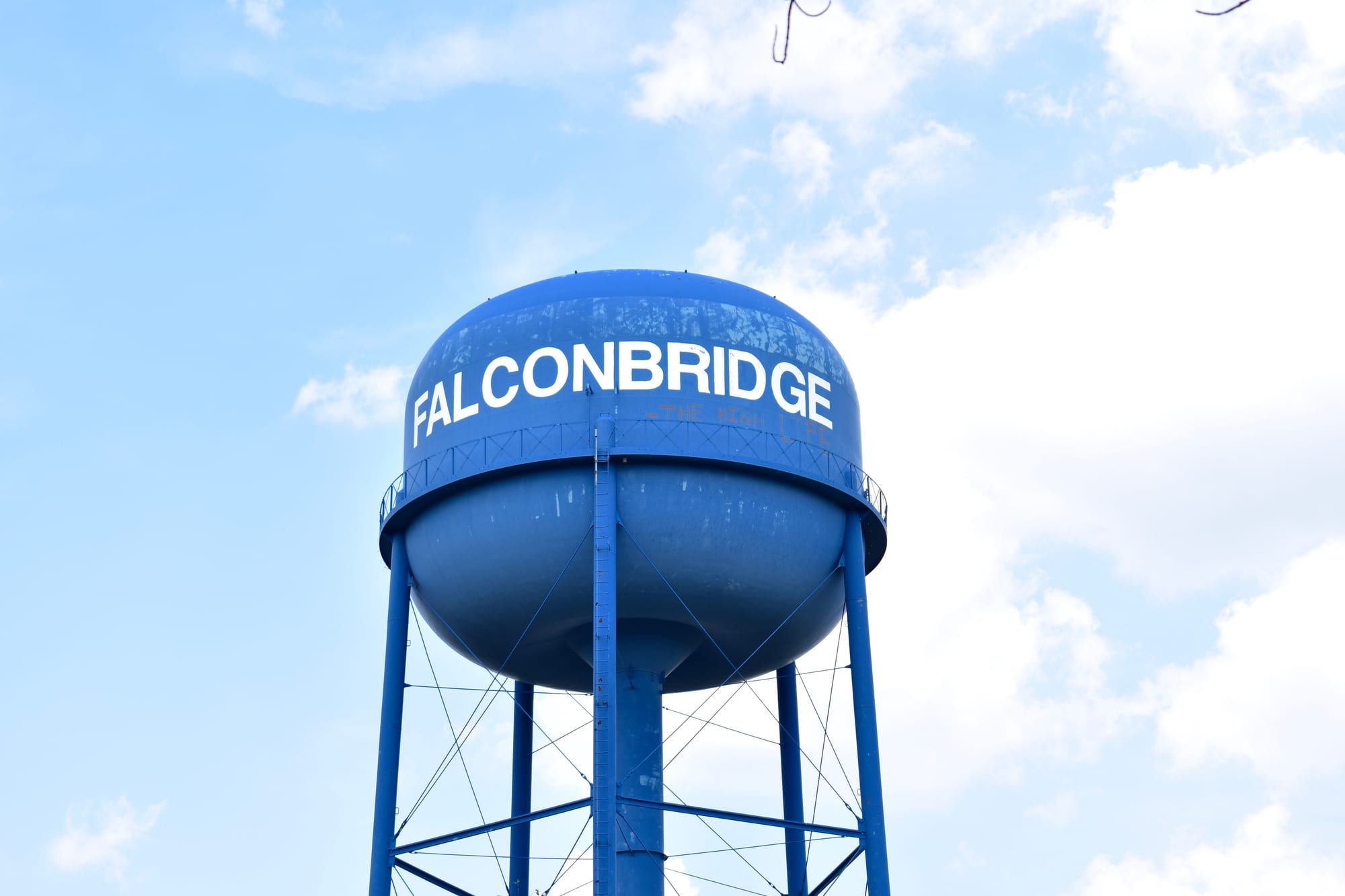
Context · Falconbridge (Sudbury, Ontario), site of the NORAD radar station
Sudbury fullsizeoutput 324a (30570597098).jpg · Wikimedia Commons · CC BY 2.0 · open original
CFS Falconbridge telex to NDHQ Ottawa and the National Research Council (11 Nov 1975)
Message from the Canadian radar station itself on 11 November 1975, held in the National Research Council records (RG 77). It describes a spherical object that 'appeared to be rotating', seen intermittently for about two hours with broken cloud, and gives the heights the radar recorded: about 42,000 feet at 11:15Z, 50,000 at 11:20Z and 72,000 at 11:29Z. It is Canadian Crown copyright with no open licence, so it is not hosted here and NICAP's copy is linked instead.
Archivos Públicos de Canadá (RG 77, vol. 308), vía NICAP · view source
The night in question
In the fall of 1975, the North American air defense system recorded a sustained series of unidentified intrusions over its most sensitive installations. Since October 28, according to a message from NORAD's Combat Operations Center, 'reliable military personnel' had sighted suspicious objects over the northern nuclear-line bases: Loring AFB (Maine), Wurtsmith AFB (Michigan), Malmstrom AFB (Montana), Minot AFB (North Dakota) and the Canadian station at Falconbridge, Ontario. It was a coordinated wave over nuclear-weapons depots and silos, and it prompted repeated intercept deployments that generally failed to establish contact.
The Falconbridge episode of November 11 combines radar and institutional witnesses, and its most direct document is the telex the station itself sent to Ottawa that same day, copied to the radio and electrical engineering division of the National Research Council (Public Archives of Canada, RG 77, vol. 308). The observation is signed by Major Robert Oliver together with Captain Carson and Corporal Lauritsen, from the operations building: a 'spherical shaped' object that 'appeared to be rotating,' with a 'surface area similar to the moon,' ascending and descending and seen intermittently for two hours through broken cloud. Search and height-finder radar placed it at 30 miles and 210° at 42,000 feet at 11:15 GMT, at 30 miles and 200° at 50,000 feet at 11:20, and at 25 miles and 190° at 72,000 feet at 11:29. According to the 22nd NORAD Region air traffic control log book, declassified for Palmiro Campagna in 1995, the calls had begun at 10:40 GMT with two lights being chased by the Sudbury police; Oliver took three snapshots with a Brownie camera whose fate is unknown, and several Ontario Provincial Police officers saw lights between 3 and 7 a.m. Two F-106s from Selfridge took off at 17:50 GMT, more than six hours after the radar track, and searched between 8,000 and 30,000 feet without contact. Even so, at 18:40 GMT the NORAD Senior Director's log, as reproduced in 'Clear Intent,' records that 'Falconbridge AFS still reporting object at 26,000 ft,' some seven hours after the telex's 72,000-foot point.
The figure that made the case famous is not the telex's. Captain Gordon Hilchie, spokesman for the 22nd Region, told the press the objects had climbed from 26,000 to 45,000 feet, stopped for a time and then shot up to 72,000, and NORAD's release of November 13 put the track at 4:05 A.M., 'ranging in altitude from 25,000 to 72,000 feet,' and said persons at the site had seen the object and that it 'appeared as a bright star but much closer.' The telex's three points show no stop at all: they give a continuous climb of about 1,600 feet per minute and then about 2,400, while the azimuth drifts from 210° to 190°, which is the profile of a stratospheric research balloon. The hypothesis faces three objections: no one has found the launch that would confirm it; between 11:15 and 11:29 GMT the sun was still 9° to 11° below the horizon, too low to light a balloon at 72,000 feet, so the glow the telex describes would not be reflected sunlight; and it does not explain the low lights the police saw during the night. The visual part also admits a reading separate from the radar's: by an ephemeris calculation made for this entry, not found in the period sources, at 11:15 GMT Sirius, at magnitude −1.4, stood about 18° up at an azimuth of about 217°, close to the radar's 210° bearing, so the 'bright star' the personnel saw could be Sirius independently of the track. The official explanations at the time were different: Colonel G. W. Patterson spoke of atmospheric effects and lenticular clouds that magnify stars or planets, and Ian Halliday of the National Research Council of atmospheric phenomena and misread planets. The file survived because Campagna recovered, via document access, the NORAD and Department of National Defence messages that fix the sequence with time, altitude and units involved.
Why it matters
Falconbridge combines radar-visual with multiple institutional witnesses and the pattern of intrusions over nuclear infrastructure. It is part of a wave that NORAD itself acknowledged in writing ('reliable military personnel') over four US bases and a Canadian radar station in barely two weeks. That an air-defense command leaves an internal record of repeated intrusions over its silos, orders intercepts, and fails to resolve the contacts is, in Cold War threat logic, an operational failure not admitted lightly; that record exists and has been recovered from the archives.
The radar profile is the analytical key, and it changes depending on who tells it. In the press version (climb, stop, jump to 72,000 feet) it was a maneuver no balloon performs; in the station's telex it is a steady climb with wind drift, which a balloon performs effortlessly. The distance between the two versions is the lesson of the case: the anomaly rests on the summary, not on the primary record. What the balloon does not close is the rest of the night (the low lights the police saw from 3 a.m. and the reports of the following days in the same region), nor the 18:40 GMT entry in the NORAD log, by which Falconbridge was still reporting the object at 26,000 feet seven hours after the 72,000-foot point, which is hard to reconcile with a steadily climbing balloon unless it referred to another return or to the visual sighting, nor the fact that NORAD treated it as part of a wave. That is why the adversary-technology reading is not ruled out at Falconbridge, though it loses part of the support attributed to it: in the same Combat Operations Center message, the objects at Loring and Wurtsmith were characterized as helicopters. The case is also the Canadian complement to Loring ↗, Malmstrom ↗ and Minot ↗, and shows the Northern Tier wave as a cross-border phenomenon, with a single integrated command observing it from within.
What's left on paper
Documented evidence
- CFS Falconbridge telex to Ottawa (111630Z Nov 1975): search and height-finder radar, 42,000 feet at 11:15 GMT, 50,000 at 11:20 and 72,000 at 11:29, with the azimuth drifting from 210° to 190°
- Observation by Major Robert Oliver, Captain Carson and Corporal Lauritsen: a spherical object that appeared to rotate, seen intermittently for two hours; Oliver took three Brownie snapshots, now lost
- Lights seen by several Ontario Provincial Police officers in Sudbury between 3 and 7 a.m.
- Two F-106s scrambled from Selfridge at 17:50 GMT, six hours after the track, searching between 8,000 and 30,000 feet without contact
- NORAD Combat Operations Center message on reports since October 28 by 'reliable military personnel' at Loring, Wurtsmith, Malmstrom, Minot and Falconbridge; NORAD and DND documents recovered by researcher Palmiro Campagna
Show 3 more items
- The press version (climb, stop and jump to 72,000 feet) does not match the telex's continuous climb, consistent with a stratospheric balloon whose launch has not been identified
- NORAD Senior Director's log (18:40 GMT, in 'Clear Intent'): 'Falconbridge AFS still reporting object at 26,000 ft'; NORAD's November 13 release puts the track at 4:05 A.M. and says the object 'appeared as a bright star but much closer'
- Ephemeris calculation made for this entry (not from the period sources): at 11:15 GMT Sirius (magnitude −1.4) stood about 18° up at an azimuth of about 217°, close to the radar bearing
Sources
- Télex de CFS Falconbridge a NDHQ Ottawa y al Consejo Nacional de Investigación, 11 de noviembre de 1975 (Archivos Públicos de Canadá, RG 77, vol. 308), copia en NICAP — Witnesses, description and the three radar points with time, bearing, range and altitude
- Palmiro Campagna, «The UFO Files: The Canadian Connection Exposed», cap. 9 (extracto en NICAP) — Summarizes the 22nd NORAD Region air traffic control log book, declassified in 1995, with the sequence in GMT
- Fawcett y Greenwood, «Clear Intent» (1984), transcripción de los registros de NORAD de oct.-nov. 1975 — Reproduces the Combat Operations Center message on the wave, the log entries on Falconbridge and NORAD's November 13 release
- Ficha RADCAT de NICAP sobre Falconbridge, con el análisis de Brad Sparks y la réplica de Don Ledger — Sets out the balloon hypothesis from the telex's climb rates and the objection that no launch is documented
Related cases
same object · same period
Cecconi G-91R · Treviso
1979 · Tier S
same object · same period
Burgos 1970 · the motionless object photographed from the FOAT light aircraft
1970 · Tier A
same object · same period
Cluj · the Emil Barnea photographs
1968 · Tier A
same object · same period
Montánchez · the object no aircraft could reach
1967 · Tier S