1951·Fort Monmouth, New Jersey
United States.Fort Monmouth · the case that revived Grudge
On September 10, 1951, a student operator at the Signal Corps radar school at Fort Monmouth, New Jersey, failed to lock a low-flying target in automatic tracking in front of visiting brass and concluded it was going faster than a jet; about 25 minutes later, the two crewmen of a T-33 saw a silver disc-shaped object far below them over Sandy Hook. The case reached General Cabell and precipitated the reorganization of Project Grudge, renamed Blue Book months later. The Air Force investigation closed it as balloons, a conventional airplane and anomalous propagation, and Ruppelt himself told it as a solved case.
Tier A · AcceptableWhat do they mean? →
Institutional evidence: several identified independent witnesses, or contemporary official documentation, without an instrumental record to corroborate them.
What it was
80%natural or human cause
Most likely explanation: balloon
See the split across the six explanations
Natural or human cause
No known cause
Primary documents
DOW-UAP-PR160 · audio of Captain Edward J. Ruppelt's presentation, March 1952 (PURSUE Release 06)
Audio (DOW-UAP-PR160) and a full 19-page transcript (DOW-UAP-D154) of a presentation by Captain Edward J. Ruppelt, head of Blue Book, from the second half of March 1952, published in PURSUE's sixth release on September 18, 2026. Ruppelt states that of some 800 cases on file about 20% resist all explanation, and in the room he deflates two cases: Fort Monmouth, a larger-than-normal balloon plus rattled radar operators, and Mantell, oxygen starvation while chasing Venus or a Skyhook balloon. It comes with Congressman Eric Burlison's letter to MIT Lincoln Laboratory (May 7, 2026) seeking the 'AF-ATIC-FILM, 03/52' reel. No document in the release names the laboratory: the identification was made by Burlison's office.
Department of War · PURSUE Release 06 (18 sep 2026), vía DVIDS · Public domain · US Government work (17 USC §105) · open original
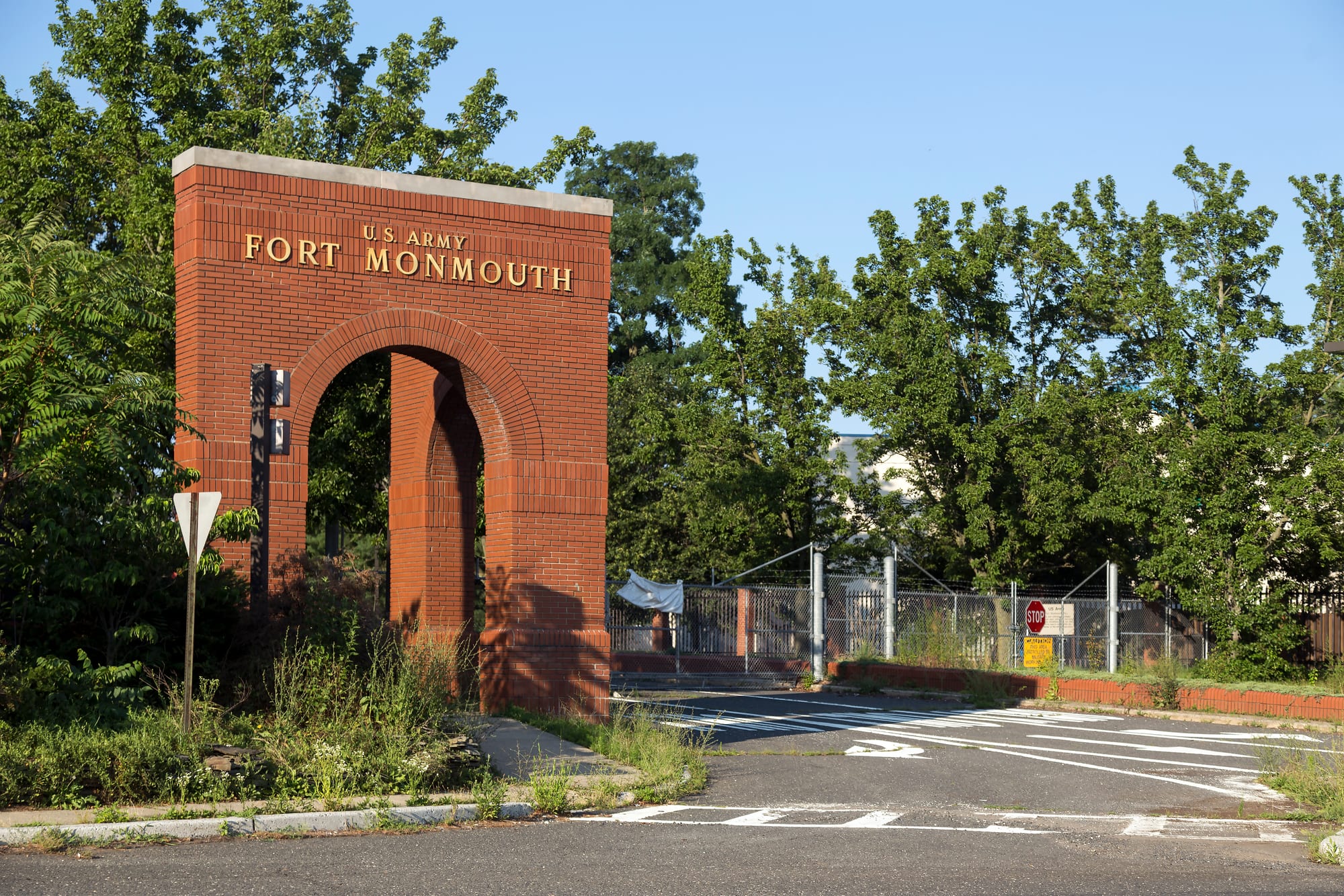
Context · Fort Monmouth (New Jersey), where radar tracked the object that relaunched Blue Book
Fort Monmouth main gate NJ1.jpg · Wikimedia Commons · CC BY-SA 4.0 · open original
DOW-UAP-D154 · full transcript of Captain Edward J. Ruppelt's presentation, March 1952: 19 pages, from the microphone test to the last question from the floor (PURSUE Release 06)
Department of War · PURSUE Release 06 (18 sep 2026) · Public domain · US Government work (17 USC §105)
The letter that demands this recording: Rep. Eric Burlison to MIT Lincoln Laboratory (May 7, 2026), asking to determine whether the reel-to-reel 'AF-ATIC-FILM, 03/52' —Ruppelt's briefing labeled 'flying saucer talk'— still exists, to preserve it, and to transfer a preservation copy to NARA (Record Group 615) under the FY 2024 NDAA UAP Records Collection.
U.S. House of Representatives · Committee on Oversight and Government Reform · Public domain · US Government work (17 USC §105)
The night in question
On the morning of September 10, 1951, at about 11:10, a student operator at the Army Signal Corps radar school at Fort Monmouth, New Jersey, was demonstrating a tracking radar to a group of visiting brass. According to the account Edward Ruppelt published in 1956, the student picked up an object some 12,000 yards to the southeast, flying low toward the north, and tried to switch the set to automatic tracking; he failed twice and told the audience the target was "going too fast for the set", faster than a jet. The target was in range for about three minutes. The Air Force summary that opens the file records that the operator "assured" the object was traveling over 700 mph precisely because automatic tracking would not follow it: the speed was not measured, it was inferred from the failure. The same summary adds that the inability may have been due to the student's failure to operate the set properly under mental stress.
The airborne sighting came afterwards. The Sandy Hook file card dates it at 11:35 EDST, about 25 minutes after the radar target. The pilot of a T-33 flying from Dover, Delaware, to Mitchel, New York, at 20,000 feet, with an Air Force major as passenger, stated by teletype that he saw over Sandy Hook a silver object, without markings or trail, circular and flat when seen edgewise, "identical to a discus as used in track events", between 5,000 and 8,000 feet, far below his aircraft; he estimated it at 30 to 50 feet (9 to 15 meters), made a 360-degree descending left turn to 17,000 feet and lost it two minutes later out to sea south of Asbury Park, after it covered about 35 miles. At 15:15 the radar was ordered to pick up a target high to the north and placed it, slow, at 93,000 feet; the next day two sets tracked further targets, and one more that afternoon.
The teletype reached Wright-Patterson on September 12 and Washington, and the Air Force Director of Intelligence, Major General C. P. Cabell, ordered an on-site investigation. Lieutenant Jerry Cummings and Lieutenant Colonel N. R. Rosengarten interrogated operators, instructors and the two T-33 crewmen, and found that no other radar in the area had picked up anything unusual. Their analysis recorded that the Evans Signal Laboratory at Belmar had released two large balloons at 11:12 EDST, painted silver for radar, which rose until bursting at about 104,000 feet with a 39-foot diameter; that the two pilots disagreed radically about the track and could not fix it to better than 10 nautical miles; and that the object, always on their left during the turn, could have been a nearly stationary balloon inside their turning circle. The 15:15 target was another balloon: according to Ruppelt, some officers had seen it launched and were betting on its height. The Blue Book card closes the file as "balloon" for the 10th and "anomalous propagation" for the 11th, and the Sandy Hook card as "balloon released from Evans Signal Laboratory at 1112 EDST". The file's initial summary left a caveat: a single one of the radar returns "cannot be explained". Ruppelt, who inherited the case, later wrote that this target was a conventional airplane of about 400 mph and that the student had fouled up the procedure for putting the set on automatic.
Why it matters
At the Pentagon meeting Cabell chaired with Cummings and Rosengarten, recorded on wire and later destroyed according to Ruppelt, the general asked who had been telling him that every decent sighting was being investigated, and someone slammed a copy of the Grudge Report down on the table. Out of it came the order to set up a new project: the "new Project Grudge", officially established on October 27, 1951 with Ruppelt in charge, which kept the name until March 1952, when it became Blue Book. It is a documented inflection point in how the state apparatus decides what to look at and what to file away: a case seen by military personnel in front of visiting brass made it evident that Grudge's default dismissal could not stand before the command.
But the case fixes the evaluator pattern in the opposite direction from how it is usually told. What forced the reorganization was the fact that nobody had investigated; once it was investigated, almost everything was resolved. The real sequence is radar first, at 11:10, and T-33 afterwards, at 11:35, with two silver Evans Signal Laboratory balloons aloft since 11:12 a few miles away; the object the pilots saw far below them, unable to fix its track, fits one of those balloons. The fit is not perfect: the Cummings and Rosengarten notes acknowledge that, taking the pilot's account at face value, the object covered 35 to 40 miles in about two minutes, which a balloon cannot do, although they themselves judged the accuracy of that account highly questionable; and Ruppelt noted, about the 11:10 target, that the Fort Monmouth radar technicians found there "wasn't the slightest indication of an inversion layer". The figure of over 1,100 km/h is the inference of a student who could not lock the target, and the analysis at the time already pointed to operator error. A single radar return remains that the initial summary could not explain, and that Ruppelt later attributed to a conventional airplane. Fort Monmouth shows that the reorganization was born of the program's credibility crisis before its own generals, and that the same team that led it closed the case as prosaic and counted it as its first success.
What's left on paper
Documented evidence
- Blue Book card "10-11 September 1951, Monmouth, New Jersey": ground radar, military source; conclusion "balloon" for the 10th and "anomalous propagation" for the 11th per radar analysts
- Blue Book card "Sandy Hook, 10 September 1951", 11:35 EDST, two-minute air-visual sighting: "balloon released from Evans Signal Laboratory at 1112 EDST"
- File summary: the operator "assured" over 700 mph because automatic tracking would not lock; possible operator error under stress; a single radar return unexplained
- T-33 pilot's teletype: silver object 30 to 50 feet across, between 5,000 and 8,000 feet over Sandy Hook, seen for two minutes from 20,000 feet, lost out to sea south of Asbury Park
- Field analysis: two large silver balloons released at 11:12 from Belmar; the pilots disagreed about the track and could not fix it within 10 nautical miles
- Ruppelt (1956): the fast target was a conventional airplane of about 400 mph, the T-33 saw a balloon and the 93,000-foot target was another balloon; the case led to the "new Project Grudge" of October 27, 1951, called Blue Book from March 1952
Sources
- Project Blue Book — file "10-11 September 1951, Monmouth, New Jersey" (card: balloon on the 10th, anomalous propagation on the 11th), NARA, archive.org mirror — Primary source: record card, status summary, T-33 teletype and analysis of the Evans Signal Laboratory balloons
- Project Blue Book — file "10 September 1951, Sandy Hook, New Jersey", NARA, archive.org mirror — Primary source: the T-33 sighting at 11:35 EDST, closed as a balloon released at 11:12
- Edward J. Ruppelt — The Report on Unidentified Flying Objects (1956), chapters 8 and 9, text on archive.org — Account by the program's first head: the Cabell meeting, the new Project Grudge and the case's solution
Related cases
same object · same country · same period
Gorman Dogfight · F-51 vs. maneuvering light (Fargo)
1948 · Tier A
same object · same country · same period
Roswell
1947 · Tier A
same object · same country · same period
Discs over Muroc Army Air Field
1947 · Tier A
same object · same country · same period
'Battle of Los Angeles' · anti-aircraft barrage over LA
1942 · Tier A