1990·France · SW→NE track
France.The 5 November 1990 French Wave
A nationwide UFO wave in France: at around 19:00 on 5 November 1990, thousands of witnesses saw a large, luminous, silent 'triangle' cross the country from southwest to northeast. It was the re-entry of the third stage of the Proton rocket that had launched the Gorizont 21 satellite two days earlier: a NASA telex placed it over eastern France at 18:06 UT, an amateur tracker had identified it even sooner, and SEPRA announced it on 9 November.
Tier S · SolidWhat do they mean? →
Strong evidence: a contemporary instrumental record (radar, sensor, film or photo of known provenance) that corroborates several independent witnesses.
What it was
96%natural or human cause
Most likely explanation: reentry
See the split across the six explanations
Natural or human cause
No known cause
Primary documents
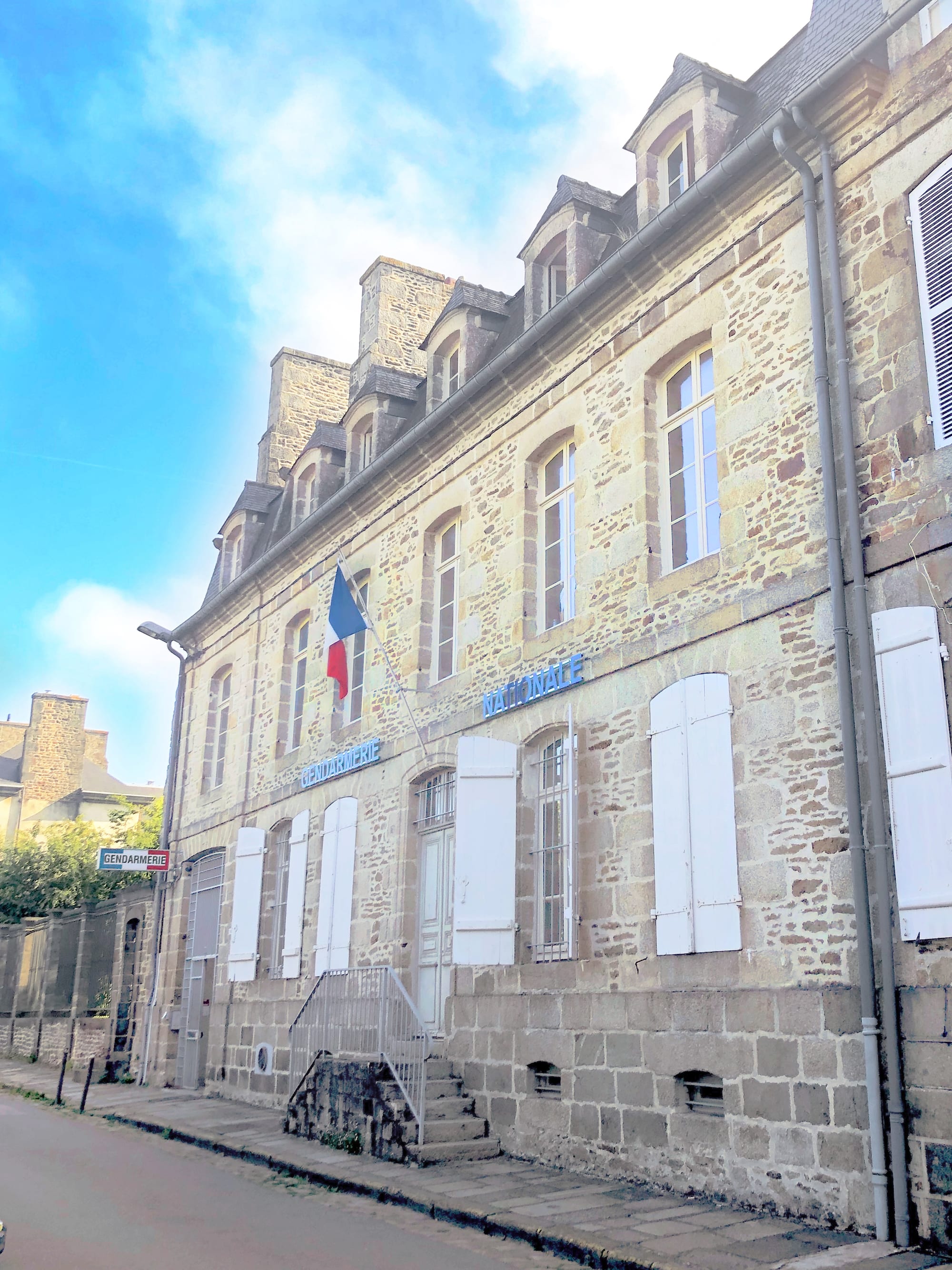
Context · the French Gendarmerie, which gathered the reports of the 5 Nov 1990 wave
Gendarmerie-Nationale-Dinan-byRundvald.jpg · Wikimedia Commons · CC BY-SA 4.0 · open original
GEIPAN (CNES), case file 'Rentrée atmosphérique 5 novembre 1990' (class A), with the gendarmerie reports
Official French file on the wave of 5 November 1990, classified by GEIPAN in class A (identified phenomenon): the atmospheric re-entry of rocket debris. It gathers the gendarmerie reports with that night's testimony. GEIPAN is a CNES service and its documents are copyrighted, so it is given as a link; the server limits repeated requests.
GEIPAN · Centre national d'études spatiales (CNES) · view source
The night in question
On the night of 5 November 1990, at around 19:00, thousands of people across France (from the Atlantic coast to the northeast) watched a luminous, silent object cross the sky. Gendarmerie reports give times between 18:45 and 19:30, the great majority around 19:00, and earlier the further southwest the witness was. By about 20:00 the CNES security office in Toulouse was taking calls from numerous brigades. According to the synthesis signed by Jean-Jacques Velasco, head of SEPRA, the service gathered 1,108 documents: 233 gendarmerie reports, 860 statements from private individuals and 5 civil or military aviation forms, plus some ten pilot accounts. The reports cluster along a southwest-northeast band led by Bas-Rhin, Loiret, Vendée, Seine-et-Marne and Corrèze, and are scarce in the east and southeast, which SEPRA linked to cloud cover and to distance from the track.
The descriptions converged on an unsettling shape. The most frequent was an immense triangle outlined by orange lights, with a very intense white ball behind and a trail; many compared it to a Boeing 747 and estimated it passed 100 or 150 metres away. All agreed on total silence, and the stated duration ran from 30 seconds to three minutes, peaking around one minute. James Oberg's compilation also includes accounts of interference with computers and car radios. Most pilots in flight thought they were seeing 'a squadron in formation, on afterburner'. In the first days the case puzzled the experts too: SEPRA noted the 'troubling similarity' of the statements and their quality, with almost no fanciful accounts; CNES astronaut Jean-Pierre Haigneré, himself a witness, confirmed to them 'the strangeness of this phenomenon'; and an AFP dispatch attributed it to a large meteorite, citing a 'Munich observatory' that turned out to be an amateur club. Some witnesses even gave the opposite direction to the real one.
The explanation came by two independent routes. On Tuesday 6 November, a private satellite tracker (identified in the literature as Pierre Neirinck) faxed that it was the re-entry of object 1990-094C, 103 km up over the Bay of Biscay and 83 km as it left over eastern France; SEPRA itself acknowledges that this amateur knew what it was from Monday evening. On the afternoon of Thursday 8 the telex SEPRA had requested from NASA arrived: object 20925, 1990-094C, 'Gorizon 21 platform', USSR, launched 3 November, descending on revolution 36 on 5 November at 18:06 UT, at 49.0° N and 7.3° E, with an inclination of 51.7°. It was the third stage of the Proton rocket that had placed Gorizont 21 in orbit; Jonathan McDowell's GCAT catalogue lists the same stage (Proton-K, 1990-094C) launched on the 3rd and re-entered on 5 November. The train of glowing fragments, advancing in formation at high altitude along nearly a thousand kilometres over France, was reconstructed by witnesses' perception into a single solid object: the 'triangle' was the fragmented trail read as the edges of a craft.
CNES communicated the explanation to the news agencies on 9 November. In his synthesis, Velasco describes it as the most important case GEPAN or SEPRA had ever had to handle, because of the number of statements and the media pressure: more than thirty interview and information requests handled and around a hundred articles in eight days. Two witnesses supplied a photograph and a video, which SEPRA examined on site and which, by its conclusion, clearly show an atmospheric re-entry. The same document credits the media with an amplifying effect, for having suggested a mysterious craft akin to the Belgian wave. GEIPAN today classifies the case as A, identified phenomenon, with hundreds of gendarmerie reports published in its file. Velasco would reaffirm the diagnosis in a 1993 book with journalist Jean-Claude Bourret, and James Oberg used it as an example of how a re-entry generates mass reports of 'structured craft'; in his presentation, Oberg attributes the launch to Gorizont 23, while the NASA telex speaks of Gorizont 21.
Why it matters
Trans-en-Provence and Valensole are France's physical-trace cases; this wave is the opposite: a mass event with an identified cause. It demonstrates, with thousands of sincere witnesses, that a mass event shaped like a 'giant silent triangle' can arise entirely from a single re-entry plus perceptual reconstruction. With no hoax involved, known orbital physics, misread at national scale, was enough, even for professional pilots who described a squadron.
The case serves to calibrate how much credit to grant mass triangle reports in other cases (the 1989 Belgian wave, the Phoenix Lights) where witness count is invoked as proof of anomaly. The lesson of 1990 is that witness count measures the visibility of the stimulus. A thousand people can be wrong at once, in complete good faith, before a real but prosaic object.
It is also an institutional success story, with a caveat SEPRA itself put in writing. A state body had the correct explanation in four days and made it public, the reverse of a cover-up. But its synthesis acknowledges that NASA took from Tuesday to Thursday to confirm the re-entry, that an amateur with a network of observers knew from Monday evening, and that this exposed France's and Europe's lack of their own space-surveillance means.
A thin residue remains: some witnesses give the opposite direction, times outside the re-entry window or distances of a hundred metres, which SEPRA attributes to the weather conditions and to errors of judgement without a frame of reference; it considers the spread of times consistent with the trajectory, and it records the opposite-direction accounts without explaining them. Some witnesses cited by Oberg describe changes of speed or a vertical ascent, and ufologist Jean Sider presented it in 1992 as 'the greatest UFO flap in France since the autumn of 1954', at a time when, according to Oberg, the satellite explanation was being vigorously snubbed. That residue is not enough to sustain an exotic hypothesis. What the case contributes is its documentation and its scale.
What's left on paper
Documented evidence
- SEPRA synthesis (J.-J. Velasco): 1,108 documents, including 233 gendarmerie reports, 860 private statements and 5 aviation forms
- Stated times between 18:45 and 19:30, most around 19:00; duration from 30 seconds to 3 minutes; total silence in every account
- Straight southwest→northeast trajectory, consistent with a re-entry inclined at 51.7°
- Fax from an amateur tracker (6 Nov): object 1990-094C, 103 km up over the Bay of Biscay and 83 km over eastern France
- NASA telex (8 Nov): 1990-094C, Gorizont 21 platform, re-entry on 5 Nov at 18:06 UT at 49.0° N 7.3° E
Show 3 more items
- GCAT catalogue: Proton-K stage 3 1990-094C, launched 3 and re-entered 5 November 1990
- CNES statement to the agencies on 9 November 1990; GEIPAN today classifies it as case A
- A photograph and a video examined by SEPRA, showing an atmospheric re-entry
Sources
- GEIPAN (CNES) — 'Rentrée atmosphérique 5 novembre 1990', case file (class A) with the gendarmerie reports — Official file; the server rate-limits repeated requests.
- Velasco, J.-J. (SEPRA) — 'Un cas remarquable: la rentrée atmosphérique du 5 novembre 1990' — Contemporary SEPRA synthesis, with the NASA telex and the tally of statements.
- McDowell, J. — GCAT general catalogue of launched objects (satcat.tsv), entry 1990-094C — Launch and re-entry dates of the Proton-K stage.
- Oberg, James — 'The November 5, 1990 French UFO wave' (SEESAT / satobs.org) — Presentation with witness drawings (secondary).
- Velasco, J.-J. & Bourret, J.-C. — 'Ovnis: la science avance' (Robert Laffont, 1993)
- Gross, Patrick — ALSACAT, 5 Nov 1990 case files (Colmar) — Ufology catalogue (secondary).
Related cases