2018·Southwest coast of Ireland (Shannon ATC)
Ireland.Ireland · pilots + IAA investigation
On November 9, 2018, around 06:47, the pilot of a British Airways flight (B787) asked Shannon ATC whether there were military exercises: she had seen an object 'moving so fast', a bright light that veered north at high speed. A Virgin flight reported multiple bright objects on the same trajectory.
Read the rest of the summary
Shannon had nothing on primary or secondary radar, the audio circulated through the public LiveATC service and the Irish Aviation Authority filed a report under its confidential occurrence investigation process. The head of Astronomy Ireland attributed it to a fireball, which four people on the ground reported at the same time.
Tier A · AcceptableWhat do they mean? →
Institutional evidence: several identified independent witnesses, or contemporary official documentation, without an instrumental record to corroborate them.
What it was
77%natural or human cause
Most likely explanation: meteor or fireball
See the split across the six explanations
Natural or human cause
No known cause
Context image (not a document from the case)
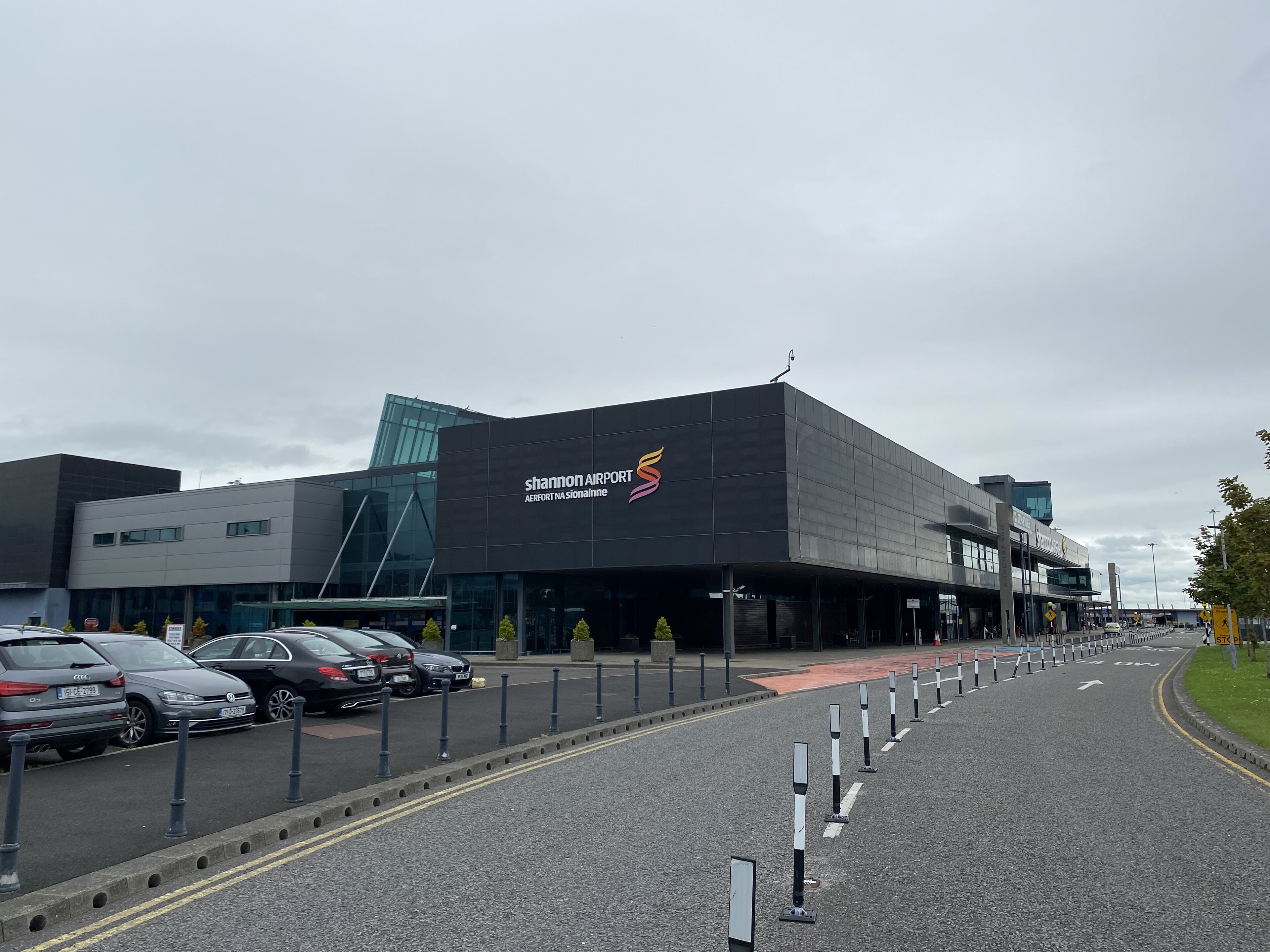
Context · Shannon Airport (Ireland), whose ATC received the reports
Shannon Airport 2020-07-12 01.jpg · Wikimedia Commons · CC BY-SA 4.0 · open original
The night in question
On November 9, 2018, around 06:47, the pilot of a British Airways flight (callsign Speedbird94, a Boeing 787 on the Montreal–Heathrow route) contacted Shannon air traffic control while over County Kerry to ask whether there were military exercises in the airspace she was crossing. There were none. She had observed an object moving at high speed: it appeared on the aircraft's left-hand side, veered sharply north and moved off as a very bright light that, she said, 'disappeared at very high speed'. The controller replied that nothing showed on either primary or secondary radar. The pilot said they were wondering what it could be and that it did not seem to be on a collision course.
Minutes later, other crews joined the frequency. The pilot of a Virgin Boeing 747 (callsign Virgin 76, Orlando to Manchester) referred to a meteor or another object re-entering the atmosphere and reported "multiple objects following the same sort of trajectory", very bright where they were, at his 11 o'clock position and "two bright lights over to the right" that then climbed away at speed; a third aircraft, a Norwegian 737 from Stewart, New York, to Shannon, was also on the frequency. Another pilot estimated the speed as 'astronomical, like Mach 2', twice the speed of sound. That several crews from different airlines described the same phenomenon almost simultaneously, over a wide area, is what made it credible as an observation and at the same time what points to its explanation.
The Irish Aviation Authority (IAA) said that, following reports from "a small number of aircraft" of unusual air activity, it had filed a report that would be investigated under its normal confidential occurrence investigation process. The Shannon ATC communications, captured by the public LiveATC service, circulated from November 11, letting journalists and the public hear the exchange. The sources consulted contain no published IAA conclusion. The most likely explanation (several pilots seeing very fast, bright lights at almost the same time, over a wide area and with no radar return at all) is a meteor or bolide entering the atmosphere, a possibility the Virgin pilot raised on the frequency itself. Afterwards, the head of Astronomy Ireland, David Moore, told The Times he was sure it had been a fireball and that four people on the west coast had reported one at the same time; aviation journalist Gerry Byrne added that it is not uncommon for meteorites to enter the atmosphere at a low angle. An object on re-entry seen from several distant aircraft produces exactly that pattern of 'bright light at enormous speed, no radar echo' and of trajectories that seem to converge: the same bolide, viewed from different angles and altitudes, appears to each crew to be on 'the same trajectory', and its very high apparent speed is consistent with an atmospheric entry rather than with a powered craft. The absence of any radar return (primary or secondary) is itself telling, since a meteor leaves no metallic, transponder-equipped target for civil radar to track. What anchors the case, then, is not the object but the institutional chain: pilots from three commercial airlines, air traffic control and a formal investigation by the aviation authority, with public audio.
Why it matters
It is a clear example of institutional over phenomenological value: the phenomenon has a meteoric explanation backed by ground witnesses, but the chain that recorded it (crews from three commercial airlines, Shannon air traffic control and an Irish Aviation Authority report, with public audio) constitutes a clean, end-to-end verifiable institutional record. Here the reader can literally hear the original pilot-controller exchange: the primary datum is available.
Its inclusion follows the same logic as Morocco 1976 or Petrozavodsk: episodes documented and acknowledged by serious institutions whose phenomenon has a plausible natural explanation, included precisely to show that institutional acknowledgment and anomaly are not the same thing.
What's left on paper
Documented evidence
- British Airways pilot (B787, Speedbird94) reported a fast, bright object to Shannon ATC (Nov 9, 2018, ~06:47).
- A Virgin 747 (Virgin 76) reported "multiple objects following the same sort of trajectory" and mentioned a meteor or a re-entry; a Norwegian 737 was also on the frequency.
- Shannon ATC: nothing on primary or secondary radar.
- The IAA filed a report for its confidential occurrence investigation process; the audio circulated via LiveATC. Astronomy Ireland: a fireball, with four ground witnesses at the same time.
Sources
- TheJournal.ie — ''Moving so fast': UFO sighting under investigation by Irish Aviation Authority' (nov 2018)
- Irish Examiner — 'UFO seen off Irish coast 'in all probability, were meteorites''
- The Week — «What was UFO seen off the Irish coast?» (nov 2018), recoge las declaraciones de David Moore (Astronomy Ireland) a The Times — Contemporary press; secondary to The Times.
Related cases